
Heating solutions for Tuolumne County, from Sonora to Pinecrest.
Wood, gas, pellet, and electric fireplace resources for every elevation in Tuolumne County—from the valley floor around Sonora and Jamestown up into the Sierra near Twain Harte, Mi-Wuk Village, and Pinecrest. Find the right unit and connect with a trusted local hearth retailer.
Every Project Starts From One of These Five Situations
Foothill-to-Sierra-crest heating across Tuolumne County, California.
Tuolumne County spans an unusually wide elevation range for its size—from around 1,800 feet at Sonora up past 6,000 feet near Pinecrest and the Dodge Ridge ski area on the Sierra crest. That range matters for heating. Down in Sonora and Jamestown, winters are mild by California mountain standards—average winter lows around 33°F and a comparatively light heating season, closer to a coastal climate than the deep-cold winters of a town like Bozeman, Montana. But climb the Highway 108 corridor into Twain Harte, Mi-Wuk Village, or Pinecrest and you're in real Sierra snow country, where a fireplace or stove is doing genuine work, not just ambiance. Oak, madrone, and Douglas fir are the common local firewood species, much of it cut under permits from the Stanislaus National Forest, the Eldorado National Forest, or through the BLM California State Office.
What you'll find on this hub: hearth retailers, service technicians, and fuel suppliers serving every community in the county—Sonora, Columbia, Jamestown, and Tuolumne City on the lower end, up through Twain Harte and Soulsbyville, out to Groveland near the Yosemite gateway, and into the higher Sierra communities around Pinecrest and Strawberry. Pick your fuel below to see local dealers, installation costs, and the units that make sense for your elevation and your home. A cabin near Dodge Ridge and a ranch house outside Sonora are not heating the same way, and this hub is built to reflect that.
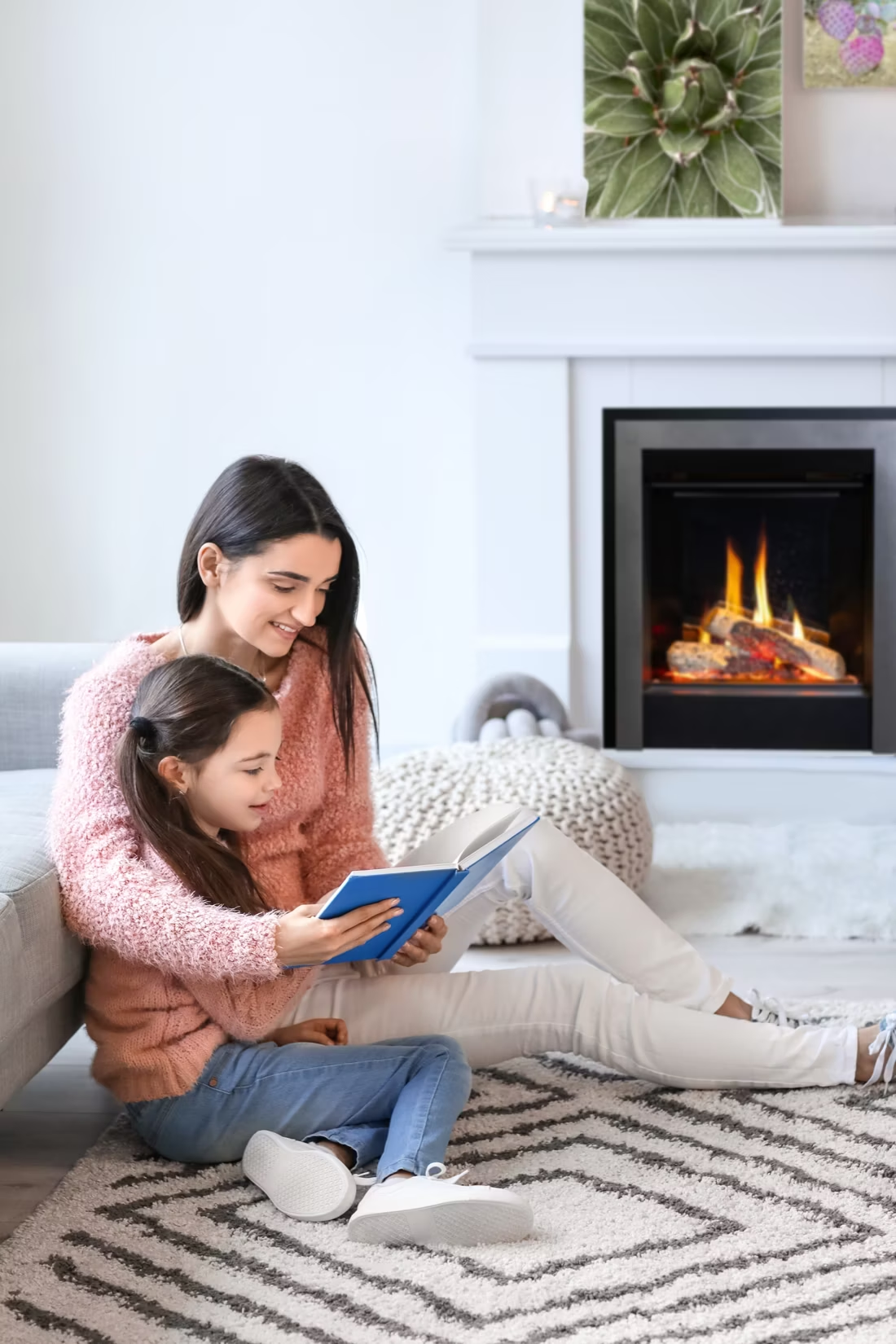
Four fuels. One honest answer for Tuolumne County.
Three steps. No salesperson until you're ready.
Tell us about your project
Your zip code, your situation, and the fuel you're leaning toward—or let the answers point you to one.
See what's actually available
The brands dealers within 100 miles genuinely carry—real options, never a catalog mirage.
Get your dealer & Project Guide
A trusted local dealer, plus the free Project Guide & Parts List that names every component of the job.
Frequently Asked Questions
Which fuel works best in Tuolumne County?
It depends heavily on where in the county you are. Down around Sonora, Jamestown, and Columbia, winters are mild—average lows near 33°F—so gas and electric units handle daily heating comfortably, with wood or pellet as a secondary or backup option. Up the elevation ladder toward Twain Harte, Mi-Wuk Village, and Pinecrest, wood becomes a much more serious primary heat source; oak, madrone, and Douglas fir are locally abundant, much of it self-cut under Forest Service permits from the Stanislaus or Eldorado National Forests, which keeps fuel costs down for households that put in the labor. Pellet stoves loaded with Bear Mountain, Lignetics, or Pacific Pellet bags are a strong middle option countywide—wood-style heat without the splitting and stacking. Electric fireplaces work well as supplemental heat at lower elevations but are rarely enough on their own once you're up near Dodge Ridge in a hard winter.
Do I need a permit to install a fireplace in Tuolumne County?
In most cases, yes. New wood stoves, wood inserts, gas fireplaces, gas inserts, and pellet stoves typically require a building permit, and any new gas line work requires a licensed gas-fitter and a separate permit. California requires wood-burning appliances sold and installed in the state to meet EPA-certified emissions standards, so an older uncertified stove generally can't be installed as new construction. Within the city limits of Sonora, permits run through the city; across the rest of the county—which is largely unincorporated, covering everything from Columbia to Groveland to Pinecrest—permits go through the county building department. Most established local hearth retailers handle the permit paperwork as part of the installation, so you're not usually filing it yourself.
Are there air quality restrictions on wood burning in Tuolumne County?
Tuolumne County doesn't deal with the winter inversion smog that traps smoke in some Central Valley and basin communities—the terrain and mild winter temperatures here don't set up that same stagnant-air pattern. The bigger air quality concern is wildfire smoke, which can blanket the county for days or weeks during fire season, roughly June through October, well outside the wood-burning season. That said, an EPA-certified stove burning seasoned oak, madrone, or Douglas fir produces meaningfully less smoke than an old uncertified unit, which matters for your neighbors and for your own indoor air quality during the heating months. If you're cutting your own firewood on Stanislaus National Forest or BLM land, check current fire restrictions before doing any cutting work, since those rules shift with fire danger level.
Can one local hearth retailer handle all four fuel types?
Many hearth retailers serving the Sonora area carry three or four fuel types—wood, gas, and pellet at minimum, with electric units as a smaller but standard part of the showroom. That's useful if you're not yet sure which fuel fits your home, since you can see working displays and get a straight comparison from one dealer instead of piecing it together from multiple stores. Retailers based farther up the Highway 108 corridor, closer to Twain Harte or Mi-Wuk Village, tend to lean harder into wood and pellet given the colder, higher-elevation customer base they mostly serve. The fuel-specific pages on this hub note which local retailers carry which fuel types so you can find the right match without guessing.
How does service work in the higher-elevation parts of Tuolumne County?
Most service technicians are based around Sonora and travel out along Highway 108 and 120 to reach communities like Twain Harte, Mi-Wuk Village, Groveland, and Pinecrest. Once you're up near Dodge Ridge or Strawberry, winter snow can make roads slower or briefly impassable, so scheduling annual chimney sweeps, gas inspections, or pellet stove service in late summer or early fall—before the first real snow—is a lot easier than trying to book a mid-winter emergency call. Expect a modest travel fee for the farther-out communities. If your cabin is up at elevation and only occupied part-time, it's worth asking your technician about a pre-season check specifically, since a stove or insert that sat unused all summer needs a look before you fire it up for the first cold night.
What's the typical cost range for fireplace installation across all fuel types in Tuolumne County?
Costs vary by fuel and by how much venting or gas line work is involved. Wood stove or insert installation typically runs $4,500–$9,500, more if a new chimney chase has to be built for a higher-elevation cabin. Gas fireplace, insert, or stove installation runs roughly $4,500–$11,000, with propane conversions and new gas line runs pushing toward the higher end in areas without existing service. Pellet stove or insert installation generally falls in the $4,500–$8,000 range. Electric fireplace installation is the least expensive option—often $200–$3,000 for the unit itself, plus $400–$1,200 in labor for anything beyond a simple plug-in wall unit. For dealer-specific pricing, the county-plus-fuel pages linked above break down costs by the retailers actually quoting jobs in Tuolumne County.
How much should I budget for a fireplace?
For an average home—covering the fireplace, the vent pipe, and basic installation—a budget between $3,900 and $5,500 gives you a lot of options across wood, gas, and pellet. By the time you add finish work, gas line, and electrical, the average complete installation lands between $5,000 and $12,000 all-in. In a remodel or new build, a good rule is to put about 2.5% of the total project cost toward the fireplace.
Wood, gas, pellet, or electric—how do I choose?
Match the fuel to your life, not the other way around. Wood: lowest fuel cost and total power-outage independence, but you're hauling and stacking. Gas: press a button, set a thermostat, no maintenance to speak of. Pellet: wood economics with automatic feeding, in exchange for weekly cleaning and a need for electricity. Electric: plugs in anywhere with honest supplemental heat. Nobody regrets the fuel that fits how they actually live.
Can I install a fireplace myself?
If you're putting a fire in your house on purpose, it's best to work with an expert. Unless you're genuinely experienced in framing, gas line, vent pipe, and the national code on clearances to combustibles, have a professional do it—and ideally the same company that sells you the fireplace, so warranty, service, and liability all live under one roof.
I know I want a fireplace—where do I actually start?
Do two things today: snap a photo of the wall or fireplace you want to transform, and take a tape measure to the space—width, height, depth. Those two artifacts answer most of a hearth professional's first questions. Then settle fuel (wood, gas, pellet, or electric) and set a realistic budget: $3,900–$5,500 covers fireplace, vent, and basic install for most homes.
Stove and Fireplace Dealers in Tuolumne County
Listings include WhyFire partner dealers, dealers we have verified as authorized for the brands we recommend, and established local businesses that carry hearth products. Every listing shows which one it is. The ones marked Preferred run on WhyFire's software, so they can show you real pricing and book your appointment right here. No manufacturer pays for placement. How we verify dealers →
Ambrosia
Hibernation Home Concepts
Billing's Stove And Sheet Metal
Calaveras Hibernation LLC
Find your fireplace in Tuolumne County.
Pick your fuel below and we'll match you with a trusted local hearth retailer and send over a free Project Guide & Parts List—a plan for your project in Tuolumne County with the exact parts, including the vent kit, and our recommended local dealer.
Find Your Fireplace →