
Reliable heat for one of California's most remote, coldest counties.
Wood, gas, pellet, and electric fireplace resources for Alturas, Cedarville, Tulelake, and the ranch and forest communities scattered across Modoc County. Find the right unit and get matched with a local dealer who actually covers this ground.
Every Project Starts From One of These Five Situations
High desert plateau heating in California's northeast corner.
Modoc County sits at elevations between 4,300 and 5,000 feet on a high desert plateau bordering Oregon and Nevada, with fewer than 5,200 residents spread across nearly 4,000 square miles. Winter lows average 21°F and the county has winters comparable to Duluth, Minnesota in severity, if not in population density. Oak, madrone, and Douglas fir are the wood species most commonly cut and burned locally, much of it harvested under Forest Service and BLM permits from the Modoc National Forest, Lassen National Forest, or the BLM Lakeview District. With this little population density and this much distance between towns, wood heat and propane remain practical necessities, not lifestyle choices.
This hub covers hearth retailers, service technicians, and fuel suppliers reaching every community in the county—from Alturas, the county seat, out to Cedarville near the Nevada line, Tulelake up near the Oregon border, and the smaller ranch communities in between. Pick your fuel below for local dealers, installed cost ranges, and unit recommendations specific to Modoc County's climate and permit rules. Whether you're heating a ranch house outside Adin or a cabin near the Warner Mountains, this is where to start.
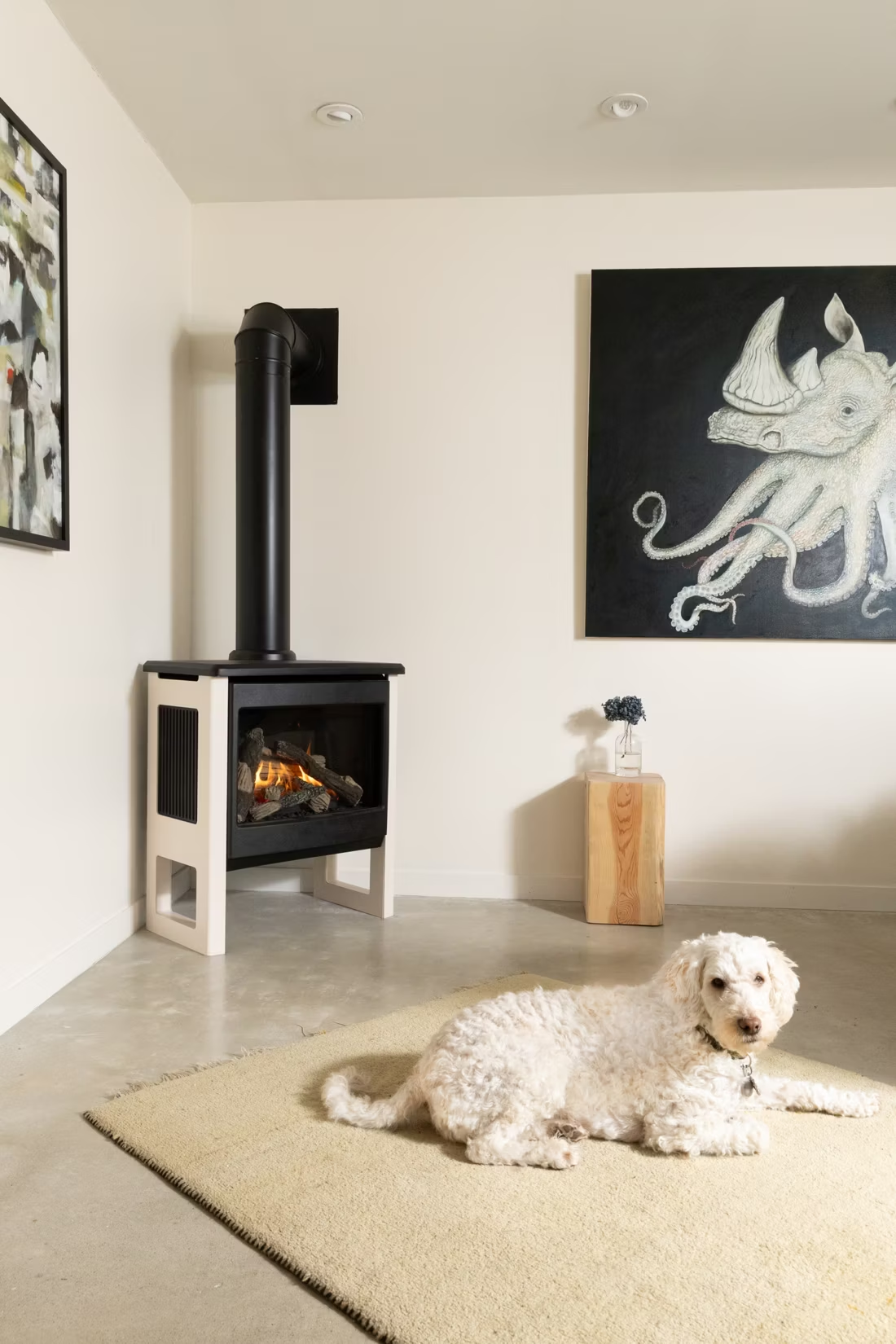
Four fuels. One honest answer for Modoc County.
Three steps. No salesperson until you're ready.
Tell us about your project
Your zip code, your situation, and the fuel you're leaning toward—or let the answers point you to one.
See what's actually available
The brands dealers within 100 miles genuinely carry—real options, never a catalog mirage.
Get your dealer & Project Guide
A trusted local dealer, plus the free Project Guide & Parts List that names every component of the job.
Frequently Asked Questions
Which fireplace fuel makes the most sense in Modoc County?
It depends on where you live and what infrastructure reaches your property. Wood is the practical choice for most rural Modoc County homes—oak and Douglas fir burn long and hot, Forest Service and BLM permits keep fuel costs low, and a wood stove keeps working when winter storms take out power on the plateau. Propane is the common convenience fuel since natural gas service is limited outside Alturas—instant heat with no wood-splitting labor. Pellet stoves are a solid middle ground, with Bear Mountain and Lignetics both distributed in the region, though homeowners need a reliable place to buy and store bags given the distances between towns. Electric fireplaces work fine as supplemental heat in a bedroom or den, but with winters comparable to Duluth, Minnesota, nobody in Modoc County should rely on electric as a primary heat source through a full winter.
Do I need a permit to install a wood stove or fireplace in Modoc County?
Generally yes. New wood stove, insert, gas fireplace, and pellet stove installations require a building permit through the Modoc County Planning & Building Division, and units must meet current EPA emissions standards. If you're cutting your own firewood, a separate permit is required from whichever agency manages the land—the Modoc National Forest, Lassen National Forest, or BLM Lakeview District each issue their own personal-use firewood permits with different seasonal windows and per-household limits, so check with the specific office before you head out with a chainsaw. Gas installations need a licensed propane installer for the line work in addition to the building permit. Most local hearth retailers here handle the permitting on your behalf as part of the installation.
Does wildfire smoke affect wood burning decisions in Modoc County?
Yes, though differently than urban winter-inversion smoke concerns. Modoc County's wildfire season (typically July through October) can bring extended periods of smoke from regional fires, which affects outdoor air quality independent of home heating. This doesn't usually restrict wood stove use in winter, but it does shape practical decisions—many residents stack and season firewood in spring specifically to avoid cutting during peak fire season, and some choose EPA-certified catalytic stoves partly because they burn more completely and produce less smoke overall, a consideration some households weigh given how much smoke exposure they already get each summer and fall.
Can one local retailer handle wood, gas, pellet, and electric in Modoc County?
Given how few hearth retailers serve a county this remote and this small, most that do operate here carry multiple fuel types out of practical necessity—a dealer that only sold one fuel couldn't sustain a business serving 5,000 people spread over 4,000 square miles. Expect retailers based in or near Alturas to carry wood stoves and inserts, propane fireplace units, and pellet stoves, with electric as a smaller supplemental line. If a specific brand or model isn't in stock locally, most dealers can special-order it, though lead times run longer here than in denser markets—plan installations well ahead of the season you need heat.
How does fireplace and stove service work in such a rural county?
Technicians serving Modoc County typically travel out from Alturas or drive in from Lassen or Siskiyou counties, covering communities like Cedarville, Tulelake, Adin, and Likely on set routes rather than on-demand. Expect a trip fee for service calls outside the immediate Alturas area, and expect to book further ahead than you would in a city—many techs bundle stops on the same trip, so flexibility on timing helps. Fall (September–October) is the best window for annual chimney sweeps and gas inspections; waiting until a cold snap hits in December means a longer wait and a higher chance of going without heat during the repair window.
What does fireplace installation typically cost across fuel types in Modoc County?
Costs run somewhat higher here than in denser California markets due to travel time built into labor rates. Wood stove or insert installation: roughly $5,000–$10,000 for a typical install, more if new chimney or hearth work is needed. Gas fireplace, insert, or stove (propane): roughly $5,000–$12,000 depending on whether a new propane line and tank setup is required. Pellet stove or insert: roughly $5,000–$8,000 installed. Electric fireplace: $200–$3,000 for the unit itself, plus $400–$1,200 in labor for anything beyond a plug-and-play install. The county + fuel pages above break these down further with retailer-specific pricing.
How much should I budget for a fireplace?
For an average home—covering the fireplace, the vent pipe, and basic installation—a budget between $3,900 and $5,500 gives you a lot of options across wood, gas, and pellet. By the time you add finish work, gas line, and electrical, the average complete installation lands between $5,000 and $12,000 all-in. In a remodel or new build, a good rule is to put about 2.5% of the total project cost toward the fireplace.
Wood, gas, pellet, or electric—how do I choose?
Match the fuel to your life, not the other way around. Wood: lowest fuel cost and total power-outage independence, but you're hauling and stacking. Gas: press a button, set a thermostat, no maintenance to speak of. Pellet: wood economics with automatic feeding, in exchange for weekly cleaning and a need for electricity. Electric: plugs in anywhere with honest supplemental heat. Nobody regrets the fuel that fits how they actually live.
Can a fireplace actually lower my heating bill?
Yes—by creating a comfort zone. A furnace heats every square foot of the house just to warm the one room you're in; a gas fireplace on low burns roughly a sixth of the gas a typical furnace does. Set the furnace around 55–60 degrees as a baseline, then heat the rooms your family actually uses. Families who heat this way commonly save $20–$60 a month.
What are the biggest mistakes people make buying a fireplace?
Five come up constantly: budgeting for the unit but not the full job (vent, gas line, electrical, finish work); drowning in options instead of starting from style and fuel; buying without an in-home preview; handing installation to a handyman instead of a pro; and giving up out of sheer indecision. Every one is avoidable with a clear plan—step one, step two, step three.
Stove and Fireplace Dealers in Modoc County
Listings include WhyFire partner dealers, dealers we have verified as authorized for the brands we recommend, and established local businesses that carry hearth products. Every listing shows which one it is. The ones marked Preferred run on WhyFire's software, so they can show you real pricing and book your appointment right here. No manufacturer pays for placement. How we verify dealers →
Coastal - Klamath Falls
Find your fireplace in Modoc County.
Tell us your fuel and your town, and we'll match you with a trusted local dealer plus a free Project Guide & Parts List—the exact parts, including the vent kit, for your home.
Find Your Fireplace →