
Find your fireplace, from Ukiah to the Mendocino coast.
Wood, gas, pellet, and electric fireplace resources for every city and community in Mendocino County—from the Ukiah Valley to the fog-bound Mendocino coast. Find the right unit and connect with a trusted local hearth retailer.
Every Project Starts From One of These Five Situations
Coastal fog, inland frost: heating options across Mendocino County.
Mendocino County stretches from the fog-bound bluffs of the Pacific coast—Point Arena, Gualala, Mendocino Village, Fort Bragg—inland across Highway 101 to the warmer, drier Ukiah Valley, and further into the Coast Range toward Willits, Laytonville, and Covelo. The county sits in climate zone 3C, with a mild coastal-to-inland gradient: average winter lows hover around 37°F and the county logs roughly 3,030 heating degree days a year, a fraction of what a place like Duluth, MN sees in a single winter. Snow is rare outside the higher elevations near Covelo and the Mendocino National Forest boundary, but damp, chilly nights are a fact of life along the coast nearly year-round, and inland towns see real frost from November through February. Firewood—oak, madrone, and Douglas fir—has been the default heat source in this county for generations, split from Mendocino National Forest permit wood or private timberland, and it remains common even in homes that also run gas or electric heat.
This hub rolls up hearth retailers, chimney sweeps, gas and pellet technicians, and fuel suppliers across every incorporated city and unincorporated community in the county—Ukiah, Willits, Fort Bragg, and Point Arena, plus Mendocino Village, Boonville, Laytonville, Covelo, Redwood Valley, and the Gualala coast. Pick your fuel below for local dealer listings, installation costs, and unit recommendations specific to Mendocino County's mix of coastal fog and inland valley cold. Whether you're heating a Victorian in downtown Mendocino or a ranch house outside Covelo, this is the starting point.
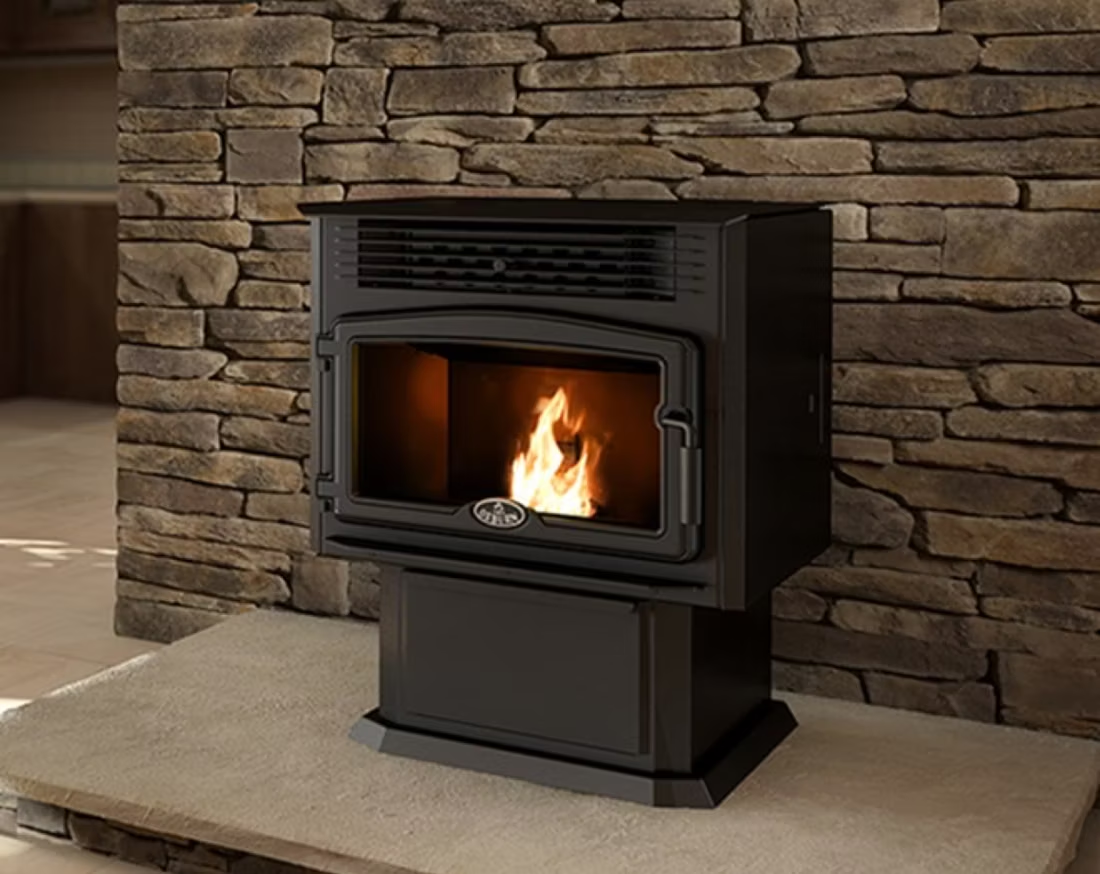
Four fuels. One honest answer for Mendocino County.
Three steps. No salesperson until you're ready.
Tell us about your project
Your zip code, your situation, and the fuel you're leaning toward—or let the answers point you to one.
See what's actually available
The brands dealers within 100 miles genuinely carry—real options, never a catalog mirage.
Get your dealer & Project Guide
A trusted local dealer, plus the free Project Guide & Parts List that names every component of the job.
Frequently Asked Questions
Which fuel works best in Mendocino County?
It depends on where in the county you live and what you're heating for. Wood is the traditional choice, especially inland—oak, madrone, and Douglas fir are the local standards, and a Mendocino National Forest permit still lets you cut your own for a fraction of retail cost. Because winters here are mild (average lows around 37°F, roughly 3,030 heating degree days a year, a fraction of what a place like Bozeman, MT logs), you don't need the 20-plus-hour catalytic burn times that colder inland climates require—a mid-size EPA-certified stove or insert is plenty for most Mendocino County homes. Gas is the convenience option in towns with PG&E natural gas service (Ukiah, Willits, Fort Bragg); rural and coastal homes on propane get the same instant-heat convenience without the gas main. Pellet is a solid middle ground, with Bear Mountain, Lignetics, and Pacific Pellet all stocked locally. Electric works better here than in colder-climate counties—with such mild heating demand, an electric insert or stove can realistically serve as a home's primary supplemental heat, not just ambiance, especially along the fog-moderated coast.
Do I need a permit to install a fireplace in Mendocino County?
Yes, in most cases. New wood stoves, wood inserts, gas fireplaces, gas inserts, gas stoves, and pellet stoves all require a building permit through Mendocino County Planning and Building Services, or through the applicable city building department if you're inside Ukiah, Willits, Fort Bragg, or Point Arena city limits. Wood-burning appliances need to meet current EPA emissions standards to pass inspection—this matters more here than in many counties because of the region's wildfire-smoke air quality concerns. Gas installations require a separate gas-line permit and licensed gas-fitter work. Electric fireplaces are typically permit-free unless you're hardwiring a built-in unit into a new circuit. Most local hearth retailers pull the permit as part of the installation quote, so you're not usually filing paperwork yourself.
Are there air quality restrictions on wood burning in Mendocino County?
The main air quality concern in Mendocino County is wildfire smoke, not winter inversion—the marine air moving in off the Pacific tends to keep the county's winter air fairly clean compared to inland California valleys. That said, during fire season, roughly August through October, smoke from wildfires in the Mendocino National Forest and surrounding areas can trigger regional air quality advisories, and outdoor burn permits are tightly restricted or suspended during those periods. Winter wood-stove burning itself isn't typically curtailed the way it is in California's Central Valley, but any new wood-burning appliance still needs to meet current EPA certification standards to be installed. If you're cutting your own firewood on Mendocino National Forest land, check current permit and fire-restriction status before you head out, especially in late summer.
Can one local hearth retailer handle all four fuel types?
Several of the larger dealers based in Ukiah and along the Fort Bragg corridor carry wood, gas, pellet, and electric units side by side, which is useful if you're still deciding what fits your home. Smaller shops closer to the coast—around Mendocino Village or Point Arena—tend to focus on wood and pellet, given the more limited natural gas infrastructure out there. If you're in Willits, Laytonville, or Covelo, expect a similar wood-and-pellet emphasis, with gas and electric options usually meaning propane or plug-in units rather than a gas-main hookup. The county + fuel pages above list which dealers carry which fuel, so you can check coverage before you call.
How does service work in rural parts of Mendocino County?
Most chimney sweeps and hearth technicians are based around Ukiah or Fort Bragg and travel out to the more remote parts of the county—Covelo in Round Valley, the Laytonville hills, Boonville and the Anderson Valley, and the Gualala coast. Expect a modest travel charge for the more distant calls, and expect fall booking windows (September–October) to fill up faster than midwinter ones, since that's when most homeowners realize their chimney hasn't been swept since last year. Coastal fog and winter storms can also delay service trucks on Highway 128 or Highway 1, so it's worth scheduling early rather than waiting for the first cold, damp week to call.
What's the typical cost range for fireplace installation across all fuel types in Mendocino County?
Costs vary by fuel and by how much existing infrastructure—venting, gas line, chimney—you already have. Wood stove or insert installation runs roughly $4,000–$8,500 for a typical retrofit, more if new chimney work is needed. Gas fireplace, insert, or stove installation runs roughly $4,000–$10,000, with propane conversions often landing higher than homes already on a PG&E gas line. Pellet stove or insert installation runs roughly $4,000–$7,000. Electric fireplace costs range from $200–$3,000 for the unit itself, plus $400–$1,200 in labor for anything beyond a simple plug-in install. Coastal properties sometimes see modestly higher labor costs due to travel distance from Ukiah-based crews. See the county + fuel pages above for cost detail tied to specific local retailers.
How much should I budget for a fireplace?
For an average home—covering the fireplace, the vent pipe, and basic installation—a budget between $3,900 and $5,500 gives you a lot of options across wood, gas, and pellet. By the time you add finish work, gas line, and electrical, the average complete installation lands between $5,000 and $12,000 all-in. In a remodel or new build, a good rule is to put about 2.5% of the total project cost toward the fireplace.
Can I install a fireplace myself?
If you're putting a fire in your house on purpose, it's best to work with an expert. Unless you're genuinely experienced in framing, gas line, vent pipe, and the national code on clearances to combustibles, have a professional do it—and ideally the same company that sells you the fireplace, so warranty, service, and liability all live under one roof.
Wood, gas, pellet, or electric—how do I choose?
Match the fuel to your life, not the other way around. Wood: lowest fuel cost and total power-outage independence, but you're hauling and stacking. Gas: press a button, set a thermostat, no maintenance to speak of. Pellet: wood economics with automatic feeding, in exchange for weekly cleaning and a need for electricity. Electric: plugs in anywhere with honest supplemental heat. Nobody regrets the fuel that fits how they actually live.
Can a fireplace actually lower my heating bill?
Yes—by creating a comfort zone. A furnace heats every square foot of the house just to warm the one room you're in; a gas fireplace on low burns roughly a sixth of the gas a typical furnace does. Set the furnace around 55–60 degrees as a baseline, then heat the rooms your family actually uses. Families who heat this way commonly save $20–$60 a month.
Stove and Fireplace Dealers in Mendocino County
Listings include WhyFire partner dealers, dealers we have verified as authorized for the brands we recommend, and established local businesses that carry hearth products. Every listing shows which one it is. The ones marked Preferred run on WhyFire's software, so they can show you real pricing and book your appointment right here. No manufacturer pays for placement. How we verify dealers →
Er Energy - Willits
Hometown Store Inc
Daniel's Installation & Service
Find your fireplace in Mendocino County.
Pick your fuel below and I'll match you with a trusted local dealer and a free Project Guide & Parts List—the exact parts, vent kit included, for your home, plus the local dealer best positioned to install it.
Find Your Fireplace →