
Keep Your Family Warm and Safe—No Matter What
With average winter lows around 52°F and just 1,127 heating degree days a year, Los Angeles rarely needs wood heat for survival—but plenty of homeowners still want a real EPA-certified wood-burning fireplace for ambiance, hillside cabins, or backup heat. Here's what's actually legal, and who can install it.
Every Project Starts From One of These Five Situations
Wood heat is the exception here, not the rule.
Los Angeles sits in climate zone 3B with an average winter low of 52°F and roughly 1,127 heating degree days per year—compare that to Duluth, MN, which racks up more than 9,000 HDD in a typical winter, and you can see why wood as a primary heat source never took hold here. On top of the mild climate, the South Coast Air Quality Management District (SCAQMD) designates the LA basin a non-attainment area for particulate matter, and Rule 445 has prohibited the installation of new open masonry wood-burning fireplaces since 2008. Wildfire smoke from the surrounding foothills adds another layer of scrutiny during fall and winter Spare the Air alerts.
None of that means wood is off the table—it means the rules are specific. EPA Phase II (or better) certified wood stoves and inserts are still permitted as retrofits into existing masonry fireplaces, and they're popular in Hollywood Hills, Pasadena, and Malibu properties where a real fire matters more than raw BTU output. For homeowners with cabins or land near the Angeles National Forest or San Bernardino National Forest, self-cut firewood permits are available May through October for $5 to $20 per cord—oak, madrone, and Douglas fir are the species most commonly cut and hauled down from higher elevation. A trusted local installer who already navigates LADBS and SCAQMD paperwork routinely will save you the guesswork.
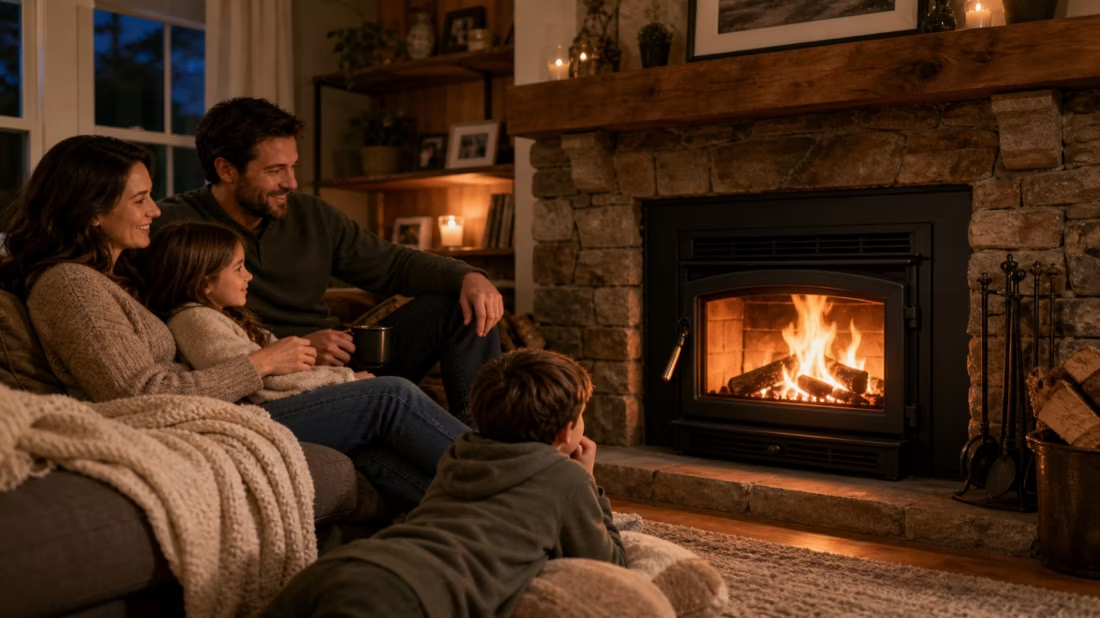
Firewood Cutting Permits Near Los Angeles
Three steps. No salesperson until you're ready.
Tell us about your project
Your zip code, your situation, and the fuel you're leaning toward—or let the answers point you to one.
See what's actually available
The brands dealers within 100 miles genuinely carry—real options, never a catalog mirage.
Get your dealer & Project Guide
A trusted local dealer, plus the free Project Guide & Parts List that names every component of the job.
Frequently Asked Questions
Is it even legal to install a wood-burning fireplace in Los Angeles?
Not in the form most people picture. SCAQMD Rule 445 has banned new open masonry wood-burning fireplaces in Los Angeles since 2008—you can't build one from scratch in new construction. What's still allowed is an EPA Phase II (or better) certified wood stove or insert retrofitted into an existing fireplace opening, which meets the emissions threshold Rule 445 requires. If you're set on real wood flame rather than gas, this retrofit path is the one nearly every local installer will point you toward.
What does an EPA-certified wood stove installation cost in Los Angeles?
Because wood installs are uncommon here compared to gas, pricing runs on the higher end of national ranges—typically $6,000 to $12,000 for a certified stove or insert retrofit, including a stainless liner and often new chimney chase work through a stucco or tile-roof exterior. Homes without an existing masonry chimney face a bigger project, since building a Class A chimney from scratch through multiple floors adds significant labor. A local hearth dealer familiar with LADBS permitting can give you a firm number after seeing the fireplace opening and roofline.
Where do I get firewood if I install a wood stove in LA?
The Los Angeles basin itself isn't firewood country—most cordwood sold locally is trucked in from the surrounding national forests or the Central Valley. If you own property near the San Gabriel or San Bernardino mountains, self-cut permits through the Angeles National Forest or San Bernardino National Forest run $5 to $20 per cord and are valid May through October. Oak, madrone, and Douglas fir are the species most commonly available. For delivery within the city, expect to pay a premium over cold-climate markets since supply is thinner and hauling distances are longer.
Can I still burn wood on a Spare the Air or no-burn day?
No. SCAQMD issues wood-burning curtailments—often called Check Before You Burn alerts—during winter temperature inversions and periods of poor air quality, which happen more often than most residents expect given the LA basin's non-attainment status. On a curtailment day, all wood-burning devices are restricted, including EPA-certified stoves, unless it's your sole source of heat. Pellet-burning appliances typically aren't sold or supported by dealers in this market, so wood-stove owners here should plan around gas or electric as backup rather than a second wood-burning device.
Wood vs. gas—which actually makes sense in Los Angeles?
For the vast majority of LA homes, gas wins on practicality: instant on-off heat, no SCAQMD curtailment days to track, no firewood sourcing, and straightforward permitting through LADBS with either an existing gas line or a short run to one. Wood makes sense mainly for homeowners who specifically want the experience of a real flame—a hillside property, a den meant for ambiance rather than heat, or a cabin-style secondary home where the fire is part of the point. If backup heat during outages matters more than atmosphere, an EPA-certified wood stove still works without electricity; most gas units with standard ignition do not.
What's the best wood stove for a mild climate like LA's?
You don't need a stove built for 20-hour overnight burns at sub-zero temperatures the way a Bozeman or Fargo homeowner would. Smaller to mid-size non-catalytic stoves from brands like Pacific Energy or Lopi are a better fit for LA's mild 52°F average winter lows—they're sized for occasional evening fires rather than round-the-clock heating, and they're easier to keep within SCAQMD's emissions certification without oversizing the firebox for a room that rarely needs sustained heat.
Do I need a permit to install a wood stove in Los Angeles?
Yes—installation requires a permit through the Los Angeles Department of Building and Safety (LADBS), and the unit itself must carry EPA Phase II or better certification to comply with SCAQMD Rule 445. Most established hearth dealers in LA handle the permit application as part of the installation and are familiar with the inspection requirements for chimney liners and clearances in older masonry fireplaces common throughout the city's pre-1960s housing stock.
I already have an old masonry fireplace—what are my options?
You have three realistic paths: retrofit an EPA-certified wood insert into the existing opening (the option that preserves real wood flame), convert to a direct-vent gas insert (the most common upgrade in LA, given the climate and air-quality rules), or leave the fireplace decorative and unused. Given Rule 445 and the frequency of winter air-quality curtailments, most local dealers report that gas conversions outnumber wood retrofits by a wide margin—but if you specifically want wood, the insert route is fully legal as long as the unit is certified.
Will my HOA or homeowners insurance limit a wood-burning installation?
Many hillside and gated communities in areas like Bel-Air, Pacific Palisades, and parts of the San Fernando Valley have HOA rules or insurance riders specifically addressing open-flame appliances, driven by wildfire risk in the wildland-urban interface. Check your HOA covenants and your homeowners policy before committing—some insurers require proof of EPA certification and an annual inspection record for wood stoves in fire-prone zip codes. A local installer who's done retrofits in your specific neighborhood will usually know the relevant HOA precedent already.
Why is a fireplace insert so efficient?
An insert does two things: it seals the chimney completely, so you stop losing air you already paid to heat, and it radiates warmth into the room through the firebox and glass. Most add a heat-exchange fan that pulls cool room air underneath, wraps it around the hot firebox, and pushes it back out warm. Your home is more efficient before you've even lit the first fire.
Why is my open fireplace making my house colder?
Open fireplaces suck—literally. As the fire burns, it consumes air your furnace already paid to heat and pulls it out through the chimney, so the house is actually colder after the fire goes out than before you lit it. An insert fixes this: it seals the chimney, puts fixed glass across the front, and turns that hole in your house into a real heat source.
How much should I budget for a fireplace?
For an average home—covering the fireplace, the vent pipe, and basic installation—a budget between $3,900 and $5,500 gives you a lot of options across wood, gas, and pellet. By the time you add finish work, gas line, and electrical, the average complete installation lands between $5,000 and $12,000 all-in. In a remodel or new build, a good rule is to put about 2.5% of the total project cost toward the fireplace.
What is an in-home preview and do I need one?
It's a visit where a hearth professional measures your space, confirms the model you picked actually works in your home, and walks the specs—framing, gas line, venting, finish work—before anything is ordered. Some details you just can't know until you see the house. Never make a down payment without one; it's the single most-skipped step that burns buyers.
Nearby Dealers
Hearth shops serving Los Angeles and the surrounding area. Every listing shows whether it is a WhyFire partner, a dealer we have verified as authorized for the brands we recommend, or a local business carrying hearth products. No manufacturer pays for placement. How we verify dealers →
West Hollywood Fireplace And Bbq
Fireplace Solutions
A Fiddler On The Roof
Ace Building Materials
Polaris Home Design
All Valley Distrib. Dba Marco Distrib
Aldik Homes
Core Fireplace & Grills
Boston Brick & Stone
Terra Outdoor Living
Floyd S Lee
Contemporary Lifestyles Furniture
The Pyro Guy
Terra Outdoor Living
Pacific Patio Furniture
Million Decor Design Inc
Conejo Valley Fireplace
Resource Building Materials
Tropicana Outdoor Living
Find your wood fireplace in Los Angeles.
Tell us about your fireplace opening, your neighborhood, and what you're hoping for, and we'll match you with a trusted local dealer who knows SCAQMD and LADBS rules cold. You'll get a free Project Guide & Parts List—the exact parts, including the vent kit, and the dealer we recommend for your wood project in Los Angeles.
Find Your Fireplace →