
From the foothills to the Tahoe basin, find the right fireplace for your El Dorado County home.
Wood, gas, pellet, and electric fireplace resources for every community in El Dorado County—from Placerville and Cameron Park up to South Lake Tahoe at 6,200 feet. Get matched with a trusted local hearth retailer who knows your elevation and your air district.
Every Project Starts From One of These Five Situations
One county, two very different heating climates.
El Dorado County stretches from the oak-and-foothill terrain around Placerville at roughly 1,800 feet up to the Sierra crest and South Lake Tahoe above 6,200 feet. That range matters for heating: the county-wide average of 3,176 heating degree days and a 34°F average winter low describe the western slope, but Tahoe basin winters run considerably colder and snowier, closer to what you'd see in Bozeman, Montana than in Placerville proper. Oak, madrone, and Douglas fir are the wood species most commonly split and burned here, and firewood cutting permits are pulled through Eldorado National Forest, Tahoe National Forest, or the BLM California State Office depending on where in the county you're gathering.
This hub covers hearth retailers, service technicians, and fuel suppliers across the whole county—foothill towns like Placerville, Cameron Park, and El Dorado Hills, mountain communities like Pollock Pines and Kyburz along Highway 50, and the Tahoe basin around South Lake Tahoe. Pick your fuel below to see local dealers, typical installation costs, and recommended units for your elevation and your air district. A Sierra cabin at 6,000 feet and a suburban home in El Dorado Hills have different venting and clearance needs, and the right dealer will know the difference.
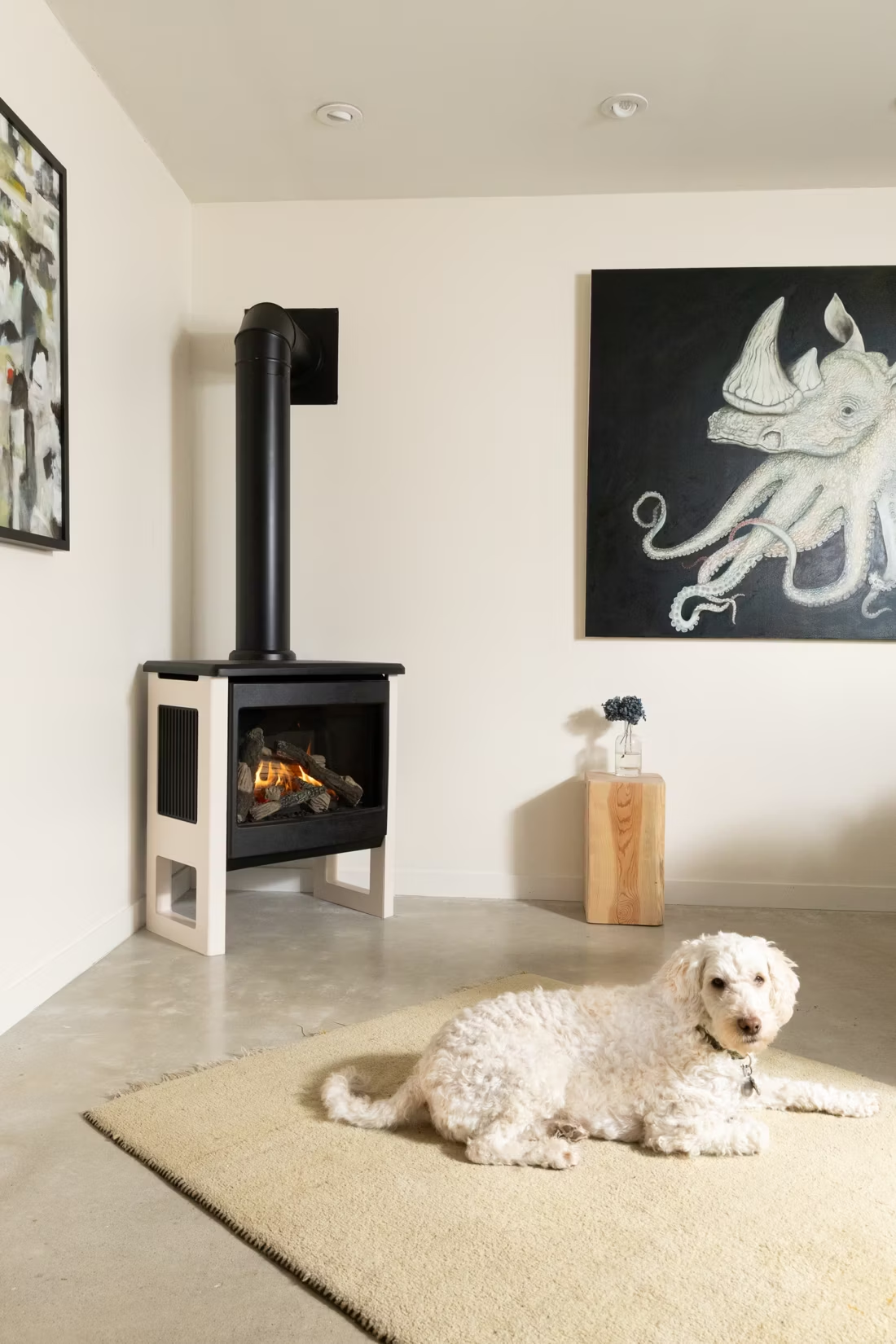
Four fuels. One honest answer for El Dorado County.
Three steps. No salesperson until you're ready.
Tell us about your project
Your zip code, your situation, and the fuel you're leaning toward—or let the answers point you to one.
See what's actually available
The brands dealers within 100 miles genuinely carry—real options, never a catalog mirage.
Get your dealer & Project Guide
A trusted local dealer, plus the free Project Guide & Parts List that names every component of the job.
Frequently Asked Questions
Which fuel works best in El Dorado County?
It depends heavily on where in the county you are. In the foothills around Placerville and El Dorado Hills, with a mild 34°F average winter low and 3,176 heating degree days, gas and pellet units cover most needs comfortably, and wood is often more about ambiance and self-sufficiency during PG&E outages than necessity. Up in the Tahoe basin, winters are far more demanding—wood stoves and pellet stoves with real BTU output matter more, and homeowners who split their own oak or Douglas fir from Eldorado National Forest permits keep fuel costs down through a long snow season. Gas works well anywhere propane or natural gas service reaches. Electric fireplaces are popular as supplemental heat and ambiance in both zones but aren't sized to be a primary heat source at Tahoe elevations.
Do I need a permit to install a fireplace in El Dorado County?
Yes, in nearly all cases. New wood stoves, wood inserts, gas fireplaces, gas inserts, gas stoves, and pellet stoves require a building permit, and gas installations need a separate gas line permit pulled by a licensed gas-fitter. Where you file depends on jurisdiction—within city limits of Placerville or South Lake Tahoe, permits go through the city; in unincorporated areas, they go through El Dorado County Building Services. Electric fireplaces are typically permit-exempt unless the installation involves new wiring or a hardwired built-in unit. Most established local retailers handle the permit paperwork as part of the installation quote, which is worth confirming up front given the county's non-attainment status for air quality.
Are there air quality restrictions on wood burning in El Dorado County?
Yes. El Dorado County falls within a non-attainment area for particulate matter, and the El Dorado County Air Quality Management District can issue mandatory no-burn days during winter stagnation events, particularly in the more populated western foothill areas. Wildfire smoke season adds a second layer of concern—during active fire smoke events, voluntary guidance often recommends limiting additional wood smoke on top of already poor air quality. New wood stove installations must meet current EPA 2020 NSPS emissions standards; older uncertified stoves generally can't be newly installed. Check current burn-day status before lighting a fire in winter, especially in the Placerville and Cameron Park areas where inversions are more common than up in the Tahoe basin.
Can one local hearth retailer handle all four fuel types?
Many El Dorado County retailers carry three or four fuel types, but elevation coverage varies more than fuel range. A Placerville-area dealer may carry wood, gas, pellet, and electric but rarely travel installs up to South Lake Tahoe, while a Tahoe-basin retailer may specialize heavily in wood and pellet—the two fuels that matter most for basin winters—with lighter gas and electric offerings. If you're near the county's midsection along Highway 50, in towns like Pollock Pines, you may have reasonable access to retailers on both ends. Ask any retailer directly about their service radius and elevation limits before assuming they'll install at your address.
How does service work for homes up near South Lake Tahoe versus the foothills?
Service logistics differ meaningfully by elevation. Foothill technicians based around Placerville or Cameron Park typically have shorter drive times and more flexible scheduling. Techs servicing the Tahoe basin often deal with seasonal road conditions, snow-chain requirements, and a compressed pre-winter scheduling window—booking chimney sweeps or pellet stove service in September or October, before the first heavy snow, is far easier than trying to get someone up Highway 50 in January. Expect a modest travel surcharge for basin service calls from foothill-based companies, and ask whether a technician is Tahoe-based or traveling in before booking during peak winter weeks.
What's the typical cost range for fireplace installation across all fuel types in El Dorado County?
Wood stove or insert installation: roughly $4,000–$8,500 for typical installs, higher for new chimney construction in mountain homes. Gas fireplace, insert, or stove: $4,000–$10,500 depending on whether gas line work is needed, with propane conversions on the higher end in areas without natural gas service. Pellet stove or insert: $4,000–$7,000 for most installs. Electric fireplace: $200–$3,000 for the unit itself, plus $400–$1,200 in labor for anything beyond a plug-and-play install. Tahoe-basin installs often run toward the higher end of each range due to snow-load venting requirements and elevation-related access costs—see the county + fuel pages above for retailer-specific pricing.
How much should I budget for a fireplace?
For an average home—covering the fireplace, the vent pipe, and basic installation—a budget between $3,900 and $5,500 gives you a lot of options across wood, gas, and pellet. By the time you add finish work, gas line, and electrical, the average complete installation lands between $5,000 and $12,000 all-in. In a remodel or new build, a good rule is to put about 2.5% of the total project cost toward the fireplace.
Can I install a fireplace myself?
If you're putting a fire in your house on purpose, it's best to work with an expert. Unless you're genuinely experienced in framing, gas line, vent pipe, and the national code on clearances to combustibles, have a professional do it—and ideally the same company that sells you the fireplace, so warranty, service, and liability all live under one roof.
Does a fireplace add value to my home?
On average, a fireplace adds back to the home about the same amount you spent installing it. Add the monthly savings from heating the rooms you actually use instead of the whole house—often hundreds of dollars a year—and the value case is strong before you even count what a fire does for how your family uses the room.
Can a fireplace actually lower my heating bill?
Yes—by creating a comfort zone. A furnace heats every square foot of the house just to warm the one room you're in; a gas fireplace on low burns roughly a sixth of the gas a typical furnace does. Set the furnace around 55–60 degrees as a baseline, then heat the rooms your family actually uses. Families who heat this way commonly save $20–$60 a month.
Stove and Fireplace Dealers in El Dorado County
Listings include WhyFire partner dealers, dealers we have verified as authorized for the brands we recommend, and established local businesses that carry hearth products. Every listing shows which one it is. The ones marked Preferred run on WhyFire's software, so they can show you real pricing and book your appointment right here. No manufacturer pays for placement. How we verify dealers →
Get matched with a local El Dorado County hearth dealer.
Pick your fuel below and we'll put together a free Project Guide & Parts List—the exact parts, including the vent kit, and a recommended local dealer for your elevation and your home.
Find Your Fireplace →