
Warm, reliable heat that isn't tied to the ferry schedule.
From Gibsons to Pender Harbour, FortisBC natural gas and local propane both keep a direct-vent fireplace running through the damp, windy stretches that define a Sunshine Coast winter. I'll match you with a trusted local dealer who knows which fuel line actually reaches your street and what a storm-related power outage means for your ignition system.
Every Project Starts From One of These Five Situations
Mild marine winters, still worth heating well.
The Sunshine Coast sits in climate zone 4C, with an average winter low around 3.6°C—a marine climate that rarely freezes hard, nothing like the months-long deep cold of Prince George or Fort McMurray. But mild doesn't mean comfortable: the region's heating season is long and damp, driven by onshore rain and wind off the Strait of Georgia rather than dry cold. Homes in Gibsons, Sechelt, Roberts Creek, Halfmoon Bay, and Pender Harbour lean on steady, low-grade heat for most of the year, which is exactly what a direct-vent gas fireplace is built to deliver—it runs quietly for hours without the tending a wood stove demands, in a region where Douglas fir stands still supply plenty of firewood for those who prefer it.
There's a geography quirk that matters here: the Sunshine Coast has no road connection to the Lower Mainland, so everything—gas fitters, propane trucks, replacement parts—arrives via the BC Ferries Langdale run or the Earls Cove-Saltery Bay crossing. FortisBC natural gas serves the Gibsons-Sechelt corridor, but Halfmoon Bay, Pender Harbour, and Egmont typically run on propane instead. Winter storms that cancel sailings can also delay a service call, which is a real reason local homeowners favor gas fireplaces with battery-backed ignition over standing-pilot units. Municipal building departments in Sechelt and Gibsons handle permitting, and any gas line work has to go through a licensed gas fitter—a trusted local dealer coordinates that as one job instead of leaving you to chase separate trades.
Three steps. No salesperson until you're ready.
Tell us about your project
Your postal code, your situation, and the fuel you're leaning toward—or let the answers point you to one.
See what's actually available
The brands dealers within 100 miles genuinely carry—real options, never a catalog mirage.
Get your dealer & Project Guide
A trusted local dealer, plus the free Project Guide & Parts List that names every component of the job.
Frequently Asked Questions
How much does a gas fireplace installation cost on the Sunshine Coast?
Installations here typically run $6,000 to $15,000 CAD. A direct-vent insert going into an existing masonry fireplace with a gas line already at that wall lands toward the lower end. A new build-in fireplace with fresh gas line and venting runs into the middle of the range, and homes in Pender Harbour, Egmont, or Halfmoon Bay that need a new propane tank set plus a longer line run, or freight for parts off the ferry, tend to land at the top. A local dealer will walk your space and give you a firm number rather than a phone estimate.
Can I convert my wood fireplace to gas?
Yes, and it's a common project in older Gibsons and Sechelt homes with an original masonry firebox. A direct-vent gas insert drops into the existing opening and vents through a liner run up your current chimney, so you keep the fireplace's look while gaining heat you can control from a thermostat. Homes already on the FortisBC line in the Gibsons-Sechelt corridor usually see lower costs than propane conversions further out toward Pender Harbour, where a new tank and longer line run add to the job.
Is natural gas available on the Sunshine Coast, or is it all propane?
Both, depending on where you are. FortisBC runs natural gas mains through the Gibsons-Sechelt corridor, covering most of the region's population. Head further along the coast toward Halfmoon Bay, Pender Harbour, Egmont, or out to the smaller waterfront communities, and there's no gas main—propane from a local supplier, delivered by truck off the ferry, is the standard fuel instead. Either fuel runs the same fireplace with the right orifice and regulator setup, so a dealer can spec the unit correctly once they know your address.
Will my gas fireplace still work if a storm knocks out power or cancels the ferry?
Most direct-vent gas fireplaces with intermittent pilot ignition carry a battery backup that takes over automatically when the power drops, so the unit still lights and runs on demand. Some models, like Valor's, generate their own electricity through the pilot assembly and skip the battery question entirely. That reliability matters on the Sunshine Coast, where winter windstorms off the Strait can take out power for a day or more and a cancelled Langdale sailing can delay a technician getting to you. Ask your local dealer which ignition system is on any model you're considering, and keep spare batteries on hand regardless.
Do I need a permit to install a gas fireplace here?
Yes. Whether you're in the Town of Gibsons, the District of Sechelt, or unincorporated Sunshine Coast Regional District land, a building permit and a gas permit are both required, and the gas line work has to be done by a licensed gas fitter. Going through a full-service local dealer means the permit, the gas work, and the inspection sign-off get handled as one coordinated job instead of several separate calls—useful in a region where scheduling trades around ferry sailings takes some planning.
Should I get a vented or vent-free gas fireplace on the Sunshine Coast?
Direct-vent is what most local dealers install, and for good reason: it draws combustion air from outside and exhausts it back outside, so it doesn't add moisture or byproducts to a home already dealing with a damp marine climate. Vent-free units are legal in BC under strict room-sizing rules, but in a region where humidity control matters as much as heat, direct-vent is the more common and more comfortable choice for most Gibsons and Sechelt homes.
What's the difference between a gas fireplace, insert, and stove?
A gas fireplace is a built-in unit framed into a wall during new construction or a remodel. A gas insert fits inside an existing masonry firebox and uses your current chimney as the vent path—the usual choice for older Sechelt or Gibsons homes upgrading from wood. A gas stove is a freestanding cabinet unit that sits on the floor, useful in a room with no existing chimney, including many of the region's waterfront cottages built without one. A local dealer can tell you which configuration actually fits your space during a walkthrough.
How often does a gas fireplace need servicing here?
Plan on an annual check, ideally before the wet season sets in around October. A technician inspects the burner, pilot assembly, gas connections, and venting, and cleans the glass. In coastal homes near Halfmoon Bay or Pender Harbour, salt-laden air can accelerate corrosion on exterior venting components, so it's worth flagging that to whoever services your unit. Expect a service call to run a modest fixed fee, separate from any parts replaced.
Gas vs. wood on the Sunshine Coast—which makes more sense?
Wood still has a real following here, especially in Pender Harbour and Egmont, where FrontCounter BC issues free cutting permits year-round (with summer fire restrictions) and Douglas fir is easy to come by. Wood heat also keeps working with no power at all, which matters during a storm-related outage. But wood appliances need CSA B365-compliant installation and usually a WETT inspection for insurance, plus regular chimney maintenance. Gas, by contrast, gives instant thermostat-controlled heat with none of that upkeep, and with battery-backed ignition it holds up almost as well through an outage. In a mild, damp climate like this one, many homeowners choose gas for daily comfort and keep a wood stove or fireplace as backup for the odd multi-day outage.
Can a gas fireplace run on a thermostat?
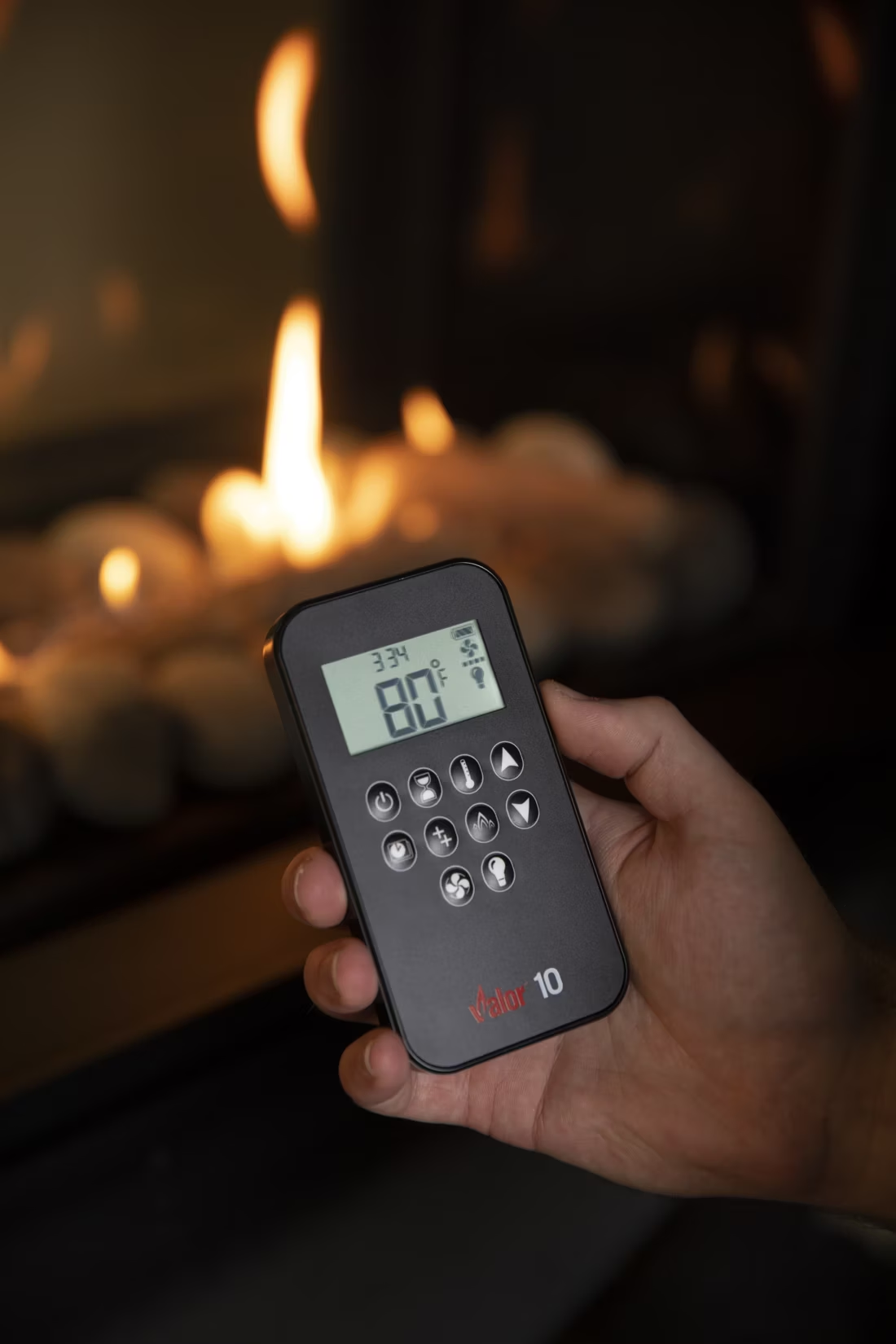
Most modern gas fireplaces can—turn it on and off from the couch with a remote, or set a room temperature and let the fireplace hold the comfort zone for you. If low maintenance matters to your family, this is the feature set that makes gas the convenience pick over wood and pellet.
Why do fireplace quotes vary so much?
Because a fireplace is an iceberg—there's more behind the wall than in front of it. A low quote often covers only the unit; the full scope includes vent pipe, gas line or electrical, framing, and the tile or stone that has to come off and go back on. Make every bidder price the whole job. If a dealer can't speak to the full scope with confidence, that's your signal to keep looking.
Why is my open fireplace making my house colder?
Open fireplaces suck—literally. As the fire burns, it consumes air your furnace already paid to heat and pulls it out through the chimney, so the house is actually colder after the fire goes out than before you lit it. An insert fixes this: it seals the chimney, puts fixed glass across the front, and turns that hole in your house into a real heat source.
Is my gas fireplace wasting gas?
If it was installed more than 15 years ago, probably. Older gas fireplaces keep a standing pilot light burning all the time, and that little flame can cost a couple hundred dollars a year. Newer models use pilot-on-demand ignition—the pilot lights only when you use the fireplace and goes out when you turn it off.
Stove and Fireplace Dealers in Sunshine Coast
Listings include WhyFire partner dealers, dealers we have verified as authorized for the brands we recommend, and established local businesses that carry hearth products. Every listing shows which one it is. The ones marked Preferred run on WhyFire's software, so they can show you real pricing and book your appointment right here. No manufacturer pays for placement. How we verify dealers →
Coastal Wood And Gas Guy Heating And Installations Ltd
Gibson’s Building Supplies
Delco Fireplaces (Vancouver Island) Ltd
Natural Gas Service in Sunshine Coast
Confirm service at your address before planning a gas fireplace—a quick call settles it.
FortisBC (Gas)
Pacific Northern Gas
Get your free Project Guide & Parts List for a gas fireplace on the Sunshine Coast.
Tell me about your home and where it sits along the coast, and I'll match you with a trusted local dealer serving Gibsons, Sechelt, or the Pender Harbour area, plus send a free Project Guide & Parts List—the exact equipment, vent kit, and fuel setup for your gas project, no big-box guesswork.
Find Your Fireplace →