
Ambiance that fits a Richmond strata unit.
With winter lows averaging just 0.9°C on the Fraser delta and thousands of homes in condo and townhome buildings, electric is the fireplace fuel that clears strata bylaws without a chimney or gas line. I'll match you with a local dealer who knows what's actually installable in your building.
Every Project Starts From One of These Five Situations
A mild delta climate where electric earns its keep.
Richmond sits at just 9 metres above sea level on the Fraser River delta, and its climate is among the gentlest in the country—average winter lows hover just under freezing at 0.9°C, a heating season measured in weeks of damp chill rather than the months of hard cold you'd get in Prince George or Winnipeg. That milder demand means a fireplace here doesn't need to carry the whole heating load; it needs to look good, come on instantly, and not fight a strata board over venting.
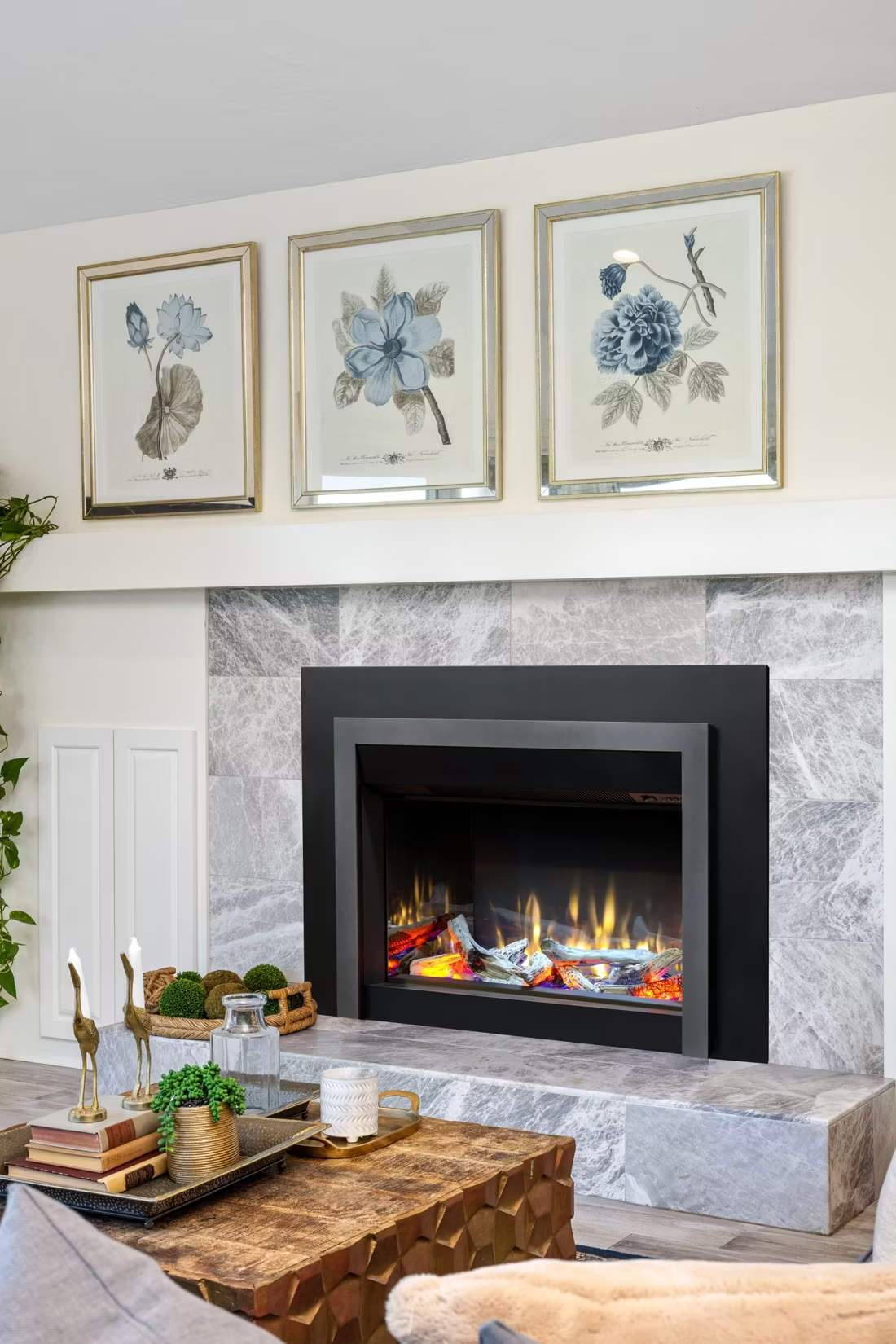
That last point matters more in Richmond than almost anywhere else in Metro Vancouver, given how much of the city's housing stock is mid- and high-rise condo and townhome, concentrated through City Centre, Steveston, and Bridgeport. Strata bylaws frequently restrict or flat-out prohibit solid-fuel appliances and can complicate new gas venting through shared walls, but electric units sidestep both issues since they need no chimney, no gas line, and no combustion air supply—just a standard outlet or a dedicated circuit. With BC Hydro and FortisBC (Electric) supplying power at a residential rate of $0.114/kWh, among the more moderate rates in the country thanks to BC's hydroelectric base, running one for ambiance or supplemental warmth is inexpensive by national standards.
Three steps. No salesperson until you're ready.
Tell us about your project
Your postal code, your situation, and the fuel you're leaning toward—or let the answers point you to one.
See what's actually available
The brands dealers within 100 miles genuinely carry—real options, never a catalog mirage.
Get your dealer & Project Guide
A trusted local dealer, plus the free Project Guide & Parts List that names every component of the job.
Frequently Asked Questions
How much does an electric fireplace installation cost in Richmond?
Most installs in Richmond run $500-$1,600 CAD. A plug-in insert or wall-mount unit that uses an existing outlet sits at the low end and can often go into a condo living room in an afternoon. A built-in electric fireplace framed into a wall or entertainment unit, which usually needs a licensed electrician to run a dedicated circuit, lands toward the top of that range. Either way, it's a fraction of the $6,000-$15,000 typical for a gas installation here, since there's no gas line or venting to run.
Are electric fireplaces allowed in Richmond condos and strata buildings?
Generally yes, and it's the main reason electric is so popular across Richmond's condo towers and townhome complexes. Most strata corporations restrict or prohibit solid-fuel appliances outright and can be cautious about new gas venting through shared walls or balconies, but electric units produce no combustion byproducts and need no exterior venting, so they typically clear strata rules without a special exemption. It's still worth a quick email to your strata council before you buy, since bylaws vary building to building, but electric is by far the least likely fuel to run into a wall of paperwork.
Do I need a permit to install an electric fireplace in Richmond?
A simple plug-in unit usually doesn't need a permit at all. A built-in electric fireplace that requires new wiring or a dedicated circuit typically needs an electrical permit, since that work has to be done by a licensed electrician and inspected under the BC Electrical Code. Larger structural changes, like framing a new wall niche, may also involve Richmond's municipal building department. A local dealer handling the installable parts list for your project will usually flag which permits apply before work starts.
What does it cost to run an electric fireplace with BC Hydro rates?
At Richmond's residential rate of roughly $0.114/kWh through BC Hydro or FortisBC (Electric), a typical 1,500-watt electric fireplace running a few hours an evening costs somewhere in the range of $5-$15 a month, depending on how often you run the heater function versus just the flame effect for ambiance. That's noticeably cheaper to operate than in provinces with higher residential rates, and it's one reason electric holds up well as a daily-use ambiance feature rather than an occasional-use luxury here.
Electric vs. gas fireplace—which makes more sense for a Richmond home?
Natural gas service through FortisBC (Gas) reaches most of Richmond, so gas is a real option, and it wins if you want a fireplace that can genuinely carry room heat during a cold snap or work through a power outage with a battery-backup ignition system. Electric wins on installed cost—$500-$1,600 versus $6,000-$15,000 for gas—and on flexibility, since it needs no gas line or venting and clears strata rules more easily. Given Richmond's mild 0.9°C average winter low, plenty of homeowners here run electric as their only fireplace and simply rely on their existing furnace or heat pump for the coldest nights.
Can an electric fireplace actually heat a Richmond living room, or is it just for looks?
Most electric fireplaces sold today include a real heating element, typically 1,200-1,500 watts, enough to comfortably supplement a single room in Richmond's mild climate, where winter lows rarely drop far below zero. It won't replace a central heating system in a larger house, but for a condo living room or a den where you want a bit of extra warmth on a damp January evening without running the whole system, it does the job. If you want flame with zero heat output for shoulder-season ambiance, most units let you run the LED flame independently of the heater.
Insert, wall-mount, or built-in—which type of electric fireplace fits my Richmond home?
An electric insert drops into an existing wood or gas firebox and is a common retrofit in Richmond's older single-family homes around Steveston and Blundell that already have a masonry surround. A wall-mount unit hangs like a flat-screen and suits condos and townhomes where floor space is tight and there's no existing fireplace opening. A built-in unit gets framed into new construction or a renovation and gives the cleanest, most custom look, but it's the option most likely to need an electrician for a dedicated circuit. A local dealer can walk your space and tell you which fits without demolition.
Do electric fireplaces need any maintenance in Richmond's damp climate?
Very little compared to wood or gas. There's no chimney to sweep, no gas lines to inspect, and no combustion byproducts to worry about—the main upkeep is dusting the unit and occasionally replacing an LED module after years of use. That said, Richmond's coastal humidity means it's worth keeping units away from damp exterior walls where condensation can form, and choosing a CSA-certified model ensures the electronics are built for reliable long-term use in a marine climate.
With Richmond's wood-stove rules, is electric the easier path than wood or pellet?
For a lot of Richmond households, yes. Wood stoves here need CSA/EPA-certified appliances, generally a WETT inspection for insurance purposes, and compliance with regional wood-stove exchange program rules tied to winter air quality concerns across Metro Vancouver's valleys. Pellet stoves ease some of that but still need venting and a fuel supply, with pellets from brands like Pinnacle Premium running $400-$575 a ton. Electric skips all of it—no certification inspection, no venting, no fuel deliveries—which is exactly why it dominates in Richmond's condo and townhome stock, even though houses with more room and a masonry chimney sometimes still prefer the ambiance of a real wood or gas flame.
How much does an electric fireplace cost to run?
With the heater on, a typical unit draws about 1,500 watts—at average electric rates that's roughly 20 cents an hour. Run the flame effect alone and it costs pennies; the flames are LED-driven and use about as much power as a light bulb. There's no pilot light, no fuel delivery, and essentially no maintenance.
What fireplace styles should I know before shopping?
Four cover most of the market: screen-front traditional (mesh front, open feel, fits craftsman homes), traditional door set (the classic look you grew up with), modern linear (wide, low, the statement piece for entertaining), and clean face contemporary (no trim—your tile or stone runs right to the fire's edge). Walk in knowing those four terms and you're ahead of most buyers.
Do electric fireplaces actually produce heat?
Yes—most put out around 4,800–5,000 BTUs from a standard outlet, which comfortably warms a bedroom, office, or den as a comfort-zone heater. What they won't do is carry a whole house the way wood, gas, or pellet can. Think of electric as ambiance-first with honest supplemental heat: flames on with no heat in July, flames plus warmth in January.
Does an electric fireplace need a vent or chimney?
No—that's its superpower. An electric fireplace needs a wall and an outlet, period. No vent pipe, no gas line, no clearances to design around, which is why it works in bedrooms, offices, apartments, and walls where venting a gas or wood unit would be impractical or impossible. Installation is typically the simplest and least expensive of any fireplace type.
Nearby Dealers
Hearth shops serving Richmond and the surrounding area. Every listing shows whether it is a WhyFire partner, a dealer we have verified as authorized for the brands we recommend, or a local business carrying hearth products. No manufacturer pays for placement. How we verify dealers →
The Fireplace Warehouse
Vancouver Gas Fireplaces
Home Makeover Centre
Real Fireplaces
Western Natural Gas
Evershine Fireplace Surrey
Gas Guys Outdoor Designs
Oray Fireplaces
Electric Service in Richmond
An electric fireplace's heater draws about 1,500 watts—pennies per hour at local rates.
Bc Hydro
FortisBC (Electric)
Get your free Project Guide & Parts List for a Richmond electric fireplace.
Tell me about your home or strata building and I'll match you with a local dealer and send a free Project Guide & Parts List—sized to your space, with the exact parts and any required electrical work spelled out.
Find Your Fireplace →