
Find your fireplace from Port Alberni to the outer coast.
Wood, gas, pellet, and electric fireplace resources for the whole regional district—from the Alberni Valley out to Tofino, Ucluelet, and Bamfield. Pick a fuel and get matched with a local dealer who actually helps with projects here.
Every Project Starts From One of These Five Situations
Mild marine winters, but a valley that holds onto its own smoke.
The Regional District of Alberni-Clayoquot runs from the head of the Alberni Inlet across the spine of Vancouver Island to the open Pacific at Tofino and Ucluelet, with roughly 25,300 people spread across Port Alberni, the outer coast, and rural pockets like Beaver Creek, Sproat Lake, and Bamfield. Winters here are mild by Canadian standards—an average low near -0.3°C puts this region closer to Victoria than to Prince George or Thunder Bay—but the marine air brings months of steady rain instead of deep cold. Wood-burning households here mix coastal Douglas fir and paper birch with lodgepole pine and western larch trucked over from interior mills, since neither of the latter two grows naturally on this side of the island.
Port Alberni sits at the bottom of a long inlet valley, and on still winter days that geography traps cold, damp air—and wood smoke—close to the ground, which is why the region has run wood-stove exchange programs and why new installs must be CSA or EPA-certified. Homeowners cutting their own firewood on Crown land work through FrontCounter BC and the BC Ministry of Forests for a permit; the installation itself gets inspected by the municipal building department under the CSA B365 code, and most insurers ask for a WETT inspection before they'll write a policy on a wood appliance. This hub rolls up hearth retailers, service technicians, and fuel suppliers across the whole regional district, from Port Alberni's built-up neighborhoods out to Ucluelet, Tofino, and the more remote communities along Bamfield Road. Pick your fuel below for local dealers, install costs, and unit recommendations specific to your town.
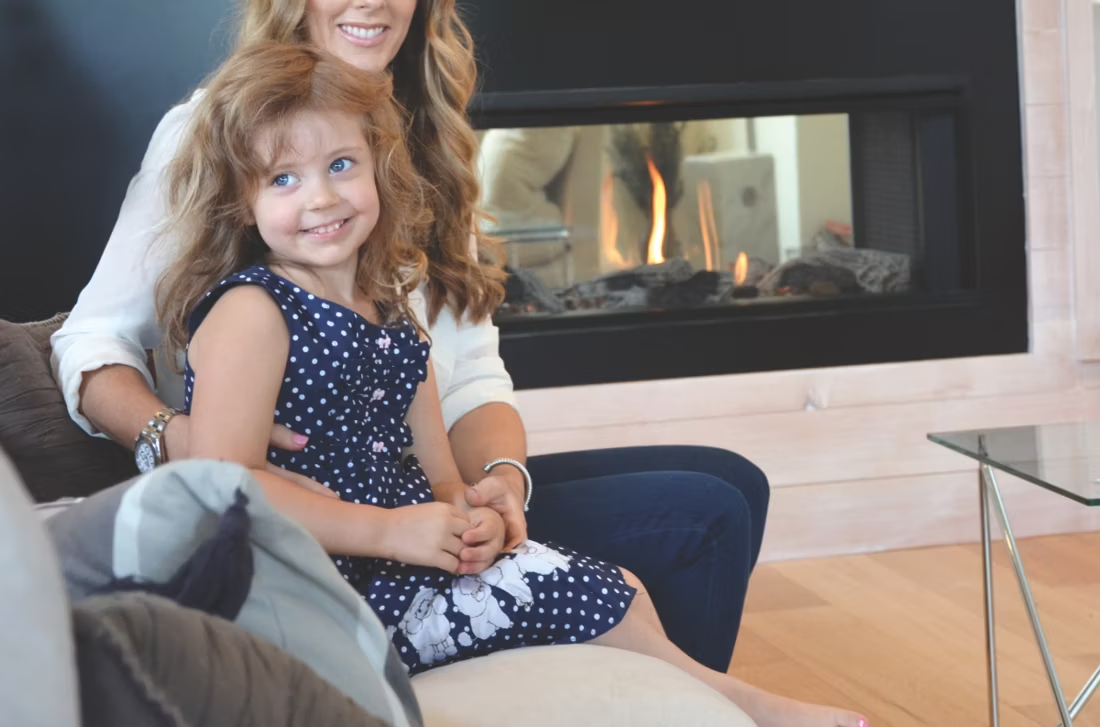
Four fuels. One honest answer for Regional District of Alberni-Clayoquot.
Wood
69 models available near Regional District of Alberni-Clayoquot.
Find your wood stove →Gas
111 models available near Regional District of Alberni-Clayoquot.
Find your gas fireplace →Pellet
See what's available near Regional District of Alberni-Clayoquot.
Find your pellet stove →Electric
See what's available near Regional District of Alberni-Clayoquot.
Find your electric fireplace →Three steps. No salesperson until you're ready.
Tell us about your project
Your postal code, your situation, and the fuel you're leaning toward—or let the answers point you to one.
See what's actually available
The brands dealers within 100 miles genuinely carry—real options, never a catalog mirage.
Get your dealer & Project Guide
A trusted local dealer, plus the free Project Guide & Parts List that names every component of the job.
Frequently Asked Questions
Which fireplace fuel makes the most sense in the Regional District of Alberni-Clayoquot?
It depends more on where you sit in the region than on the season. Port Alberni has FortisBC natural gas service, so a gas insert or fireplace is a straightforward retrofit for most valley homes. Out on the coast, Tofino and Ucluelet largely run on propane or electricity, and wood stoves stay popular there because winter power outages during Pacific storms are common enough that homeowners want a heat source that doesn't depend on the grid. Wood also makes sense given how well seasoned Douglas fir and paper birch are available locally, though the wet climate means seasoning takes real planning. Electric units work anywhere and are a common supplemental choice in Tofino's rental and vacation properties, where a plug-in unit is simpler to manage than venting.
Do I need a permit to install a wood stove or fireplace here?
Yes. New wood stoves and inserts are installed to the CSA B365 code and inspected through the municipal building department, whether that's the City of Port Alberni or the applicable district office for Ucluelet, Tofino, or the rural electoral areas. Gas installs need a licensed gas fitter and a separate gas permit. If you're cutting your own firewood on Crown land rather than buying it, you'll need a permit from FrontCounter BC and the BC Ministry of Forests. And if you're insuring a wood appliance, plan on a WETT inspection—most BC insurers require one before they'll write or renew a homeowner's policy that includes a wood stove or fireplace. Retailers we match homeowners with typically handle the building permit paperwork as part of the install.
What's this about wood-stove exchange programs and smoke advisories in Port Alberni?
Port Alberni sits at the base of a long inlet valley, and on calm winter days that bowl-shaped geography traps cold air—and wood smoke—near the ground, the same inversion pattern that produces occasional smoke advisories in interior BC valleys. The region has run wood-stove exchange programs to help homeowners swap older, uncertified stoves for CSA or EPA-certified units, which burn cleaner and produce a fraction of the particulate. If you're buying a new wood appliance today, certification isn't optional—it's required for permitting—so this mostly affects homes with an older stove still in service. A local retailer can tell you whether your current unit qualifies for a swap program or rebate.
What does a fireplace installation typically cost in the region?
Costs shift with the fuel and how much venting or gas-line work is involved. Wood stove or insert installs generally run $4,000-$8,500 CAD, with full masonry chimney work for new construction pushing past $10,000. Gas fireplaces and inserts run roughly $4,500-$10,000 CAD depending on whether a gas line needs to be extended to reach the hearth, which is more common on the outer coast where existing gas infrastructure is thinner. Pellet stove or insert installs typically land at $4,000-$7,500 CAD. Electric fireplaces are the exception—$200-$2,500 CAD for the unit, plus $400-$1,200 CAD in labor unless it's a simple plug-and-play placement. The region and fuel pages above break these numbers down further by local retailer.
How does service work if I'm in Tofino, Ucluelet, or Bamfield instead of Port Alberni?
Most retailers and service techs are based in Port Alberni and travel out along Highway 4 to the coast, so expect a trip fee for calls to Tofino, Ucluelet, or Bamfield, and expect longer lead times during Tofino's busy tourist season when rental-property owners are also booking maintenance. Pacific storm season, roughly October through February, brings heavy rain and occasional road closures on Highway 4, which can delay a return visit if a part needs ordering. Booking your annual chimney sweep or gas inspection in late summer, before storm season and before the coastal rental rush, is the easiest way to avoid a scheduling squeeze.
What wood should I burn, and how do I keep it dry in such a wet climate?
Douglas fir and paper birch are the two species most local households burn, both available through regional firewood dealers, while lodgepole pine and western larch are usually trucked in from interior mills for households that prefer them. The real challenge on this side of the island isn't finding wood—it's seasoning it. Steady coastal rain and high humidity mean uncovered firewood can stay damp far longer than it would in a drier interior climate, so a covered woodshed with airflow on at least two sides matters more here than in most of BC. A moisture meter reading under 20 percent before you burn is worth the five-dollar investment; wet wood is the single biggest cause of poor draft and creosote buildup that leads to a failed WETT inspection.
How many BTUs do I need in a fireplace?
Wrong question—and the industry's favorite way to confuse you. More BTUs isn't better if the fireplace cooks you out of the room you spent thousands to enjoy. Think in terms you can verify: how many square feet the unit heats, whether it's primary or backup heat, and whether you want it running overnight. Those three answers size a fireplace correctly every time.
Will we actually use a fireplace once we have one?
In my own home, the room with the fireplace has never been the same—it became the social hub. Game nights, holidays, date nights after the kids are down: the fire is where the house gathers. There's a reason people in this industry joke that we're really in the romance and entertainment business. You won't wonder whether you'll use it; you'll wonder how the room worked before.
Why is my open fireplace making my house colder?
Open fireplaces suck—literally. As the fire burns, it consumes air your furnace already paid to heat and pulls it out through the chimney, so the house is actually colder after the fire goes out than before you lit it. An insert fixes this: it seals the chimney, puts fixed glass across the front, and turns that hole in your house into a real heat source.
Wood, gas, pellet, or electric—how do I choose?
Match the fuel to your life, not the other way around. Wood: lowest fuel cost and total power-outage independence, but you're hauling and stacking. Gas: press a button, set a thermostat, no maintenance to speak of. Pellet: wood economics with automatic feeding, in exchange for weekly cleaning and a need for electricity. Electric: plugs in anywhere with honest supplemental heat. Nobody regrets the fuel that fits how they actually live.
Stove and Fireplace Dealers in Regional District of Alberni-Clayoquot
Listings include WhyFire partner dealers, dealers we have verified as authorized for the brands we recommend, and established local businesses that carry hearth products. Every listing shows which one it is. The ones marked Preferred run on WhyFire's software, so they can show you real pricing and book your appointment right here. No manufacturer pays for placement. How we verify dealers →
Windsor Plywood
Long Beach Plumbing & Heating Ltd
Bamfield Pro Hardware & Builders Supply
Long Beach Plumbing & Heating
Get matched with a local Alberni-Clayoquot dealer.
Pick your fuel below and we'll put together a free Project Guide & Parts List—the right unit, the vent kit it needs, and the local dealer we recommend for your project.
Find Your Fireplace →