
Built for winter inversions in the Okanagan Valley.
Penticton's winters are mild by Canadian standards, averaging around -3°C, but the valley between Okanagan and Skaha lakes traps smoke on still days. A certified pellet appliance gives you real heat without adding to the problem. I'll match you with a trusted local dealer who knows what's installable on your street.
Every Project Starts From One of These Five Situations
A cleaner burn for a valley that holds its smoke.
At 357 metres between two lakes, Penticton sits in a bowl that behaves nothing like Winnipeg or Edmonton in January. Winter lows average around -3°C and the heating season here is comparatively short and mild. But that same valley geography works against air quality: cold, still nights trap smoke close to the ground, and the Regional District of Okanagan-Similkameen sees enough winter inversions and smoke advisories that several nearby regional districts run wood-stove exchange programs and require CSA or EPA-certified appliances before they'll let you burn.
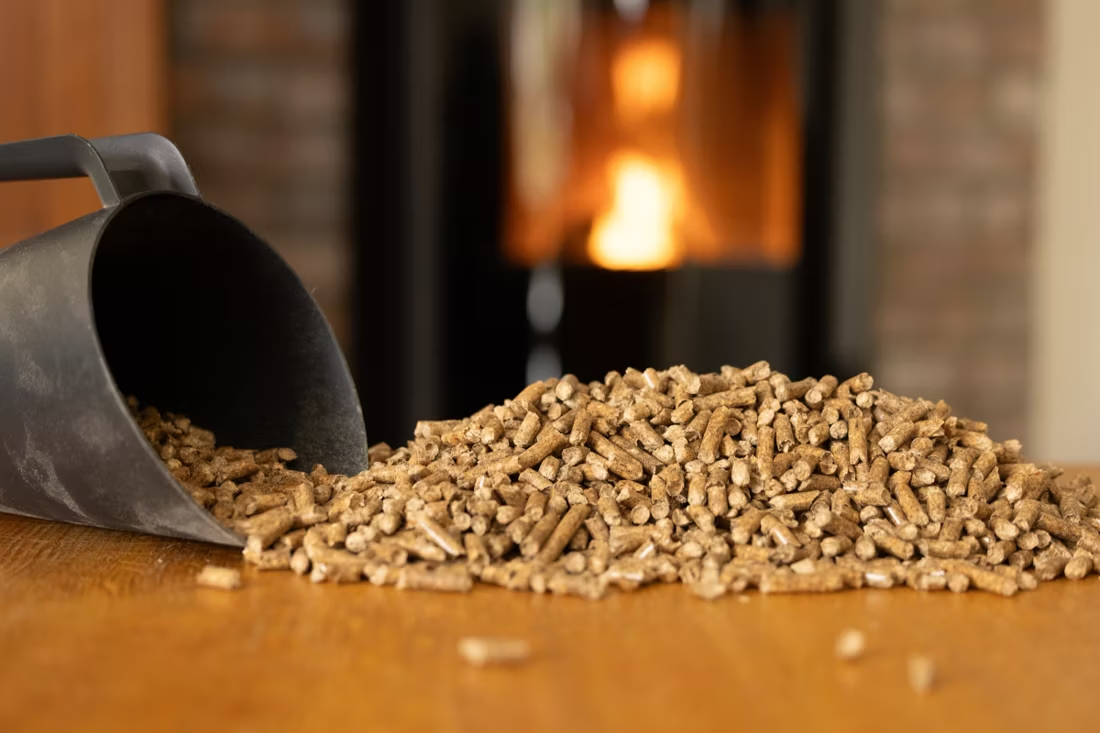
Pellet appliances are built for exactly that situation. They burn compressed fuel—often Pinnacle Premium or Princeton Fuel Pellets, the latter milled about an hour away in Princeton—at a controlled rate that produces a fraction of the particulate of an open wood fire, which is why they're frequently the appliance of choice for homeowners upgrading out of an old uncertified wood stove. With FortisBC (Gas) and Pacific Northern Gas both serving the area, natural gas is an easy option too, but a lot of Penticton households want the visible flame and radiant feel of a wood-style appliance without the smoke-advisory headache, and that's the gap pellet fills.
Three steps. No salesperson until you're ready.
Tell us about your project
Your postal code, your situation, and the fuel you're leaning toward—or let the answers point you to one.
See what's actually available
The brands dealers within 100 miles genuinely carry—real options, never a catalog mirage.
Get your dealer & Project Guide
A trusted local dealer, plus the free Project Guide & Parts List that names every component of the job.
Frequently Asked Questions
How much does a pellet stove installation cost in Penticton?
Most pellet installs here run $6,000 to $10,000 CAD. A freestanding stove venting through an existing exterior wall near the intended location sits toward the lower end, while a pellet insert going into an existing masonry firebox, or a install requiring a longer horizontal vent run to clear a covered deck or overhang common on Naramata Bench and Skaha Lake properties, pushes toward the top. Your municipal building department permit and CSA B365-compliant installation are typically folded into a dealer's quote rather than billed separately.
What size pellet stove do I need for a Penticton home?
Because winter lows here average only around -3°C, oversizing is the more common mistake in Penticton than it is in colder interior towns like Kamloops or Prince George. A stove rated for 1,000 to 1,500 square feet handles most bungalows and townhomes near downtown or Skaha Lake comfortably as a primary heat source, while larger great-room layouts common in newer Naramata or Wiltse builds may want a mid-size unit closer to 2,000 square feet of rated coverage. A local dealer will size against your actual layout and window exposure rather than square footage alone.
Do I need a permit to install a pellet stove in Penticton?
Yes. New installs go through the municipal building department, and the installation itself has to follow the CSA B365 code that governs solid-fuel appliance venting and clearances in Canada. Most insurance providers in the Okanagan will also ask for a WETT inspection before they'll cover a pellet or wood appliance, even though pellet stoves are mechanically simpler than a wood stove. A dealer who installs regularly in Penticton will usually have both the permit paperwork and the WETT inspection built into their process.
Why do pellet stoves make sense in a valley prone to smoke advisories?
Penticton sits in a bowl between the Okanagan and Skaha lakes, and on cold, calm nights that geography holds smoke at ground level instead of letting it disperse—the same pattern that shows up in Kelowna and Kamloops. Pellet appliances burn a manufactured, low-moisture fuel at a metered rate, producing far less particulate than an open wood fire, which is part of why regional wood-stove exchange programs in the Okanagan-Similkameen area often point homeowners toward certified pellet units when they're retiring an old uncertified wood stove.
Where does pellet fuel come from, and what does it cost in Penticton?
Pinnacle Premium and Princeton Fuel Pellets are the two brands most Penticton dealers stock, with Princeton Fuel Pellets milled just up the highway in Princeton. Expect to pay roughly $400-$575 CAD a ton depending on season and supplier, and plan storage for a dry, covered space—a garage or carport works, since pellets that pick up moisture won't feed properly through the auger. A typical Okanagan winter runs 2 to 4 tons for a home using a pellet stove as primary heat.
How much maintenance does a pellet stove need?
Plan on daily ash removal from the burn pot, a weekly hopper and glass cleaning, and a full professional service once a year—ideally in late summer before burning season starts, since Okanagan installers get busy fast once the first cool nights hit in September. The service covers the auger, exhaust blower, and gaskets, which matters because a pellet stove has more moving mechanical parts than a wood stove and a neglected auger motor is the most common service call.
Will a pellet stove work if the power goes out?
Not without help. Pellet stoves rely on an electric auger to feed fuel and a blower to circulate heat, so a BC Hydro or FortisBC (Electric) outage will shut one down unless it's paired with a battery backup or small inverter generator, which some Penticton dealers can spec as part of the install. If outage resilience during interior wind and snow events is a priority for you, that's worth raising up front—it's a real tradeoff against a wood stove, which keeps running with no power at all.
Pellet vs. natural gas—which makes more sense in Penticton?
With FortisBC (Gas) and Pacific Northern Gas both serving the area, natural gas is a realistic option for most Penticton addresses, and a gas fireplace fires instantly with no fuel to haul or store. Pellet stoves cost more to feed—$400-$575 a ton adds up over a winter—but they give you the look and radiant heat of a real fire along with the lower emissions that matter during valley smoke advisories, which a sealed gas unit doesn't need to worry about in the first place. Households wanting authentic flame with a cleaner burn tend to land on pellet; households prioritizing pure convenience tend to land on gas.
Are there rebates for switching to a pellet stove in Penticton?
CleanBC has run efficiency incentives touching wood and pellet heating upgrades, and regional wood-stove exchange programs active across the Okanagan-Similkameen area periodically offer rebates for retiring an old uncertified wood stove in favour of a certified pellet or EPA-rated appliance—worth checking before you buy, since funding cycles change year to year. A local dealer who handles Penticton installs regularly will usually know what's currently funded and can walk you through the paperwork alongside your building permit.
Why do fireplace quotes vary so much?
Because a fireplace is an iceberg—there's more behind the wall than in front of it. A low quote often covers only the unit; the full scope includes vent pipe, gas line or electrical, framing, and the tile or stone that has to come off and go back on. Make every bidder price the whole job. If a dealer can't speak to the full scope with confidence, that's your signal to keep looking.
Is it worth replacing an old fireplace that still sort of works?
Ask three questions: Is it ugly? Is it drafty? Does it actually work? Most old fireplaces fail at least two. Beyond looks, an old unit leaks air around the damper year-round and—if it's gas with a standing pilot—quietly burns a couple hundred dollars a year. A modern replacement seals the wall, heats the room, and changes how the whole space gets used.
How often does a pellet stove need cleaning?
A clean pellet stove is a happy pellet stove. Plan on cleaning the burn pot about once a week when you're burning regularly—ash and clinkers gum up the air holes just like a pellet barbecue. Most pellet stove problems trace back to skipped cleaning that nobody explained up front. Some designs make it easy with a trapdoor burn pot: pull a lever and the gunk drops into the ash pan.
Why is a fireplace insert so efficient?
An insert does two things: it seals the chimney completely, so you stop losing air you already paid to heat, and it radiates warmth into the room through the firebox and glass. Most add a heat-exchange fan that pulls cool room air underneath, wraps it around the hot firebox, and pushes it back out warm. Your home is more efficient before you've even lit the first fire.
Nearby Dealers
Hearth shops serving Penticton and the surrounding area. Every listing shows whether it is a WhyFire partner, a dealer we have verified as authorized for the brands we recommend, or a local business carrying hearth products. No manufacturer pays for placement. How we verify dealers →
Penticton Home Hardware Bldg Ctr
Sarsons Mechanical Services
Keremeos Building Supplies
Osoyoos Home Building Centre
Action Plumbing & Heating
Pellet Brands Stocked Around Penticton
Typical price runs $400-$575 per ton—buy early-season for the best rates. Manufacturers will point you to the nearest stocking dealer.
Pinnacle Premium
Princeton Fuel Pellets
Get your free Project Guide & Parts List for a Penticton pellet project.
Tell me about your home and whether you're weighing pellet against gas or wood, and I'll match you with a trusted local dealer and send a free Project Guide & Parts List with the exact vent kit and parts your project needs.
Find Your Fireplace →