
Ambiance and heat that suit the South Okanagan's easy winters.
With winter lows averaging just -3.4°C and BC Hydro power running about 11.4 cents per kWh, Oliver homes can add real warmth and a real flame look for as little as $500 to $1,600 installed. I'll match you with a trusted local dealer who knows what actually fits your wall, your panel, and your budget.
Every Project Starts From One of These Five Situations
A climate that doesn't demand a cordwood stack to get through January.
Oliver sits at 309 metres in the South Okanagan, and at -3.4°C average winter lows, it's a genuinely mild pocket of BC's interior compared to places like Prince George or Kamloops, let alone the deep-cold winters of Winnipeg or Edmonton. Plenty of Oliver households still burn Douglas fir, paper birch, lodgepole pine, or western larch for the look and the backup heat, but the valley's smoke advisories and periodic winter inversions mean a lot of homeowners are looking for a cleaner, simpler option, especially in condos, townhomes, and secondary living spaces where running a chimney was never practical to begin with.
Electric is where that need lands most often. BC Hydro and FortisBC (Electric) both serve the area, and at roughly 11.4 cents a kWh, running a supplemental electric unit for a few hours a night costs a fraction of what a full furnace cycle does. Install costs typically run $500 to $1,600—a plug-in insert needs nothing more than an outlet, while a wired-in built-in unit usually calls for a dedicated circuit and a licensed electrician. Either way, there's no chimney, no WETT inspection, and no cutting permit to think about, which is a real advantage over the $6,000-$12,000 typical for a wood install in this area.
Three steps. No salesperson until you're ready.
Tell us about your project
Your postal code, your situation, and the fuel you're leaning toward—or let the answers point you to one.
See what's actually available
The brands dealers within 100 miles genuinely carry—real options, never a catalog mirage.
Get your dealer & Project Guide
A trusted local dealer, plus the free Project Guide & Parts List that names every component of the job.
Frequently Asked Questions
How much does an electric fireplace installation cost in Oliver?
Most electric fireplace projects here land between $500 and $1,600. A plug-in insert or wall-mounted unit that runs off a standard household outlet sits at the low end and is often a same-day project. A hardwired built-in—common when homeowners want the unit flush into a wall in a newer Oliver townhome or a vineyard-view remodel—needs a dedicated circuit and licensed electrical work, which pushes the cost toward the top of that range. Either way it's a fraction of the $6,000-$12,000 a wood installation runs, since there's no chimney or venting involved.
Do I need a permit to install an electric fireplace in Oliver?
A simple plug-in unit generally doesn't require a permit since it's treated like any other appliance. A hardwired built-in unit tied into a new circuit typically does need an electrical permit through the municipal building department, and your electrician usually pulls that as part of the job. It's worth confirming with whoever you hire, since requirements can vary slightly depending on whether the unit is a straightforward retrofit or part of a larger renovation.
How much does it cost to run an electric fireplace in Oliver?
At BC Hydro's residential rate of about 11.4 cents per kWh, a typical 1,500-watt electric fireplace running on high costs roughly 17 cents an hour, or about $1.50 for an evening of use. Most homeowners run theirs on the heat-free ambiance setting some nights and the heater setting on colder ones, so actual monthly cost depends heavily on habits—but compared to firing up a furnace, it's a low-cost way to take the chill off a single room without touching the thermostat for the whole house.
Is electric heat enough for an Oliver winter, or do I need something with more output?
Oliver's winter lows average -3.4°C, which is mild by BC interior standards, so an electric unit works well as the primary heat source in a smaller room or as a supplement to an existing furnace or heat pump elsewhere in the house. Where electric falls short is as a whole-home backup during a power outage—since it needs electricity to run at all, it won't help if a winter windstorm knocks out BC Hydro service. Some households here keep a wood stove or insert, often burning Douglas fir or western larch, specifically for that scenario, and add electric for the rooms where daily convenience matters more than outage resilience.
Electric vs. gas—which makes more sense for my Oliver home?
Gas is available through FortisBC (Gas) across much of Oliver, and a gas fireplace installation typically runs $6,000-$15,000 with real heat output that can carry a room through a cold snap. Electric installs at $500-$1,600 with no gas line, no venting, and far less disruption, but it produces less usable heat and works best as a supplemental or ambiance-focused choice rather than a primary heat source. For a den, a bedroom, or a secondary living space, electric is usually the more sensible upgrade; for a great room you're heating daily through the season, gas often earns its higher cost.
What's the best electric fireplace option for a condo or townhome in Oliver?
Wall-mounted electric fireplaces and slim linear inserts are popular in Oliver's newer townhome and condo developments because they need no venting, no gas line, and no structural chimney chase—just a wall and, for hardwired models, access to a circuit. That makes them one of the only fireplace options that's realistic in a strata unit where altering the exterior wall or roofline usually isn't allowed. A local dealer can tell you which models fit your unit's electrical panel capacity before you commit to a hardwired install.
Do smoke advisories or burn restrictions in the Okanagan affect electric fireplaces?
No, and that's part of why electric has grown more popular locally. The South Okanagan sees winter inversions and wildfire-season smoke advisories that can trigger burn restrictions on wood appliances, and several regional districts run wood-stove exchange programs pushing older uncertified stoves out of service. An electric fireplace produces no smoke or particulate at all, so it keeps running exactly the same whether there's a smoke advisory in effect or not—a real advantage if you want reliable ambiance without watching the air quality index.
What size electric fireplace do I need for my Oliver home?
Most electric units are rated for supplemental heating in the 300-400 square foot range rather than whole-home heating, so sizing is more about the room than the house. A 30 to 40-inch wall-mount or insert comfortably heats a standard living room or bedroom, while larger linear units are chosen more for visual impact across a great room than for raw heat output. Since Oliver's winters are mild enough that most homes already have adequate primary heat from a furnace or heat pump, the electric fireplace is usually sized for the room and the look, not for carrying the house through the cold season.
What happens to my electric fireplace during a BC Hydro power outage?
It simply won't run, since electric units draw directly from household power with no battery backup. Outages aren't common in Oliver compared to more storm-exposed parts of the province, but winter windstorms do occasionally knock out BC Hydro service in the South Okanagan. If backup heat during an outage matters to you, a wood stove burning local Douglas fir or lodgepole pine, or a battery-capable pellet unit, is worth considering alongside your electric fireplace rather than instead of it—most homeowners here use electric for daily convenience and keep a separate fuel source for true backup.
How much does an electric fireplace cost to run?
With the heater on, a typical unit draws about 1,500 watts—at average electric rates that's roughly 20 cents an hour. Run the flame effect alone and it costs pennies; the flames are LED-driven and use about as much power as a light bulb. There's no pilot light, no fuel delivery, and essentially no maintenance.
What fireplace styles should I know before shopping?
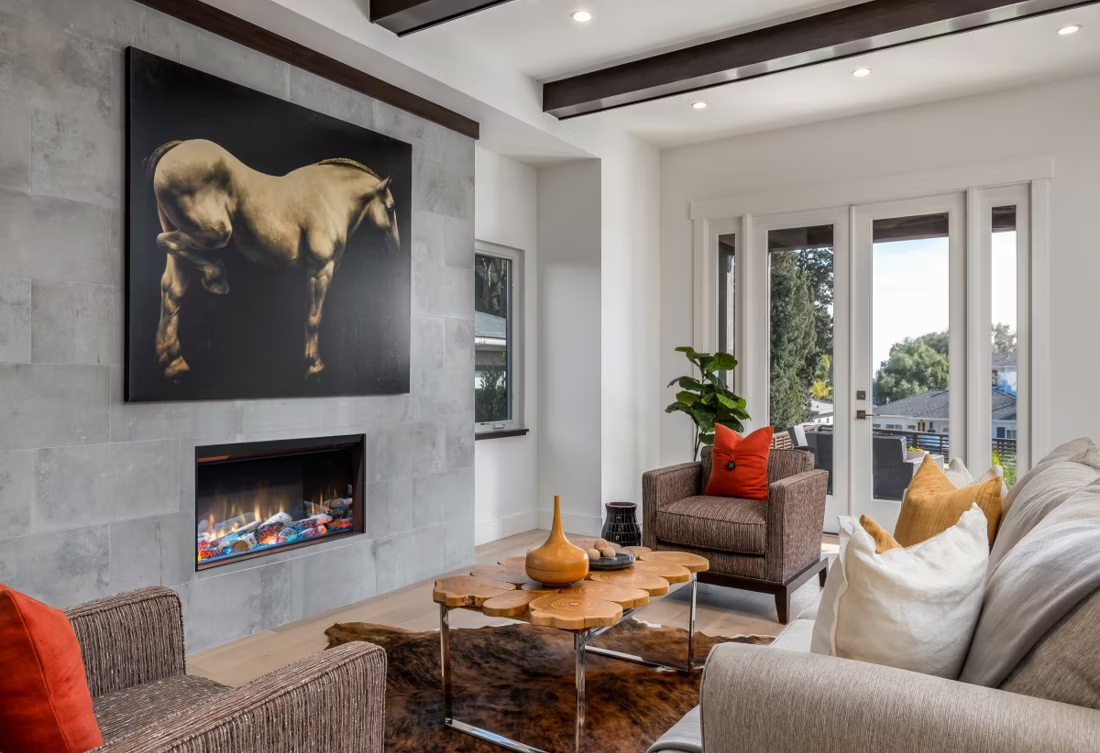
Four cover most of the market: screen-front traditional (mesh front, open feel, fits craftsman homes), traditional door set (the classic look you grew up with), modern linear (wide, low, the statement piece for entertaining), and clean face contemporary (no trim—your tile or stone runs right to the fire's edge). Walk in knowing those four terms and you're ahead of most buyers.
Do electric fireplaces actually produce heat?
Yes—most put out around 4,800–5,000 BTUs from a standard outlet, which comfortably warms a bedroom, office, or den as a comfort-zone heater. What they won't do is carry a whole house the way wood, gas, or pellet can. Think of electric as ambiance-first with honest supplemental heat: flames on with no heat in July, flames plus warmth in January.
Does an electric fireplace need a vent or chimney?
No—that's its superpower. An electric fireplace needs a wall and an outlet, period. No vent pipe, no gas line, no clearances to design around, which is why it works in bedrooms, offices, apartments, and walls where venting a gas or wood unit would be impractical or impossible. Installation is typically the simplest and least expensive of any fireplace type.
Nearby Dealers
Hearth shops serving Oliver and the surrounding area. Every listing shows whether it is a WhyFire partner, a dealer we have verified as authorized for the brands we recommend, or a local business carrying hearth products. No manufacturer pays for placement. How we verify dealers →
Osoyoos Home Building Centre
Sarsons Mechanical Services
Action Plumbing & Heating
Keremeos Building Supplies
Penticton Home Hardware Bldg Ctr
Electric Service in Oliver
An electric fireplace's heater draws about 1,500 watts—pennies per hour at local rates.
Bc Hydro
FortisBC (Electric)
Get your free Project Guide & Parts List for an Oliver electric fireplace.
Tell me about your home, your wall, and whether you're after a simple plug-in unit or a hardwired built-in, and I'll match you with a trusted local dealer and send a free Project Guide & Parts List with the exact parts your project needs.
Find Your Fireplace →