
On-demand heat for a valley that rarely sees a hard freeze.
North Cowichan sits at 145 metres in the Cowichan Valley, where winter lows average just 2°C. I'll match you with a trusted local dealer who knows the FortisBC service area, the venting rules, and what's actually installable on your street.
Every Project Starts From One of These Five Situations
Convenience beats cold in a marine climate like this one.
North Cowichan and the surrounding Cowichan Valley sit in climate zone 4C, a mild marine pocket of Vancouver Island where winter lows average around 2°C and a true hard freeze is the exception, not the rule. That's a different world from the interior of the province—Prince George regularly sees months of nights well below freezing—and it means a fireplace here is rarely asked to be the sole heat source for a home. What it is asked to do is take the edge off a damp, grey stretch fast, without the split-and-stack cycle that wood demands.
The Cowichan Valley is also known for winter temperature inversions that trap wood smoke in low-lying areas, which is why the regional district runs wood-stove exchange programs and requires CSA or EPA-certified appliances for new wood installs. Gas sidesteps that entirely—FortisBC (Gas) serves most of North Cowichan and the broader Duncan-Cowichan corridor, with Pacific Northern Gas serving other parts of the province. A direct-vent gas fireplace or insert lights instantly, adds nothing to an inversion advisory, and—with the right ignition system—keeps working through the windstorm-driven BC Hydro outages that hit Vancouver Island most winters.
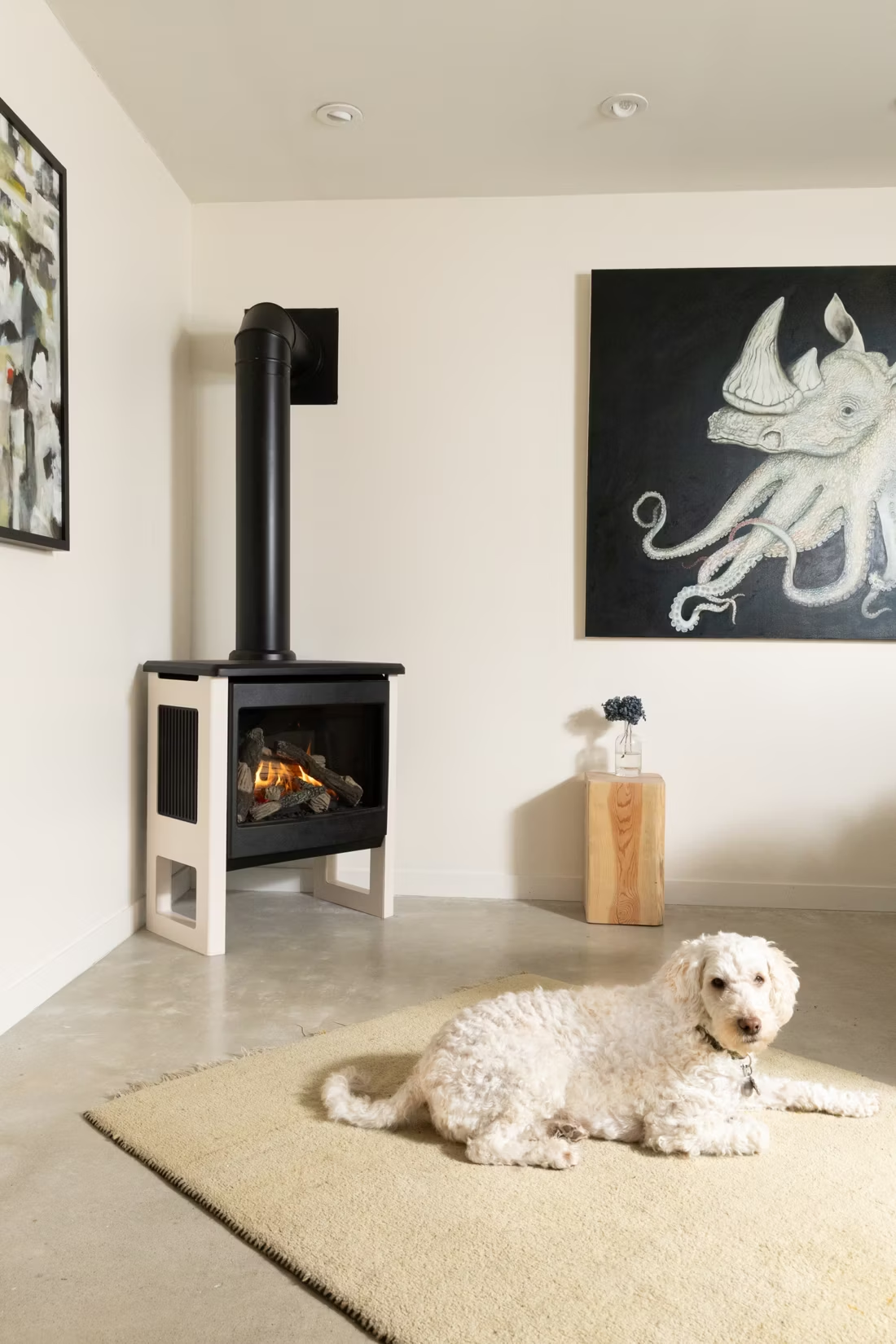
Three steps. No salesperson until you're ready.
Tell us about your project
Your postal code, your situation, and the fuel you're leaning toward—or let the answers point you to one.
See what's actually available
The brands dealers within 100 miles genuinely carry—real options, never a catalog mirage.
Get your dealer & Project Guide
A trusted local dealer, plus the free Project Guide & Parts List that names every component of the job.
Frequently Asked Questions
How much does a gas fireplace installation cost in North Cowichan?
Most installs here run $6,000 to $15,000 CAD. A direct-vent insert dropping into an existing masonry firebox—common in the older character homes around Chemainus and Crofton—sits toward the low end, especially if a gas line is already nearby. A new built-in unit for a renovation or addition, with fresh gas line runs and venting through a wall or roof, lands toward the top of that range. Properties on the rural edges of the Cowichan Valley that need a propane tank set instead of a FortisBC hookup should budget extra for the tank and line.
Can I convert my existing wood fireplace to gas?
Yes, and it's a common upgrade in the older Douglas fir-framed homes scattered through North Cowichan and Duncan. A gas insert typically slides into the existing masonry firebox with a stainless liner run through the current chimney, usually landing in the $6,000-$12,000 range depending on whether you're on FortisBC natural gas or propane. Switching also means you're no longer on the hook for a WETT inspection at resale or renewal—insurers ask for those on wood appliances, not gas—which simplifies things for a lot of sellers.
Do I need natural gas service, or is propane the fallback here?
FortisBC (Gas) serves most of North Cowichan and the Duncan corridor, so if your street already has gas for a furnace or water heater, tying in a fireplace is usually straightforward. Homes on the rural fringes of the Cowichan Valley—up toward Mount Sicker or out past Maple Bay—are more likely to be outside the distribution network and run on propane instead. Pacific Northern Gas serves other parts of the province, not this stretch of the Island, so if you're unsure which utility reaches your address, that's one of the first things a local dealer checks before quoting anything.
Will a gas fireplace keep working during a power outage?
Most models will, and that matters on Vancouver Island—the windstorms that roll through the Cowichan Valley most winters are a bigger threat to your heat than the cold itself, and BC Hydro outages after a bad blow can stretch for a day or more. Units with intermittent pilot ignition (IPI) run their control board on AA battery backup that kicks in automatically. Valor fireplaces skip the battery altogether since their pilot's thermocouple generates its own current. If storm resilience matters to you, ask your dealer which ignition system is on any model you're considering—it's a real difference here, not a minor spec.
What's the difference between a gas fireplace, insert, and stove?
A gas fireplace is a built-in unit framed into a wall, which is typical in newer construction around North Cowichan's growing subdivisions. A gas insert fits inside an existing masonry firebox, the more common route in older homes near Duncan and Chemainus that were originally built with a wood-burning fireplace. A gas stove is freestanding on a hearth pad, similar footprint to a wood stove but running off a gas line or propane tank. For most existing homes here with a fireplace already in place, an insert is the least disruptive and often the most cost-effective option.
Do I need a permit to install a gas fireplace in North Cowichan?
Yes. You'll need a building permit through the municipal building department, plus the installation has to meet the CSA B365 code that governs solid-fuel and gas appliance installs across the province. The gas line work itself has to be done by a licensed gas fitter. Most hearth dealers who work regularly in the Cowichan Valley handle the permit application and coordinate the final inspection as part of the job.
Should I choose a vented or vent-free gas fireplace?
Direct-vent is the standard recommendation for North Cowichan, and most local dealers won't push you toward anything else. It pulls combustion air from outside and exhausts it back outside through sealed venting, so nothing goes into the room. That matters in the Cowichan Valley specifically because winter inversions can trap air pollutants close to the ground for days at a time—the same reason the regional district has leaned on wood-stove exchange programs. A direct-vent gas unit adds nothing to that problem, unlike a vent-free unit burning into the living space.
How often does a gas fireplace need servicing?
Plan on an annual check, ideally in late summer or early fall before anyone's using it daily through the wet season. A technician checks the burner, pilot assembly, gas connections, and venting, and cleans the glass—usually $150 to $250 CAD for a standard visit. It's a lighter lift than a wood chimney sweep, but skipping it on a unit that runs most evenings from October through April is how a pilot or ignition problem shows up on the one cold, damp week you actually need it.
Does wood heat still make sense here, or is gas the better call?
Given how mild North Cowichan's winters run—averaging around 2°C rather than the deep freezes you'd see in Prince George or further into the BC interior—a lot of households treat wood as a secondary or ambiance appliance rather than a primary heat source. Douglas fir, paper birch, and western larch are all common locally, and cutting permits through FrontCounter BC are free with summer fire restrictions the main limit. But wood means WETT inspections for insurance and mindful burning during inversion advisories. Gas skips both of those and gives you heat at the flip of a switch, which is why most new installs in North Cowichan lean gas even in homes that keep a wood stove in the shop or a secondary space.
Can a gas fireplace run on a thermostat?
Most modern gas fireplaces can—turn it on and off from the couch with a remote, or set a room temperature and let the fireplace hold the comfort zone for you. If low maintenance matters to your family, this is the feature set that makes gas the convenience pick over wood and pellet.
Why do fireplace quotes vary so much?
Because a fireplace is an iceberg—there's more behind the wall than in front of it. A low quote often covers only the unit; the full scope includes vent pipe, gas line or electrical, framing, and the tile or stone that has to come off and go back on. Make every bidder price the whole job. If a dealer can't speak to the full scope with confidence, that's your signal to keep looking.
Why is a fireplace insert so efficient?
An insert does two things: it seals the chimney completely, so you stop losing air you already paid to heat, and it radiates warmth into the room through the firebox and glass. Most add a heat-exchange fan that pulls cool room air underneath, wraps it around the hot firebox, and pushes it back out warm. Your home is more efficient before you've even lit the first fire.
Louvered or clean face—which fireplace front is better?
Louvered fronts have grill work above and below the glass for airflow, move heat a little better with a fan, and suit traditional mantels. Clean face designs drop the louvers entirely so finish work runs to the fire's edge—they fit both modern and traditional rooms. When we did our own home we chose clean face: a big viewing area beat a little extra airflow. It depends on your room, not on a rulebook.
Nearby Dealers
Hearth shops serving North Cowichan and the surrounding area. Every listing shows whether it is a WhyFire partner, a dealer we have verified as authorized for the brands we recommend, or a local business carrying hearth products. No manufacturer pays for placement. How we verify dealers →
Island Woodheat
Natural Gas Service in North Cowichan
Confirm service at your address before planning a gas fireplace—a quick call settles it.
FortisBC (Gas)
Pacific Northern Gas
Get your free Project Guide & Parts List for a North Cowichan gas fireplace.
Tell me about your home and whether you're on FortisBC or propane, and I'll match you with a trusted local dealer and send a free Project Guide & Parts List with the exact vent kit and parts your project needs.
Find Your Fireplace →