
Instant ambiance for a lakeside village that rarely sees a hard freeze.
At 364 metres on the Naramata Bench above Okanagan Lake, winters average a mild -3°C, so the real need is supplemental warmth and honest flame look, not a furnace replacement. I'll match you with a local dealer who knows what fits a heritage cottage, a tasting room, or a new build here, and send a free planning packet built around your project.
Every Project Starts From One of These Five Situations
A bench climate that rewards ambiance over brute heat.
Naramata sits on the east bench above Okanagan Lake in the Regional District of Okanagan-Similkameen, and the lake does real work moderating the climate here. Winter lows average around -3°C, and while the valley still gets a genuine heating season, it's nowhere near the sustained deep freeze you'd plan around in Prince George or Fort McMurray. That's a climate where an electric fireplace isn't a compromise heat source—it's often exactly the right tool for a bedroom, a sunroom, or a lakeview living space that needs a boost on a damp February evening.
A lot of Naramata's housing stock is wineries, tasting rooms, guest cottages, and character homes on the Bench, many without an existing gas line or a chimney built for wood. FortisBC (Gas) and Pacific Northern Gas do serve parts of the Okanagan corridor, and wood heat burning Douglas fir, paper birch, lodgepole pine, or western larch is still common for full-time residents who want a primary hearth. But electric skips the CSA B365 installation code and WETT inspection that come with a wood appliance, and a plug-in unit typically needs no permit at all—which fits the seasonal-cottage, vacation-rental character of a good share of Naramata's properties.
Three steps. No salesperson until you're ready.
Tell us about your project
Your postal code, your situation, and the fuel you're leaning toward—or let the answers point you to one.
See what's actually available
The brands dealers within 100 miles genuinely carry—real options, never a catalog mirage.
Get your dealer & Project Guide
A trusted local dealer, plus the free Project Guide & Parts List that names every component of the job.
Frequently Asked Questions
How much does it cost to add an electric fireplace in Naramata?
Typical projects run $500 to $1,600 CAD. A freestanding or mantel-style unit that plugs into a standard outlet sits at the low end—no electrician needed beyond what's already in the wall. A built-in wall unit or a linear electric insert usually calls for a dedicated circuit, which means an electrician's time and pushes the cost toward the top of that range. Either way, it's a fraction of what a gas or wood install runs on the Bench.
Do I need a permit for an electric fireplace in Naramata?
Most plug-in units need no permit at all. A built-in electric fireplace wired to a new dedicated circuit typically needs an electrical permit through the Regional District of Okanagan-Similkameen's building department, since Naramata itself is unincorporated. None of the CSA B365 code or WETT inspection requirements that apply to the wood stoves common on the Bench come into play with an electric unit.
What does it cost to run an electric fireplace here?
BC Hydro and FortisBC (Electric) bill residential power at roughly 11.4 cents per kWh, which keeps electric fireplaces cheap to operate. A typical 1,500-watt unit running a few hours most evenings adds up to somewhere around $15 to $25 a month—noticeably less than most people expect, and a real advantage if you're weighing electric against the fuel costs of a gas insert.
Will an electric fireplace actually heat a room during Naramata's winter?
With average winter lows around -3°C, a standard 1,500-watt electric unit is genuinely useful supplemental heat for a bedroom, tasting room, or guest cottage—not just decoration. It's not built to be a home's sole heat source through a hard cold snap the way you'd need in Winnipeg or Edmonton, but Naramata's climate rarely asks that of it. Most homeowners here pair it with a heat pump, baseboard heat, or a wood stove for the coldest stretches.
What type of electric fireplace suits a Naramata Bench tasting room or guest cottage?
A wall-mount linear unit works well in a tasting room with lake or vineyard views—low profile, clean sightlines, and no hearth footprint eating into seating. For a heritage cottage or a Craftsman-style home on the Bench, a freestanding stove-look electric unit often fits the architecture better than a flush built-in. Both run off standard household power, so there's no venting or gas line to plan around either way.
Can I put an electric fireplace in a rental or seasonal cottage without any wiring work?
Yes. A plug-in freestanding or mantel-style unit runs off a standard 15-amp outlet, which suits Naramata's many vacation rentals and seasonal properties where an owner doesn't want to open walls or coordinate a trade visit. Built-in units need an electrician for a dedicated circuit, but even those skip the chimney or gas line work a wood or gas install requires.
What happens to an electric fireplace during a power outage?
It goes dark—no power, no flame effect, no heat, unlike a wood stove. BC Hydro service across the Okanagan is generally solid, but wildfire-season line work and the occasional storm can still knock out power for a stretch. Homeowners here who run electric as their main hearth appliance often keep a wood stove or insert as backup, burning Douglas fir or western larch cut under a free FrontCounter BC permit outside the summer fire-restriction window.
Are there rebates for switching to electric heat in Naramata?
A decorative electric fireplace on its own usually doesn't qualify for provincial rebates. But if the real project is replacing an aging furnace or baseboard heat, CleanBC and FortisBC (Electric) rebate programs for heat pumps are worth asking your dealer about—some Naramata projects end up bundling a heat pump upgrade with a new fireplace for the living room in the same visit.
Electric vs. gas vs. wood—what's the right call for a Naramata home?
Gas, where FortisBC (Gas) or Pacific Northern Gas reaches your street, gives on-demand heat without splitting wood, typically $6,000-$15,000 CAD installed. Wood, using Douglas fir, paper birch, lodgepole pine, or western larch off the Bench and free FrontCounter BC cutting permits, remains the resilient choice for anyone worried about outages, running $6,000-$12,000 installed. Electric wins on simplicity and cost—$500-$1,600 CAD, often no permit at all—but it depends entirely on the grid and makes the most sense as supplemental heat rather than a home's only defence on the coldest night of the year.
How much does an electric fireplace cost to run?
With the heater on, a typical unit draws about 1,500 watts—at average electric rates that's roughly 20 cents an hour. Run the flame effect alone and it costs pennies; the flames are LED-driven and use about as much power as a light bulb. There's no pilot light, no fuel delivery, and essentially no maintenance.
What fireplace styles should I know before shopping?
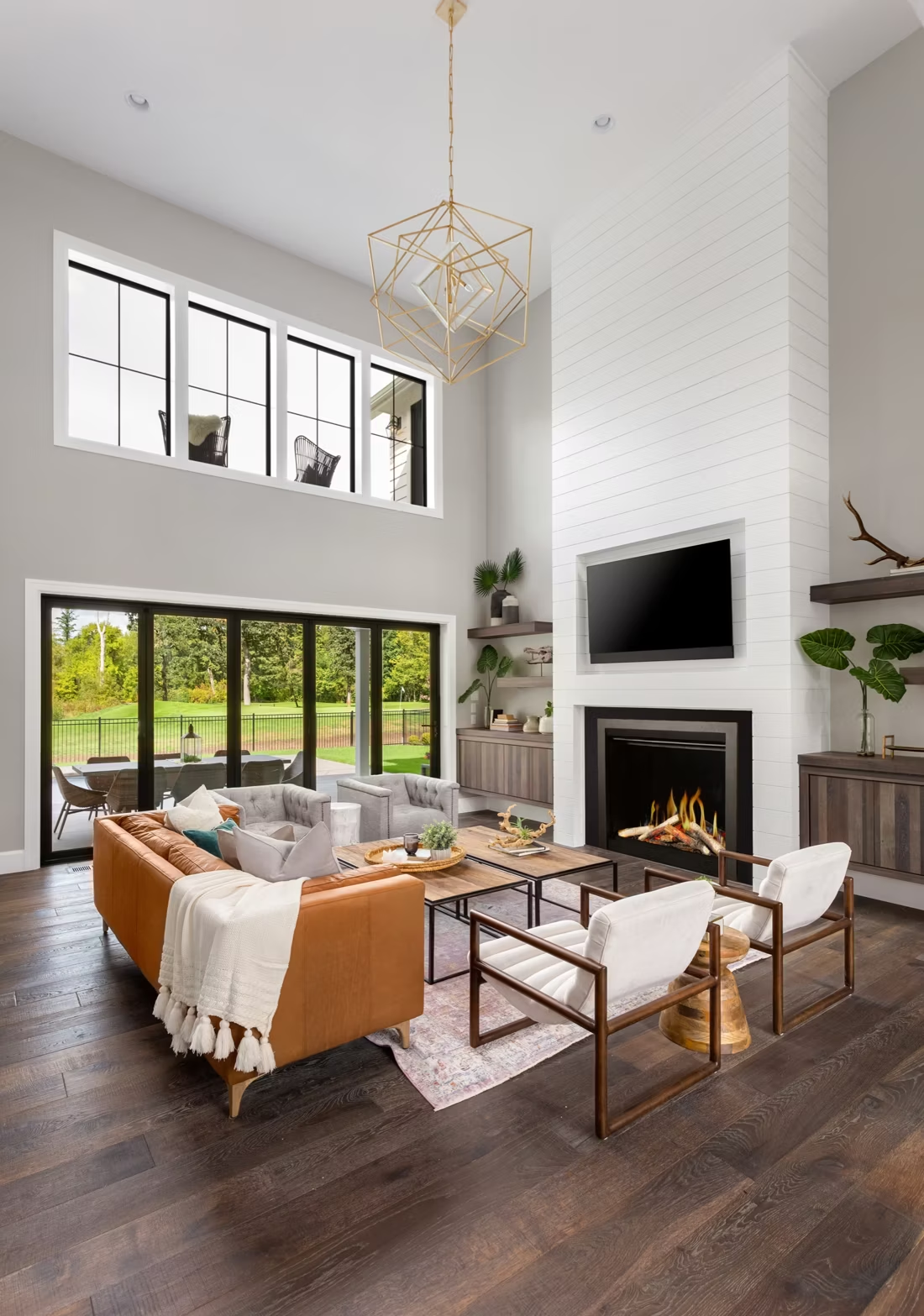
Four cover most of the market: screen-front traditional (mesh front, open feel, fits craftsman homes), traditional door set (the classic look you grew up with), modern linear (wide, low, the statement piece for entertaining), and clean face contemporary (no trim—your tile or stone runs right to the fire's edge). Walk in knowing those four terms and you're ahead of most buyers.
Does an electric fireplace need a vent or chimney?
No—that's its superpower. An electric fireplace needs a wall and an outlet, period. No vent pipe, no gas line, no clearances to design around, which is why it works in bedrooms, offices, apartments, and walls where venting a gas or wood unit would be impractical or impossible. Installation is typically the simplest and least expensive of any fireplace type.
Can I put a TV above my fireplace?
Yes—with an asterisk. Fireplaces are hot and TVs don't like heat. Either put a mantel between them to deflect rising warmth, or choose a fireplace with heat-management technology that creates a cool zone on the wall above—the wall stays around 125 degrees, barely warm, while the room still gets full heat. If you like clean lines and don't want a mantel, heat management is the answer.
Nearby Dealers
Hearth shops serving Naramata and the surrounding area. Every listing shows whether it is a WhyFire partner, a dealer we have verified as authorized for the brands we recommend, or a local business carrying hearth products. No manufacturer pays for placement. How we verify dealers →
Penticton Home Hardware Bldg Ctr
Sarsons Mechanical Services
White's Barbecue & Fireplace Centre
Ace Plumbing And Heating
Fire-Craft
Keremeos Building Supplies
Osoyoos Home Building Centre
Action Plumbing & Heating
Electric Service in Naramata
An electric fireplace's heater draws about 1,500 watts—pennies per hour at local rates.
Bc Hydro
FortisBC (Electric)
Get your free Project Guide & Parts List for a Naramata electric fireplace.
Tell me about your space—tasting room, guest cottage, or living room—and I'll match you with a local dealer who knows what's installable on the Bench, plus send a free Project Guide & Parts List with the exact unit and wiring needs for your project.
Find Your Fireplace →