
Keep Your Family Warm and Safe—No Matter What
Mill Bay sits right on Saanich Inlet at just 2 metres elevation, where winter lows average a mild 0.5°C. That's not a climate that demands wood heat to survive, but it's one where Malahat windstorms knock out BC Hydro power often enough that a lot of households want a stove that doesn't care. I'll match you with a trusted local dealer who knows what's actually installable on your street.
Every Project Starts From One of These Five Situations
Mild winters, but real reasons to burn wood.
With an average winter low around 0.5°C, Mill Bay isn't chasing the kind of cold that keeps Winnipeg or Thunder Bay households burning wood as primary heat all winter. This is a marine climate where a wood stove is more often a supplemental heat source, an ambiance upgrade, or an insurance policy against the power outages that come with Malahat windstorms rolling off the Georgia Strait. When BC Hydro lines go down for a day, a wood stove is the one appliance in the house that doesn't need the grid.
Locally, Douglas fir is the wood most Mill Bay households split and burn, with paper birch, lodgepole pine, and western larch also common through regional suppliers. Cutting permits through FrontCounter BC and the BC Ministry of Forests are free and available year-round, with summer fire restrictions the main limitation. Installation runs through the municipal building department, and every new wood appliance has to meet CSA B365 code; most insurers in the Cowichan Valley also want a WETT inspection on file before they'll write or renew a policy that covers a wood-burning appliance.
Firewood Cutting Permits Near Mill Bay
FrontCounter Bc / Bc Ministry Of Forests
Three steps. No salesperson until you're ready.
Tell us about your project
Your postal code, your situation, and the fuel you're leaning toward—or let the answers point you to one.
See what's actually available
The brands dealers within 100 miles genuinely carry—real options, never a catalog mirage.
Get your dealer & Project Guide
A trusted local dealer, plus the free Project Guide & Parts List that names every component of the job.
Frequently Asked Questions
How much does a wood stove installation cost in Mill Bay?
Most installs here run $6,000 to $12,000 CAD. A stove going into a home that already has a masonry chimney or an existing hearth pad lands toward the lower end. Newer Mill Bay builds without an existing flue need full Class A chimney venting run through the roof, which pushes the job toward the top of that range. Your local dealer will also factor in whether the WETT inspection your insurer wants happens before or after install, since that can affect scheduling.
What size wood stove do I actually need with winters this mild?
Given an average winter low near 0.5°C, most Mill Bay homes don't need the biggest catalytic stove on the showroom floor rated for 20-hour overnight burns through minus 30. A small to medium stove sized for supplemental heat or a single main living area is usually the right call, unless you're heating a larger, older, less-insulated farmhouse-style property further up toward the Malahat where a bigger unit as a genuine backup heat source makes more sense.
Do I need a permit to install a wood stove in Mill Bay?
Yes. New wood appliance installs go through the municipal building department, and the installation itself has to meet CSA B365 code. Separately, most home insurers serving the Cowichan Valley require a WETT inspection before they'll cover a wood-burning appliance, so plan on booking a WETT-certified inspector as part of the project rather than treating it as an afterthought once the stove is already in.
Wood stove or wood insert—which fits my Mill Bay home better?
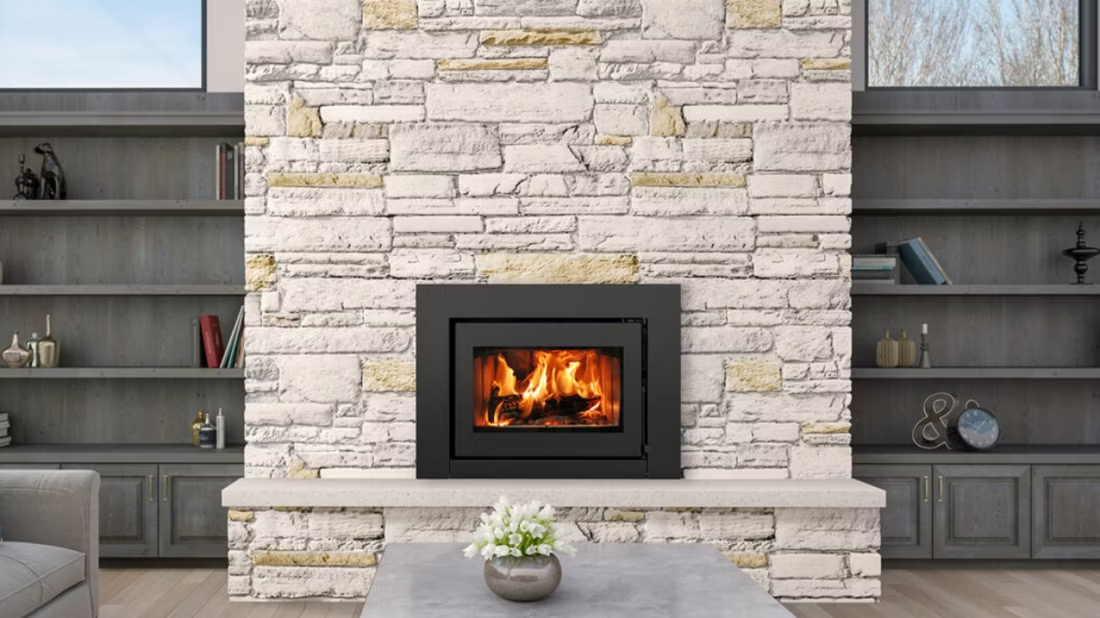
A freestanding stove sits on a hearth pad and vents through new Class A pipe, which suits newer Mill Bay homes that never had a masonry fireplace to begin with. An insert slides into an existing masonry firebox and reuses the chimney you already have, which is the common retrofit in older waterfront and Shawnigan-area properties built with an open fireplace decades ago. Inserts generally land toward the lower end of the $6,000-$12,000 range since less new venting is required.
Where do I get a firewood cutting permit near Mill Bay?
FrontCounter BC and the BC Ministry of Forests issue cutting permits at no cost, and the season runs year-round with summer fire restrictions kicking in during dry months. Douglas fir is the wood most local burners come home with, though paper birch, lodgepole pine, and western larch are also available depending on which block you're cutting in. Worth noting: coastal Douglas fir needs a longer, drier seasoning stretch than interior species before it burns clean, so plan to split and stack a full season ahead.
What's the best wood stove for a coastal climate like Mill Bay's?
Because winters here are mild and damp rather than brutally cold, efficiency and clean secondary combustion matter more than raw overnight burn time. A mid-size non-catalytic stove from a brand like Pacific Energy or Blaze King handles supplemental heat and shoulder-season damp-chill evenings well without overheating a smaller coastal home. Whatever you choose, it needs to be CSA/EPA-certified—several regional districts on Vancouver Island run wood-stove exchange programs and expect certified appliances, and your dealer can tell you if a local exchange rebate applies to your upgrade.
How often should my chimney be swept in Mill Bay?
An annual sweep and inspection before the wet season starts, typically in September or October, is the standard recommendation, and it matters here even with a mild climate because coastal humidity slows wood seasoning and can leave homeowners burning slightly wetter Douglas fir than they realize, which builds creosote faster. If your stove doubles as a genuine backup heat source and runs hard during a multi-day storm outage, it's worth a quick visual check afterward too.
Are there air quality rules I should know about before installing a wood stove?
Yes. Several BC regional districts, including areas around the Cowichan Valley, run wood-stove exchange programs and require CSA or EPA-certified appliances rather than older uncertified stoves—this is more of an interior-valley smoke-advisory concern during winter inversions, but it shapes what's sold and installed provincewide, including on Vancouver Island. A certified stove from a trusted local dealer covers this automatically, and it's also generally a requirement for the WETT inspection your insurer will ask for.
Wood vs. gas—which makes more sense for a Mill Bay home?
Natural gas service through FortisBC reaches a good part of Mill Bay, and a gas fireplace or insert offers instant, thermostat-controlled heat without any wood handling, which appeals to a lot of newer households here. Wood's advantage is that it keeps working with zero electricity and no gas line at all, which matters when a Malahat windstorm takes out BC Hydro power for a day or more. Plenty of Mill Bay homes end up with both: gas for daily convenience in the main living space, and a certified wood stove somewhere in the house as a genuine backup.
Why do fireplace quotes vary so much?
Because a fireplace is an iceberg—there's more behind the wall than in front of it. A low quote often covers only the unit; the full scope includes vent pipe, gas line or electrical, framing, and the tile or stone that has to come off and go back on. Make every bidder price the whole job. If a dealer can't speak to the full scope with confidence, that's your signal to keep looking.
Louvered or clean face—which fireplace front is better?
Louvered fronts have grill work above and below the glass for airflow, move heat a little better with a fan, and suit traditional mantels. Clean face designs drop the louvers entirely so finish work runs to the fire's edge—they fit both modern and traditional rooms. When we did our own home we chose clean face: a big viewing area beat a little extra airflow. It depends on your room, not on a rulebook.
Why is my open fireplace making my house colder?
Open fireplaces suck—literally. As the fire burns, it consumes air your furnace already paid to heat and pulls it out through the chimney, so the house is actually colder after the fire goes out than before you lit it. An insert fixes this: it seals the chimney, puts fixed glass across the front, and turns that hole in your house into a real heat source.
What's the difference between an insert and a zero-clearance fireplace?
An insert is a fireplace that slides into a pre-existing wood-burning fireplace—if you don't have one, there's nothing to insert it into. A zero-clearance fireplace is built into a framed wall, which makes it the answer for remodels and new construction. Simple test: existing masonry fireplace means insert; blank or framed wall means zero-clearance.
Nearby Dealers
Hearth shops serving Mill Bay and the surrounding area. Every listing shows whether it is a WhyFire partner, a dealer we have verified as authorized for the brands we recommend, or a local business carrying hearth products. No manufacturer pays for placement. How we verify dealers →
Silver Knight Heating Ltd
Island Woodheat
Get your Mill Bay wood heat project mapped out.
Tell me about your home and I'll match you with a trusted local dealer and send a free Project Guide & Parts List—sized for a mild coastal climate, with the vent kit and parts specified, and the WETT inspection step accounted for.
Find Your Fireplace →