
Reliable heat for Peace River winters that stay below freezing for months.
At 696 metres in the Peace River region, Fort St. John's winter lows average -16.9°C, with routine stretches well past that. I'll match you with a trusted local dealer who knows which pellet stove or insert can hold steady heat through the season, and send you a free planning packet with the exact parts your project needs.
Every Project Starts From One of These Five Situations
Consistent, thermostatic heat without a daily woodpile.
Fort St. John sits in climate zone 7B, a continental climate closer in character to Fort McMurray or Edmonton than the coastal image most people carry of British Columbia. Winter lows average -16.9°C, and the region routinely runs months of sustained sub-freezing weather where a hands-off heat source earns its keep. Plenty of local homeowners already split Douglas fir, paper birch, lodgepole pine, or western larch for a wood stove, but a growing number choose pellet instead specifically because the hopper and auger keep feeding fuel automatically through a cold snap without a 2 a.m. reload.
Natural gas service through FortisBC and Pacific Northern Gas reaches most of the city, so pellet isn't filling a fuel-access gap here the way it does in off-grid parts of the province—it's chosen for a cleaner, lower-particulate burn during the winter inversions and smoke advisories that periodically settle over interior valleys, and several regional districts running wood-stove exchange programs treat pellet as an easy upgrade path. Regional brands like Pinnacle Premium and Princeton Fuel Pellets run $400-$575 CAD a ton, and every install still needs to meet CSA B365 code, with a WETT inspection commonly required before an insurer will sign off on the appliance.
Three steps. No salesperson until you're ready.
Tell us about your project
Your postal code, your situation, and the fuel you're leaning toward—or let the answers point you to one.
See what's actually available
The brands dealers within 100 miles genuinely carry—real options, never a catalog mirage.
Get your dealer & Project Guide
A trusted local dealer, plus the free Project Guide & Parts List that names every component of the job.
Frequently Asked Questions
How much does a pellet stove installation cost in Fort St. John?
Typical installs run $6,000 to $10,000 CAD. A pellet insert dropping into an existing masonry firebox usually lands toward the lower end, since much of the venting structure is already in place. A freestanding pellet stove in a home without a chimney needs a full through-wall vent kit and hearth pad, which pushes costs toward the top of that range. Either way, your local dealer coordinates the permit through the municipal building department and sizes the vent run to the manufacturer's specs.
Pellet vs. wood—which makes more sense for a Fort St. John home?
Wood cut from Douglas fir, paper birch, lodgepole pine, or western larch is essentially free once you've got a cutting permit through FrontCounter BC, and a wood stove keeps working without power—a real advantage given how often Peace region storms knock out BC Hydro service. Pellet trades that fuel-cost edge for convenience: load the hopper, set the thermostat, and it holds a steady burn for a day or more without splitting or stacking. With smoke advisories periodically affecting interior valleys here, pellet's cleaner burn is also an easier sell in areas where regional districts are pushing wood-stove exchange programs.
Do I need a permit to install a pellet stove in Fort St. John?
Yes. New installations go through the municipal building department, and the appliance and venting need to meet CSA B365 installation code. Most insurers in the Peace region also want a WETT inspection on file for a solid-fuel appliance, pellet included, before they'll cover it—it's a standard step a trusted local dealer builds into the install rather than an afterthought.
What size pellet stove do I need for a Fort St. John home?
With winter lows averaging -16.9°C and real cold snaps that go well past that, undersizing is the mistake to avoid. A unit rated for 1,200 to 1,800 square feet handles most single-storey homes here as a primary heat source, while larger or older, less-insulated houses common in the established parts of town often do better with something closer to a 2,000-square-foot rating so it isn't running flat out around the clock. A dealer sizing your project will factor in insulation and layout, not just the floor plan.
Where do I buy pellets in Fort St. John, and how much should I budget?
Pinnacle Premium and Princeton Fuel Pellets are the two regional brands most commonly stocked by dealers serving the Peace region, typically running $400 to $575 CAD a ton. A household running a pellet stove as a primary heat source through a long northern winter can burn through 2 to 3 tons or more, so it's worth asking your dealer about buying a season's supply early and where to store it—a garage or shed works, but bags need to stay dry and off damp concrete.
What happens to my pellet stove during a power outage?
Pellet stoves need electricity to run the auger, igniter, and blower, so a standard unit stops working in an outage—worth knowing given how winter storms in the Peace region can take down BC Hydro lines for hours at a stretch. A battery backup unit or a small inverter generator can bridge most outages, and it's worth raising with your dealer before you buy. If outage resilience matters more to you than daily convenience, a wood stove burning local Douglas fir or lodgepole pine is the more storm-proof backup option.
Are pellet stoves affected by winter smoke advisories in this region?
Pellet appliances burn markedly cleaner than older wood stoves, which is why several regional districts running wood-stove exchange programs treat a pellet upgrade as a straightforward way to cut particulate output during the winter inversions that settle over interior valleys here. A CSA/EPA-certified pellet unit generally isn't the target of curtailment advisories the way an old uncertified wood stove is, but it's worth checking your specific municipality's air quality bylaws before burning heavily during an active advisory.
I already have natural gas—why would I choose pellet instead?
FortisBC and Pacific Northern Gas both serve Fort St. John, so gas is a realistic option for most addresses in town. Homeowners who choose pellet anyway usually want the look and heat character of a real solid-fuel flame along with less reliance on a single utility, or they're drawn to the per-ton cost of Pinnacle Premium or Princeton Fuel Pellets against a long heating season's gas bill. It comes down to priorities—gas wins on hands-off convenience and instant heat, pellet wins on fuel-cost control and flame character.
How much maintenance does a pellet stove need in this climate?
Plan on a full professional service once a year, ideally before the cold sets in, plus regular homeowner upkeep—emptying the ash pan, wiping the glass, and checking the hopper and auger every week or two during a Fort St. John heating season that can run six months or longer. Vent runs should be inspected annually too, since a pellet stove running daily through a Peace region winter puts more hours on the system than a typical shoulder-season fireplace elsewhere in the province.
Why do fireplace quotes vary so much?
Because a fireplace is an iceberg—there's more behind the wall than in front of it. A low quote often covers only the unit; the full scope includes vent pipe, gas line or electrical, framing, and the tile or stone that has to come off and go back on. Make every bidder price the whole job. If a dealer can't speak to the full scope with confidence, that's your signal to keep looking.
Is it worth replacing an old fireplace that still sort of works?
Ask three questions: Is it ugly? Is it drafty? Does it actually work? Most old fireplaces fail at least two. Beyond looks, an old unit leaks air around the damper year-round and—if it's gas with a standing pilot—quietly burns a couple hundred dollars a year. A modern replacement seals the wall, heats the room, and changes how the whole space gets used.
Are pellet stoves loud?
They make some noise—there are two fans running plus an auger motor that turns as it feeds pellets. But there's a real range: premium models are engineered quiet, and the best offer a whisper-quiet mode you can comfortably watch TV next to. If noise matters in your room, ask to hear a stove running before you buy—it's a five-minute test that saves years of annoyance.
Can a pellet stove heat a whole house?
It genuinely can. I burned a pellet stove as my only heat source for years after a furnace died, and it kept the entire house warm. Pellets feed automatically from a hopper, so you get wood-heat economics with thermostat-style control. Two honest caveats: it needs weekly cleaning during the season, and most models need electricity to run—ask about battery backup if outages are a concern.
Nearby Dealers
Hearth shops serving Fort St. John and the surrounding area. Every listing shows whether it is a WhyFire partner, a dealer we have verified as authorized for the brands we recommend, or a local business carrying hearth products. No manufacturer pays for placement. How we verify dealers →
Pellet Brands Stocked Around Fort St. John
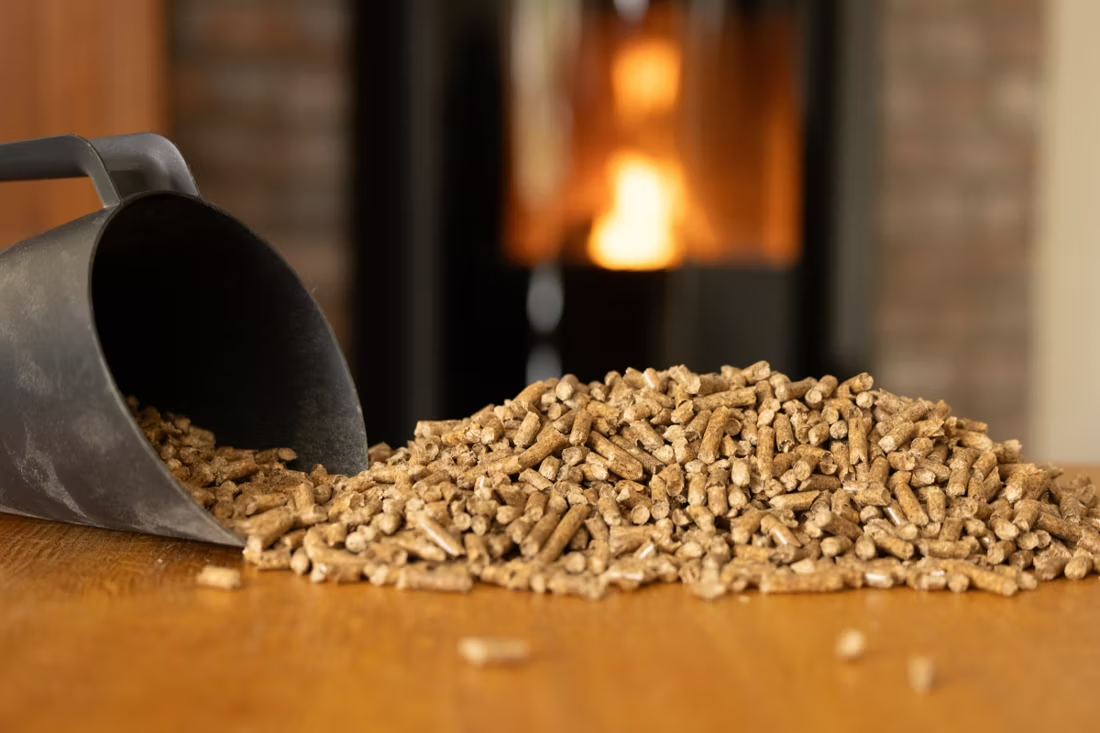
Typical price runs $400-$575 per ton—buy early-season for the best rates. Manufacturers will point you to the nearest stocking dealer.
Pinnacle Premium
Princeton Fuel Pellets
Get your free Project Guide & Parts List for a Fort St. John pellet project.
Tell me about your home and I'll match you with a trusted local dealer serving the Peace region, plus send a free Project Guide & Parts List with the exact vent kit and parts your project needs.
Find Your Fireplace →