
Instant, no-chimney heat for North Thompson Valley homes and cabins.
Clearwater sees winter lows averaging -8.3°C at 411 metres, and BC Hydro's residential rate of about 11.4 cents per kWh makes electric heat one of the cheapest ways to add warmth to a room. I'll match you with a trusted local dealer who knows what's installable in your home.
Every Project Starts From One of These Five Situations
The simplest way to add real heat to any room in Clearwater.
Clearwater sits at 411 metres in the North Thompson Valley, a gateway community to Wells Gray Provincial Park where winter lows average -8.3°C and cold snaps can push well past that. It's a real winter, though not an extreme one by BC interior standards—think closer to a mild stretch of what Prince George sees most years than the deep cold of Fort McMurray or Whitehorse. Plenty of local homes still burn Douglas fir, paper birch, lodgepole pine, and western larch in a wood stove, but interior valleys like this one are prone to winter inversions and smoke advisories, and several regional districts here run wood-stove exchange programs pushing older uncertified stoves out. Electric fireplaces sidestep all of that: no smoke, no advisory days, no combustion to certify.
With a population under 2,400 spread across a valley of full-time homes, cabins, and vacation rentals near the park, electric is also the practical choice for spaces where running a gas line or a full chimney system doesn't pencil out—a rental suite, a cabin addition, a bedroom that just needs supplemental warmth. BC Hydro and FortisBC (Electric) both serve properties in and around Clearwater, and at roughly 11.4 cents per kWh, running an electric unit costs a fraction of what most people expect. Installed cost typically runs $500 to $1,600, well under the $6,000 to $15,000 range for a wood or gas system that needs venting, a gas line, or CSA B365-compliant construction.
Three steps. No salesperson until you're ready.
Tell us about your project
Your postal code, your situation, and the fuel you're leaning toward—or let the answers point you to one.
See what's actually available
The brands dealers within 100 miles genuinely carry—real options, never a catalog mirage.
Get your dealer & Project Guide
A trusted local dealer, plus the free Project Guide & Parts List that names every component of the job.
Frequently Asked Questions
How much does an electric fireplace cost to install in Clearwater?
Most electric fireplace projects here run $500 to $1,600 CAD. A plug-in freestanding unit or a wall-mounted model on an existing outlet sits at the low end—plenty of Clearwater cabins and rental suites go this route since there's no new wiring involved. A built-in linear unit or an insert that needs a dedicated 240V circuit run by a licensed electrician lands toward the top of that range. Either way, it's a fraction of the $6,000-plus typical for a wood or gas install that requires venting or a chimney.
Do I need a permit for an electric fireplace in Clearwater?
Usually it's simpler than people expect. The District of Clearwater's building department generally only requires an electrical permit when a unit needs a new dedicated circuit—a plug-in model on an existing outlet often doesn't trigger any permit at all. That's a real advantage over wood or gas appliances, which fall under CSA B365 and typically need a WETT inspection for insurance purposes. Electric skips both of those requirements since there's no combustion or venting involved.
What size electric fireplace do I need for a Clearwater home or cabin?
With winter lows averaging -8.3°C, most electric units in this valley are sized as supplemental heat rather than the sole heat source for a whole home. A 1,500-watt unit comfortably takes the edge off a bedroom or small den, while a larger linear model or insert rated for 4,000-5,000 BTU can carry a living room or an open-concept cabin space near Wells Gray. Older, less-insulated homes around Clearwater's core sometimes need a slightly larger unit than the square footage alone would suggest—a local dealer can size it against your actual insulation rather than guesswork.
How much does it actually cost to run an electric fireplace here?
At BC Hydro's residential rate of about 11.4 cents per kWh, a typical 1,500-watt electric fireplace running four hours an evening through a cold stretch costs roughly $20 to $25 CAD a month—cheap compared to pellet heat, which runs $400 to $575 a tonne through Pinnacle Premium or Princeton Fuel Pellets. Electric fireplaces convert essentially all their power to heat, so there's no efficiency loss the way there can be with older gas units, which matters if you're weighing it against a $6,000-plus gas install through FortisBC.
Will my electric fireplace still work if the power goes out?
No, and that's the one honest tradeoff worth knowing before you buy. Power lines running through the North Thompson Valley's forested terrain can go down during winter ice storms, and summer wildfire risk occasionally forces preventive shutoffs as well. Households here that want heat regardless of grid status often keep a wood stove burning Douglas fir or lodgepole pine as backup, with cutting permits free year-round (summer fire restrictions apply) through FrontCounter BC. Electric fireplaces are best thought of as your everyday, no-maintenance heat source, not your outage plan.
What's the difference between an electric insert, a built-in unit, and a stove?
An electric insert slides into an existing masonry firebox—a common retrofit in older Clearwater homes with a fireplace that no longer sees wood, letting you keep the mantel and hearth look without the chimney upkeep. A built-in or wall-mounted linear unit gets framed into new construction or a renovation, popular in cabins and additions near the park where there's no existing firebox to reuse. A freestanding electric stove sits on the floor like a wood stove but plugs into a standard outlet, which makes it the easiest option for a rental suite or a room that just needs a heat source added after the fact.
Are electric fireplaces a good fit for cabins and rental properties near Wells Gray Park?
Yes, and it's one of the more common uses locally. Vacation rentals and seasonal cabins around Wells Gray Provincial Park often can't justify a gas line extension or a full wood setup with cordwood storage, so a plug-in or wall-mounted electric unit gives guests real ambiance and supplemental heat without ongoing fuel deliveries or chimney maintenance between bookings. It also sidesteps the WETT inspection insurers commonly ask for on wood appliances in a rental context.
Electric vs. wood—which makes more sense for a Clearwater home?
Wood, split from Douglas fir, paper birch, lodgepole pine, or western larch cut under a free FrontCounter BC permit, still wins if you want heat that keeps working through a grid outage in the valley. Electric wins on convenience and air quality—no smoke, no involvement with the smoke advisories that interior valleys like this one see during winter inversions, and no need to meet CSA B365 or arrange a WETT inspection. Plenty of local households run electric as their daily, low-fuss heat source and keep a wood stove elsewhere in the house as backup for when the power's out.
Can an electric fireplace replace an old wood stove I'm retiring through an exchange program?
It's a common path. Several regional districts around Clearwater run wood-stove exchange programs that put a rebate toward removing an older, uncertified stove, and an electric insert or built-in unit is a straightforward replacement if you want to keep the fireplace look without buying a new EPA-certified wood appliance. It also removes the appliance from any future smoke-advisory restrictions entirely, since there's no combustion to regulate. A local dealer familiar with the exchange paperwork can tell you what's currently funded in the Thompson-Nicola region.
How much does an electric fireplace cost to run?
With the heater on, a typical unit draws about 1,500 watts—at average electric rates that's roughly 20 cents an hour. Run the flame effect alone and it costs pennies; the flames are LED-driven and use about as much power as a light bulb. There's no pilot light, no fuel delivery, and essentially no maintenance.
What fireplace styles should I know before shopping?
Four cover most of the market: screen-front traditional (mesh front, open feel, fits craftsman homes), traditional door set (the classic look you grew up with), modern linear (wide, low, the statement piece for entertaining), and clean face contemporary (no trim—your tile or stone runs right to the fire's edge). Walk in knowing those four terms and you're ahead of most buyers.
Can I put a TV above my fireplace?
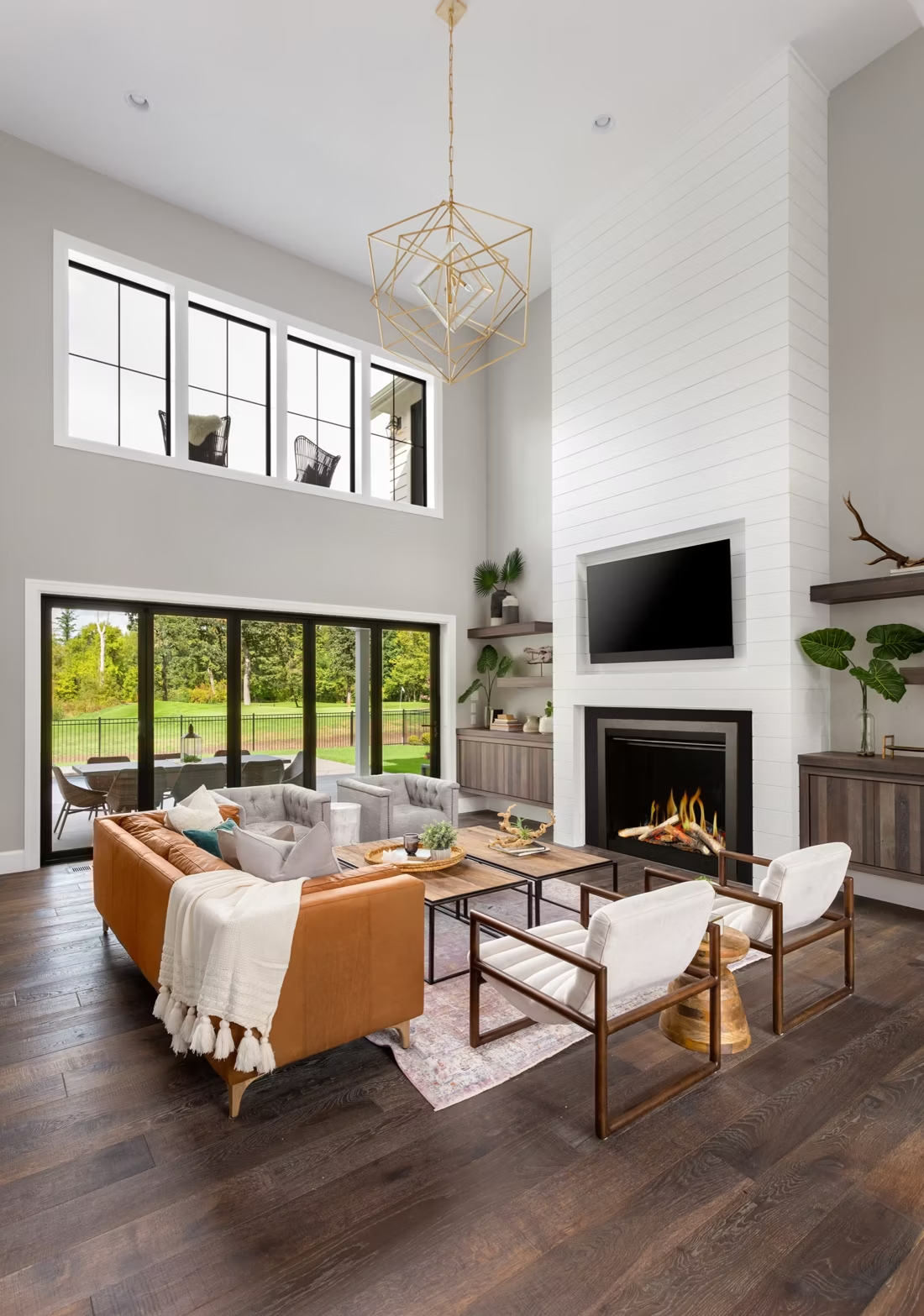
Yes—with an asterisk. Fireplaces are hot and TVs don't like heat. Either put a mantel between them to deflect rising warmth, or choose a fireplace with heat-management technology that creates a cool zone on the wall above—the wall stays around 125 degrees, barely warm, while the room still gets full heat. If you like clean lines and don't want a mantel, heat management is the answer.
Do electric fireplaces actually produce heat?
Yes—most put out around 4,800–5,000 BTUs from a standard outlet, which comfortably warms a bedroom, office, or den as a comfort-zone heater. What they won't do is carry a whole house the way wood, gas, or pellet can. Think of electric as ambiance-first with honest supplemental heat: flames on with no heat in July, flames plus warmth in January.
Nearby Dealers
Hearth shops serving Clearwater and the surrounding area. Every listing shows whether it is a WhyFire partner, a dealer we have verified as authorized for the brands we recommend, or a local business carrying hearth products. No manufacturer pays for placement. How we verify dealers →
Clearwater Home Building Centre
Jul Pam Heating Systems
Chase Home Hardware
Highland Valley Plumbing
Copper Valley Mechanical Cont.
Electric Service in Clearwater
An electric fireplace's heater draws about 1,500 watts—pennies per hour at local rates.
Bc Hydro
FortisBC (Electric)
Get your free Project Guide & Parts List for a Clearwater electric fireplace project.
Tell me about your home or cabin and I'll match you with a trusted local dealer and send a free Project Guide & Parts List, sized to your space and BC Hydro's rates, with the exact parts your project needs.
Find Your Fireplace →