
Clean, instant heat for a valley that traps winter smoke.
Chilliwack's winters are mild by Canadian standards—lows averaging around -0.2°C—but the Fraser Valley's temperature inversions can hold wood smoke low for days. I'll match you with a trusted local dealer who knows FortisBC's service area and can spec a direct-vent system that's ready for your home.
Every Project Starts From One of These Five Situations
A mild climate with a real smoke problem.
At just 11 metres elevation and sitting in climate zone 4C, Chilliwack doesn't see the kind of cold that defines winter in Winnipeg or Prince George—winter lows average around -0.2°C, and the heating season here is shorter and gentler than almost anywhere else in the country. Plenty of households still burn Douglas fir, paper birch, lodgepole pine, or western larch in a wood stove or insert, but the Fraser Valley is also known for winter inversions that trap smoke against the valley floor for days at a stretch. Several regional districts around Chilliwack run wood-stove exchange programs and require CSA or EPA-certified appliances specifically because of this.
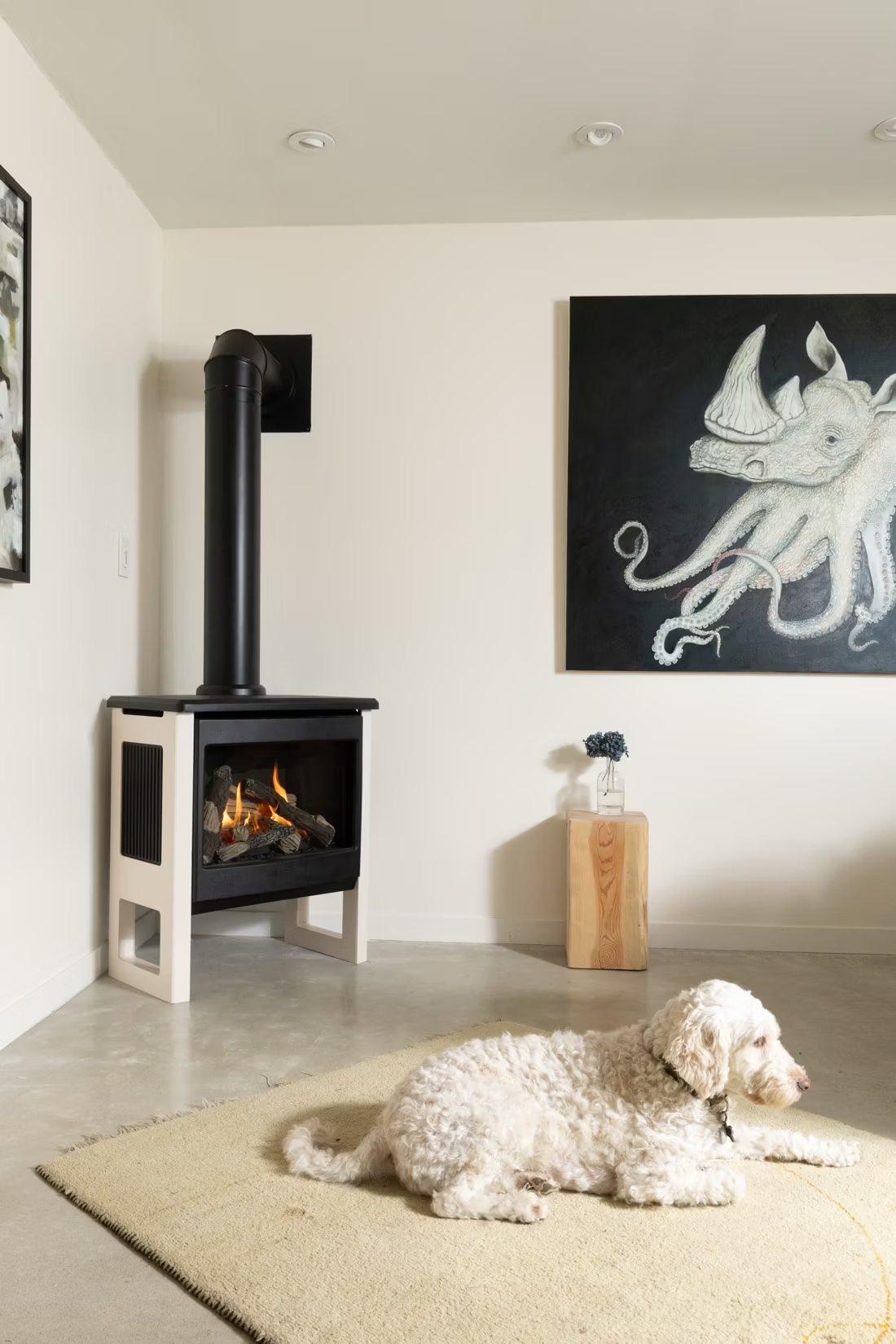
That's part of why gas has become the default choice for a lot of homeowners here. FortisBC (Gas) serves the vast majority of Chilliwack, with Pacific Northern Gas covering some adjacent service territory, so most addresses in the city can run a direct-vent fireplace or insert off the mains line without needing a propane tank. A gas unit fires instantly, produces no visible smoke during an inversion advisory, and typically runs $6,000 to $15,000 CAD installed depending on whether you're retrofitting an existing masonry firebox or building out a new wall unit.
Three steps. No salesperson until you're ready.
Tell us about your project
Your postal code, your situation, and the fuel you're leaning toward—or let the answers point you to one.
See what's actually available
The brands dealers within 100 miles genuinely carry—real options, never a catalog mirage.
Get your dealer & Project Guide
A trusted local dealer, plus the free Project Guide & Parts List that names every component of the job.
Frequently Asked Questions
How much does a gas fireplace installation cost in Chilliwack?
Installed costs in Chilliwack typically run $6,000 to $15,000 CAD. An insert that drops into an existing masonry firebox near a gas line—common in older neighbourhoods like Chilliwack Proper and Sardis—lands toward the lower end. A new built-in unit for an addition or a home without existing venting, especially one needing a longer gas line run from the meter, pushes toward the top of that range. Your local dealer's quote should include the gas-fitter work, venting, and the municipal permit.
Can I convert my existing wood fireplace to gas?
Yes, and it's a common request in Chilliwack's older homes that were originally built around a wood-burning masonry fireplace. A gas insert typically slides into the existing firebox with a liner run up the current chimney, and because you're eliminating the wood appliance, you also sidestep the WETT inspection that insurers often require for wood-burning systems. If your household has been dealing with smoke advisories during winter inversions, converting to gas is also the more straightforward path to compliance with the air-quality rules some Fraser Valley regional districts now enforce.
Do I need to be on FortisBC's gas line, or can I run on propane?
FortisBC (Gas) covers the large majority of addresses within Chilliwack, so most homeowners in the city core, Sardis, and Vedder Crossing can tie a fireplace into existing mains service. Homes further out toward Ryder Lake or the rural fringe of the Fraser Valley, where Pacific Northern Gas or no mains service reaches, generally run on a propane tank instead. Either fuel works with most fireplace models a local dealer carries—it's mainly a question of your address and what's already feeding your furnace or water heater.
Will a gas fireplace keep working if the power goes out?
Most will, which matters in a region where atmospheric river storms and windstorms periodically knock out BC Hydro service across the Fraser Valley. Units with intermittent pilot ignition run on AA battery backup that kicks in automatically during an outage. Some models, including several from Valor, use a self-powered pilot system that doesn't need batteries at all. If outage resilience matters to your household, ask your dealer which ignition system is built into any model you're considering.
What's the difference between a gas fireplace, insert, and stove?
A gas fireplace is a built-in unit framed into a wall, typical for new construction or a full renovation. A gas insert fits into an existing masonry firebox, which is the more common upgrade in Chilliwack's older stock of homes that started out with a wood-burning fireplace. A gas stove stands freestanding on a hearth pad, similar in footprint to a wood stove but running off a gas line or propane tank. For most existing Chilliwack homes, an insert is the least disruptive option since it reuses the chimney chase that's already there.
Do I need a permit to install a gas fireplace in Chilliwack?
Yes. You'll need a building permit through the municipal building department, and the gas line work itself must be done by a licensed gas fitter and inspected separately. CSA B365 governs the installation code for solid-fuel and gas appliances in BC, and most established local dealers handle both the permit and the final inspection as part of the project so you're not coordinating two separate approvals yourself.
Should I choose vented or vent-free for a Chilliwack home?
Direct-vent is the standard recommendation here, and for good reason: it pulls combustion air from outside and exhausts it back outside through sealed venting, so it doesn't add anything to indoor air during the same stagnant winter days that trigger smoke advisories in the valley. Vent-free units are legal in some applications but come with strict room-sizing limits, and given how seriously several Fraser Valley regional districts already treat winter air quality, most dealers steer Chilliwack homeowners toward direct-vent as the default.
How often does a gas fireplace need servicing?
Plan on an annual check, ideally in late summer or early fall before the first cool, damp evenings set in. A technician inspects the burner, pilot assembly, gas connections, and venting, and cleans the glass. It's a lighter job than a wood chimney sweep, but skipping it on a unit that runs most evenings through Chilliwack's long, mild but frequently used heating season is how a pilot or ignition problem shows up on the coldest night of the year. Budget roughly $150-$250 CAD for a standard visit.
Gas vs. wood—which makes more sense for a Chilliwack home?
Wood cut under a free FrontCounter BC permit—Douglas fir, paper birch, lodgepole pine, or western larch—still costs less to burn, and a CSA or EPA-certified stove keeps working without electricity during a storm-driven outage. Gas wins on convenience and on the days that matter most locally for air quality: gas fireplaces don't add smoke during the winter inversions that periodically bring advisories to the Fraser Valley. A lot of Chilliwack households run gas as their everyday fireplace and keep a certified wood stove or insert as backup elsewhere in the house.
Can a gas fireplace run on a thermostat?
Most modern gas fireplaces can—turn it on and off from the couch with a remote, or set a room temperature and let the fireplace hold the comfort zone for you. If low maintenance matters to your family, this is the feature set that makes gas the convenience pick over wood and pellet.
Why do fireplace quotes vary so much?
Because a fireplace is an iceberg—there's more behind the wall than in front of it. A low quote often covers only the unit; the full scope includes vent pipe, gas line or electrical, framing, and the tile or stone that has to come off and go back on. Make every bidder price the whole job. If a dealer can't speak to the full scope with confidence, that's your signal to keep looking.
What do I measure to size a fireplace insert?
Four numbers tell you what fits: the front width, the front height, the back width, and the overall depth of your existing fireplace opening. Grab a tape measure, jot those down, and snap a photo of the wall—those two things do more to move your project forward than anything else you can do today.
What's the difference between radiant and convective fireplace heat?
Most fireplaces are a thin metal box—they heat fine, but you rely on the fan to move the warmth into the room. Radiant models use a thick cast-ceramic firebox, about an inch and a quarter thick, that soaks up the fire's heat and radiates roughly 25–30% more warmth into the room with no fan running. If you watch TV in the same room or want heat in a power outage, radiant is worth asking about.
Nearby Dealers
Hearth shops serving Chilliwack and the surrounding area. Every listing shows whether it is a WhyFire partner, a dealer we have verified as authorized for the brands we recommend, or a local business carrying hearth products. No manufacturer pays for placement. How we verify dealers →
Dagg's Fireplace Shop
Encore Fireplaces
Natural Gas Service in Chilliwack
Confirm service at your address before planning a gas fireplace—a quick call settles it.
FortisBC (Gas)
Pacific Northern Gas
Get your free Project Guide & Parts List for a Chilliwack gas fireplace.
Tell me about your home and whether you're on FortisBC, Pacific Northern Gas, or propane, and I'll match you with a trusted local dealer and send a free Project Guide & Parts List with the exact vent kit and parts your project needs.
Find Your Fireplace →