
Reliable pellet heat for Vancouver Island's mild, damp winters.
Chemainus sits at just 40 metres elevation on the Vancouver Island coast, where winter lows average around 2°C rather than the deep freezes inland communities see. I'll match you with a trusted local dealer who knows what's actually installable on your street and can get you a free planning packet built around your home.
Every Project Starts From One of These Five Situations
Mild winters, but damp ones that still call for steady heat.
Chemainus sits right on the Salish Sea in the Cowichan Valley region, in a climate zone (4C) that's about as mild as Canada gets—winter lows average around 2°C, and hard freezes are rare compared to a place like Prince George, where the mercury regularly drops well below -20°C. That doesn't mean the heating season is short: damp, grey stretches from November through March push most homes here to run supplemental heat for months at a time, and a pellet stove's steady, thermostat-controlled output suits that pattern better than babysitting an open fire.
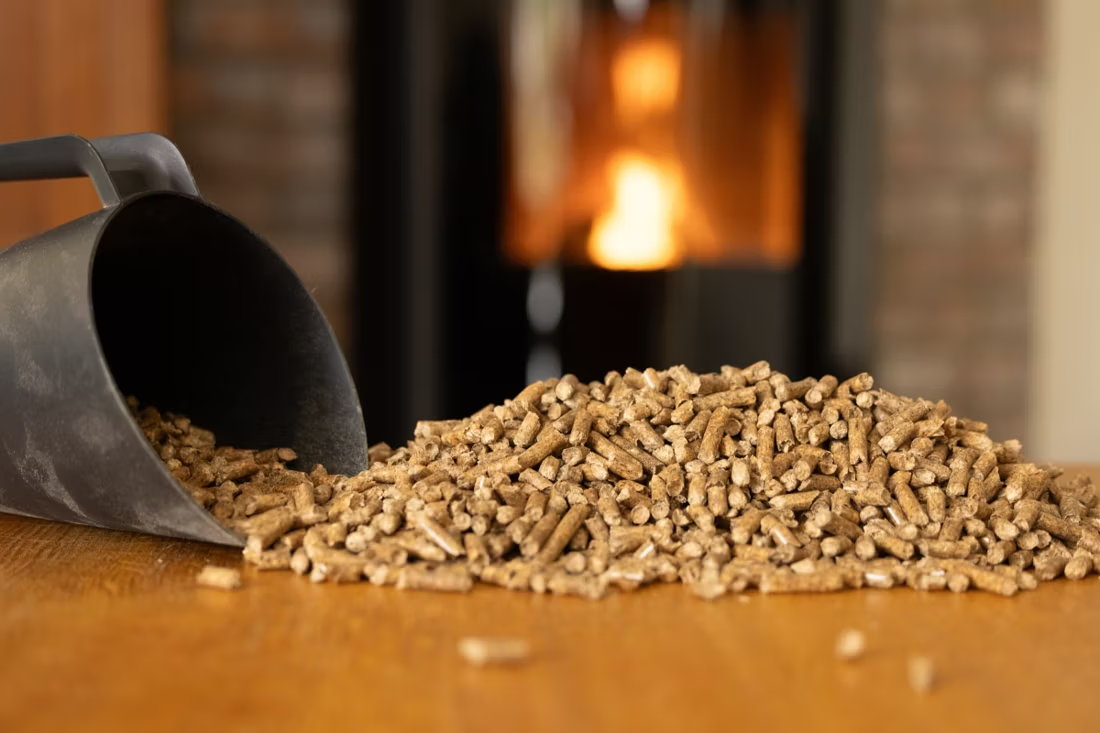
Natural gas service through FortisBC reaches much of Chemainus, so gas is a real option too, but pellet appliances remain popular because they burn cleanly enough to sidestep the smoke advisories and stove-exchange restrictions that apply to older wood-burning units across the Cowichan Valley region. Local suppliers stock BC-made pellets from Pinnacle Premium and Princeton Fuel Pellets, typically $400-$575 a tonne, and a new pellet insert or freestanding unit runs $6,000-$10,000 CAD installed. Any install still needs a permit through the municipal building department and has to meet the CSA B365 installation code; many insurers also ask for a WETT inspection before they'll write a policy, so it's worth confirming that with your dealer up front.
Three steps. No salesperson until you're ready.
Tell us about your project
Your postal code, your situation, and the fuel you're leaning toward—or let the answers point you to one.
See what's actually available
The brands dealers within 100 miles genuinely carry—real options, never a catalog mirage.
Get your dealer & Project Guide
A trusted local dealer, plus the free Project Guide & Parts List that names every component of the job.
Frequently Asked Questions
How much does a pellet stove installation cost in Chemainus?
Most pellet installs in Chemainus run $6,000-$10,000 CAD. A freestanding unit venting straight out an exterior wall near where it sits lands toward the lower end, which is common in the town's older character homes near the murals district. Costs climb when a unit needs to route through an existing masonry chase, when electrical work is needed for the hopper and blower circuit, or when the hearth pad and clearances require framing changes. Your local dealer will price the vent kit and parts specific to your wall or roof configuration rather than a flat number.
Is a pellet stove or a wood stove the better fit for a Chemainus home?
Douglas fir, paper birch, lodgepole pine, and western larch are all available locally, and FrontCounter BC / BC Ministry of Forests issues cutting permits year-round at no cost, aside from summer fire restrictions—so wood is genuinely cheap here if you're willing to split and stack it. Pellets cost more per unit of heat but skip that labour entirely and burn cleaner, which matters given the CSA/EPA-certified appliance rules and wood-stove exchange programs active across the Cowichan Valley region. For a mild coastal climate where you're not running a stove around the clock for months, a lot of homeowners find the convenience of a hopper and auger worth the premium over cordwood.
Do I need a permit to install a pellet stove in Chemainus?
Yes. The municipal building department issues the permit, and the installation itself has to meet the CSA B365 code regardless of whether you're on natural gas, wood, or pellet fuel. Pellet appliances aren't always subject to the same insurance scrutiny as open wood burning, but many insurers still ask for a WETT inspection before adding a solid-fuel appliance to a policy, so it's worth building that step into your timeline rather than finding out after the fact.
What size pellet stove do I need given how mild Chemainus winters are?
Chemainus has a real but comparatively short and mild heating season—nothing like the four-to-five-month deep freeze a place like Winnipeg sees. Most homes here do fine with a small to mid-size pellet stove rather than a unit built for extreme cold, especially if the stove is supplementing an existing gas or electric system rather than serving as the sole heat source. A dealer will still size against your actual square footage, ceiling height, and insulation rather than climate averages alone, since older Chemainus homes near the waterfront often carry more heat loss than their footprint suggests.
Where do I buy pellets locally, and what do they cost?
Pinnacle Premium and Princeton Fuel Pellets are the two BC-made brands most commonly stocked by dealers and hardware suppliers serving the Cowichan Valley region, typically running $400-$575 a tonne depending on the season and how early you buy. Because the coastal climate here is damp much of the year, storing pellets somewhere dry—a garage or shed rather than an open carport—matters more in Chemainus than it would inland, since bagged pellets that pick up moisture swell and jam an auger fast.
Will my pellet stove still work during a power outage?
Not without backup power. The auger, igniter, and blower all run on electricity, so a pellet stove goes cold the moment the power does—something to plan for given that winter windstorms off the Salish Sea do knock out power in this area from time to time. A small battery backup or inverter generator sized for the stove's draw is the usual fix, and most dealers who install pellet units in Chemainus can point you to a compatible setup. If outage resilience is your top priority, a wood stove burning local Douglas fir or lodgepole pine needs no electricity at all.
Pellet vs. gas—which makes more sense in Chemainus?
FortisBC gas service reaches much of Chemainus, and a gas fireplace or insert typically runs $6,000-$15,000 CAD installed, against $6,000-$10,000 for pellet. Gas wins on instant on-and-off convenience and, with the right ignition system, keeps working through a power outage without a battery. Pellet wins if you'd rather not be tied to a utility bill that moves with gas prices, and it gives you a visible flame and hopper you refill on your own schedule. Plenty of homes here end up with gas in the main living space and a pellet unit in a secondary room or workshop.
How often does a pellet stove need maintenance in Chemainus?
Plan on emptying the ash pan weekly during regular use and a full professional service once a year, ideally in early fall before the damp season sets in. Coastal humidity means the hopper, gasket, and exhaust components are worth a closer look here than they might be in a drier interior climate—moisture can affect pellet feed and seal integrity over time. Most dealers servicing the Cowichan Valley region bundle this into an annual visit alongside a burn-pot and venting inspection.
Are there air quality rules that affect pellet stoves in the Cowichan Valley region?
CSA or EPA certification is required for any new solid-fuel appliance sold and installed in BC, pellet stoves included, and several regional districts run wood-stove exchange programs that offer incentives for replacing an old, uncertified wood stove—sometimes with a pellet unit as the upgrade path. Chemainus sits on the coast rather than in one of the interior valleys that see the worst winter inversions and smoke advisories, so the day-to-day air quality pressure is lighter here, but the certification requirement itself applies province-wide and your dealer will confirm your chosen model qualifies.
Why do fireplace quotes vary so much?
Because a fireplace is an iceberg—there's more behind the wall than in front of it. A low quote often covers only the unit; the full scope includes vent pipe, gas line or electrical, framing, and the tile or stone that has to come off and go back on. Make every bidder price the whole job. If a dealer can't speak to the full scope with confidence, that's your signal to keep looking.
Is it worth replacing an old fireplace that still sort of works?
Ask three questions: Is it ugly? Is it drafty? Does it actually work? Most old fireplaces fail at least two. Beyond looks, an old unit leaks air around the damper year-round and—if it's gas with a standing pilot—quietly burns a couple hundred dollars a year. A modern replacement seals the wall, heats the room, and changes how the whole space gets used.
What does it take to replace an existing fireplace?
Fireplaces are like icebergs—bigger behind the wall than in front of it. Replacement means removing the surrounding tile or stone (the finish material laps onto the fireplace face), pulling the old unit, setting the new one in the same enclosure, and re-finishing the wall. A hearth professional can determine what's behind your wall without demolition during an in-home preview.
Why is my open fireplace making my house colder?
Open fireplaces suck—literally. As the fire burns, it consumes air your furnace already paid to heat and pulls it out through the chimney, so the house is actually colder after the fire goes out than before you lit it. An insert fixes this: it seals the chimney, puts fixed glass across the front, and turns that hole in your house into a real heat source.
Nearby Dealers
Hearth shops serving Chemainus and the surrounding area. Every listing shows whether it is a WhyFire partner, a dealer we have verified as authorized for the brands we recommend, or a local business carrying hearth products. No manufacturer pays for placement. How we verify dealers →
Island Woodheat
Delco Fireplaces (Vancouver Island) Ltd
Pellet Brands Stocked Around Chemainus
Typical price runs $400-$575 per ton—buy early-season for the best rates. Manufacturers will point you to the nearest stocking dealer.
Pinnacle Premium
Princeton Fuel Pellets
Get your free Project Guide & Parts List for a Chemainus pellet project.
Tell us about your home and current setup, and we'll match you with a trusted local dealer and send a free Project Guide & Parts List—sized to Chemainus's mild, damp climate, with the vent kit and parts specified.
Find Your Fireplace →