
Clean-burning heat built for Shuswap valley inversions.
Chase sits in a Thompson-Nicola valley where winter inversions trap smoke against the hills and average lows hover around -6.6°C. I'll match you with a trusted local dealer who knows what actually clears permitting and venting here.
Every Project Starts From One of These Five Situations
A clean burn for a valley that traps its own smoke.
Chase sits where the South Thompson River meets Shuswap Lake, tucked into a Thompson-Nicola valley that holds cold air and wood smoke through the winter months. At 366 metres elevation with an average winter low of -6.6°C, the climate here (zone 5B) isn't as brutal as some Interior towns further from the lake moderating effect, but the valley geography means winter inversions and smoke advisories are a regular feature of the heating season. Douglas fir, paper birch, lodgepole pine, and western larch are the wood species most local households know from cutting their own firewood on nearby Crown land, and plenty of homes still burn it. But when a regional district calls a smoke advisory or runs one of its wood-stove exchange programs, a CSA-certified pellet appliance is the upgrade that keeps the house warm without adding to the haze sitting over the valley floor.
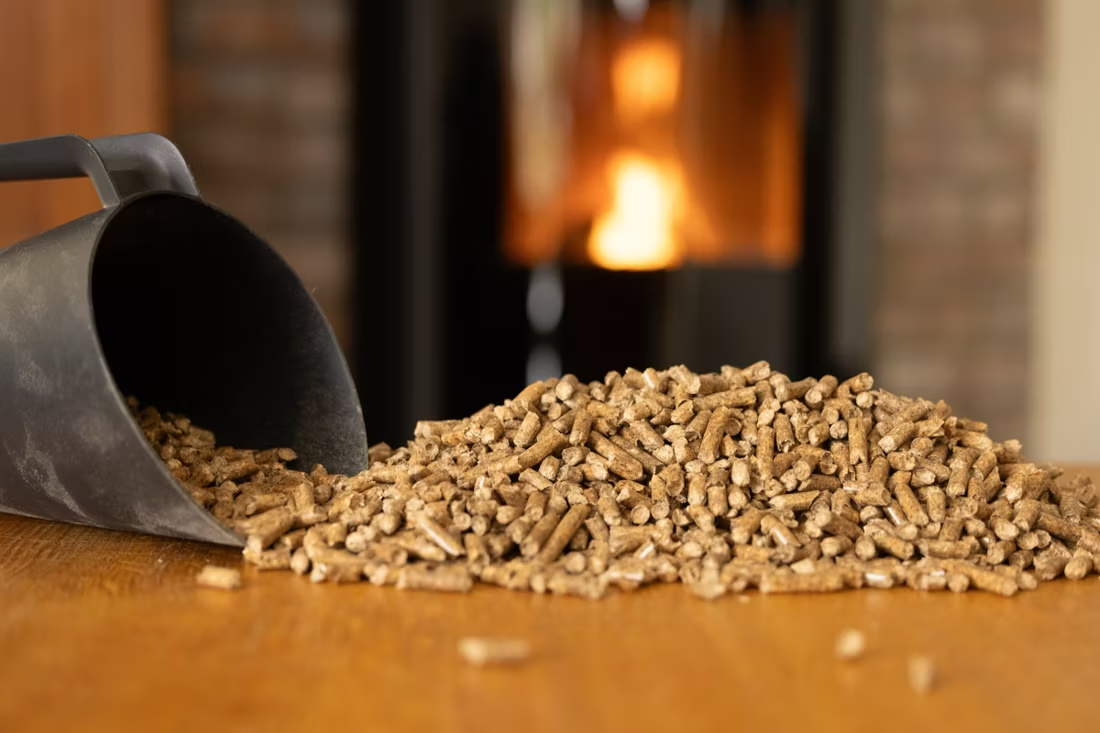
Pellet supply is solid in this part of BC. Pinnacle Premium and Princeton Fuel Pellets are the regional brands most Chase-area dealers stock, typically running $400 to $575 a ton, and a hopper-fed stove means no splitting, stacking, or seasoning wood before you can burn it. FortisBC (Gas) and Pacific Northern Gas both serve parts of the area if you'd rather go gas, and BC Hydro and FortisBC (Electric) keep the lights on at roughly 11.4 cents a kilowatt-hour, but pellet remains the choice for households who want wood-stove-level heat output with a fraction of the particulate output and none of the free-but-labour-intensive Crown land permit trips through FrontCounter BC.
Three steps. No salesperson until you're ready.
Tell us about your project
Your postal code, your situation, and the fuel you're leaning toward—or let the answers point you to one.
See what's actually available
The brands dealers within 100 miles genuinely carry—real options, never a catalog mirage.
Get your dealer & Project Guide
A trusted local dealer, plus the free Project Guide & Parts List that names every component of the job.
Frequently Asked Questions
How much does a pellet stove installation cost in Chase?
Most pellet stove and insert installations in Chase run $6,000 to $10,000 CAD, which covers the unit, venting, and the hearth pad or surround work most older Shuswap-area homes need. A pellet insert dropping into an existing masonry firebox lands toward the lower end since the chimney chase is already there; a freestanding stove in a home with no existing fireplace, needing fresh through-wall venting, sits closer to the top. Your municipal building department will want a permit either way, and most local dealers fold that paperwork into the quote.
What size pellet stove do I need for a Chase home?
With an average winter low around -6.6°C and periodic cold snaps that push well below that when Arctic air settles into the valley, most Chase homes do fine with a mid-size pellet stove rated for 1,200 to 2,000 square feet as a primary or near-primary heat source. Smaller cabins and seasonal properties around Shuswap Lake can get by with an entry-level unit. A local dealer will size it against your actual floor plan and insulation rather than square footage alone, since older homes near downtown Chase often need more output than a newer, tighter build the same size.
Do I need a permit to install a pellet stove in Chase?
Yes. Installations go through your municipal building department, and the work needs to meet CSA B365 installation code regardless of whether you're doing a wood, gas, or pellet appliance. Pellet stoves burn cleaner than wood, but most insurers in BC still expect proof of a proper, code-compliant install before they'll cover the appliance, and some ask for a WETT inspection even on pellet units tied into solid-fuel venting. A dealer who installs regularly in the Thompson-Nicola region will already know what your insurer and building department expect.
Pellet stove vs. wood stove—which makes more sense in Chase?
Wood is effectively free here if you're willing to cut it yourself: FrontCounter BC and the BC Ministry of Forests issue cutting permits year-round at no cost, with summer fire restrictions the main limit, and Douglas fir, lodgepole pine, and western larch are all common on nearby Crown land. The tradeoff is smoke. During winter inversions, when cold air settles over Chase and the surrounding valley, wood smoke has nowhere to go, which is why several regional districts here run wood-stove exchange programs pushing people toward CSA/EPA-certified appliances. A pellet stove burns cleaner than even a certified wood stove, doesn't need splitting or seasoning, and is the appliance most exchange programs are steering people toward, though it does need electricity to run the auger and blower.
Where do I buy pellets near Chase, and what do they cost?
Pinnacle Premium and Princeton Fuel Pellets are the two brands most dealers in the Thompson-Nicola region carry, and they typically run $400 to $575 a ton depending on the season and whether you buy bagged or bulk. Buying a season's supply in late summer, before demand climbs with the first cold snap, usually gets you the better end of that range. A dealer can also tell you what local storage setup makes sense: a garage or dry outbuilding works fine for bagged pellets, since keeping them off damp concrete and away from moisture is the main thing that affects burn quality.
How do winter inversions and smoke advisories affect pellet stove owners in Chase?
Chase sits low in a valley where cold, still air settles over the town and smoke from wood-burning appliances can hang around for days rather than dispersing. Regional districts here respond with smoke advisories and, in some areas, wood-stove exchange programs that offer incentives to swap an old wood stove for a cleaner-burning CSA/EPA-certified appliance. A pellet stove's combustion is more complete and consistent than an open wood fire, so it produces a fraction of the particulate matter, which is why it's one of the appliances these exchange programs typically qualify for.
Will my pellet stove still work during a power outage?
Not without backup power. Pellet stoves rely on an electric auger to feed fuel and a blower to circulate heat, so a BC Hydro outage—which does happen during winter storms in the Thompson-Nicola region—will shut the unit down unless you have it wired to a battery backup or small generator. If outage resilience matters more to you than daily convenience, a wood stove burning Douglas fir or lodgepole pine you cut yourself under a free FrontCounter BC permit will keep running with no power at all. Many Chase households actually keep both: pellet for everyday heat, wood as the outage backup.
How often does a pellet stove need to be serviced?
Plan on a full cleaning and inspection once a year, ideally in late summer before pellet demand picks up and service appointments get harder to book. Day to day, the hopper and burn pot need regular ash removal, more often if you're burning through a long Interior heating season, and the venting should be checked annually since pellet exhaust runs cooler than wood and can build deposits differently. A technician familiar with pellet appliances, not just wood stoves, is worth seeking out since the auger and igniter components are specific to pellet units.
Are there rebates for upgrading to a pellet stove in Chase?
Several regional districts in the BC Interior run wood-stove exchange programs that offer a cash incentive toward a cleaner-burning appliance, including pellet stoves, when you retire an old uncertified wood stove. It's worth checking current funding with the Thompson-Nicola region before you buy, since these programs run in limited-funding cycles. FortisBC has also periodically offered rebates on efficient heating upgrades. A local dealer who installs pellet appliances regularly in the area will typically know what's currently funded and can help with the paperwork.
Why do fireplace quotes vary so much?
Because a fireplace is an iceberg—there's more behind the wall than in front of it. A low quote often covers only the unit; the full scope includes vent pipe, gas line or electrical, framing, and the tile or stone that has to come off and go back on. Make every bidder price the whole job. If a dealer can't speak to the full scope with confidence, that's your signal to keep looking.
Is it worth replacing an old fireplace that still sort of works?
Ask three questions: Is it ugly? Is it drafty? Does it actually work? Most old fireplaces fail at least two. Beyond looks, an old unit leaks air around the damper year-round and—if it's gas with a standing pilot—quietly burns a couple hundred dollars a year. A modern replacement seals the wall, heats the room, and changes how the whole space gets used.
Can a pellet stove heat a whole house?
It genuinely can. I burned a pellet stove as my only heat source for years after a furnace died, and it kept the entire house warm. Pellets feed automatically from a hopper, so you get wood-heat economics with thermostat-style control. Two honest caveats: it needs weekly cleaning during the season, and most models need electricity to run—ask about battery backup if outages are a concern.
What does it take to replace an existing fireplace?
Fireplaces are like icebergs—bigger behind the wall than in front of it. Replacement means removing the surrounding tile or stone (the finish material laps onto the fireplace face), pulling the old unit, setting the new one in the same enclosure, and re-finishing the wall. A hearth professional can determine what's behind your wall without demolition during an in-home preview.
Nearby Dealers
Hearth shops serving Chase and the surrounding area. Every listing shows whether it is a WhyFire partner, a dealer we have verified as authorized for the brands we recommend, or a local business carrying hearth products. No manufacturer pays for placement. How we verify dealers →
Chase Home Hardware
Salmon Arm Proair
Highland Valley Plumbing
Jul Pam Heating Systems
Clearwater Home Building Centre
Copper Valley Mechanical Cont.
Pellet Brands Stocked Around Chase
Typical price runs $400-$575 per ton—buy early-season for the best rates. Manufacturers will point you to the nearest stocking dealer.
Pinnacle Premium
Princeton Fuel Pellets
Get your free Project Guide & Parts List for a Chase pellet stove.
Tell me about your home and whether you're leaning pellet, wood, or gas, and I'll match you with a trusted local dealer and send a free Project Guide & Parts List with the exact venting and parts your Chase project needs.
Find Your Fireplace →