
Instant warmth for Cariboo homes, without a chimney to maintain.
From Williams Lake to Quesnel to 100 Mile House, electric fireplaces give Cariboo homeowners real supplemental heat and a clean look with no venting, no wood to split, and no gas line to run. I'll match you with a local dealer who can tell you what actually fits your wall, your panel, and your budget.
Every Project Starts From One of These Five Situations
A smoke-free, no-venting option in wood country.
The Cariboo covers a huge stretch of BC's Interior plateau, and winters here run long: average winter lows sit near minus 10°C, with stretches that drop well past that in the valleys around Williams Lake and Quesnel, not unlike a milder version of what Fort McMurray sees each January. Wood heat has deep roots here—Douglas fir, paper birch, lodgepole pine, and western larch are all common local fuel, and plenty of ranch and forestry properties still run a wood stove as primary heat. Electric fireplaces have carved out a real, standard role alongside that tradition: they're the fastest way to add supplemental warmth and ambiance to a living room, a basement suite, or a cabin near Wells or Bowron Lake without touching a chimney or a gas line.
Interior valleys in the Cariboo also see winter inversions and, in bad wildfire years, extended smoke advisories, which is part of why several regional districts here run wood-stove exchange programs and require CSA or EPA-certified appliances for new wood installs. An electric unit adds zero particulate to the air regardless of what's happening outside, which matters on the days an inversion or a summer smoke advisory has everyone thinking twice about burning. The honest tradeoff: electric fireplaces need power to run, and rural stretches of the Cariboo do lose power during winter storms, so most local dealers will tell you straight that electric works best as a zone-heat and ambiance layer alongside—not a replacement for—a wood or propane system if you're off the grid or far from town.
Three steps. No salesperson until you're ready.
Tell us about your project
Your postal code, your situation, and the fuel you're leaning toward—or let the answers point you to one.
See what's actually available
The brands dealers within 100 miles genuinely carry—real options, never a catalog mirage.
Get your dealer & Project Guide
A trusted local dealer, plus the free Project Guide & Parts List that names every component of the job.
Frequently Asked Questions
How much does an electric fireplace installation cost in the Cariboo?
Most electric fireplace projects in the Cariboo run $500 to $1,600 CAD, which is a fraction of what a wood or gas installation costs because there's no venting, no chimney work, and no gas line to run. A plug-in insert or wall-mount unit on an existing outlet sits at the low end. If you want a built-in unit on a dedicated 240-volt circuit—common for larger units in a Williams Lake or Quesnel living room remodel—add an electrician's time for the circuit and panel work, which is most of what pushes you toward the top of that range.
Will an electric fireplace heat my whole Cariboo home?
No, and any honest local dealer will tell you that upfront. Electric fireplaces are zone heaters—they're built to warm the room they're in, not to replace a furnace or a wood stove as your primary heat source through a Cariboo winter. They're a strong fit for a living room that needs a boost on the coldest evenings, a basement or rental suite in Williams Lake or 100 Mile House, or a cabin near Barkerville used seasonally where running a full wood system isn't practical.
Do I need a permit to install an electric fireplace?
Usually not the same permit process as wood or gas. Electric fireplaces don't fall under the CSA B365 wood-appliance code or require a WETT inspection, since there's no chimney or combustion involved. That said, if your installation needs a new dedicated circuit—which most built-in units over about 1,500 watts do—a licensed electrician typically needs to pull an electrical permit through your municipal building department. A local dealer can tell you which of their recommended units need that step and which run off a standard outlet.
Will my electric fireplace still work during a power outage?
No—this is the main tradeoff to know going in. Electric fireplaces need grid power to run the heater and any flame effect, so they go dark the moment the lights do. That matters in parts of the Cariboo where winter storms can knock out rural lines for hours at a stretch. It's a big reason so many properties here run wood heat as backup: a Douglas fir or lodgepole pine stove keeps producing heat with no electricity at all. If outage resilience matters for your home, plan the electric fireplace as a supplemental comfort feature, with wood or propane covering you when the power's out.
Is electric heat a good option during wildfire smoke advisories?
Yes, and it's one of the clearest advantages electric has in the Cariboo. Interior valleys around Williams Lake and Quesnel see periodic winter inversions and, in tough fire years, extended summer and fall smoke advisories, and several regional districts here actively encourage cleaner-burning or non-combustion heat options through wood-stove exchange programs. An electric fireplace adds nothing to outdoor or indoor air quality regardless of what's happening with regional smoke, which makes it a sensible addition for households that want ambiance and supplemental warmth without adding another emission source on an already smoky day.
What type of electric fireplace makes sense for a Cariboo cabin or rental suite?
For a seasonal cabin near Wells or Bowron Lake, a simple plug-in insert or freestanding unit is often the easiest choice—no electrical upgrade, easy to install into an existing opening, and nothing to winterize beyond unplugging it. For a basement or rental suite in Williams Lake or Quesnel, a wall-mount or built-in linear unit gives a cleaner look and can be wired on its own circuit if you want higher heat output. A local dealer can walk through your space and tell you whether a plug-in model covers what you need or whether the built-in route is worth the extra electrical work.
How much does it cost to run an electric fireplace compared to my regular heating bill?
Electric fireplaces are efficient at converting electricity to heat in the room they're in, but they're still resistance heaters, so running one for hours daily through a long Cariboo winter adds up on a BC Hydro bill faster than people expect. Most homeowners here use them a few hours a day in one room rather than as a full-time heat source, which keeps the added cost modest. If you're planning to run a unit most of the day in a larger space, ask your local dealer about wattage and expected daily run time so you can estimate the impact before you buy.
Electric vs. wood—which makes more sense for my Cariboo property?
Wood remains the practical primary or backup heat source for a lot of Cariboo households, especially rural and ranch properties where Douglas fir, paper birch, lodgepole pine, and western larch are cut locally, cutting permits through FrontCounter BC are free, and a properly permitted, CSA-certified stove keeps running with no power at all. Electric wins on convenience and cost of entry: $500 to $1,600 CAD installed versus $6,000 to $12,000 CAD for a wood system, no chimney, no WETT inspection, and instant on-off control. Many Cariboo homes run both—wood for serious winter heat and outage security, electric for quick supplemental warmth and ambiance in a room that doesn't need a full wood setup.
Electric vs. gas—which is the better supplemental heat option here?
Natural gas service reaches many Cariboo communities, and a gas fireplace or insert puts out more heat than an electric unit and keeps working in a power outage if it has a battery-backed ignition system, which is a real advantage in a region with storm-related outages. Gas installs also cost more, typically $6,000 to $15,000 CAD once venting and a gas line are involved, versus $500 to $1,600 CAD for electric. If you want meaningful backup heat capacity, gas is usually the stronger choice; if you want low-cost ambiance and a supplemental warmth boost in one room with the simplest possible install, electric is hard to beat.
How much does an electric fireplace cost to run?
With the heater on, a typical unit draws about 1,500 watts—at average electric rates that's roughly 20 cents an hour. Run the flame effect alone and it costs pennies; the flames are LED-driven and use about as much power as a light bulb. There's no pilot light, no fuel delivery, and essentially no maintenance.
What fireplace styles should I know before shopping?
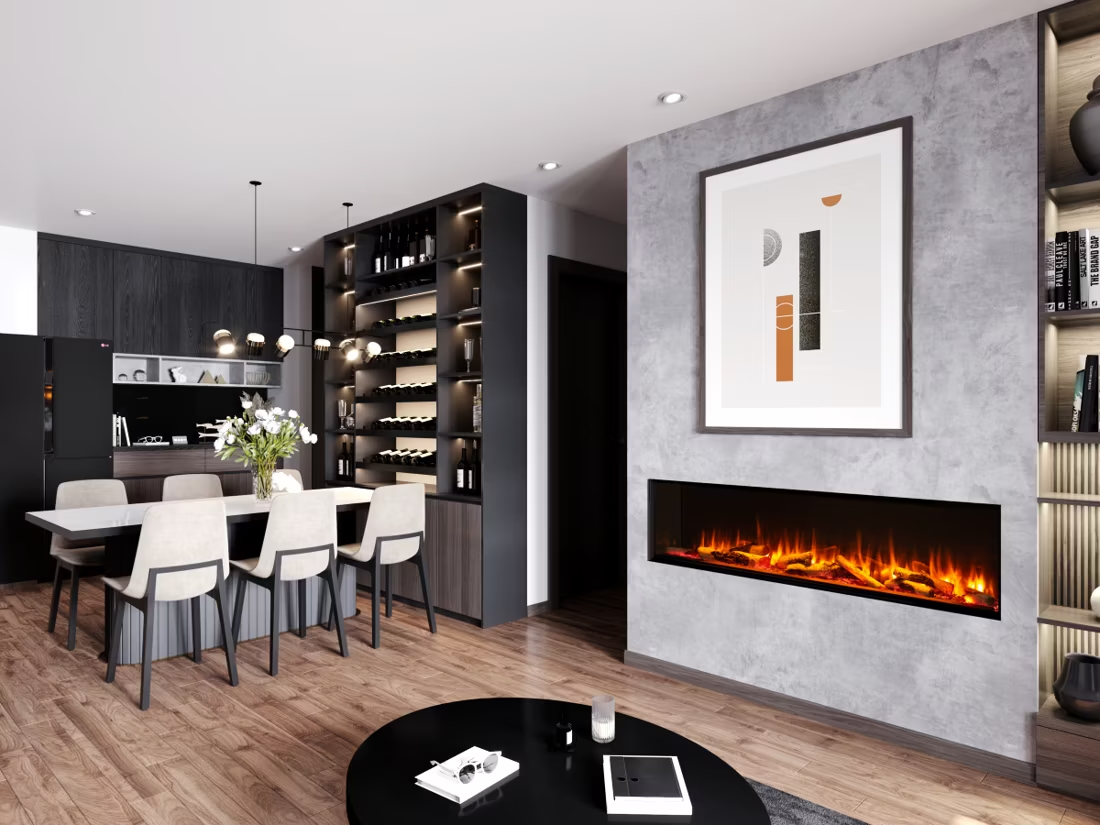
Four cover most of the market: screen-front traditional (mesh front, open feel, fits craftsman homes), traditional door set (the classic look you grew up with), modern linear (wide, low, the statement piece for entertaining), and clean face contemporary (no trim—your tile or stone runs right to the fire's edge). Walk in knowing those four terms and you're ahead of most buyers.
Does an electric fireplace need a vent or chimney?
No—that's its superpower. An electric fireplace needs a wall and an outlet, period. No vent pipe, no gas line, no clearances to design around, which is why it works in bedrooms, offices, apartments, and walls where venting a gas or wood unit would be impractical or impossible. Installation is typically the simplest and least expensive of any fireplace type.
Can I put a TV above my fireplace?
Yes—with an asterisk. Fireplaces are hot and TVs don't like heat. Either put a mantel between them to deflect rising warmth, or choose a fireplace with heat-management technology that creates a cool zone on the wall above—the wall stays around 125 degrees, barely warm, while the room still gets full heat. If you like clean lines and don't want a mantel, heat management is the answer.
Stove and Fireplace Dealers in Cariboo
Listings include WhyFire partner dealers, dealers we have verified as authorized for the brands we recommend, and established local businesses that carry hearth products. Every listing shows which one it is. The ones marked Preferred run on WhyFire's software, so they can show you real pricing and book your appointment right here. No manufacturer pays for placement. How we verify dealers →
Soapstone Heating Systems
Burgess Plumbing, Heating & Electrical Co.
Frontier Plumbing & Heating Ltd.
Electric Service in Cariboo
An electric fireplace's heater draws about 1,500 watts—pennies per hour at local rates.
Bc Hydro
FortisBC (Electric)
Get your free Project Guide & Parts List for an electric fireplace in the Cariboo.
Tell me a bit about your home and how you plan to use the fireplace, and I'll match you with a local Cariboo dealer and send over a free Project Guide & Parts List—the right unit, any electrical work needed, and a recommended local dealer for your project.
Find Your Fireplace →