
Steady, thermostat-controlled heat for Vancouver Island's long wet winters.
Campbell River's winter lows average a mild 1.6°C, but the heating season here runs long and damp rather than brutally cold. I'll match you with a trusted local dealer who knows what's actually installable on your street.
Every Project Starts From One of These Five Situations
Mild winters, but a long, damp heating season.
Campbell River sits at 65 metres elevation on the east coast of Vancouver Island in the Strathcona region, and its winter lows average just 1.6°C, nowhere near the deep freezes you'd find in Prince George or Fort McMurray. What the region does have is a long, overcast heating season that stretches across most of the year, favouring appliances that hold a steady, low-maintenance temperature over ones built for extreme output. That's exactly the case pellet stoves make: thermostat-controlled heat that runs for hours on a hopper of fuel without the splitting and stacking that Douglas fir, lodgepole pine, and western larch demand from a wood stove.
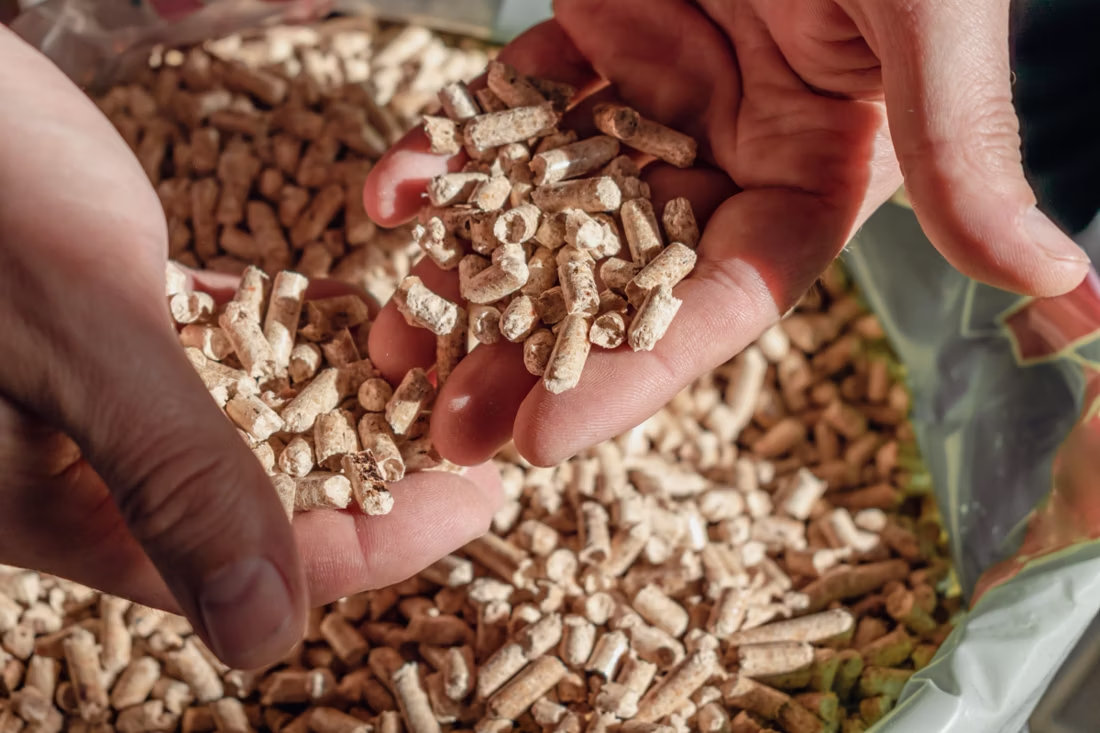
Natural gas through FortisBC and Pacific Northern Gas reaches much of Campbell River, so gas fireplaces are a mainstream option here too. Pellet stoves carve out their own niche for homeowners who want the look of a solid-fuel fire without processing cordwood, and for rural Strathcona properties sitting outside the gas service area. Regional brands Pinnacle Premium and Princeton Fuel Pellets, both milled from BC timber, run roughly $400 to $575 a tonne through Vancouver Island suppliers. Strathcona and several neighbouring regional districts also run wood-stove exchange programs that favour CSA and EPA-certified appliances, and a clean-burning pellet stove is a common upgrade choice under those programs.
Three steps. No salesperson until you're ready.
Tell us about your project
Your postal code, your situation, and the fuel you're leaning toward—or let the answers point you to one.
See what's actually available
The brands dealers within 100 miles genuinely carry—real options, never a catalog mirage.
Get your dealer & Project Guide
A trusted local dealer, plus the free Project Guide & Parts List that names every component of the job.
Frequently Asked Questions
How much does a pellet stove installation cost in Campbell River?
Budget $6,000 to $10,000 CAD for a full pellet stove project in Campbell River. An insert dropping into an existing masonry firebox, common in older homes around Willow Point or downtown, tends to land toward the lower end since the chimney chase is already there. A freestanding unit that needs a new hearth pad and wall-through venting, more typical in newer construction, pushes toward the top. Most local dealers fold the municipal building permit and final inspection into that quote.
Why choose a pellet stove over a wood stove in a climate this mild?
With winter lows averaging just 1.6°C, Campbell River doesn't face the extreme cold that drives wood-heat demand in places like Prince George or Winnipeg, but the region still runs a long, damp heating season where steady, hands-off warmth matters. A pellet stove holds a thermostat-set temperature for hours without reloading or splitting Douglas fir and lodgepole pine, and it burns clean enough to avoid the smoke concerns that have pushed several BC regional districts, including Strathcona, toward wood-stove exchange programs. Wood still wins if you want a fuel source that works without power; pellet trades that off for convenience and lower particulate output.
Do I need a permit to install a pellet stove in Campbell River?
Yes. New installations go through the municipal building department, and the appliance and venting need to meet CSA B365 installation code. Most insurance providers on Vancouver Island also ask for a WETT inspection before covering a solid-fuel appliance, pellet stoves included, so it's worth confirming your installer is WETT-certified before signing a contract rather than finding out when your insurer asks for paperwork later.
What size pellet stove does a Campbell River home actually need?
Less than you might expect. With winter lows rarely dropping far below freezing and a comparatively mild heating season for the coast, most living rooms here are well served by a mid-size unit in the 40,000 to 50,000 BTU range covering roughly 1,200 to 1,800 square feet, rather than the largest stoves built for Interior or Prairie cold snaps. A local dealer will size it against your actual floor plan and insulation, since an open-concept newer home near Oyster River heats differently than an older, more compartmentalized house downtown.
Where do I buy pellets in the Campbell River area, and what do they cost?
Pinnacle Premium and Princeton Fuel Pellets, both milled from BC timber, are the two brands most commonly stocked through Vancouver Island hearth dealers and hardware suppliers, running roughly $400 to $575 CAD a tonne depending on season and supply. Buying in early fall before demand peaks usually gets you the better end of that range. Pellets need dry, off-the-ground storage, a garage or covered shed works well, since bags left exposed to Campbell River's wet winters swell and clog easily.
Will my pellet stove work during a power outage?
Not without a backup power source. Pellet stoves rely on an electric auger and blower to feed fuel and circulate heat, so a BC Hydro outage, which coastal windstorms cause a handful of times most winters on Vancouver Island, will shut the stove down along with everything else. Some homeowners pair a pellet stove with a small battery backup or generator for exactly this reason. If outage resilience matters more than convenience, a wood stove burning Douglas fir or western larch is the more dependable option for that specific need.
What's a WETT inspection, and do I need one for a pellet stove?
WETT stands for Wood Energy Technology Transfer, and it's the certification most insurance companies on Vancouver Island require before covering a solid-fuel heating appliance, a category that includes pellet stoves even though they burn compressed sawdust rather than cordwood. A WETT-certified inspector checks your clearances, venting, and hearth pad against CSA B365 code. Getting that inspection done at install time is far simpler than trying to arrange it later during a claim or policy renewal.
Are there air quality rules that affect pellet stoves in Campbell River?
Pellet stoves are generally the appliance regional districts want to see more of, not less. Strathcona and several neighbouring BC regional districts run wood-stove exchange programs offering rebates for swapping an old, uncertified wood stove for a cleaner-burning CSA or EPA-certified appliance, and pellet stoves usually qualify as an upgrade option. Because pellet combustion produces far less particulate than an open wood fire, they're not typically the target of the smoke advisories and inversion-related burning restrictions that affect Interior BC valleys during stagnant winter air.
Pellet vs. natural gas, which makes more sense for a Campbell River home?
Both FortisBC and Pacific Northern Gas serve natural gas through much of Campbell River, so a gas fireplace is realistic for most in-town addresses and typically runs $6,000 to $15,000 CAD installed. Gas wins on push-button convenience and, with the right ignition system, keeps working through a power outage. Pellet costs less on the appliance side and gives you the look and feel of a real solid-fuel fire, but it needs an annual supply of bagged pellets and steady electricity to run. Homeowners on rural Strathcona properties without gas service, or anyone who specifically wants that solid-fuel ambiance without processing cordwood, tend to be the ones who land on pellet.
Why do fireplace quotes vary so much?
Because a fireplace is an iceberg—there's more behind the wall than in front of it. A low quote often covers only the unit; the full scope includes vent pipe, gas line or electrical, framing, and the tile or stone that has to come off and go back on. Make every bidder price the whole job. If a dealer can't speak to the full scope with confidence, that's your signal to keep looking.
Is it worth replacing an old fireplace that still sort of works?
Ask three questions: Is it ugly? Is it drafty? Does it actually work? Most old fireplaces fail at least two. Beyond looks, an old unit leaks air around the damper year-round and—if it's gas with a standing pilot—quietly burns a couple hundred dollars a year. A modern replacement seals the wall, heats the room, and changes how the whole space gets used.
Do I need a permit to install a fireplace?
In most jurisdictions, yes—fireplace and stove installations involve venting, clearances, and often gas or electrical work that gets permitted and inspected. That's a feature, not a hassle: the inspection protects your family and your homeowner's insurance. A professional installer pulls the permit, installs to code, and stands behind the inspection. If someone suggests skipping it, keep looking.
What do I measure to size a fireplace insert?
Four numbers tell you what fits: the front width, the front height, the back width, and the overall depth of your existing fireplace opening. Grab a tape measure, jot those down, and snap a photo of the wall—those two things do more to move your project forward than anything else you can do today.
Nearby Dealers
Hearth shops serving Campbell River and the surrounding area. Every listing shows whether it is a WhyFire partner, a dealer we have verified as authorized for the brands we recommend, or a local business carrying hearth products. No manufacturer pays for placement. How we verify dealers →
Pellet Brands Stocked Around Campbell River
Typical price runs $400-$575 per ton—buy early-season for the best rates. Manufacturers will point you to the nearest stocking dealer.
Pinnacle Premium
Princeton Fuel Pellets
Get your free Project Guide & Parts List for a Campbell River pellet stove.
Tell me about your home and your fuel storage situation, and I'll match you with a trusted local dealer and send a free Project Guide & Parts List sized for Campbell River's long, damp heating season, with the exact vent kit and parts your project needs.
Find Your Fireplace →