
Find the right hearth fuel for your Pike County home.
Wood, gas, pellet, and electric fireplace resources for every community in Pike County—from Murfreesboro to Glenwood and out to Delight. Find the right unit and connect with a trusted local hearth retailer.
Every Project Starts From One of These Five Situations
Moderate winters in the Ouachita foothills.
Pike County sits in the Ouachita Mountain foothills of southwest Arkansas, where winters are shorter and milder than the upper Midwest cold this site sometimes references—think closer to a Nashville or Little Rock heating season than a Duluth one. With a winter low average near 28°F and a heating season that runs a solid stretch from November through February, most homes here need supplemental heat for that stretch, not a six-month siege. Oak, hickory, and pine are the wood species people actually burn, split from the hardwood bottomlands and pine stands that surround Murfreesboro, Glenwood, and Delight. There's no formal air quality non-attainment designation here, so wood burning isn't subject to the curtailment restrictions you'd see in a smoke-prone basin—but EPA-certified stoves still make sense for efficiency and lower fuel consumption.
What you'll find on this hub: hearth retailers, service technicians, and fuel suppliers serving every town in the county—Murfreesboro as the county seat, Glenwood along Highway 70, Delight and Daisy in the more rural southern and eastern reaches. Pick your fuel below to drill into specifics—local dealers, installation costs, recommended units, and permit details. Whether you're heating a farmhouse near the Little Missouri River or a cabin close to the Ouachita National Forest boundary, this is the starting point.
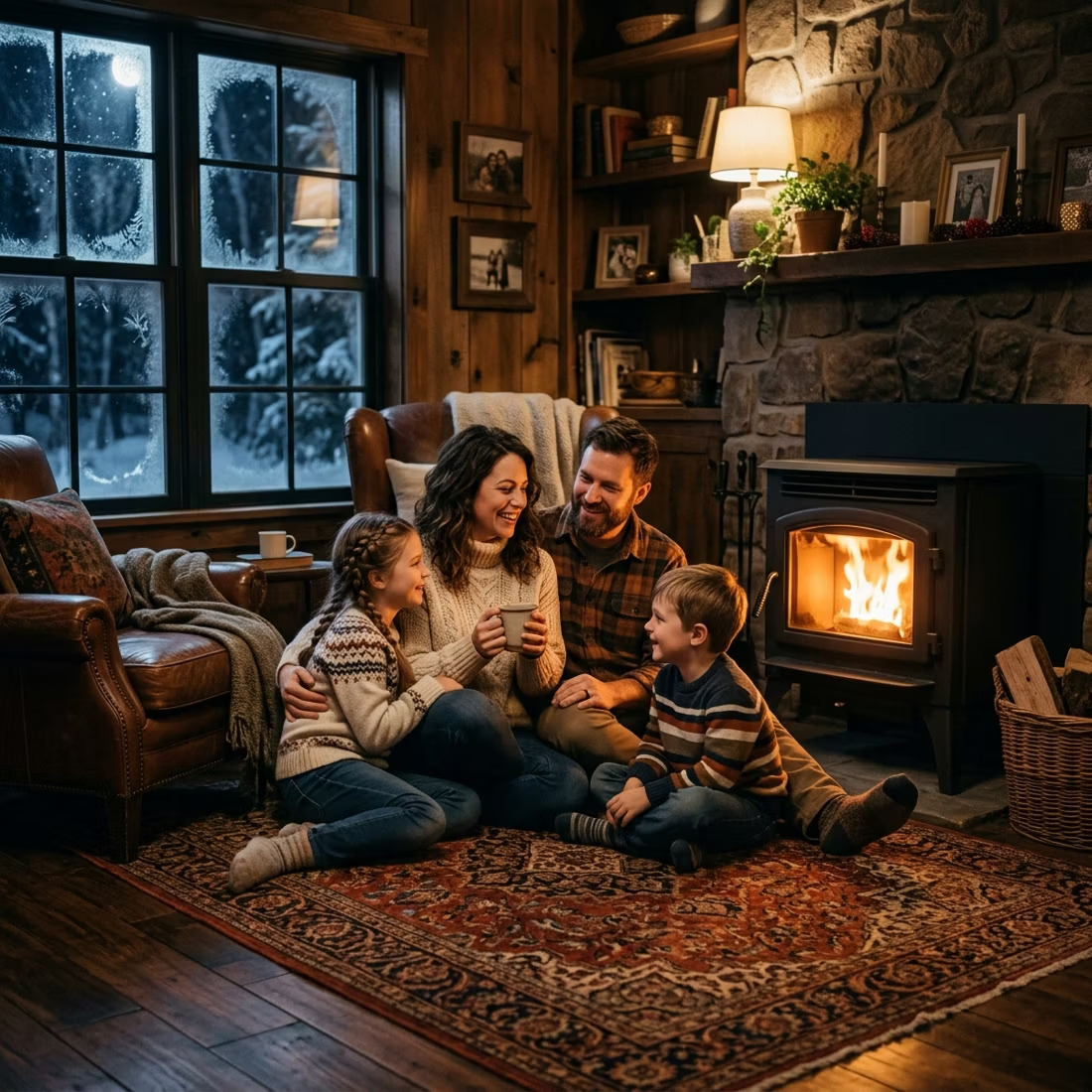
Four fuels. One honest answer for Pike County.
Three steps. No salesperson until you're ready.
Tell us about your project
Your zip code, your situation, and the fuel you're leaning toward—or let the answers point you to one.
See what's actually available
The brands dealers within 100 miles genuinely carry—real options, never a catalog mirage.
Get your dealer & Project Guide
A trusted local dealer, plus the free Project Guide & Parts List that names every component of the job.
Frequently Asked Questions
Which fuel works best in Pike County?
It depends on your home and how you use it, but Pike County's mild-to-moderate winters give people real flexibility. Wood is the traditional choice, especially for rural properties where oak and hickory are cut locally near the Ouachita and Ozark-St. Francis National Forest boundaries—it's economical and works during ice-storm power outages, which happen here more often than snow events. Gas is the convenience pick where propane service is available (there's limited natural gas infrastructure in a county this size, so propane is the practical version); it gives instant heat without wood handling. Pellet stoves are a solid middle ground—Lignetics and Indeck Energy Services pellets are regionally available, and pellet heat requires less physical labor than splitting wood, though it does need electricity to run the auger and fan. Electric fireplaces work well as supplemental or ambiance heat in bedrooms and additions, but given the county's fairly modest winter heating needs, they're rarely anyone's sole heat source. Many Pike County homes pair wood or propane as primary heat with electric in secondary rooms.
Do I need a permit to install a fireplace in Pike County?
In most cases, yes, for anything beyond a plug-in electric unit. New wood stoves, wood inserts, gas stoves, gas inserts, and pellet stoves typically require a building permit, and gas installations need a separate gas line permit performed by a licensed installer. In unincorporated parts of the county, permitting generally runs through the county building office; within Murfreesboro or Glenwood city limits, check with the city first since municipal codes can differ from county rules. Wood-burning appliances installed new should meet current EPA emissions standards even though Pike County has no local air quality restrictions forcing the issue—it keeps fuel use efficient and resale straightforward. Most local hearth retailers handle the permit paperwork as part of the installation quote, so you're not usually navigating it solo.
Are there air quality restrictions on wood burning in Pike County?
No—Pike County has no designated air quality non-attainment status and no winter burn curtailment program, unlike smoke-prone basins in the Pacific Northwest or Intermountain West. That means you won't run into mandatory or voluntary no-burn days here. That said, an EPA-certified stove still burns cleaner and more efficiently than an older uncertified unit, which matters for wood consumption and chimney maintenance even without a regulatory push. If you're burning green or unseasoned oak and hickory—common if you're cutting your own from Ouachita National Forest permit areas—expect more smoke and creosote buildup regardless of local air quality rules, so seasoning wood for at least six months to a year still pays off.
Can one local hearth retailer handle all four fuel types?
In a county with just over 5,000 residents, most hearth dealers focus on the fuels their customer base actually wants—usually wood and gas, sometimes pellet, with electric as a smaller line if carried at all. Homeowners in Murfreesboro and Glenwood often find that the nearest full-service, multi-fuel retailer is based in a neighboring county like Hot Spring or Clark, given the driving distances involved in rural southwest Arkansas. If you're cross-shopping fuels, it's worth calling ahead to confirm which display units a given retailer has on the floor before making the trip, since inventory in smaller markets shifts based on demand.
How does service work in rural areas of Pike County?
Most chimney sweeps and gas techs serving Pike County travel in from Murfreesboro, Glenwood, or from neighboring Hot Spring and Clark counties, covering the more remote stretches near Daisy and Delight and the properties bordering the Ouachita National Forest. Expect a modest trip charge on top of the service call for the farther-out addresses. Scheduling early in fall—before the first cold snap—gets you ahead of the rush that follows the county's periodic ice storms, which tend to spike demand for wood stove inspections and generator-adjacent heating solutions all at once. If you're on a wood or pellet setup, having a backup plan (a few dry cords stacked, or backup batteries for a pellet stove's igniter) is worth it given how ice events here can knock out power for days.
What's the typical cost range for fireplace installation across all fuel types in Pike County?
Costs run a bit lower here than in higher cost-of-living metro markets, though rural travel fees can offset some of that. Wood stove or insert installation: roughly $4,000–$8,500 depending on chimney condition and whether new masonry work is needed. Gas fireplace, insert, or stove: roughly $4,000–$9,500, with propane conversions often on the lower end if a tank and line are already in place. Pellet stove or insert: roughly $4,000–$7,000 for a typical install. Electric fireplace: $200–$2,500 for the unit itself, plus $300–$1,000 in labor unless it's a simple plug-and-play placement. For the specifics tied to your fuel choice, see the county + fuel pages above.
What is an in-home preview and do I need one?
It's a visit where a hearth professional measures your space, confirms the model you picked actually works in your home, and walks the specs—framing, gas line, venting, finish work—before anything is ordered. Some details you just can't know until you see the house. Never make a down payment without one; it's the single most-skipped step that burns buyers.
Can I install a fireplace myself?
If you're putting a fire in your house on purpose, it's best to work with an expert. Unless you're genuinely experienced in framing, gas line, vent pipe, and the national code on clearances to combustibles, have a professional do it—and ideally the same company that sells you the fireplace, so warranty, service, and liability all live under one roof.
How much should I budget for a fireplace?
For an average home—covering the fireplace, the vent pipe, and basic installation—a budget between $3,900 and $5,500 gives you a lot of options across wood, gas, and pellet. By the time you add finish work, gas line, and electrical, the average complete installation lands between $5,000 and $12,000 all-in. In a remodel or new build, a good rule is to put about 2.5% of the total project cost toward the fireplace.
Does a fireplace add value to my home?
On average, a fireplace adds back to the home about the same amount you spent installing it. Add the monthly savings from heating the rooms you actually use instead of the whole house—often hundreds of dollars a year—and the value case is strong before you even count what a fire does for how your family uses the room.
Stove and Fireplace Dealers in Pike County
Listings include WhyFire partner dealers, dealers we have verified as authorized for the brands we recommend, and established local businesses that carry hearth products. Every listing shows which one it is. The ones marked Preferred run on WhyFire's software, so they can show you real pricing and book your appointment right here. No manufacturer pays for placement. How we verify dealers →
Plyer's Home Center
Thrash Propane
LaGrone Williams Hardware
Kerry Blue Holdings
Abc Block And Brick
Find your fireplace in Pike County.
Pick your fuel below and we'll match you with a trusted local dealer, plus send a free Project Guide & Parts List—the exact parts, including the vent kit, and the dealer we recommend for your Pike County home.
Find Your Fireplace →