
Find the right fireplace for your Lee County home.
Wood, gas, pellet, and electric fireplace resources for Marianna and every community in Lee County. See what's genuinely available locally and get matched with a trusted hearth retailer near you.
Every Project Starts From One of These Five Situations
Delta winters and moderate heating needs across Lee County, Arkansas.
Lee County sits in the Arkansas Delta along the St. Francis River, in Climate Zone 3A—a mixed-humid zone where winter lows average 32 degrees and the heating season is real but far shorter than it is up in places like Duluth or Fargo. At roughly 3,100 heating degree days, most homes here need supplemental warmth for a handful of cold months rather than a primary heat source that has to run day and night through a long winter. Oak and hickory are the backbone firewood species in this part of the Delta, with pine filling in for kindling and quick-burning supplemental fires—all abundant given the bottomland hardwood forests that surround Marianna and the surrounding farmland.
What you'll find on this hub: hearth retailers, service technicians, and fuel suppliers covering Marianna and the smaller communities of Lee County—Aubrey, Haynes, Moro, LaGrange, and the rural routes between them. Pick a fuel below to see local dealers, typical installation costs, and unit recommendations that fit a Delta home. Whether you're warming a farmhouse near the river bottoms or a brick ranch in town, this is the place to start.
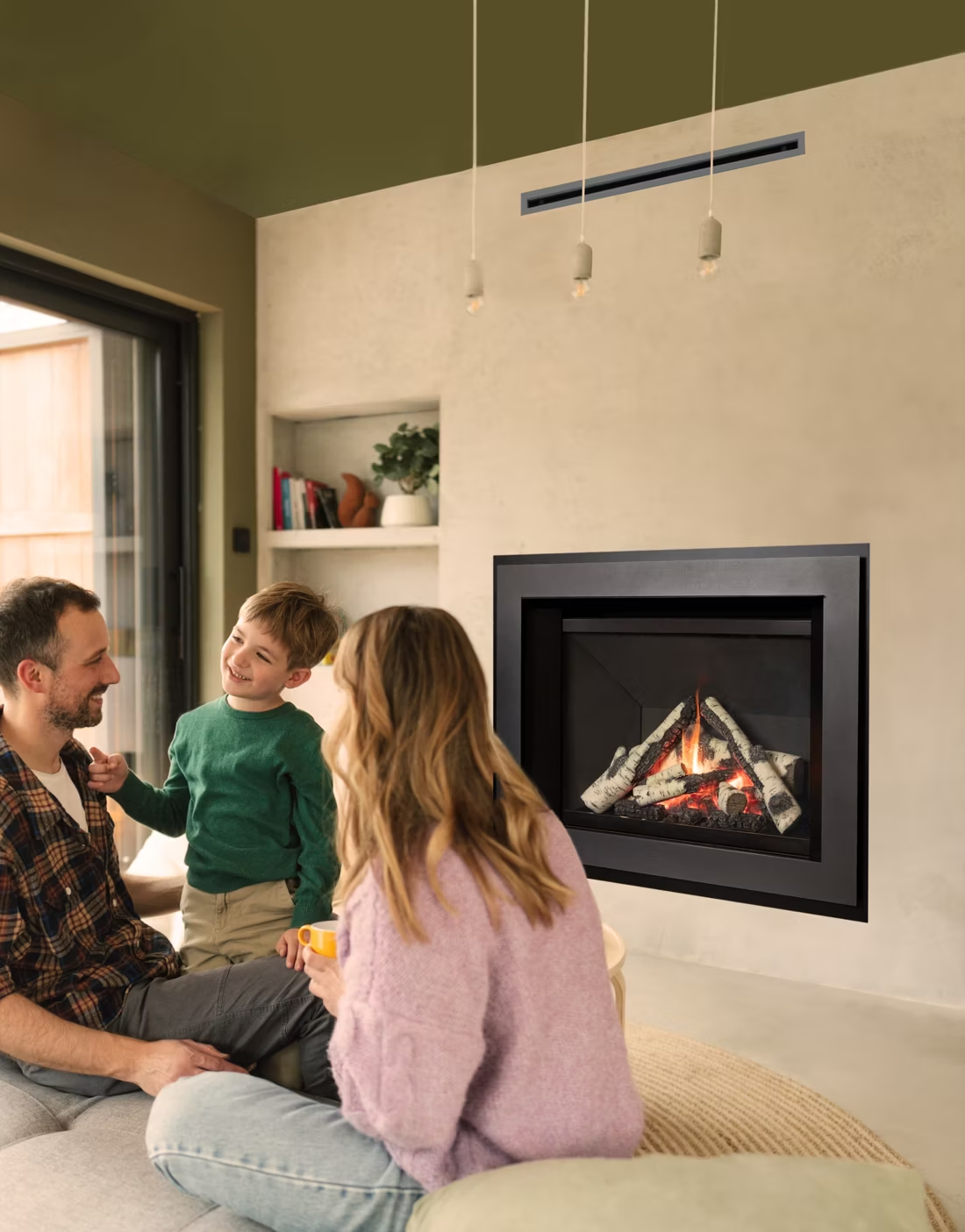
Four fuels. One honest answer for Lee County.
Three steps. No salesperson until you're ready.
Tell us about your project
Your zip code, your situation, and the fuel you're leaning toward—or let the answers point you to one.
See what's actually available
The brands dealers within 100 miles genuinely carry—real options, never a catalog mirage.
Get your dealer & Project Guide
A trusted local dealer, plus the free Project Guide & Parts List that names every component of the job.
Frequently Asked Questions
Which fireplace fuel makes the most sense in Lee County?
It comes down to how much of the winter you need to heat and what's convenient for your home. Lee County's heating season is moderate—around 3,100 heating degree days, well short of what a place like Bismarck or Minneapolis logs—so many homes here use a fireplace as supplemental heat rather than a whole-house furnace replacement. Wood is a natural fit given the local oak and hickory supply; a wood stove or insert can comfortably carry a living area through the coldest weeks. Gas fireplaces and inserts are popular for convenience—no wood-splitting, instant heat on a cold January morning. Pellet stoves work well too, with Lignetics and Indeck Energy Services both distributing into the region, though pellet supply in a county this size is worth confirming with your dealer before you commit. Electric fireplaces are a good supplemental option for bedrooms or a den where running a flue isn't practical. Most Lee County homeowners end up choosing based on which fuel is easiest to source and service near Marianna.
Do I need a permit to install a fireplace in Lee County?
Generally yes, though enforcement and process in a rural county this size is less involved than in a larger jurisdiction. Wood stoves, wood inserts, gas fireplaces, gas inserts, and pellet stoves typically require a building permit, and any gas connection work should go through a licensed gas-fitter, with propane tank placement following local fire code setbacks common throughout rural Arkansas. Electric fireplaces usually don't need a permit unless you're doing a built-in installation with new wiring. Within Marianna, permits run through the city; outside city limits, they go through the county. Most local hearth retailers or installers can walk you through this as part of the job, so it's rarely something a homeowner has to manage solo.
Are there air quality restrictions on wood burning in Lee County?
No—Lee County has no reported air quality non-attainment concerns or winter inversion issues, unlike parts of the West where geography traps wood smoke near the ground. That said, a well-seasoned, EPA-certified wood stove burning dry oak or hickory will always perform better and produce less smoke than an older, uncertified unit burning green or wet wood. If you're replacing an old stove, an EPA 2020 NSPS-certified model will burn cleaner and more efficiently regardless of local regulation.
Can one local retailer handle all four fuel types?
In a county with Lee's population, it's more common to find retailers who specialize in one or two fuels rather than carrying all four with full showroom displays. Some dealers based in Marianna or nearby in Phillips and Cross counties carry a broader mix—wood and gas together, or gas and pellet—while others focus tightly on wood stoves and inserts given the strong local firewood tradition. If you want to compare fuel types side by side, it's worth checking which nearby retailers stock multiple lines before you commit to a showroom visit, since not every dealer in this part of the Delta will have all four on the floor.
How does fireplace service work in a rural county like this?
Most technicians serving Lee County are based in Marianna or travel in from neighboring towns in Phillips or Cross counties, covering the rural routes out toward Aubrey, Haynes, Moro, and LaGrange. Expect to book service calls a bit further in advance than you would in a larger market—especially for pre-season chimney sweeps in September and October, before the oak and hickory burning season really starts. A small trip fee for the more remote farm routes is common. Scheduling your annual sweep or gas inspection early in the fall, before the first cold front comes through, tends to be easier than trying to get someone out during a January cold snap.
What's the typical cost range for fireplace installation across fuel types in Lee County?
Costs in a rural Delta county like Lee tend to track regional averages, though travel time from a nearby installer can add a bit to labor. Wood stove or insert installation typically runs $4,000–$8,000 depending on chimney or liner work. Gas fireplace, insert, or stove installation runs $4,000–$9,000, with propane setups sometimes lower if a tank and line are already in place. Pellet stove or insert installation typically falls in the $4,000–$6,500 range. Electric fireplaces run $200–$2,500 for the unit itself, with $300–$1,000 in labor for anything beyond a simple plug-and-play placement. A local dealer can give you an exact number once they've seen your home and venting situation.
Can a fireplace actually lower my heating bill?
Yes—by creating a comfort zone. A furnace heats every square foot of the house just to warm the one room you're in; a gas fireplace on low burns roughly a sixth of the gas a typical furnace does. Set the furnace around 55–60 degrees as a baseline, then heat the rooms your family actually uses. Families who heat this way commonly save $20–$60 a month.
Wood, gas, pellet, or electric—how do I choose?
Match the fuel to your life, not the other way around. Wood: lowest fuel cost and total power-outage independence, but you're hauling and stacking. Gas: press a button, set a thermostat, no maintenance to speak of. Pellet: wood economics with automatic feeding, in exchange for weekly cleaning and a need for electricity. Electric: plugs in anywhere with honest supplemental heat. Nobody regrets the fuel that fits how they actually live.
How much should I budget for a fireplace?
For an average home—covering the fireplace, the vent pipe, and basic installation—a budget between $3,900 and $5,500 gives you a lot of options across wood, gas, and pellet. By the time you add finish work, gas line, and electrical, the average complete installation lands between $5,000 and $12,000 all-in. In a remodel or new build, a good rule is to put about 2.5% of the total project cost toward the fireplace.
Can I install a fireplace myself?
If you're putting a fire in your house on purpose, it's best to work with an expert. Unless you're genuinely experienced in framing, gas line, vent pipe, and the national code on clearances to combustibles, have a professional do it—and ideally the same company that sells you the fireplace, so warranty, service, and liability all live under one roof.
Stove and Fireplace Dealers in Lee County
Listings include WhyFire partner dealers, dealers we have verified as authorized for the brands we recommend, and established local businesses that carry hearth products. Every listing shows which one it is. The ones marked Preferred run on WhyFire's software, so they can show you real pricing and book your appointment right here. No manufacturer pays for placement. How we verify dealers →
Quality Grills
Sayle Oil Company Inc.
Sayle Oil Company
Installed Building Products Of Memphis
Southern Hearth
eFireplaceStore.com
Bishop Hearth And Home, Inc.
The Chimney Doctor
Wallace Electric LLC
Find your fireplace in Lee County.
Tell us your fuel and your home, and we'll match you with a trusted local dealer plus a free Project Guide & Parts List—the exact parts, including the vent kit, and the dealer we recommend for your Lee County project.
Find Your Fireplace →