
Find the Right Fireplace for Mohave County's Desert Winters and High-Country Chill.
Wood, gas, pellet, and electric fireplace resources for every city and rural community in Mohave County—from the Colorado River valley in Bullhead City and Lake Havasu City up to the higher, cooler ground around Kingman and Colorado City. Find the right unit and connect with a trusted local hearth retailer.
Every Project Starts From One of These Five Situations
From Colorado River Basin Warmth to High-Country Cold in Mohave County, Arizona.
Mohave County spans roughly 13,000 square miles of northwest Arizona, and the climate shifts dramatically across it. Down along the Colorado River—Bullhead City, Lake Havasu City, Fort Mohave—winter lows average in the low-to-mid 40s, and the heating season is short; the county's mild winters mean a fraction of the heating load that a cold-climate town like Bozeman, Montana or Fargo, North Dakota logs in a single season. Up around Kingman and toward the Hualapai and Cerbat Mountains, elevation climbs past 3,000 feet and winter nights get genuinely cold, with the surrounding pinyon-juniper woodlands and ponderosa pine stands supplying much of the local firewood. Wildfire smoke is the county's main air-quality concern given how dry those woodlands run most of the year, which shapes both wood-collection seasons and how careful people are about chimney maintenance.
What you'll find on this hub: hearth retailers, service technicians, and fuel suppliers serving every community in the county—from Kingman and Golden Valley in the north to Bullhead City and Fort Mohave along the river, east to Lake Havasu City, and out to Colorado City, Dolan Springs, and Meadview. Pick your fuel below to drill into specifics—local dealers, installation costs, recommended units, and the resources that match your project. Whether you're heating a river-valley home that barely sees a hard freeze or a higher-elevation place near Kingman that does, this is the starting point.
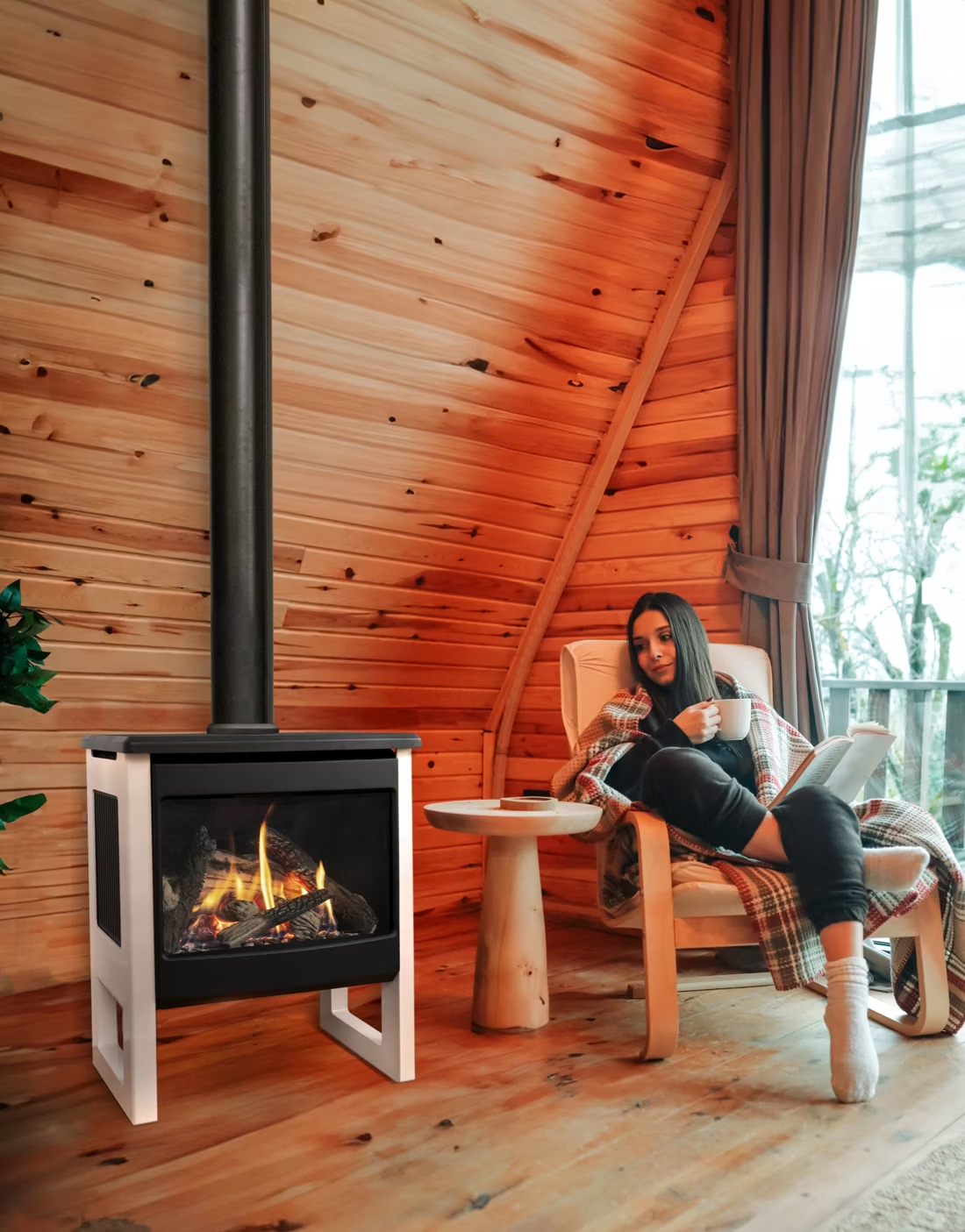
Four fuels. One honest answer for Mohave County.
Three steps. No salesperson until you're ready.
Tell us about your project
Your zip code, your situation, and the fuel you're leaning toward—or let the answers point you to one.
See what's actually available
The brands dealers within 100 miles genuinely carry—real options, never a catalog mirage.
Get your dealer & Project Guide
A trusted local dealer, plus the free Project Guide & Parts List that names every component of the job.
Frequently Asked Questions
Which fuel works best in Mohave County?
It depends heavily on where in the county you are. Mohave County's overall heating season is short—the county's winters are mild overall, nothing like a cold-climate town such as Duluth, Minnesota—so along the river in Bullhead City and Lake Havasu City, a fireplace is often more about ambiance and taking the chill off a few cool evenings than surviving a hard winter. Wood stoves are more genuinely useful up around Kingman and Colorado City, where elevation brings colder nights and ponderosa pine, pinyon, and juniper are readily available as local firewood. Gas is the convenience pick where natural gas service exists, and propane fills that role well elsewhere in the county. Pellet stoves are a solid middle ground, especially with Forest Energy and Lignetics pellets stocked regionally. Electric fireplaces make sense almost anywhere in the county as a low-maintenance ambiance unit, since so few homes actually need a fireplace as primary heat.
Do I need a permit to install a fireplace in Mohave County?
Generally yes, for anything beyond a plug-in electric unit. New wood stoves, wood inserts, gas fireplaces, gas inserts, and pellet stoves typically require a building permit, and gas installations need a separate gas-line permit handled by a licensed installer. Where you file depends on where you live: inside city limits, Kingman, Bullhead City, Lake Havasu City, and Colorado City each handle their own permitting, while unincorporated areas—Golden Valley, Fort Mohave, Mohave Valley, Dolan Springs, Meadview—go through the county building department. Most local hearth retailers manage this process as part of the installation, so it's rarely something you have to navigate solo.
Are there wood-burning or air quality restrictions in Mohave County?
The county's main air-quality concern is wildfire smoke rather than winter inversions, given how dry the pinyon-juniper woodlands and ponderosa pine stands around Kingman and the Hualapai Mountains run for most of the year. That mostly affects wood-cutting and open-burning windows rather than fireplace use itself, but it's still worth checking seasonal fire restrictions before gathering firewood on public land. Because conditions stay dry so much of the year, annual chimney inspection matters—creosote buildup in a rarely-cleaned flue is a real fire risk in a county where wildfire is already top of mind.
Can one local hearth retailer handle all four fuel types?
Many of the larger hearth retailers in Kingman and along the river cities carry three or four fuel types, which is convenient if you're comparing wood, gas, pellet, and electric side by side before deciding. Some smaller shops specialize—a supplier that focuses on firewood and pellets isn't necessarily a hearth retailer that installs gas or electric units. Check each dealer's listed fuel coverage on this hub before you drive across the county to visit a showroom, since coverage varies more here than the distances might suggest.
How does service work in the more remote parts of Mohave County?
Mohave County is one of the largest counties in the country by land area, and it shows in service logistics. Technicians based in Kingman, Bullhead City, or Lake Havasu City often drive well over an hour to reach Golden Valley, Dolan Springs, Meadview, or other outlying communities, so expect a travel fee on top of the service call and plan ahead rather than calling for same-day help. Scheduling annual chimney or gas-system service before the cooler months (roughly October–December) is easier than trying to book during a cold spell, and it matters more here than the mild average winter suggests—a poorly maintained wood system is still a fire risk even in a short heating season.
What's the typical cost range for fireplace installation across all fuel types in Mohave County?
Ranges vary by fuel and by how much venting or gas-line work is involved. Wood stove or insert installation: roughly $4,000–$8,500 for a typical install, with the higher end tied to full chimney or hearth work. Gas fireplace, insert, or stove: roughly $4,000–$10,000 depending on whether gas line extension is needed, with propane conversions sometimes landing lower than natural-gas hookups. Pellet stove or insert: roughly $4,000–$7,000 for a typical install. Electric fireplace: $200–$3,000 for the unit itself, plus $400–$1,200 in labor for anything beyond simple plug-in placement. For specifics tied to local retailer pricing, see the county + fuel pages above.
What is an in-home preview and do I need one?
It's a visit where a hearth professional measures your space, confirms the model you picked actually works in your home, and walks the specs—framing, gas line, venting, finish work—before anything is ordered. Some details you just can't know until you see the house. Never make a down payment without one; it's the single most-skipped step that burns buyers.
Does a fireplace add value to my home?
On average, a fireplace adds back to the home about the same amount you spent installing it. Add the monthly savings from heating the rooms you actually use instead of the whole house—often hundreds of dollars a year—and the value case is strong before you even count what a fire does for how your family uses the room.
Can I install a fireplace myself?
If you're putting a fire in your house on purpose, it's best to work with an expert. Unless you're genuinely experienced in framing, gas line, vent pipe, and the national code on clearances to combustibles, have a professional do it—and ideally the same company that sells you the fireplace, so warranty, service, and liability all live under one roof.
Can a fireplace actually lower my heating bill?
Yes—by creating a comfort zone. A furnace heats every square foot of the house just to warm the one room you're in; a gas fireplace on low burns roughly a sixth of the gas a typical furnace does. Set the furnace around 55–60 degrees as a baseline, then heat the rooms your family actually uses. Families who heat this way commonly save $20–$60 a month.
Stove and Fireplace Dealers in Mohave County
Listings include WhyFire partner dealers, dealers we have verified as authorized for the brands we recommend, and established local businesses that carry hearth products. Every listing shows which one it is. The ones marked Preferred run on WhyFire's software, so they can show you real pricing and book your appointment right here. No manufacturer pays for placement. How we verify dealers →
Banker Insulation
Vista Bbq Outfitters
Premier Bbq & Fire
Banker Insulation
Proficient Patios & Backyard Designs
Silver State Specialties, LLC
Penguin Fireplace & Design
Patio Paradise
Blue Sky Design And Build
Sunshield Awning Co.
Southwest Plumbing Supply- Mesquite
Find your fireplace in Mohave County.
Pick your fuel below, and we'll help you find a trusted local dealer and send over a free Project Guide & Parts List—the exact parts, vent kit included, and the recommended dealer for your Mohave County home.
Find Your Fireplace →