
Keep Your Family Warm and Safe—No Matter What
Cool desert nights, mesquite and pinyon within reach, and the occasional power blip from Sulphur Springs Valley EC—a wood stove earns its keep here. Get matched with a trusted local dealer who knows the area.
Every Project Starts From One of These Five Situations
A Fire for Cool Desert Nights, Not Survival Heat.
Mescal sits at 4,172 feet in the high desert of Cochise County, where the climate runs mild by national standards—average winter lows around 33°F and a fairly short, mild heating season, a fraction of what a place like Bozeman, MT sees in a single hard winter. That mildness changes the calculus: wood heat here isn't the survival necessity it is in the northern Rockies, but it's still a genuinely popular choice for supplemental warmth on the area's chilly desert nights, backup heat when rural power lines go down, and the simple appeal of a real fire in a region where mesquite grows practically in the backyard.
The Coronado National Forest issues personal-use cutting permits May through October, and at $5 to $20 per cord it's one of the more affordable ways to stock a woodpile in the Southwest. Mesquite is the signature local fuel—dense, slow-burning, and hot enough that oversized stoves can be a real problem here—while pinyon and juniper round out the mix with a lighter, more aromatic burn. Electric service comes from Sulphur Springs Valley Electric Cooperative at roughly 13.5 cents per kWh, reasonable enough that electric heat is affordable most winters, but rural co-op lines can go down during monsoon storms, which is part of why a wood stove still has a place in a lot of Mescal homes.
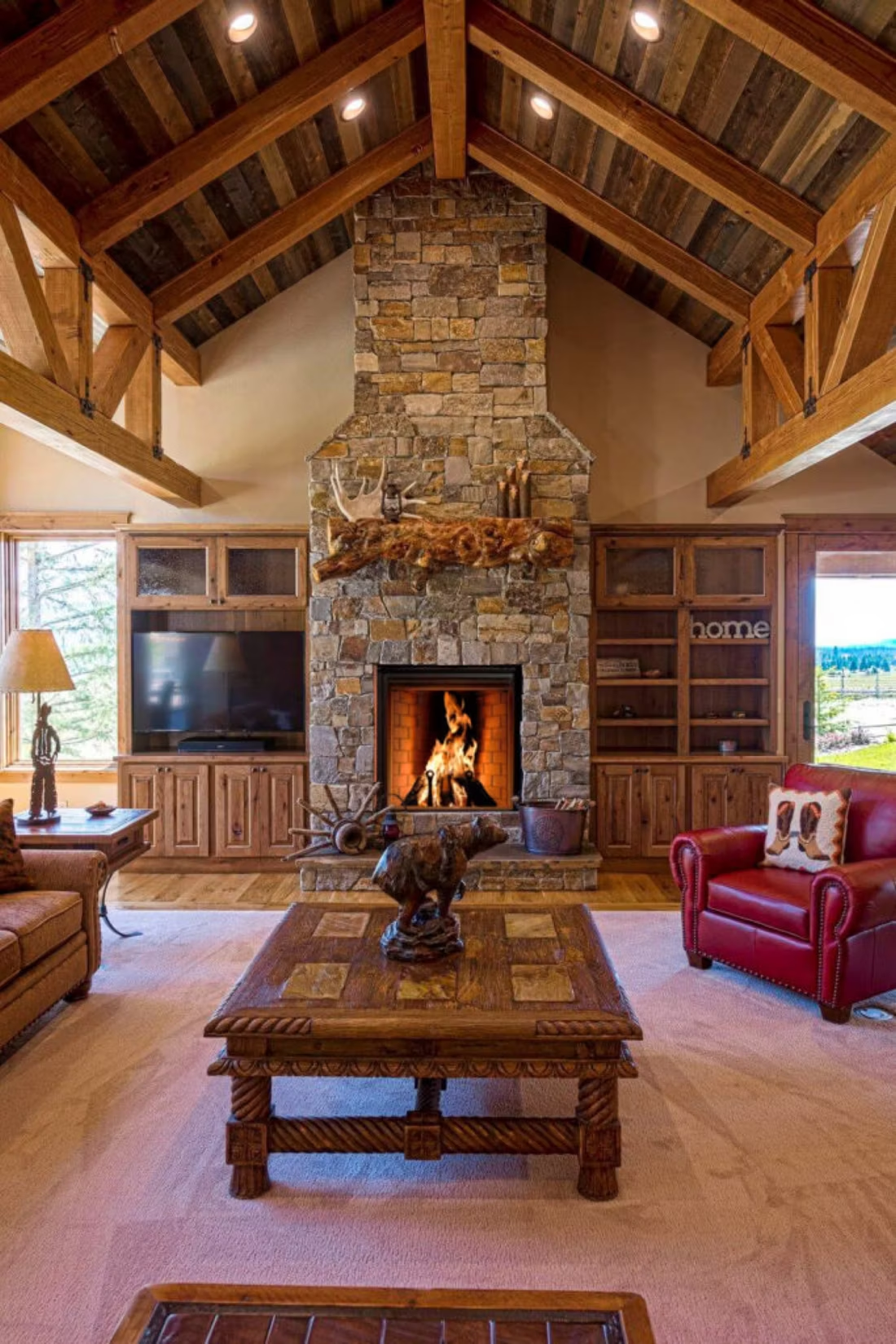
Firewood Cutting Permits Near Mescal
Three steps. No salesperson until you're ready.
Tell us about your project
Your zip code, your situation, and the fuel you're leaning toward—or let the answers point you to one.
See what's actually available
The brands dealers within 100 miles genuinely carry—real options, never a catalog mirage.
Get your dealer & Project Guide
A trusted local dealer, plus the free Project Guide & Parts List that names every component of the job.
Frequently Asked Questions
How much does a wood stove installation cost in Mescal?
Most wood stove installations in this part of Cochise County run somewhere between $3,500 and $8,500, depending on the stove, whether you need new Class A chimney pipe run through the roof, and how much hearth pad work is required for code clearances. Because Mescal is unincorporated and has no hearth retailers of its own, expect your installer to be based out of Benson, Sierra Vista, or Tucson—factor in a trip charge for the initial site visit, which most dealers roll into the estimate rather than billing separately.
What size wood stove do I actually need out here?
Given Mescal's mild winter lows—averaging around 33°F—most homes here are better served by a small to mid-size stove used for supplemental heat rather than a large unit meant to run around the clock. A stove sized for 1,000 to 1,500 square feet handles most rural Cochise County homes comfortably, with electric heat from Sulphur Springs Valley EC covering the rest. Going bigger than you need is a common mistake in mild climates like this one—an oversized firebox loaded with dense mesquite can overheat a room fast and force you to run it at a smolder, which isn't good for the stove or your air quality.
Where do I find a certified wood stove installer near Mescal?
Look for NFI (National Fireplace Institute) or CSIA-certified installers—since there's no hearth retailer inside Mescal itself, the nearest certified dealers typically operate out of Sierra Vista, Benson, or Tucson and travel out for installs throughout Cochise County. Certification matters more than convenience here: improper clearances or venting on a wood stove is the leading cause of house fires, and a properly credentialed installer will also know Cochise County's permit and inspection process cold.
Wood stove or wood insert—which fits a Mescal home?
A freestanding wood stove sits on a hearth pad and can go almost anywhere with the right clearances, which suits the manufactured and site-built homes common in rural Cochise County that don't already have a masonry fireplace. A wood insert, by contrast, slides into an existing masonry fireplace opening and uses the existing chimney with a new liner—a good option if your home already has an open hearth you want to make more efficient. Given how many rural homes out this way were built without a fireplace at all, freestanding stoves are the more common installation locally.
Do I need a permit to install a wood stove in Mescal?
Yes. Because Mescal is unincorporated, building permits for a new wood stove installation go through Cochise County's building department, and the unit itself needs to meet current EPA emissions standards. Most installers handle the permit paperwork as part of the job. Separately, keep an eye on air quality advisories—the region deals with both non-attainment air quality status and periodic wildfire smoke, and burn restrictions can go into effect during smoke events even though they don't require a permit to burn day-to-day.
What's the best wood stove for a climate like Mescal's?
Because winters here are mild and mesquite burns unusually hot and dense, a mid-size non-catalytic stove from a brand like Pacific Energy or Lopi is usually a better fit than a large catalytic unit built for 20-hour burns in sub-zero climates—you simply don't need that much sustained output most nights. The main thing to get right locally is firebox size relative to your square footage; mesquite's BTU output is high enough that an undersized room with an oversized stove will run you out of the house on a mild evening.
How often should my chimney be inspected in Mescal?
An annual inspection before burning season is still the right call even in a dry desert climate—the CSIA recommends it regardless of how much creosote actually builds up. Mesquite, pinyon, and juniper all burn relatively clean when properly seasoned, and the area's low humidity helps keep creosote formation slower than in wetter climates, but a chimney sweep can still catch nesting debris, cracked liners, or venting issues that build up over a season of infrequent use.
Where can I get firewood in or near Mescal?
Mesquite is the local specialty—dense, hot-burning, and abundant throughout the Cochise County high desert, with plenty of it also sold commercially for grilling. For self-cut firewood, the Coronado National Forest issues personal-use permits from May through October at $5 to $20 per cord, and pinyon and juniper are both available on permit alongside mesquite. Commercial firewood delivery is more limited out this way than in larger towns, so many Mescal households mix permitted cutting with occasional purchases from sellers based in Benson or Sierra Vista.
Wood stove or pellet stove for a Mescal home?
Wood stoves work without electricity, which matters if Sulphur Springs Valley EC's rural lines go down during a summer monsoon or winter storm, and they pair naturally with the mesquite and pinyon already available through Coronado National Forest permits. Pellet stoves are easier to run day to day and burn cleaner, and regional brands like Forest Energy and Lignetics are available through dealers in the area—but they need electricity for the auger and blower, so they won't help during an outage. Given Mescal's mild winters, a lot of households here treat wood as backup and ambiance rather than a daily necessity, which tips the decision toward wood for reliability and pellet for convenience.
Why is a fireplace insert so efficient?
An insert does two things: it seals the chimney completely, so you stop losing air you already paid to heat, and it radiates warmth into the room through the firebox and glass. Most add a heat-exchange fan that pulls cool room air underneath, wraps it around the hot firebox, and pushes it back out warm. Your home is more efficient before you've even lit the first fire.
Why is my open fireplace making my house colder?
Open fireplaces suck—literally. As the fire burns, it consumes air your furnace already paid to heat and pulls it out through the chimney, so the house is actually colder after the fire goes out than before you lit it. An insert fixes this: it seals the chimney, puts fixed glass across the front, and turns that hole in your house into a real heat source.
Can a fireplace actually lower my heating bill?
Yes—by creating a comfort zone. A furnace heats every square foot of the house just to warm the one room you're in; a gas fireplace on low burns roughly a sixth of the gas a typical furnace does. Set the furnace around 55–60 degrees as a baseline, then heat the rooms your family actually uses. Families who heat this way commonly save $20–$60 a month.
Can I install a fireplace myself?
If you're putting a fire in your house on purpose, it's best to work with an expert. Unless you're genuinely experienced in framing, gas line, vent pipe, and the national code on clearances to combustibles, have a professional do it—and ideally the same company that sells you the fireplace, so warranty, service, and liability all live under one roof.
Nearby Dealers
Hearth shops serving Mescal and the surrounding area. Every listing shows whether it is a WhyFire partner, a dealer we have verified as authorized for the brands we recommend, or a local business carrying hearth products. No manufacturer pays for placement. How we verify dealers →
Southwest Home & Hearth
Find your wood stove in Mescal.
Tell us about your home and we'll put together a free Project Guide & Parts List—the right stove, vent kit, and a trusted local dealer who installs wood stoves throughout Cochise County.
Find Your Fireplace →