
Heating gear built for Gila County's mountain-to-desert swing.
Wood, gas, pellet, and electric fireplace resources for every town in Gila County—from the Rim country around Payson down to the desert floor near Globe and Miami. Find the right unit and connect with a trusted local hearth retailer.
Every Project Starts From One of These Five Situations
From the Mogollon Rim to the Sonoran floor —
Gila County spans one of Arizona's most dramatic elevation ranges—Rim communities like Pine and Strawberry sit above 5,500 feet with real winter cold, while Globe and Miami down in the Pinal Creek valley stay milder most of the season. With a winter heating load that puts the county in a moderate-cold band, nowhere near Fargo ND territory but cold enough that heating matters five to six months a year, especially above the Rim. Mesquite, pinyon, and juniper are the local wood species—mesquite for its dense, long coal bed, pinyon and juniper cut under Tonto, Coconino, and Prescott National Forest permits for backcountry-heavy properties.
What you'll find on this hub: hearth retailers, service technicians, and fuel suppliers serving every community in the county—Payson and the Rim towns, Globe and Miami in the copper belt, and the smaller communities scattered through Tonto National Forest land. Pick your fuel below to see local dealers, realistic installation costs, and unit recommendations matched to your elevation and home. A Rim cabin at 6,000 feet and a Globe ranch house at 3,500 feet call for different setups, and this is the place to start sorting that out.
Four fuels. One honest answer for Gila County.
Three steps. No salesperson until you're ready.
Tell us about your project
Your zip code, your situation, and the fuel you're leaning toward—or let the answers point you to one.
See what's actually available
The brands dealers within 100 miles genuinely carry—real options, never a catalog mirage.
Get your dealer & Project Guide
A trusted local dealer, plus the free Project Guide & Parts List that names every component of the job.
Frequently Asked Questions
Which fuel works best in Gila County?
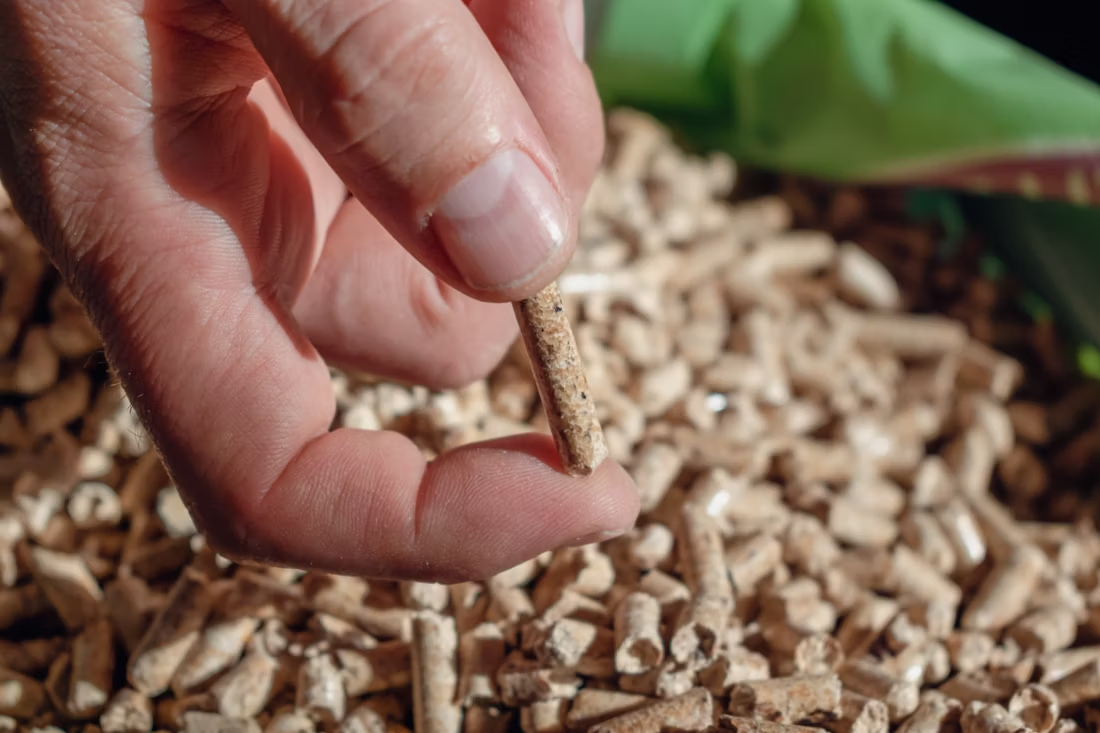
It depends heavily on where in the county you sit. Above the Rim in Pine, Strawberry, and upper Payson, wood remains a strong primary heat source—mesquite and pinyon burn hot and long, and a catalytic stove can carry a Rim cabin through the coldest nights without relying on the grid. Down in Globe and Miami, where winters are milder, gas and electric units cover most of the heating load with wood or pellet often kept for ambiance rather than necessity. Pellet stoves are a solid middle option countywide—Forest Energy and Lignetics both distribute into the area, so fuel isn't hard to find even away from the Rim. Electric fireplaces work well as supplemental heat almost anywhere in the county, but in Rim communities that occasionally lose power during winter storms, they shouldn't be the only heat source in a home.
Do I need a permit to install a fireplace in Gila County?
In most cases, yes. Wood stoves, wood inserts, gas fireplaces, gas inserts, gas stoves, and pellet stoves typically require a building permit, and gas installations need a separate permit and licensed gas-fitter for the line work. In unincorporated Gila County, permits run through the county building department; within Payson or Globe city limits, permits are issued by the respective city. Wood-burning appliances need to meet current EPA emissions standards for new installs. Electric fireplaces usually skip the permit process unless you're doing a built-in with new wiring. Most local retailers handle this paperwork as part of the installation, so it's rarely something homeowners have to manage themselves.
Are there air quality restrictions on wood burning in Gila County?
Parts of Gila County fall in a non-attainment area, and wildfire smoke is a recurring seasonal concern given the county's position along Tonto National Forest and the broader Rim country. That combination means summer and early fall can bring smoke advisories tied to regional fires rather than home heating specifically, but it's still worth checking Arizona Department of Environmental Quality advisories before burning during active fire season or stagnant-air periods. Unlike some non-attainment counties, Gila County doesn't run mandatory winter burn curtailment days, but installing an EPA-certified wood stove is still the better long-term choice—cleaner burn, less particulate, and better performance from mesquite and juniper cordwood.
Can one local hearth retailer handle all four fuel types?
Several retailers serving Gila County carry three or four fuel types, which is useful if you're weighing options between a Rim cabin and a valley home. Dealers based near Payson tend to lean heavier into wood and pellet, given the Rim's colder, higher-elevation customer base, while Globe-area retailers often carry a stronger gas and electric lineup for milder-winter homes. If you're not sure which fuel fits your specific elevation and home, a multi-fuel dealer can walk you through working displays and give you a straight answer rather than pushing whatever they happen to stock most of.
How does service work in remote parts of Gila County, like the Rim towns?
Technicians based in Payson and Globe travel out to Rim communities like Pine, Strawberry, and Christopher Creek, as well as more remote pockets near Young and the San Carlos area. Expect a modest travel fee for the farthest calls, and expect scheduling to tighten up considerably once winter weather rolls in—snow on Rim roads can delay service visits by days. Booking annual chimney sweeps or gas inspections in September or October, before the first cold snap, is the reliable way to avoid a mid-January wait. For Rim homeowners running wood as primary heat, this pre-season slot matters more than almost anything else.
What's the typical cost range for fireplace installation across all fuel types in Gila County?
Costs vary by fuel and by how much venting or gas line work is involved. Wood stove or insert installation typically runs $4,000–$8,500, with Rim installs sometimes running higher if a full masonry chimney is needed. Gas fireplace, insert, or stove installation runs roughly $4,000–$10,000 depending on whether propane lines need to be run—common in Rim communities without natural gas access. Pellet stove or insert installs generally land between $4,000–$7,000. Electric fireplaces are the most affordable option, from $200–$3,000 for the unit plus $300–$1,000 in labor for anything beyond a plug-and-play install. See the county + fuel pages above for retailer-specific pricing detail.
Can a fireplace actually lower my heating bill?
Yes—by creating a comfort zone. A furnace heats every square foot of the house just to warm the one room you're in; a gas fireplace on low burns roughly a sixth of the gas a typical furnace does. Set the furnace around 55–60 degrees as a baseline, then heat the rooms your family actually uses. Families who heat this way commonly save $20–$60 a month.
What is an in-home preview and do I need one?
It's a visit where a hearth professional measures your space, confirms the model you picked actually works in your home, and walks the specs—framing, gas line, venting, finish work—before anything is ordered. Some details you just can't know until you see the house. Never make a down payment without one; it's the single most-skipped step that burns buyers.
How much should I budget for a fireplace?
For an average home—covering the fireplace, the vent pipe, and basic installation—a budget between $3,900 and $5,500 gives you a lot of options across wood, gas, and pellet. By the time you add finish work, gas line, and electrical, the average complete installation lands between $5,000 and $12,000 all-in. In a remodel or new build, a good rule is to put about 2.5% of the total project cost toward the fireplace.
Does a fireplace add value to my home?
On average, a fireplace adds back to the home about the same amount you spent installing it. Add the monthly savings from heating the rooms you actually use instead of the whole house—often hundreds of dollars a year—and the value case is strong before you even count what a fire does for how your family uses the room.
Stove and Fireplace Dealers in Gila County
Listings include WhyFire partner dealers, dealers we have verified as authorized for the brands we recommend, and established local businesses that carry hearth products. Every listing shows which one it is. The ones marked Preferred run on WhyFire's software, so they can show you real pricing and book your appointment right here. No manufacturer pays for placement. How we verify dealers →
Home Center Supply
Banker Insulation
Mountain Leisure
Gilbert Fireplaces & BBQ’s
Find your fireplace match in Gila County.
Pick your fuel below and we'll match you with a trusted local dealer and put together a free Project Guide & Parts List—the parts, the vent kit, and the recommended installer for your elevation and home.
Find Your Fireplace →