
Zone heat and real flame for St. Albert homes, without the venting.
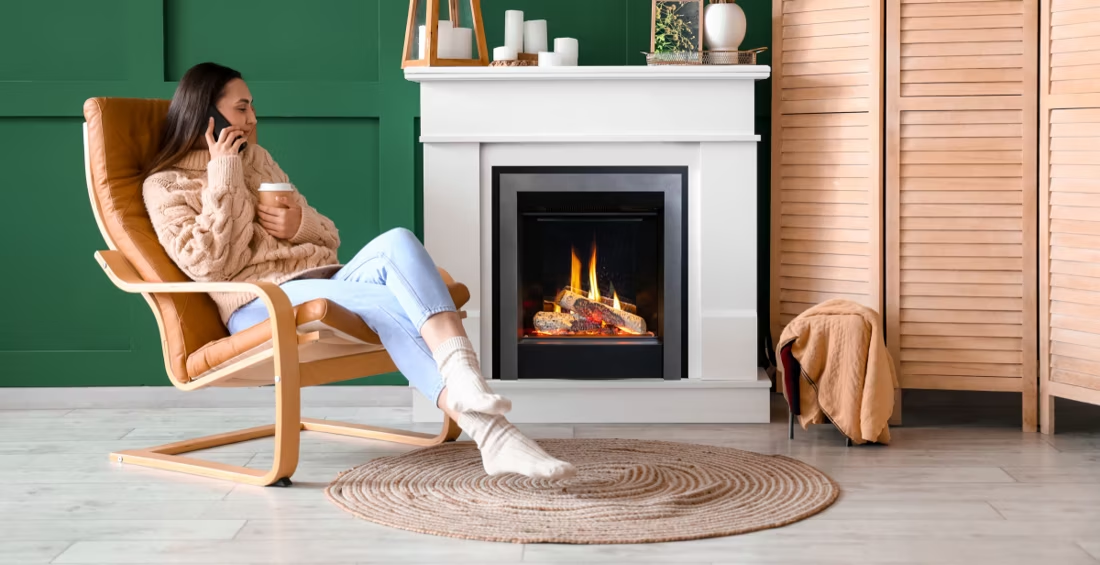
St. Albert sees average winter lows near -14.8°C and a long, freeze-thaw heating season typical of the Edmonton Region. An electric fireplace won't replace your furnace, but it adds instant flame and zone heat to a bonus room, basement, or condo with no chimney and no gas line. We'll help you find a trusted local dealer and a clear parts list.
Every Project Starts From One of These Five Situations
A supplemental heat source, not a furnace replacement.
At 663 metres elevation with winter lows averaging -14.8°C, St. Albert's heating season is long and the Chinook-belt freeze-thaw swings mean furnaces run hard from October through April. Most homes here lean on natural gas through ATCO Gas or Apex Utilities for primary heat, or a wood stove burning aspen poplar, paper birch, lodgepole pine, or white spruce cut under a free, year-round 30-day permit from Alberta Forestry and Parks. Electric fireplaces fit differently into that picture: they're the fastest, least disruptive way to add flame and localized warmth to a room that doesn't already have a heat source, without opening a wall for venting.
That's also where the honesty comes in. Running on straight resistance heat at roughly 13 cents a kilowatt-hour through EPCOR, ENMAX, or ATCO Electric depending on your address, an electric unit costs more per unit of heat than gas from ATCO Gas. It makes the most sense as a secondary or ambiance source—a finished basement, a St. Albert condo or townhome without gas service, or a family room addition—rather than as the main way you fight a Prairie winter. The upside is installation cost: at $500 to $1,600, it's the cheapest fireplace project on this list by a wide margin, since there's no chimney, no gas line, and often just a dedicated circuit to run.
Three steps. No salesperson until you're ready.
Tell us about your project
Your postal code, your situation, and the fuel you're leaning toward—or let the answers point you to one.
See what's actually available
The brands dealers within 100 miles genuinely carry—real options, never a catalog mirage.
Get your dealer & Project Guide
A trusted local dealer, plus the free Project Guide & Parts List that names every component of the job.
Frequently Asked Questions
How much does an electric fireplace installation cost in St. Albert?
Most electric fireplace projects here land between $500 and $1,600 CAD. A plug-in insert or wall-mount unit that uses an existing outlet sits at the low end and can often go in same-day. A built-in unit that needs framing, a dedicated 120V or 240V circuit, and finish trim runs closer to the top of that range, especially if an electrician has to run new wiring from the panel in an older St. Albert home. Either way, it's a fraction of the $6,000-$15,000 typical for a gas install with new line work and venting.
Is electric enough to heat a St. Albert home through the winter?
Not as a stand-alone furnace. With average lows around -14.8°C and a heating season that stretches well past the shoulder months, most homes here still rely on a gas furnace through ATCO Gas or Apex Utilities, or a wood appliance, for whole-home heat. An electric fireplace is better matched to a single room—a bonus room over the garage, a basement rec room, or a condo that doesn't have gas service at all—where 1,500 watts of supplemental heat is genuinely useful rather than a primary heat source stretched too thin.
Do I need a permit for an electric fireplace in St. Albert?
It depends on the unit. A freestanding or wall-mount electric fireplace that plugs into an existing outlet typically doesn't trigger a permit. If your dealer is adding a new dedicated circuit or doing any panel work for a built-in unit, that electrical work needs to be pulled through St. Albert's municipal building department and done by a licensed electrician. It's a much lighter process than the CSA B365 inspection and WETT sign-off wood installs need for insurance purposes.
Will an electric fireplace still work if the power goes out?
No—an electric fireplace is entirely dependent on grid power, so it goes dark the same moment your furnace fan does. That matters in St. Albert, where winter windstorms and ice events tied to Chinook freeze-thaw swings occasionally knock out power for hours at a time. If outage backup is a real concern for your household, a wood stove burning locally available aspen poplar or lodgepole pine, cut under a free Alberta Forestry and Parks permit, is worth considering alongside an electric unit rather than instead of one.
What does it cost to run an electric fireplace day to day?
At the province's roughly 13 cents per kilowatt-hour residential rate, a typical 1,500-watt electric fireplace costs around $0.20 an hour on full heat output. Running it a few hours most evenings through the coldest months works out to somewhere around $30-$45 a month depending on your utility—EPCOR, ENMAX, or ATCO Electric—and how much of that time is spent on flame-only mode, which draws only a few watts once the heater cycles off.
Where do electric fireplaces make the most sense in a St. Albert home?
The best fits are rooms that don't already have a heat source nearby or don't have gas service at all—finished basements, above-garage bonus rooms, and condos or townhomes across St. Albert that were built without a gas fireplace rough-in. Because there's no venting requirement, a unit can go on almost any interior wall, which is useful in newer builds where running a gas line or masonry chimney after the fact would be disruptive and expensive.
What's the difference between an electric insert, a built-in, and a mantel unit?
An electric insert is sized to drop into an existing masonry firebox, which is a common upgrade for St. Albert homeowners retiring an old wood-burning fireplace they no longer want to maintain. A built-in unit gets framed into a new wall during a renovation or basement finish and usually needs a dedicated circuit. A mantel or freestanding electric fireplace is furniture-style, plugs into a standard outlet, and can move with you—the simplest option if you're renting or not ready to commit to construction.
How does an electric fireplace compare to a wood stove for a St. Albert property?
Wood is the traditional choice in this region—aspen poplar, paper birch, lodgepole pine, and white spruce are all common local species, and Alberta Forestry and Parks issues free cutting permits valid for 30 days, year-round. But wood installs run $6,000-$12,000, need a WETT inspection for insurance and CSA B365-compliant venting, and require ongoing hauling and cleaning. Electric skips all of that: no chimney, no WETT inspection, no wood storage, and a $500-$1,600 install, at the tradeoff of higher running cost per hour of heat and zero function during a power outage.
Are there rebates or efficiency incentives for electric fireplaces in Alberta?
There's no dedicated fireplace rebate program tied to Alberta's electric utilities at this time, so most of the savings case comes from the low upfront cost rather than an incentive cheque. Because a $500-$1,600 install is already the cheapest fireplace option in St. Albert, the payback period on ambiance and zone heat is short even without a rebate. If you're weighing electric against a gas or wood upgrade, ask your local dealer whether any current municipal or utility programs apply to your specific project—offers do change from year to year.
How much does an electric fireplace cost to run?
With the heater on, a typical unit draws about 1,500 watts—at average electric rates that's roughly 20 cents an hour. Run the flame effect alone and it costs pennies; the flames are LED-driven and use about as much power as a light bulb. There's no pilot light, no fuel delivery, and essentially no maintenance.
What fireplace styles should I know before shopping?
Four cover most of the market: screen-front traditional (mesh front, open feel, fits craftsman homes), traditional door set (the classic look you grew up with), modern linear (wide, low, the statement piece for entertaining), and clean face contemporary (no trim—your tile or stone runs right to the fire's edge). Walk in knowing those four terms and you're ahead of most buyers.
Does an electric fireplace need a vent or chimney?
No—that's its superpower. An electric fireplace needs a wall and an outlet, period. No vent pipe, no gas line, no clearances to design around, which is why it works in bedrooms, offices, apartments, and walls where venting a gas or wood unit would be impractical or impossible. Installation is typically the simplest and least expensive of any fireplace type.
Can I put a TV above my fireplace?
Yes—with an asterisk. Fireplaces are hot and TVs don't like heat. Either put a mantel between them to deflect rising warmth, or choose a fireplace with heat-management technology that creates a cool zone on the wall above—the wall stays around 125 degrees, barely warm, while the room still gets full heat. If you like clean lines and don't want a mantel, heat management is the answer.
Nearby Dealers
Hearth shops serving St. Albert and the surrounding area. Every listing shows whether it is a WhyFire partner, a dealer we have verified as authorized for the brands we recommend, or a local business carrying hearth products. No manufacturer pays for placement. How we verify dealers →
National Energy Equipment Inc.
Gemco Fireplaces & Wholesale Heating Products
Carriere Enterprises
McLeod Home Building Centre
Spark Heating & Air Conditioning
Roy’s Plumbing And Heating Ltd
Onoway Tim-Br Mart
Hayduk Lumbert Hardware Ltd
Midnight Heating
Country Homes Inspections
Roy’s Plumbing And Heating Ltd
Bob Jack’s Sheet Metal
Electric Service in St. Albert
An electric fireplace's heater draws about 1,500 watts—pennies per hour at local rates.
Enmax
Epcor
Atco Electric
Get your free Project Guide & Parts List for a St. Albert electric fireplace.
Tell us about your home, whether you're on EPCOR, ENMAX, or ATCO Electric, and which room needs the heat, and we'll help you find a trusted local dealer plus a free Project Guide & Parts List specifying the right unit and circuit for your St. Albert project.
Find Your Fireplace →