
Keep Your Family Warm and Safe—No Matter What
At 618 metres in Alberta's aspen parkland, Smoky Lake sees winter lows averaging -15.6°C and a heating season that runs six months or more. We'll help you find a local dealer who knows what actually installs on rural power and municipal service alike.
Every Project Starts From One of These Five Situations
Wood heat is a practical backup here, not a novelty.
Smoky Lake sits in the aspen parkland belt of the Edmonton Region, where winter lows average -15.6°C and long stretches of sub-zero weather rival what Saskatoon or Edmonton itself sees most winters. Chinook-belt freeze-thaw swings are common here, and with a population under 1,100 spread across town and the surrounding acreages, a lot of households treat a wood stove as the appliance that keeps the house warm when a rural power line goes down in an ice storm, not just a weekend feature.
Aspen poplar, paper birch, lodgepole pine, and white spruce are the species most local burners split and stack, and Alberta Forestry and Parks issues free cutting permits, valid for 30 days, on a season that runs year-round on Crown land near town. ATCO Gas and Apex Utilities both serve natural gas within Smoky Lake's town limits, but plenty of the outlying acreages this region is known for sit outside that service area, which keeps wood in steady demand as either the primary heat source or the backup that doesn't depend on the grid. Whatever you install, expect the municipal building department to require a permit under CSA B365, and expect your insurer to ask for a WETT inspection before they'll write a policy on the appliance.
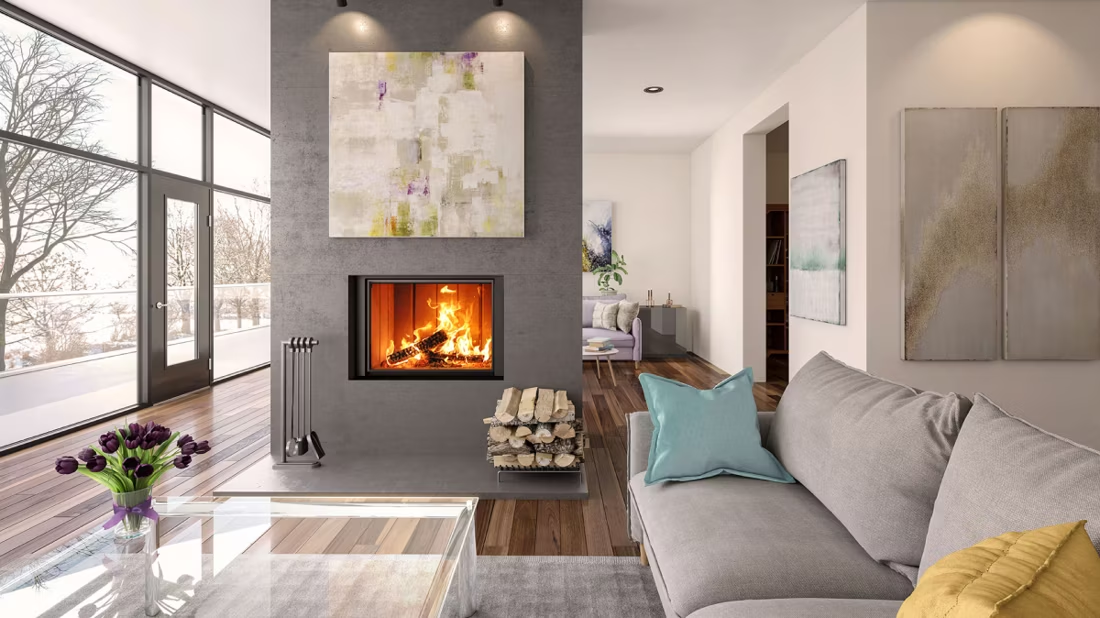
Firewood Cutting Permits Near Smoky Lake
Government Of Alberta, Forestry And Parks
Three steps. No salesperson until you're ready.
Tell us about your project
Your postal code, your situation, and the fuel you're leaning toward—or let the answers point you to one.
See what's actually available
The brands dealers within 100 miles genuinely carry—real options, never a catalog mirage.
Get your dealer & Project Guide
A trusted local dealer, plus the free Project Guide & Parts List that names every component of the job.
Frequently Asked Questions
How much does a wood stove installation cost in Smoky Lake?
Most installs in and around Smoky Lake run $6,000 to $12,000 CAD, with the spread coming down to whether you're dropping an insert into an existing masonry firebox or building a full Class A chimney system from the floor up. An insert into a working flue in an older Smoky Lake or area farmhouse sits toward the low end. A newer acreage home without an existing chimney needs full through-roof venting, which pushes the job toward the top of that range. Either way, the municipal building department requires a permit, and CSA B365 governs how the installer runs the clearances and venting.
What size wood stove do I need for a Smoky Lake home or acreage?
With winter lows averaging -15.6°C and routine cold snaps well below that, undersizing is the mistake to avoid. A small stove rated under 1,000 square feet suits a cabin or a supplemental setup, but the farmhouses and acreage homes common around Smoky Lake usually call for a medium to large stove in the 1,500 to 2,500 square foot range so it can carry an overnight burn without a 3 a.m. reload. A local dealer will size it against your actual insulation, ceiling height, and how much of the house you're asking the stove to heat, not just the square footage on the listing.
Do I need a permit to install a wood stove in Smoky Lake?
Yes. New installations go through the municipal building department, and the install itself has to meet CSA B365. Most local dealers handle that paperwork as part of the job. The other permit that catches people off guard isn't a building permit at all—it's insurance. Most insurers in this region won't write or renew a policy on a wood-burning appliance without a WETT inspection, so budget for that alongside the building permit.
What's the difference between a wood stove and a wood insert for my house?
A freestanding stove sits on a hearth pad and vents up through new Class A pipe, which works well for the newer acreage homes around Smoky Lake that were never built with a masonry fireplace. An insert slides into an existing masonry firebox and reuses the chimney that's already there, which is the more common retrofit in the older houses in town where an open fireplace was standard decades ago. Inserts also tend to land toward the lower end of the $6,000-$12,000 range since the chimney structure doesn't need to be built from scratch.
Where do I get a firewood cutting permit near Smoky Lake?
Government of Alberta, Forestry and Parks issues cutting permits for Crown land in the region, and they're free with a 30-day validity, on a season that runs year-round rather than the shorter spring-to-fall windows you'll find in some other provinces. Aspen poplar and white spruce are the two species most permit-holders come home with, since they're the most common stands near Smoky Lake, though paper birch and lodgepole pine both show up in the bush around the North Saskatchewan River valley too.
What's the best wood stove for Smoky Lake winters?
Given a heating season that runs six months and lows that regularly sit near -20°C during a hard cold snap, catalytic stoves built to hold a fire 20-plus hours overnight are a common choice for households using wood as primary heat on an acreage. For a supplemental setup in a town home already on ATCO Gas or Apex Utilities service, a simpler non-catalytic stove is easier to live with and still handles the job when the power goes out during a winter storm. Whichever you choose, look for CSA-certified models—your dealer and your insurer will both want to see that certification before the WETT inspection.
How often should my chimney be swept in Smoky Lake?
An annual sweep before burning season, ideally in September or early October ahead of the first hard freeze, is the standard recommendation, and it matters more here than in a milder climate because of the freeze-thaw cycles common to this part of the Chinook belt. Those swings can crack and loosen creosote deposits in ways that a steadier cold climate doesn't, so a lot of local WETT inspectors recommend a mid-season check too if you're burning aspen poplar that hasn't had a full year to season.
What's a WETT inspection, and do I actually need one?
WETT stands for Wood Energy Technology Transfer, and it's the certification Canadian insurers rely on to confirm a wood-burning appliance was installed to code and is safe to run. In Smoky Lake and the wider region, most home insurers require a WETT inspection before they'll insure a wood stove or insert, whether it's brand new or already in place when you buy a property. It's a normal step, not a red flag—a good local dealer arranges it alongside the project rather than leaving you to track down an inspector afterward.
Wood vs. natural gas—which makes more sense for a Smoky Lake home?
Inside town limits where ATCO Gas or Apex Utilities service reaches, gas wins on convenience: it fires instantly and doesn't need splitting or stacking. Wood wins on resilience, which matters on the acreages surrounding Smoky Lake where gas service often doesn't extend and where a downed rural power line can mean days without heat if your only source needs electricity to run. A lot of households in this region end up with both—gas or an electric appliance for daily ease in town, and a wood stove as the appliance that keeps working no matter what the grid or the weather does.
Why do fireplace quotes vary so much?
Because a fireplace is an iceberg—there's more behind the wall than in front of it. A low quote often covers only the unit; the full scope includes vent pipe, gas line or electrical, framing, and the tile or stone that has to come off and go back on. Make every bidder price the whole job. If a dealer can't speak to the full scope with confidence, that's your signal to keep looking.
Louvered or clean face—which fireplace front is better?
Louvered fronts have grill work above and below the glass for airflow, move heat a little better with a fan, and suit traditional mantels. Clean face designs drop the louvers entirely so finish work runs to the fire's edge—they fit both modern and traditional rooms. When we did our own home we chose clean face: a big viewing area beat a little extra airflow. It depends on your room, not on a rulebook.
What does it take to replace an existing fireplace?
Fireplaces are like icebergs—bigger behind the wall than in front of it. Replacement means removing the surrounding tile or stone (the finish material laps onto the fireplace face), pulling the old unit, setting the new one in the same enclosure, and re-finishing the wall. A hearth professional can determine what's behind your wall without demolition during an in-home preview.
Can a wood stove burn all night?
The right one can. If waking up to a warm house and live coals matters to you, say exactly that when you're shopping—firebox size and burn-rate control determine overnight performance far more than any number on a spec sheet. It's a much more useful question than asking about BTUs.
Nearby Dealers
Hearth shops serving Smoky Lake and the surrounding area. Every listing shows whether it is a WhyFire partner, a dealer we have verified as authorized for the brands we recommend, or a local business carrying hearth products. No manufacturer pays for placement. How we verify dealers →
Wilson Fans & Lighting
Clarks Plumbing & Heating
Spark Heating & Air Conditioning
Gemco Fireplaces & Wholesale Heating Products
National Energy Equipment Inc.
Midnight Heating
Carriere Enterprises
McLeod Home Building Centre
Roy’s Plumbing And Heating Ltd
Onoway Tim-Br Mart
Hayduk Lumbert Hardware Ltd
Bob Jack’s Sheet Metal
Get your free Project Guide & Parts List for a Smoky Lake wood project.
Tell us about your home or acreage and we'll help you find a local dealer and send a free Project Guide & Parts List—sized for a six-month heating season, with the vent kit and parts specified and the WETT inspection accounted for.
Find Your Fireplace →