
Built for Leduc winters that settle in below -17°C.
Leduc sits at 728 metres in a climate zone where winter lows average -17.7°C and cold snaps run well past that. We'll help you find a trusted local dealer who knows the ATCO Gas and Apex Utilities service lines, the venting, and what's actually installable on your street.
Every Project Starts From One of These Five Situations
Natural gas is already the backbone of heat here.
Leduc's climate zone 7B puts it in territory that runs colder longer than most of Canada, closer to what Saskatoon or Regina residents deal with than anything on the coast. An average winter low of -17.7°C is the baseline, not the extreme—multi-day stretches well below that are normal most winters, and a fireplace here needs to be a real heat source on the coldest nights, not just ambiance for the living room.
Most homes in Leduc already run on natural gas through either ATCO Gas or Apex Utilities, the two distributors serving the Edmonton Region, so adding or upgrading a gas fireplace is usually a straightforward tie-in rather than a new service question. It's a fitting fuel for a city that owes its modern identity to the Leduc No. 1 oil discovery in 1947—energy infrastructure runs deep here, and a direct-vent gas fireplace or insert fires instantly, doesn't need a woodpile, and keeps running through the freeze-thaw swings that make wood seasoning trickier for burners across the region.
Three steps. No salesperson until you're ready.
Tell us about your project
Your postal code, your situation, and the fuel you're leaning toward—or let the answers point you to one.
See what's actually available
The brands dealers within 100 miles genuinely carry—real options, never a catalog mirage.
Get your dealer & Project Guide
A trusted local dealer, plus the free Project Guide & Parts List that names every component of the job.
Frequently Asked Questions
How much does a gas fireplace installation cost in Leduc?
Typical installs in Leduc run $6,000 to $15,000 CAD. A direct-vent insert dropping into an existing masonry firebox near an ATCO Gas or Apex Utilities line lands toward the low end. A new built-in unit for a renovation or addition—with fresh gas line runs and venting through a wall or roof—pushes toward the top of that range. Acreage properties on the edge of town that sit outside either utility's service area should budget extra for a propane tank set instead.
Can I convert my existing wood fireplace to gas?
Yes, and it's a common request in Leduc's older neighbourhoods where homes were originally built with a masonry firebox for burning aspen poplar or lodgepole pine. A gas insert typically slides into that same firebox with a liner run through the existing chimney, generally landing between $6,000 and $11,000 depending on whether you're tying into ATCO Gas, Apex Utilities, or running propane on an acreage. It also sidesteps the WETT inspection insurers commonly require for wood appliances, since a properly installed gas unit falls under a different code path.
ATCO Gas or Apex Utilities—does it matter which one serves my house?
It mostly changes who reads your meter, not how the fireplace performs. ATCO Gas and Apex Utilities both distribute natural gas across the Edmonton Region, and either one supports a standard direct-vent fireplace or insert without issue. What matters more is confirming your home's actual service before you shop, since a handful of newer subdivisions on Leduc's edges and surrounding acreages sit outside both footprints and rely on propane instead—your dealer can confirm which situation applies to your address.
Will a gas fireplace still work if the power goes out?
Most will, which is worth planning for given how often prairie winter storms knock out power across the Edmonton Region for hours at a stretch. Units with intermittent pilot ignition run on a small battery backup that kicks in automatically. Some models, including certain Valor fireplaces, skip the battery entirely because the pilot's thermocouple generates its own current. Ask your dealer which ignition system is on any unit you're considering—on a night when it's -20°C outside, that detail matters more than the mantel finish.
What's the difference between a gas fireplace, insert, and stove?
A gas fireplace is a built-in unit framed into a wall, typical for new construction or a full renovation. A gas insert fits inside an existing masonry firebox, which is the common upgrade path in older Leduc homes that started out burning wood. A gas stove is freestanding on a hearth pad, similar footprint to a wood stove but running off a gas line or propane tank instead of split aspen or birch. For most existing homes here, an insert is the least disruptive option since it reuses the chimney chase already in the wall.
Do I need a permit to install a gas fireplace in Leduc?
Yes. You'll need a building permit through the municipal building department, plus a separate gas permit tied to work done by a licensed gas fitter. Most local hearth dealers who install here handle both permits and the final inspection as part of the job, which saves you from coordinating two separate approvals on your own. It's a lighter process than the CSA B365 and WETT inspection requirements that apply to wood appliances, but it's still a required step, not optional paperwork.
Should I get a vented or vent-free gas fireplace in Leduc?
Direct-vent is the standard here and the option nearly every local dealer will steer you toward. Vent-free units burn into the room and aren't broadly approved for use under Canadian building codes the way they sometimes are in parts of the U.S., so you'll find limited selection and limited installer willingness to take on that job. A direct-vent unit pulls combustion air from outside and exhausts it back outside through sealed venting, which is both code-compliant and the safer, lower-maintenance choice through a long Leduc heating season.
How often does a gas fireplace need to be serviced?
Plan on an annual check, ideally in late summer or early fall before the first hard freeze rather than mid-winter when technicians are booked solid. A technician checks the burner, pilot assembly, gas connections, and venting, and cleans the glass. It's a lighter lift than servicing a wood-burning appliance, but skipping it on a unit that runs daily through a Leduc winter is how an ignition failure shows up on the coldest night of the year. Expect roughly $150-$250 for a standard visit.
Gas vs. wood vs. pellet—which makes sense for a Leduc home?
Gas wins on convenience—instant heat off the ATCO Gas or Apex Utilities line with no wood to split or stack. Wood, usually aspen poplar, paper birch, lodgepole pine, or white spruce cut under a free Government of Alberta, Forestry and Parks permit, still wins on fuel cost and keeps working without electricity during an outage, though the region's freeze-thaw cycles mean seasoning your supply properly matters more than it does in a steadier cold climate. Pellet stoves, running on regional brands like La Crete Sawmills or Vanderwell at roughly $400-$575 a tonne, land in between—cleaner-burning than wood but still dependent on electricity for the auger. Many Leduc households run gas in the main living space for daily convenience and keep a wood or pellet appliance elsewhere in the house as backup for extended winter outages.
Can a gas fireplace run on a thermostat?
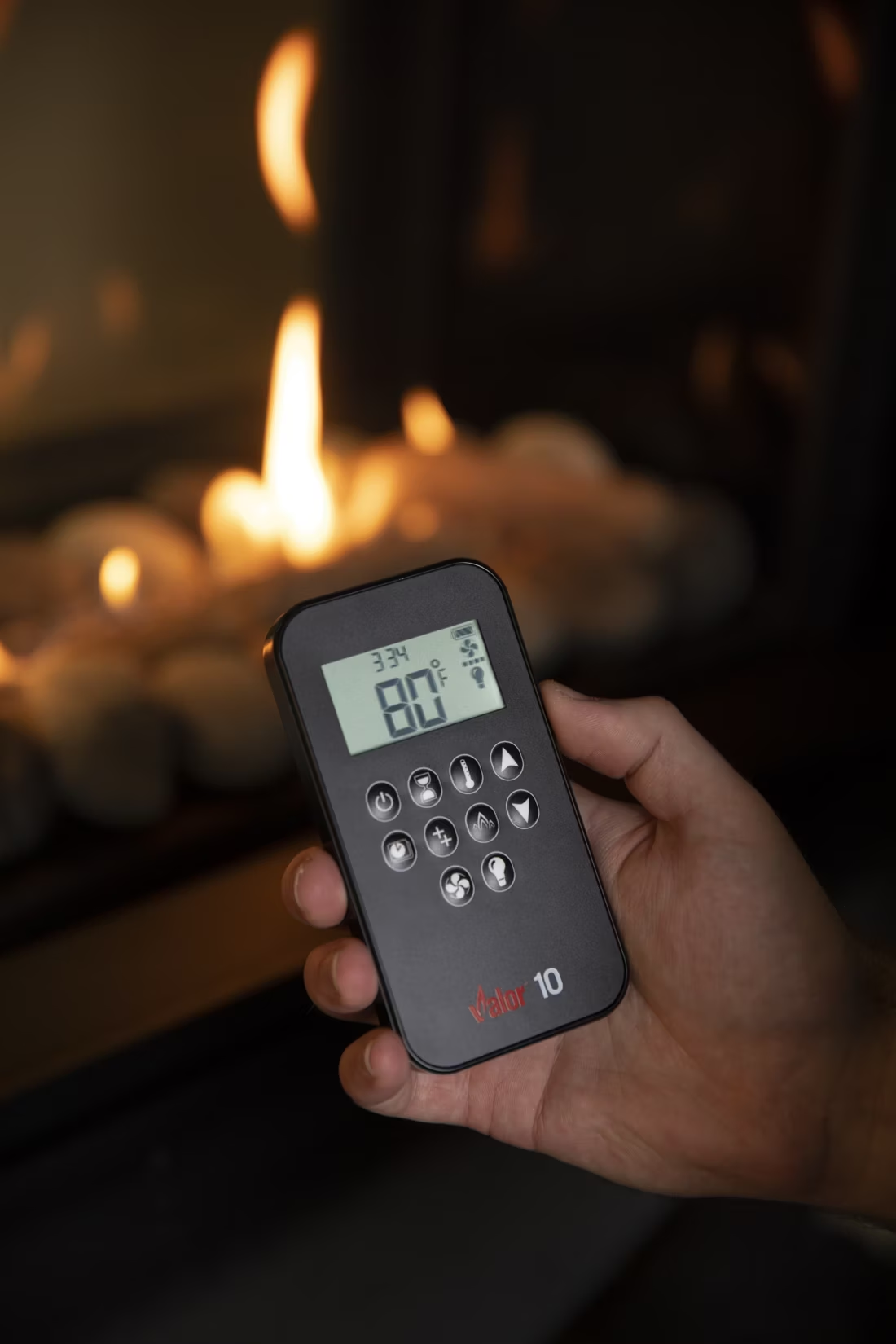
Most modern gas fireplaces can—turn it on and off from the couch with a remote, or set a room temperature and let the fireplace hold the comfort zone for you. If low maintenance matters to your family, this is the feature set that makes gas the convenience pick over wood and pellet.
Why do fireplace quotes vary so much?
Because a fireplace is an iceberg—there's more behind the wall than in front of it. A low quote often covers only the unit; the full scope includes vent pipe, gas line or electrical, framing, and the tile or stone that has to come off and go back on. Make every bidder price the whole job. If a dealer can't speak to the full scope with confidence, that's your signal to keep looking.
What's the difference between radiant and convective fireplace heat?
Most fireplaces are a thin metal box—they heat fine, but you rely on the fan to move the warmth into the room. Radiant models use a thick cast-ceramic firebox, about an inch and a quarter thick, that soaks up the fire's heat and radiates roughly 25–30% more warmth into the room with no fan running. If you watch TV in the same room or want heat in a power outage, radiant is worth asking about.
What does it take to replace an existing fireplace?
Fireplaces are like icebergs—bigger behind the wall than in front of it. Replacement means removing the surrounding tile or stone (the finish material laps onto the fireplace face), pulling the old unit, setting the new one in the same enclosure, and re-finishing the wall. A hearth professional can determine what's behind your wall without demolition during an in-home preview.
Nearby Dealers
Hearth shops serving Leduc and the surrounding area. Every listing shows whether it is a WhyFire partner, a dealer we have verified as authorized for the brands we recommend, or a local business carrying hearth products. No manufacturer pays for placement. How we verify dealers →
Hayduk Lumbert Hardware Ltd
Gemco Fireplaces & Wholesale Heating Products
Spark Heating & Air Conditioning
National Energy Equipment Inc.
McLeod Home Building Centre
Carriere Enterprises
Roy’s Plumbing And Heating Ltd
Onoway Tim-Br Mart
Midnight Heating
Country Homes Inspections
Roy’s Plumbing And Heating Ltd
Natural Gas Service in Leduc
Confirm service at your address before planning a gas fireplace—a quick call settles it.
Atco Gas
Apex Utilities
Get your free Project Guide & Parts List for a Leduc gas fireplace.
Tell us about your home and whether you're on ATCO Gas, Apex Utilities, or propane, and we'll help you find a trusted local dealer and send a free Project Guide & Parts List with the exact vent kit and parts your project needs.
Find Your Fireplace →