
Keep Your Family Warm and Safe—No Matter What
At 1,225 metres in the foothills, with winter lows averaging -15.2°C, Grande Cache is a place where a serious wood stove is still standard equipment, not a backup plan. We'll help you find a local dealer who knows the terrain and send a free plan for your project.
Every Project Starts From One of These Five Situations
A foothills town where the woodpile is part of the plan.
Grande Cache is a small, isolated community of roughly 3,300 people wedged into the Rocky Mountain foothills along Highway 40, closer to Grande Prairie and Hinton than to anything resembling a city. It's technically grouped under the Edmonton Region for administrative purposes, but the climate here is its own story: sitting at 1,225 metres in climate zone 7B, winters average -15.2°C at the low end and stretch into a long, genuinely cold season closer to what Whitehorse or Fort McMurray residents would recognize than what most of central Alberta deals with. Long, isolated stretches of highway and a grid that occasionally goes down in a winter storm make an independent heat source more than a nice-to-have here.
Aspen poplar, paper birch, lodgepole pine, and white spruce grow all around Grande Cache on Crown land, and the Government of Alberta, Forestry and Parks issues cutting permits free of charge, valid for 30 days, with no closed season—a real advantage over communities that charge per cord and limit cutting to a few summer months. The catch is the freeze-thaw cycles typical of this Chinook-influenced belt of the foothills, which can re-wet split wood that looked dry in October. Stacking early, covering the top of the pile, and giving rounds a full season under cover matters more here than the calendar suggests. Natural gas is available through ATCO Gas and Apex Utilities, and plenty of homes run it for convenience, but wood remains the fallback most Grande Cache households actually count on when a storm takes the power out.
Firewood Cutting Permits Near Grande Cache
Government Of Alberta, Forestry And Parks
Three steps. No salesperson until you're ready.
Tell us about your project
Your postal code, your situation, and the fuel you're leaning toward—or let the answers point you to one.
See what's actually available
The brands dealers within 100 miles genuinely carry—real options, never a catalog mirage.
Get your dealer & Project Guide
A trusted local dealer, plus the free Project Guide & Parts List that names every component of the job.
Frequently Asked Questions
How much does a wood stove installation cost in Grande Cache?
Most installations run $6,000 to $12,000 CAD, with the range mostly determined by whether you're inserting into a chimney that already exists or building new venting from scratch. A wood insert going into a working masonry firebox in one of the older homes near the townsite sits toward the low end. New construction or additions without existing venting—more common on newer lots toward the edge of town—need a full Class A chimney system, which pushes cost toward the top of that range. Either way, a permit through the municipal building department is required, and most installers include that step in their quote.
What size wood stove do I need in Grande Cache?
With winter lows averaging -15.2°C and a heating season that runs long into a foothills spring, undersizing is the bigger risk here than oversizing. A stove rated under 1,000 square feet suits a cabin or camp use around the Sulphur Gates area, but most Grande Cache homes do better with a mid-to-large stove in the 1,500 to 2,500 square foot range so it can carry an overnight burn without constant reloading during a hard cold snap. A local dealer should size it against your actual floor plan and insulation rather than square footage alone—older log and frame homes in town often lose heat differently than newer builds.
Where do I get a wood cutting permit near Grande Cache?
The Government of Alberta, Forestry and Parks issues personal-use cutting permits for the Crown land surrounding town, and the terms are about as good as it gets in Alberta: no fee, a permit valid for 30 days, and cutting allowed year-round rather than a narrow summer window. Aspen poplar and paper birch are the easiest to find and season quickest; lodgepole pine burns clean and dries fast after beetle-kill stands; white spruce is common too but tends to throw more sparks, so it's better suited to a stove with a solid door seal than an open hearth.
Do I need a permit to install a wood stove in Grande Cache?
Yes. New installations go through the municipal building department, and the work has to meet CSA B365, the national installation code for solid-fuel appliances—clearance to combustibles, chimney height above the roofline, hearth pad sizing, all of it. Most hearth dealers serving Grande Cache handle the permit application and inspection as part of the job, which is worth confirming up front given how few installers cover this stretch of Highway 40 regularly.
Does my home insurance require a WETT inspection for a wood stove?
Most insurers writing policies in Grande Cache will ask for a WETT (Wood Energy Technology Transfer) inspection before they'll cover a wood-burning appliance, especially on older homes with a stove that predates the current owner. It's a straightforward inspection confirming the installation meets CSA B365 and that clearances and venting are correct—expect to book it after installation and keep the certificate on file. A dealer who regularly installs in this area can usually recommend a certified WETT inspector without you having to search one out on your own.
Wood vs. gas—which makes more sense for a Grande Cache home?
Both ATCO Gas and Apex Utilities serve Grande Cache, and a gas fireplace or insert is a real option here, typically running $6,000 to $15,000 CAD installed. But wood keeps working when the power and, in a bad enough storm, the gas supply itself are interrupted along this stretch of the foothills—a genuine consideration in a town this far from redundant infrastructure. Many households here run gas for everyday convenience in the main living space and keep a wood stove or insert as the appliance they actually trust to carry the house through a multi-day outage.
How do I keep firewood dry through Grande Cache's freeze-thaw cycles?
The Chinook-influenced swings common to this part of the foothills—a mild spell that softens snow, followed by a hard refreeze—can wick moisture back into a woodpile that looked fully seasoned in the fall. Stack aspen poplar and birch off the ground on rails, top-cover the pile but leave the sides open for airflow, and split rounds early enough that they've had a full spring-to-fall season to dry before your first cold snap. Lodgepole pine and white spruce season a bit faster than the hardwoods but benefit from the same treatment.
How often should my chimney be swept in Grande Cache?
An inspection before the season starts—ideally by September, ahead of the first real cold snap off the foothills—is the standard recommendation, and it matters more in a town where a lot of households burn wood through a genuinely long, cold season rather than just on weekends. Homes burning several cords a winter, which is common here, often need a mid-season check too, particularly if the wood going in wasn't quite as seasoned as it should have been thanks to the freeze-thaw swings this area sees.
What's the best wood stove for Grande Cache's winters?
Given lows that regularly sit around -15.2°C and a heating season that runs deep into spring at this elevation, a catalytic stove that can hold a fire 15 to 20 hours overnight is a genuine advantage for a household relying on wood as a primary or serious backup heat source. Non-catalytic stoves are simpler to maintain and still perform well for supplemental heat or secondary living spaces. Either way, look for a stove rated for the larger end of your square footage rather than average—this town's cold snaps aren't the kind you want to be undersized for.
Why do fireplace quotes vary so much?
Because a fireplace is an iceberg—there's more behind the wall than in front of it. A low quote often covers only the unit; the full scope includes vent pipe, gas line or electrical, framing, and the tile or stone that has to come off and go back on. Make every bidder price the whole job. If a dealer can't speak to the full scope with confidence, that's your signal to keep looking.
Louvered or clean face—which fireplace front is better?
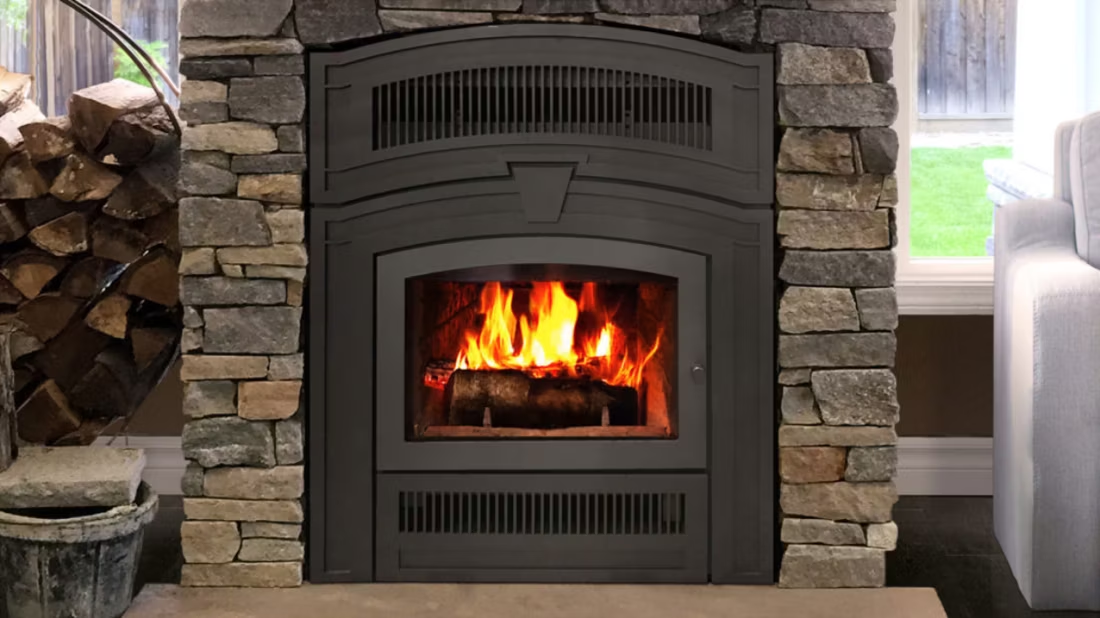
Louvered fronts have grill work above and below the glass for airflow, move heat a little better with a fan, and suit traditional mantels. Clean face designs drop the louvers entirely so finish work runs to the fire's edge—they fit both modern and traditional rooms. When we did our own home we chose clean face: a big viewing area beat a little extra airflow. It depends on your room, not on a rulebook.
What fireplace styles should I know before shopping?
Four cover most of the market: screen-front traditional (mesh front, open feel, fits craftsman homes), traditional door set (the classic look you grew up with), modern linear (wide, low, the statement piece for entertaining), and clean face contemporary (no trim—your tile or stone runs right to the fire's edge). Walk in knowing those four terms and you're ahead of most buyers.
Is it worth replacing a wood stove from the '80s?
Old stoves from the '70s and '80s run around 50% efficient—half your firewood's heat goes up the chimney. Modern stoves push past 70%, burn dramatically cleaner, and hold a fire longer on the same load. That's less wood to cut, haul, and stack for more heat in the room, plus a chimney that stays cleaner between sweepings.
Nearby Dealers
Hearth shops serving Grande Cache and the surrounding area. Every listing shows whether it is a WhyFire partner, a dealer we have verified as authorized for the brands we recommend, or a local business carrying hearth products. No manufacturer pays for placement. How we verify dealers →
Roy’s Plumbing And Heating Ltd
Windsor Plywood
Roy’s Plumbing And Heating Ltd
Country Homes Inspections
Onoway Tim-Br Mart
Roy’s Plumbing And Heating Ltd
Carriere Enterprises
McLeod Home Building Centre
Midnight Heating
Hayduk Lumbert Hardware Ltd
National Energy Equipment Inc.
Gemco Fireplaces & Wholesale Heating Products
Spark Heating & Air Conditioning
Get your free Project Guide & Parts List for a Grande Cache wood project.
Tell us about your home and we'll help you find a local dealer who works this stretch of the foothills, plus send a free Project Guide & Parts List sized for Grande Cache winters, with the vent kit and parts specified.
Find Your Fireplace →