
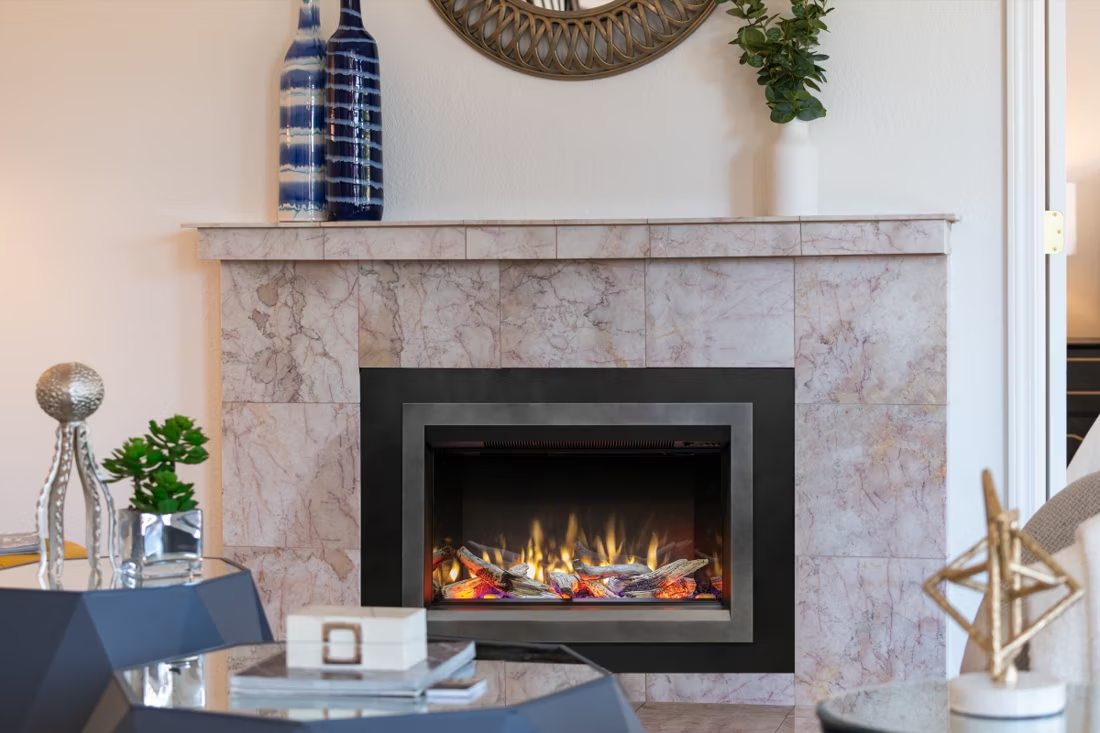
A plug-in glow for Crossfield's -13°C winter nights.
Crossfield homes mostly heat with natural gas through ATCO Gas or Apex Utilities, so an electric fireplace's job here is ambiance and zone heat, not the whole house. We'll help you find a trusted local dealer who can size the right unit and circuit for your room.
Every Project Starts From One of These Five Situations
Heat that plugs in, no chimney required.
Crossfield sits just north of Calgary in the Calgary Region, at 1,117 metres elevation in climate zone 7B, where winter lows average around -13°C and Chinook freeze-thaw cycles swing temperatures fast through the cold months. Most homes here already run on natural gas through ATCO Gas or Apex Utilities for primary heat, so an electric fireplace's real job in town is ambiance and supplemental warmth in a basement, bonus room, or living area, not carrying the whole house through a hard cold snap the way a furnace or a wood stove does.
The appeal is how little a project like this asks of the house. There's no flue, no gas line, and no WETT inspection to satisfy for insurance the way wood appliances need, just a properly sized circuit run by a licensed electrician and a permit through Crossfield's municipal building department if the unit is a built-in. At the region's residential rate of roughly $0.13 per kWh through ENMAX, EPCOR, or ATCO Electric, running a typical 1,500-watt insert costs pennies compared with heating an entire home, which is exactly the supplemental role most local buyers want it to fill.
Three steps. No salesperson until you're ready.
Tell us about your project
Your postal code, your situation, and the fuel you're leaning toward—or let the answers point you to one.
See what's actually available
The brands dealers within 100 miles genuinely carry—real options, never a catalog mirage.
Get your dealer & Project Guide
A trusted local dealer, plus the free Project Guide & Parts List that names every component of the job.
Frequently Asked Questions
How much does an electric fireplace installation cost in Crossfield?
Most electric fireplace projects here run $500 to $1,600 CAD. A plug-in freestanding stove or a small wall-mount unit sits at the low end since it just needs an outlet. A built-in insert or a linear unit set into a wall or media surround costs more once you add a dedicated circuit run by a licensed electrician, plus any framing. Crossfield's municipal building department requires a permit for the built-in electrical work, and most local dealers coordinate that as part of the quote.
Do I need a permit to install an electric fireplace in Crossfield?
For a plug-in unit, no, it's an appliance like a lamp. For a built-in insert wired to a dedicated circuit, yes: you'll need an electrical permit through Crossfield's municipal building department, and the wiring has to be done by a licensed electrician. None of the CSA B365 code or WETT inspection requirements that apply to wood appliances come into play here, which is one reason electric units are often the fastest fireplace project to close out in town.
What does it cost to run an electric fireplace in Crossfield?
At the region's residential rate of about $0.13 per kWh through ENMAX, EPCOR, or ATCO Electric depending on your street, a typical 1,500-watt insert running on high costs around 20 cents an hour. Most owners only use the heater setting occasionally and run the flame effect on its own the rest of the time, which draws just 30-50 watts, closer to the cost of a couple of light bulbs than a heating appliance.
Should I rely on an electric fireplace for primary heat in a Crossfield winter?
Not really. With winter lows averaging around -13°C and the Chinook belt's fast freeze-thaw swings, a 1,500-watt electric heater can't carry a whole living space the way a furnace or a wood stove does. Nearly every home in Crossfield already has natural gas through ATCO Gas or Apex Utilities for primary heat, and electric fireplaces do their best work as a zone heater for one room or as pure ambiance while the furnace handles the rest of the house.
Which rooms in a Crossfield home suit an electric fireplace best?
Basements and bonus rooms are the most common request locally, since they're often the coldest, least-insulated spaces in an older Crossfield bungalow and benefit most from a supplemental 1,500-watt heater. Bedrooms and home offices are the other frequent picks, mainly for the flame effect and ambiance rather than heat output. A media wall or fireplace-TV combo insert is popular in the newer builds going up around town.
Built-in insert, wall-mount, or freestanding stove, what's the difference?
A built-in insert sets into a wall cavity or an existing masonry opening and needs a dedicated circuit, landing toward the higher end of the $500-$1,600 range. A wall-mount unit hangs like a flat-screen TV and usually just plugs in. A freestanding electric stove sits on the floor like a small appliance and can move with you if you ever leave the house. For older Crossfield homes with a decommissioned wood-burning fireplace opening, converting the firebox to a built-in electric insert is one of the more common upgrades local dealers see.
Will my electric fireplace still work during a power outage?
No, and that's worth planning around given how a hard Chinook wind event can knock out power in this part of the Calgary Region. A wood stove keeps running through an outage, and Crossfield residents have easy access to that backup: the Government of Alberta, Forestry and Parks issues free cutting permits valid for 30 days, year-round, for species like aspen poplar, paper birch, lodgepole pine, and white spruce on public land. Plenty of local households keep an electric fireplace for daily ambiance and a wood stove or insert as the outage plan.
How much maintenance does an electric fireplace need?
Very little. There's no chimney to sweep, no WETT inspection to renew, and no gas line to have checked, just an occasional dusting of the heater vents and, on some models, an LED or flame-bulb replacement every few years. That low-maintenance profile is a big part of why electric units are popular in Crossfield's newer infill homes and townhomes where owners want fireplace ambiance without taking on a wood-supply routine or an annual service call.
Why choose electric over wood or pellet in Crossfield?
Wood is genuinely practical here, cutting permits are free through Alberta Forestry and Parks, and aspen poplar and lodgepole pine are common on nearby public land, but it demands seasoned, dry supply, which the Chinook belt's freeze-thaw cycles and tight rural availability make worth planning ahead for. Pellet stoves, stocked regionally by mills like La Crete Sawmills and Vanderwell at roughly $400-$575 a ton, solve the seasoning problem but still need a hopper filled and a vent. Electric skips fuel handling entirely, which is why it's the pick for a den, basement, or secondary living space where the natural gas furnace is already doing the heavy lifting.
How much does an electric fireplace cost to run?
With the heater on, a typical unit draws about 1,500 watts—at average electric rates that's roughly 20 cents an hour. Run the flame effect alone and it costs pennies; the flames are LED-driven and use about as much power as a light bulb. There's no pilot light, no fuel delivery, and essentially no maintenance.
What fireplace styles should I know before shopping?
Four cover most of the market: screen-front traditional (mesh front, open feel, fits craftsman homes), traditional door set (the classic look you grew up with), modern linear (wide, low, the statement piece for entertaining), and clean face contemporary (no trim—your tile or stone runs right to the fire's edge). Walk in knowing those four terms and you're ahead of most buyers.
Do electric fireplaces actually produce heat?
Yes—most put out around 4,800–5,000 BTUs from a standard outlet, which comfortably warms a bedroom, office, or den as a comfort-zone heater. What they won't do is carry a whole house the way wood, gas, or pellet can. Think of electric as ambiance-first with honest supplemental heat: flames on with no heat in July, flames plus warmth in January.
Does an electric fireplace need a vent or chimney?
No—that's its superpower. An electric fireplace needs a wall and an outlet, period. No vent pipe, no gas line, no clearances to design around, which is why it works in bedrooms, offices, apartments, and walls where venting a gas or wood unit would be impractical or impossible. Installation is typically the simplest and least expensive of any fireplace type.
Nearby Dealers
Hearth shops serving Crossfield and the surrounding area. Every listing shows whether it is a WhyFire partner, a dealer we have verified as authorized for the brands we recommend, or a local business carrying hearth products. No manufacturer pays for placement. How we verify dealers →
Diamond Fireplace Distributors
Ryan My Fireplace Guy
Electric Service in Crossfield
An electric fireplace's heater draws about 1,500 watts—pennies per hour at local rates.
Enmax
Epcor
Atco Electric
Get your free Project Guide & Parts List for a Crossfield electric fireplace.
Tell us about your room and your electrical panel, and we'll help you find a trusted local dealer and send a free Project Guide & Parts List, sized for your space, with the circuit requirements and parts spelled out, so there's no big-box guesswork.
Find Your Fireplace →