
Steady pellet heat through Carstairs' chinook swings.
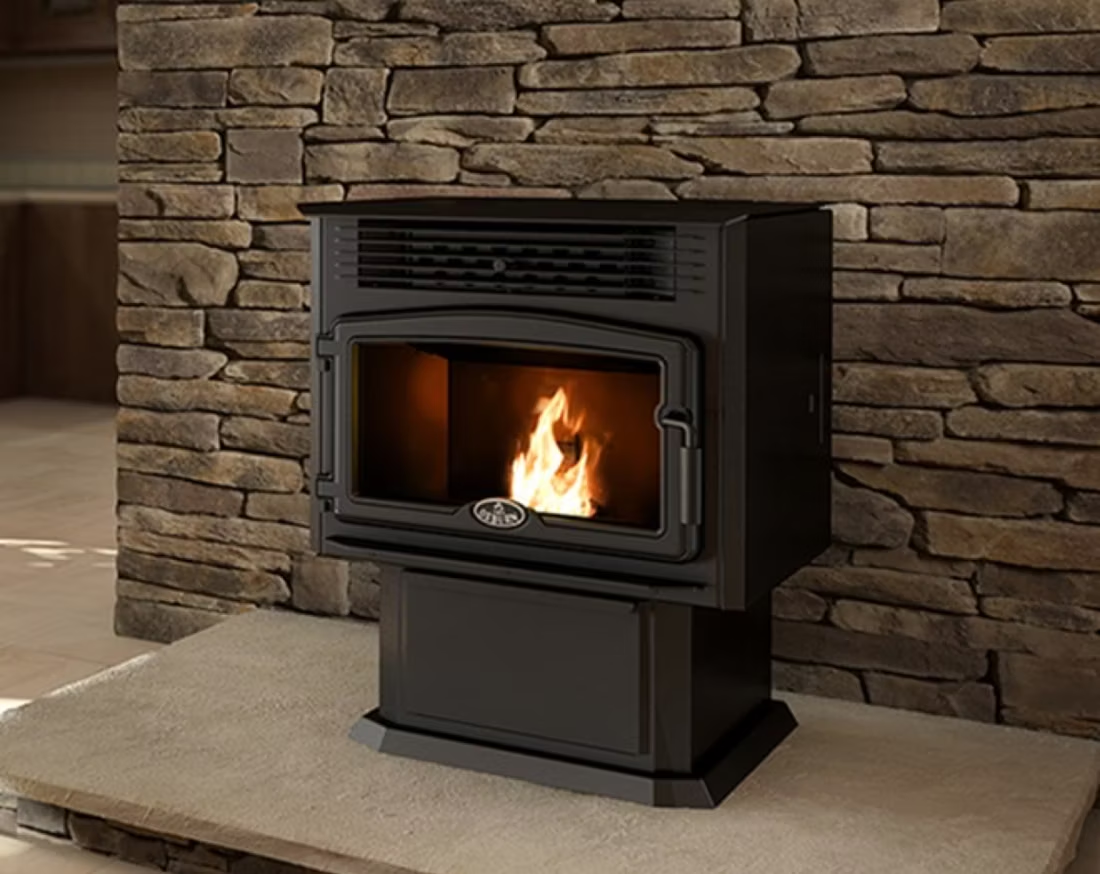
At 1,059 metres with an average winter low of -13.1°C, Carstairs sits in classic chinook country, where temperatures can swing 20 degrees in a day. A thermostat-controlled pellet stove holds a steady output through those swings without the guesswork of seasoned wood. We'll help you find a trusted local dealer who can size the unit and handle the venting correctly.
Every Project Starts From One of These Five Situations
Consistent BTUs without a woodshed to manage.
Carstairs runs milder on paper than Edmonton or Saskatoon, but the chinook belt cuts both ways: a -13.1°C average winter low can flip to above freezing within a day, then drop again. That freeze-thaw cycling makes it genuinely hard to keep a supply of well-seasoned aspen poplar, paper birch, lodgepole pine, or white spruce dry and ready, especially with the tight rural supply around town. A pellet stove sidesteps that problem entirely, burning a manufactured fuel with a consistent moisture content no matter what the sky is doing.
Regional mills like Vanderwell and La Crete Sawmills supply the bags most Carstairs households burn, typically running $400-$575 CAD a ton, and buying a season's worth early avoids scrambling when a cold snap tightens local stock. The tradeoff is that pellet stoves need electricity for the auger and blower, so with ENMAX, EPCOR, and ATCO Electric all serving different parts of the region at roughly $0.13 per kWh, it's worth asking your dealer about a battery backup or small generator for the wind events that sometimes accompany chinook fronts and knock out power.
Three steps. No salesperson until you're ready.
Tell us about your project
Your postal code, your situation, and the fuel you're leaning toward—or let the answers point you to one.
See what's actually available
The brands dealers within 100 miles genuinely carry—real options, never a catalog mirage.
Get your dealer & Project Guide
A trusted local dealer, plus the free Project Guide & Parts List that names every component of the job.
Frequently Asked Questions
How much does a pellet stove installation cost in Carstairs?
Most installations here run $6,000-$10,000 CAD. An insert going into an existing masonry firebox with a straightforward vent run through an exterior wall lands toward the low end. A freestanding stove in a new location, especially one that needs a longer horizontal vent run or a hearth pad built from scratch, pushes toward the higher end. Your local dealer will quote the actual number once they've seen the room and the wall or chimney you're working with.
Do I need a permit to install a pellet stove in Carstairs?
Yes. Installations go through the municipal building department, and the work needs to follow the CSA B365 installation code that applies across Alberta. Most insurers also want a WETT inspection on file for any solid-fuel appliance, pellet stoves included, before they'll add it to your policy. A dealer who installs regularly in the Calgary Region will already have this paperwork routine down and can walk you through what your insurer specifically asks for.
Where do I buy pellets near Carstairs, and what do they cost?
Vanderwell and La Crete Sawmills are the two regional brands most commonly stocked by dealers and farm supply stores serving the area, and pellets typically run $400-$575 CAD a ton depending on the season and how far the load has to travel. Because rural supply can tighten up fast once cold weather sets in and everyone is buying at once, most experienced burners in Carstairs order a full season's worth in late summer or early fall rather than waiting for the first cold snap.
Pellet stove or wood stove—which makes more sense for a Carstairs home?
Wood is the cheaper fuel if you're already cutting under a free Government of Alberta, Forestry and Parks permit—those are valid year-round for 30 days at a time—but the chinook belt's freeze-thaw cycling makes it genuinely hard to keep aspen poplar or lodgepole pine properly seasoned. A pellet stove trades that variability for consistent, bagged fuel and a thermostat that holds a steady temperature through a swinging Carstairs winter. The real downside is the electrical dependence: wood keeps burning in a power outage, and a pellet stove does not unless you've got a battery backup in place.
What size pellet stove do I need for my Carstairs home?
With an average winter low around -13.1°C and Zone 7B construction standards common in newer Carstairs builds, a mid-size pellet stove rated for 1,200 to 1,800 square feet suits most single-family homes as a primary heat source in the main living area. Older farmhouses on the edge of town with less insulation, or homes trying to heat an open-concept main floor, often do better sized up toward 2,000 square feet so the stove isn't running at full output constantly. A dealer will size it against your actual floor plan and insulation rather than square footage alone.
Will my pellet stove still work if the power goes out?
Not without a backup power source. Pellet stoves rely on an electric auger to feed fuel and a blower to distribute heat, so a straight power outage shuts them down even with a full hopper. Given that chinook wind events in the Carstairs area can knock out ENMAX, EPCOR, or ATCO Electric service for a stretch, some households pair their pellet stove with a small battery backup or portable generator, or keep a wood stove elsewhere in the house for outage resilience. It's worth raising with your dealer at the planning stage rather than after the first outage.
Pellet stove or gas fireplace—which is the better fit here?
With both ATCO Gas and Apex Utilities serving the area, natural gas is a realistic option for most Carstairs addresses, and a gas fireplace offers instant on-demand heat with none of the fuel handling a pellet stove requires. Pellet stoves cost less to install, typically $6,000-$10,000 CAD versus $6,000-$15,000 CAD for gas, and give you a visible flame with a wood-like ambiance that a lot of homeowners prefer over gas glass. If your priority is minimal maintenance and guaranteed operation during a chinook wind outage, gas edges ahead; if you want lower fuel cost and don't mind refilling a hopper, pellet is the more economical daily driver.
How much maintenance does a pellet stove need in Carstairs?
Plan on emptying and cleaning the ash pot every few days during steady winter use, a deeper burn-pot and glass cleaning weekly, and a full professional service once a year, ideally in late summer before the first cold snap rather than mid-winter when technicians are booked solid. Because Carstairs households often run pellet stoves hard through a long, swinging winter season, sticking to that schedule matters more here than in a milder climate—a clogged burn pot or worn auger motor tends to show up on the coldest night, not a mild one.
Are there rebates for installing a pellet stove in Carstairs?
There's no broad standing provincial rebate program for residential pellet stoves in Alberta at this time, though efficiency incentives do come and go, so it's worth asking your dealer what's currently available before you buy. The more consistent cost advantage here is the fuel itself: at $400-$575 CAD a ton through mills like Vanderwell or La Crete Sawmills, and with a CSA B365-compliant install handled by a local dealer, the ongoing running cost is usually the bigger factor in the payback than any one-time rebate.
Why do fireplace quotes vary so much?
Because a fireplace is an iceberg—there's more behind the wall than in front of it. A low quote often covers only the unit; the full scope includes vent pipe, gas line or electrical, framing, and the tile or stone that has to come off and go back on. Make every bidder price the whole job. If a dealer can't speak to the full scope with confidence, that's your signal to keep looking.
Is it worth replacing an old fireplace that still sort of works?
Ask three questions: Is it ugly? Is it drafty? Does it actually work? Most old fireplaces fail at least two. Beyond looks, an old unit leaks air around the damper year-round and—if it's gas with a standing pilot—quietly burns a couple hundred dollars a year. A modern replacement seals the wall, heats the room, and changes how the whole space gets used.
Why is a fireplace insert so efficient?
An insert does two things: it seals the chimney completely, so you stop losing air you already paid to heat, and it radiates warmth into the room through the firebox and glass. Most add a heat-exchange fan that pulls cool room air underneath, wraps it around the hot firebox, and pushes it back out warm. Your home is more efficient before you've even lit the first fire.
What should I look for in pellet stove design?
Three things separate the field: how easy the burn pot is to clean (trapdoor designs let the ash drop straight into the pan), how the auger moves pellets (top-mounted augers that pull instead of push jam less and wear slower), and diagnostics (self-diagnosing control boards tell you exactly which part needs attention instead of leaving you guessing). Heat output is table stakes—livability is in these details.
Nearby Dealers
Hearth shops serving Carstairs and the surrounding area. Every listing shows whether it is a WhyFire partner, a dealer we have verified as authorized for the brands we recommend, or a local business carrying hearth products. No manufacturer pays for placement. How we verify dealers →
Reinhard Ceramic Tile
Wild's Home Hardware
Reinhart Ceramic Tile & Marble
Diamond Fireplace Distributors
Ryan My Fireplace Guy
Pellet Brands Stocked Around Carstairs
Typical price runs $400-$575 per ton—buy early-season for the best rates. Manufacturers will point you to the nearest stocking dealer.
La Crete Sawmills
Vanderwell
Get your free Project Guide & Parts List for a Carstairs pellet stove.
Tell us about your home and whether you're on ATCO Gas or planning around chinook power swings, and we'll help you find a trusted local dealer and send a free Project Guide & Parts List with the exact vent kit and parts your project needs.
Find Your Fireplace →