
The easiest hearth upgrade for Bow Valley condos and cabins.
At 1,309 metres in the Bow Valley, where winter lows average -11.7°C, a lot of Canmore homes just need supplemental warmth and real ambiance without a chimney or a gas line. Electric units run $500-$1,600 installed, and we'll help you find a local dealer who knows what your building actually allows.
Every Project Starts From One of These Five Situations
Simple heat for a valley built on strata rules and shared walls.
Canmore sits at 1,309 metres in the Bow Valley, part of the Calgary Region, where winter lows average -11.7°C and a climate zone of 7B puts local heating demand in the same territory as Edmonton. Chinook cycles here mean the cold breaks and returns in a way Saskatoon or Regina rarely sees, and that freeze-thaw pattern is part of why wood needs careful seasoning and why a lot of households treat their fireplace as backup or ambiance rather than the thing keeping the house warm. Electric fits that role well: instant heat, a thermostat, and nothing that needs venting through a roofline surrounded by Grotto Mountain and the Three Sisters.
A large share of Canmore's housing stock is strata-governed condos and townhomes in developments like Three Sisters, Stewart Creek, and along Bow Valley Trail, and plenty of those buildings restrict or flatly prohibit new gas lines and solid-fuel venting through shared walls and roofs. Electric is often the only fireplace type a strata board will approve without a fight, and it sidesteps the CSA B365 venting review and WETT inspection that apply to wood appliances. With ENMAX, EPCOR, and ATCO Electric all serving parts of the valley at roughly 13 cents per kilowatt-hour, running one costs pennies a day for the ambiance most homeowners actually want.
Three steps. No salesperson until you're ready.
Tell us about your project
Your postal code, your situation, and the fuel you're leaning toward—or let the answers point you to one.
See what's actually available
The brands dealers within 100 miles genuinely carry—real options, never a catalog mirage.
Get your dealer & Project Guide
A trusted local dealer, plus the free Project Guide & Parts List that names every component of the job.
Frequently Asked Questions
How much does an electric fireplace installation cost in Canmore?
Most electric installs in Canmore run $500 to $1,600 CAD. A plug-in insert or wall-mount unit that just needs a standard outlet sits at the low end, a common choice for a condo in Three Sisters or a rental downtown. Built-in models that need a dedicated 240-volt circuit, a finished mantel surround, or wiring run behind drywall land toward the top of that range. Because there's no chimney, no gas line, and no combustion venting, electric is consistently the cheapest hearth upgrade available here, well under the $6,000-plus you'd budget for wood or gas.
Will an electric fireplace actually heat my Canmore home through winter?
Not as a primary heat source, and we'd rather tell you that upfront. Most residential electric fireplaces top out around 5,000-7,000 BTU, enough to take the edge off a room but not enough to carry a house through a stretch of -20°C or colder that can follow a chinook breakdown. Think of it as supplemental heat and genuine ambiance layered on top of your furnace or in-floor heat, which is how most Bow Valley households actually use theirs: running the fireplace in the evenings while the primary heating system does the real work.
Does my strata or condo board allow electric fireplaces in Canmore?
Usually yes, and it's often the only fireplace type strata boards in developments like Three Sisters, Silvertip, or along Bow Valley Trail will approve without a lengthy variance process. Electric units don't need new gas lines or venting penetrations through a shared roof or wall, which is exactly what most bylaws restrict. Still, check your specific strata's bylaws before buying: some buildings limit wattage or require a licensed electrician's sign-off for anything wired into a dedicated circuit rather than plugged into an outlet.
Do I need a permit to install an electric fireplace in Canmore?
A plug-in unit on an existing outlet generally doesn't need a permit. A built-in electric fireplace wired to a new dedicated circuit typically does need an electrical permit through the municipal building department, since that's wiring work regardless of the fact there's no venting or gas involved. It's a much lighter process than a wood or gas install, with no CSA B365 review or WETT inspection to schedule, but a local dealer who has pulled permits in Canmore before can tell you in five minutes whether your specific unit triggers one.
What style of electric fireplace fits Canmore's mountain-modern homes?
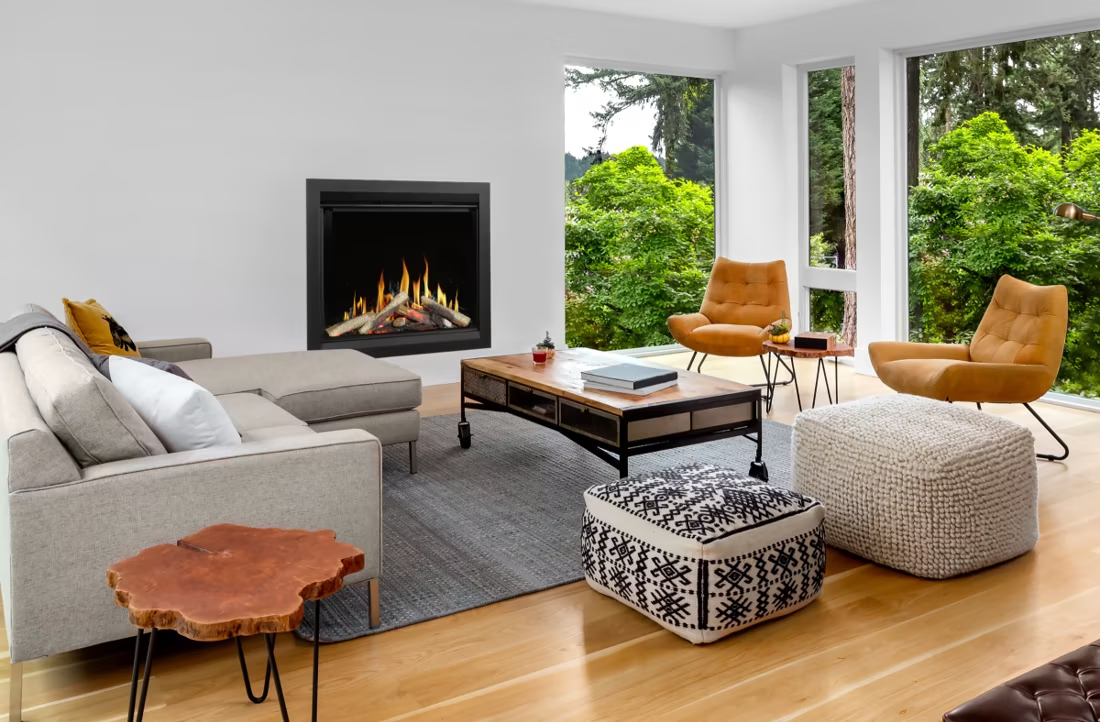
Linear, wall-mounted units with a clean glass front are the most common request we hear from Canmore homeowners going for the mountain-modern look popular in newer builds around Stewart Creek and the Peaks of Grassi. They pair well with stone or reclaimed-wood surrounds without needing an actual chimney chase. For a cabin-style property, a mantel-style insert into an existing masonry opening, set up to look like a traditional firebox but running on electricity, is the more common retrofit in older Canmore homes originally built with a wood-burning fireplace.
How much does it cost to run an electric fireplace in Canmore?
At roughly 13 cents per kilowatt-hour, which is what ENMAX, EPCOR, and ATCO Electric customers pay across the valley, a typical 1,500-watt electric fireplace costs around 20 cents an hour to run on full heat, and less on ambiance-only flame mode with the heater off. Running it four hours a night through a Bow Valley winter adds up to roughly $20-$25 a month, noticeably cheaper than most people expect, and one reason electric has become the default secondary heat source in newer Canmore builds.
Electric vs. wood, which makes more sense for a Canmore property?
Wood remains genuinely popular here: aspen poplar, paper birch, lodgepole pine, and white spruce are all common local species, and Alberta Forestry and Parks issues free cutting permits valid for 30 days, year-round. For a detached home with a real chimney and someone willing to season wood properly through the valley's freeze-thaw cycles, wood heat still makes sense, especially as backup during a power outage. But for a condo, a strata-restricted townhome, or anyone who wants ambiance without stacking cordwood or scheduling a WETT inspection, electric is the simpler, cheaper path, installed for a fraction of the $6,000-$12,000 a wood setup typically runs.
Are electric fireplaces a good fit for Canmore's short-term rental properties?
Very much so. With tourism driving a large share of Canmore's housing, from vacation rentals to hotel-condos throughout the Bow Valley, property managers generally prefer electric fireplaces because there's no gas line liability, no WETT inspection to keep current for insurance, and no risk of a guest mishandling an open flame. A wall-mounted or built-in electric unit gives a rental the cozy mountain-lodge look guests expect at a fraction of the cost and upkeep of a wood or gas installation.
How long do electric fireplaces last, and what maintenance do they need?
A quality electric fireplace typically runs 8-12 years before the heating element or LED flame effect needs replacing, and unlike wood or gas there's no annual chimney sweep or gas-line inspection to schedule. Maintenance is mostly dusting the vents and occasionally swapping a heater fan or a burned-out bulb in older LED models. That low-maintenance profile is a real selling point in Canmore, where plenty of homeowners are only in the valley part-time and don't want a hearth appliance that needs seasonal attention.
How much does an electric fireplace cost to run?
With the heater on, a typical unit draws about 1,500 watts—at average electric rates that's roughly 20 cents an hour. Run the flame effect alone and it costs pennies; the flames are LED-driven and use about as much power as a light bulb. There's no pilot light, no fuel delivery, and essentially no maintenance.
What fireplace styles should I know before shopping?
Four cover most of the market: screen-front traditional (mesh front, open feel, fits craftsman homes), traditional door set (the classic look you grew up with), modern linear (wide, low, the statement piece for entertaining), and clean face contemporary (no trim—your tile or stone runs right to the fire's edge). Walk in knowing those four terms and you're ahead of most buyers.
Do electric fireplaces actually produce heat?
Yes—most put out around 4,800–5,000 BTUs from a standard outlet, which comfortably warms a bedroom, office, or den as a comfort-zone heater. What they won't do is carry a whole house the way wood, gas, or pellet can. Think of electric as ambiance-first with honest supplemental heat: flames on with no heat in July, flames plus warmth in January.
Does an electric fireplace need a vent or chimney?
No—that's its superpower. An electric fireplace needs a wall and an outlet, period. No vent pipe, no gas line, no clearances to design around, which is why it works in bedrooms, offices, apartments, and walls where venting a gas or wood unit would be impractical or impossible. Installation is typically the simplest and least expensive of any fireplace type.
Nearby Dealers
Hearth shops serving Canmore and the surrounding area. Every listing shows whether it is a WhyFire partner, a dealer we have verified as authorized for the brands we recommend, or a local business carrying hearth products. No manufacturer pays for placement. How we verify dealers →
Diamond Fireplace Distributors
Ryan My Fireplace Guy
Electric Service in Canmore
An electric fireplace's heater draws about 1,500 watts—pennies per hour at local rates.
Enmax
Epcor
Atco Electric
Get your free Project Guide & Parts List for a Canmore electric fireplace.
Tell us about your home or unit, whether it's a condo, townhome, or cabin, and we'll help you find a local dealer who knows Bow Valley strata rules, and send a free Project Guide & Parts List with the exact unit and wiring your project needs.
Find Your Fireplace →