
Steady heat between Chinook thaws and hard prairie freezes.
Bow Island sits at 795 metres in Alberta's Chinook belt, where winter lows average -13.1°C but a warm wind can swing temperatures dramatically in an afternoon. We'll help you find a trusted local dealer who knows the gas line work, the venting, and what ATCO Gas or Apex Utilities service actually allows on your street.
Every Project Starts From One of These Five Situations
A fuel that doesn't care which way the wind is blowing.
Bow Island's climate is unusual even by Southern Alberta standards. Chinook winds roll off the Rockies often enough that a -13.1°C average winter low can jump above freezing for a day or two before dropping back hard—a freeze-thaw pattern that's harder on stacked firewood and masonry than the steadier, deeper cold you'd find in Edmonton or Saskatoon. At 795 metres on open prairie, the town also takes the full force of wind chill when a system does settle in. That combination makes an on-demand heat source appealing to a lot of homeowners here, gas chief among them.
ATCO Gas and Apex Utilities both serve Bow Island, and with a population just over 2,000, most homes in town are already tied into one network or the other, which keeps a gas fireplace or insert a straightforward add-on rather than a major infrastructure project. That matters in a region where the wood supply is real but tight—aspen poplar, paper birch, lodgepole pine, and white spruce are the species people cut locally, but seasoning wood properly through Chinook freeze-thaw swings takes real planning. A direct-vent gas unit sidesteps that entirely: it fires instantly, doesn't need a woodshed, and keeps running through the kind of prairie wind events that make an open flue behave unpredictably.
Three steps. No salesperson until you're ready.
Tell us about your project
Your postal code, your situation, and the fuel you're leaning toward—or let the answers point you to one.
See what's actually available
The brands dealers within 100 miles genuinely carry—real options, never a catalog mirage.
Get your dealer & Project Guide
A trusted local dealer, plus the free Project Guide & Parts List that names every component of the job.
Frequently Asked Questions
How much does a gas fireplace installation cost in Bow Island?
Expect $6,000 to $15,000 CAD for most installations. A direct-vent insert going into an existing masonry firebox with a gas line already nearby lands toward the low end. A new built-in unit for a renovation or new build, especially one needing a fresh gas line run from the meter, pushes toward the top of that range. Because Bow Island is a small town, your dealer will likely confirm upfront whether you're on ATCO Gas or Apex Utilities, since that affects which crew handles the line work and how quickly it gets scheduled.
Can I convert an existing wood fireplace to gas?
Yes, and it's a common upgrade for older Bow Island homes with a masonry fireplace originally built for wood. A gas insert typically slides into the existing firebox with a liner run up the current chimney, and the work has to meet the CSA B365 installation code that applies across Alberta. Converting also sidesteps the seasoned-wood planning that Chinook freeze-thaw cycles make harder here, and it removes any future WETT inspection requirement your insurer might ask for on a wood-burning appliance.
Is natural gas available at my address, or would I need propane?
Bow Island is served by both ATCO Gas and Apex Utilities, and most in-town addresses have access to one of the two networks, so a straight gas tie-in is realistic for the large majority of homeowners here. Properties out on acreages or further into the surrounding Southern Alberta countryside sometimes sit beyond the distribution lines, and propane with a tank is the standard fallback in those cases. Either way, most fireplace models a local dealer carries can be configured for natural gas or propane.
Will a gas fireplace still work if the power goes out?
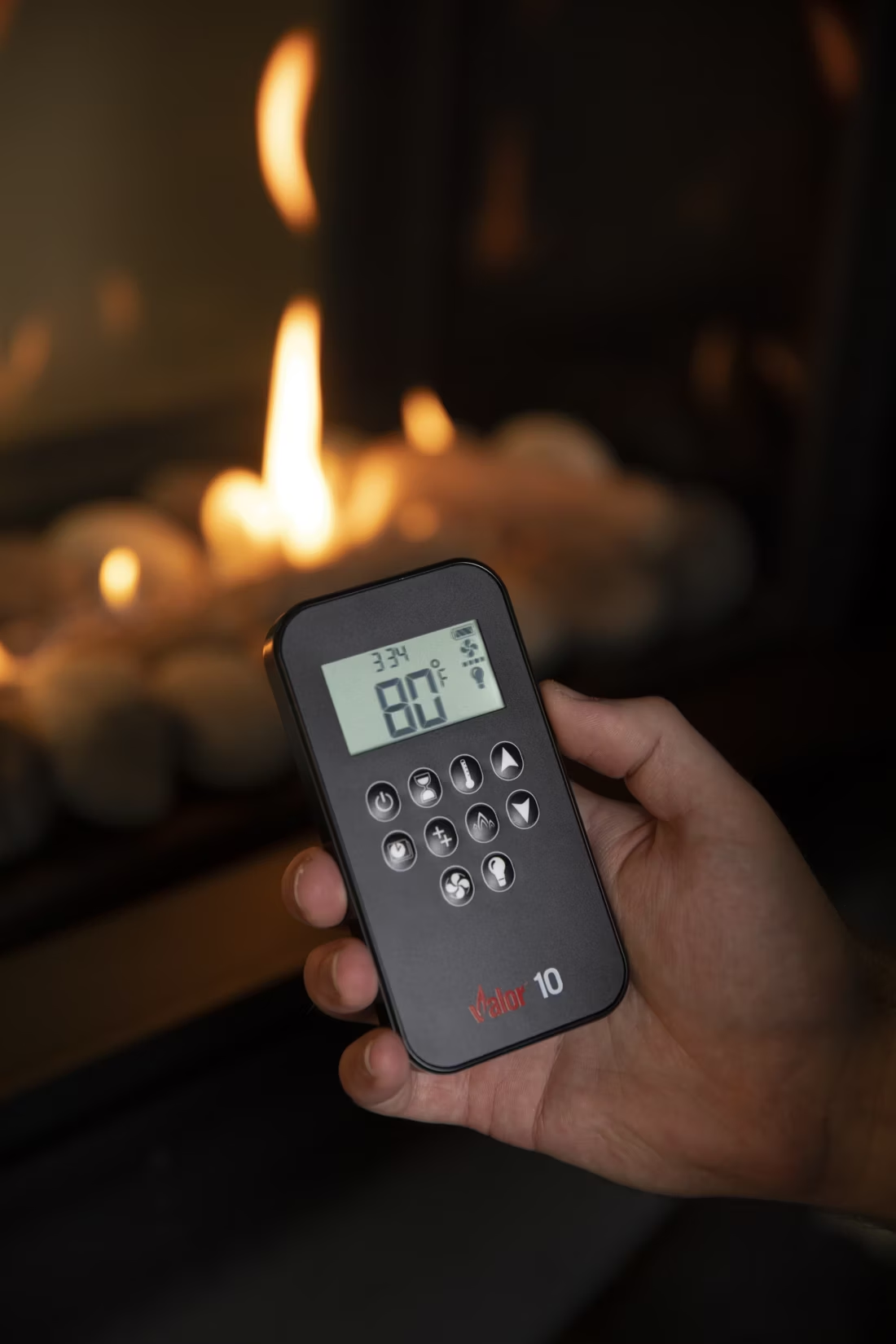
Most will, which is worth knowing given how prairie wind events can knock out ENMAX, EPCOR, or ATCO Electric service for hours at a time. Units with intermittent pilot ignition run on a AA battery backup that kicks in automatically when the power drops. Some models, including several from Valor, skip the battery altogether because the pilot's thermocouple generates its own current. Ask your dealer which ignition system is on any unit you're considering—for a town that can lose power during a hard winter blow, it's a real factor.
What's the difference between a gas fireplace, insert, and stove?
A gas fireplace is a built-in unit framed into a wall, which fits naturally into a renovation or new build. A gas insert fits inside an existing masonry firebox, the more common route for older Bow Island homes that already have a chimney chase from a wood-burning past. A gas stove is freestanding on a hearth pad, similar in footprint to a wood stove but running off a gas line or propane tank instead of split aspen or spruce. For most existing homes in town, an insert is the least disruptive way to upgrade.
Do I need a permit to install a gas fireplace in Bow Island?
Yes. You'll need a permit through the municipal building department, and the installation itself has to meet the CSA B365 code that governs solid-fuel and gas hearth appliances across Alberta. Gas line work also requires a licensed gas fitter. Most dealers who work in Bow Island and the surrounding Southern Alberta region handle the permit application and final inspection as part of the job, so you're not coordinating the trades yourself.
Should I choose a vented or vent-free gas fireplace?
Direct-vent units pull combustion air from outside and exhaust it back outside through sealed venting, which makes them the safer, more common choice for daily use and the one most Alberta building departments prefer for a primary heat source. Vent-free units are legal in many applications but come with strict room-sizing limits and aren't ideal for a tightly built prairie home that's already sealed up against Chinook wind. For most Bow Island installs, direct-vent is the straightforward recommendation.
How often does a gas fireplace need servicing?
Plan on an annual check, ideally in late summer or early fall before the first hard freeze rather than mid-winter when technicians serving Southern Alberta are booked solid. A technician checks the burner, pilot assembly, gas connections, and venting, and cleans the glass. Expect roughly $150-$250 CAD for a standard visit—a small cost against the risk of an ignition failure showing up on the one night a Chinook breaks and the temperature actually drops.
Gas or wood—which makes more sense for a Bow Island home?
Wood cut under a free Government of Alberta, Forestry and Parks permit—aspen poplar, paper birch, lodgepole pine, or white spruce are what's locally available—still wins on fuel cost and keeps working without electricity. But seasoning wood properly through Bow Island's freeze-thaw swings takes real planning, and a wood-burning appliance usually needs a WETT inspection for insurance purposes. Gas skips both of those steps: it fires on demand, doesn't need a dry woodshed, and is a lower-maintenance choice for a household that wants heat without managing a fuel supply. Many homeowners here run gas in the main living space and keep wood as a backup option for extended outages.
Can a gas fireplace run on a thermostat?
Most modern gas fireplaces can—turn it on and off from the couch with a remote, or set a room temperature and let the fireplace hold the comfort zone for you. If low maintenance matters to your family, this is the feature set that makes gas the convenience pick over wood and pellet.
Why do fireplace quotes vary so much?
Because a fireplace is an iceberg—there's more behind the wall than in front of it. A low quote often covers only the unit; the full scope includes vent pipe, gas line or electrical, framing, and the tile or stone that has to come off and go back on. Make every bidder price the whole job. If a dealer can't speak to the full scope with confidence, that's your signal to keep looking.
What do I measure to size a fireplace insert?
Four numbers tell you what fits: the front width, the front height, the back width, and the overall depth of your existing fireplace opening. Grab a tape measure, jot those down, and snap a photo of the wall—those two things do more to move your project forward than anything else you can do today.
What's the difference between radiant and convective fireplace heat?
Most fireplaces are a thin metal box—they heat fine, but you rely on the fan to move the warmth into the room. Radiant models use a thick cast-ceramic firebox, about an inch and a quarter thick, that soaks up the fire's heat and radiates roughly 25–30% more warmth into the room with no fan running. If you watch TV in the same room or want heat in a power outage, radiant is worth asking about.
Nearby Dealers
Hearth shops serving Bow Island and the surrounding area. Every listing shows whether it is a WhyFire partner, a dealer we have verified as authorized for the brands we recommend, or a local business carrying hearth products. No manufacturer pays for placement. How we verify dealers →
Natural Gas Service in Bow Island
Confirm service at your address before planning a gas fireplace—a quick call settles it.
Atco Gas
Apex Utilities
Get your free Project Guide & Parts List for a Bow Island gas fireplace.
Tell us about your home and whether you're on ATCO Gas, Apex Utilities, or propane, and we'll help you find a trusted local dealer serving Bow Island and the surrounding Southern Alberta region, plus send a free Project Guide & Parts List with the exact vent kit and parts your project needs.
Find Your Fireplace →