
Instant warmth for a Crowsnest Pass home, no chimney required.
At 1,344 metres in the Crowsnest Pass, with winter lows averaging -10.9°C and Chinook winds that swing temperatures fast, Blairmore homeowners often want a zero-fuss heat source for the main living room. We'll help you find a trusted local dealer who knows what actually installs cleanly on Blairmore's older housing stock.
Every Project Starts From One of These Five Situations
A supplemental heat source, not the whole plan.
Blairmore's winters are real but not extreme by Alberta standards—an average low of -10.9°C, tempered on and off by Chinook freeze-thaw swings that can push temperatures up and back down within days. That variability, more than raw cold, is what shapes heating choices in this old coal-mining town: a lot of the housing stock is older and renovated in stages, which makes an electric fireplace an easy way to add heat and ambiance to a living room or basement without opening up a wall for venting. Wood is still standard here too—aspen poplar, paper birch, lodgepole pine, and white spruce are the common backup fuels, and natural gas from ATCO Gas or Apex Utilities covers most of the townsite for primary heat.
Where electric earns its place is cost and simplicity. A typical install runs $500 to $1,600 CAD, compared with $6,000 to $12,000 for wood or $6,000 to $15,000 for gas, and most units plug into an existing circuit or need only a straightforward electrical hookup rather than a full mechanical permit. Running one costs whatever ENMAX, EPCOR, or ATCO Electric charges per kilowatt-hour—around $0.13 in this area—which is fine for zone heating a den or bedroom but not meant to replace your furnace on a January cold snap. Worth knowing before you buy: wind and snow events through the Pass do knock out power occasionally, and an electric fireplace goes dark right along with everything else, which is why a lot of local households keep a wood stove or gas appliance as their real backup plan.
Three steps. No salesperson until you're ready.
Tell us about your project
Your postal code, your situation, and the fuel you're leaning toward—or let the answers point you to one.
See what's actually available
The brands dealers within 100 miles genuinely carry—real options, never a catalog mirage.
Get your dealer & Project Guide
A trusted local dealer, plus the free Project Guide & Parts List that names every component of the job.
Frequently Asked Questions
How much does an electric fireplace installation cost in Blairmore?
Most electric fireplace projects here land between $500 and $1,600 CAD. A plug-in insert or wall-mounted unit dropped into an existing opening sits at the low end—often just a matter of fitting the surround and confirming the outlet can handle the draw. A built-in linear unit framed into a new wall, which some Blairmore homeowners choose during a basement or living room renovation, runs closer to the top of that range once a dedicated circuit and finish carpentry are factored in.
Can an electric fireplace actually heat my Blairmore home through the winter?
Not on its own. With winter lows averaging -10.9°C and the Pass seeing genuine cold snaps between Chinook swings, an electric fireplace is a zone heater for one room, not a substitute for a furnace. Most homes here run on natural gas through ATCO Gas or Apex Utilities for whole-house heat and add an electric unit to the living room or a bedroom for supplemental warmth and ambiance without the cost of running a gas line or wood chimney to that space.
Will my electric fireplace still work if the power goes out?
No—that's the honest tradeoff. Wind and heavy snow events through the Crowsnest Pass periodically knock out power, and an electric unit has no battery or standby option the way some gas fireplaces do. Because of that, many Blairmore households pair an electric fireplace for everyday convenience with a wood stove or insert elsewhere in the house, since aspen poplar, paper birch, lodgepole pine, and white spruce are all readily available and cutting permits from Alberta Forestry and Parks are free and issued year-round.
Electric vs. a gas insert—which makes more sense here?
Electric wins on upfront cost and simplicity: $500-$1,600 CAD installed with no gas line or venting to plan around, versus $6,000-$15,000 for a gas insert. Gas wins on heat output and reliability during a cold stretch, and ATCO Gas and Apex Utilities both serve Blairmore, so most homes already have the service in place. A common approach locally is gas or wood for the primary heating appliance and electric for a second room where running a gas line isn't worth the cost.
Do I need a permit for an electric fireplace in Blairmore?
Usually not for a plug-in unit—it's treated like any other appliance. If your installer is adding a new dedicated circuit or doing panel work for a built-in unit, that electrical work typically needs to go through the municipal building department, and a licensed electrician handles the inspection. It's a much lighter process than a wood or gas install, which involves CSA B365 code compliance and often a WETT inspection for insurance purposes on wood appliances.
What type of electric fireplace works best in Blairmore's older homes?
A lot of Blairmore's housing stock dates back to the town's coal-mining era and has been renovated over time rather than rebuilt from scratch, so a wall-mounted or freestanding electric unit is often the easiest fit—no structural opening required, and it can be relocated if you renovate again later. Where a home already has an old, unused masonry fireplace, an electric insert sized to that opening is a popular way to bring the space back into use without touching the chimney at all.
What will an electric fireplace add to my power bill?
At the roughly $0.13 per kilowatt-hour charged by ENMAX, EPCOR, or ATCO Electric depending on your provider, running a typical 1,500-watt electric fireplace for several hours an evening adds a modest amount to a monthly bill—far less than heating a whole home electrically, since most units here are used for zone heat in one room rather than as a primary furnace replacement.
Electric vs. wood stove—which suits the Chinook-belt climate better?
Wood stoves handle the Pass's freeze-thaw swings and occasional deep cold well, and they keep working through a power outage, which matters given the wind events common here. The tradeoff is planning ahead for seasoned wood—aspen poplar, paper birch, lodgepole pine, and white spruce are the local staples, and Alberta Forestry and Parks issues free cutting permits valid for 30 days year-round. Electric skips all of that: no wood to season or store, no chimney to maintain, but it depends entirely on the grid and works best as a supplemental heat source rather than your only plan for a cold night.
How disruptive is installing an electric fireplace compared to wood or gas?
Minimal, which is a big part of the appeal. A plug-in or hardwired electric unit can usually go in within a day, with no chimney, no gas line, and none of the WETT inspection or CSA B365 code work that a wood or gas project in Blairmore requires. That's part of why the install cost sits at $500-$1,600 CAD versus $6,000 or more for wood or gas—you're paying for the unit and a straightforward electrical hookup, not a full venting system.
How much does an electric fireplace cost to run?
With the heater on, a typical unit draws about 1,500 watts—at average electric rates that's roughly 20 cents an hour. Run the flame effect alone and it costs pennies; the flames are LED-driven and use about as much power as a light bulb. There's no pilot light, no fuel delivery, and essentially no maintenance.
What fireplace styles should I know before shopping?
Four cover most of the market: screen-front traditional (mesh front, open feel, fits craftsman homes), traditional door set (the classic look you grew up with), modern linear (wide, low, the statement piece for entertaining), and clean face contemporary (no trim—your tile or stone runs right to the fire's edge). Walk in knowing those four terms and you're ahead of most buyers.
Does an electric fireplace need a vent or chimney?
No—that's its superpower. An electric fireplace needs a wall and an outlet, period. No vent pipe, no gas line, no clearances to design around, which is why it works in bedrooms, offices, apartments, and walls where venting a gas or wood unit would be impractical or impossible. Installation is typically the simplest and least expensive of any fireplace type.
Can I put a TV above my fireplace?
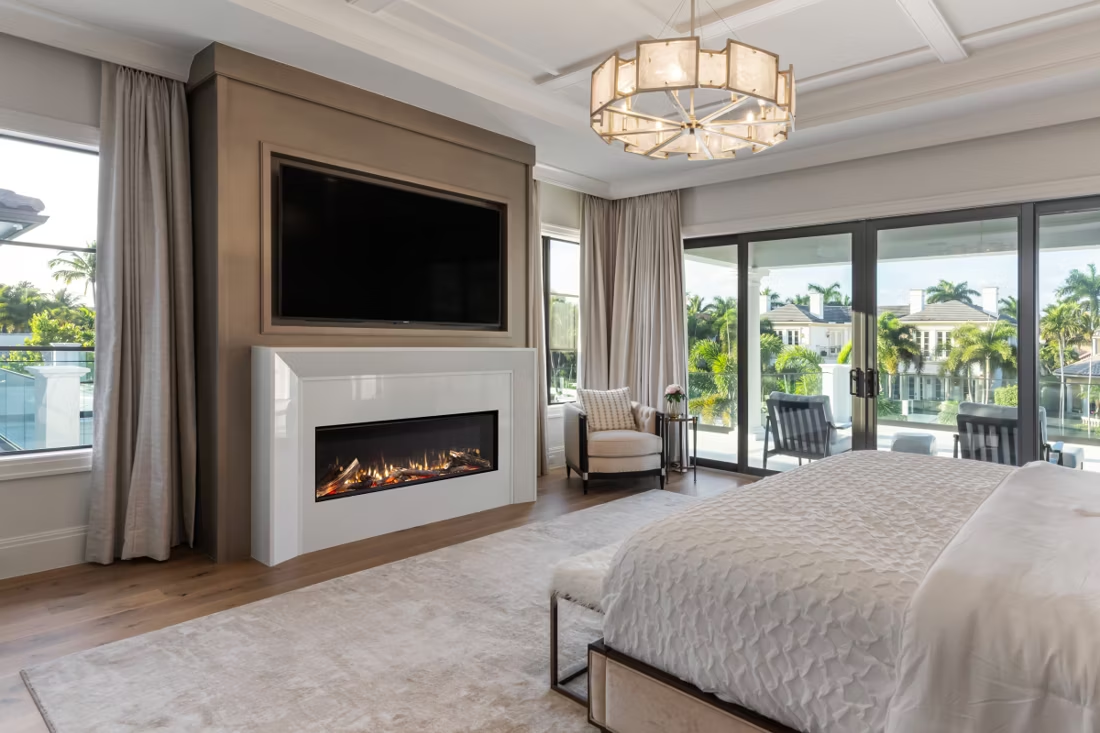
Yes—with an asterisk. Fireplaces are hot and TVs don't like heat. Either put a mantel between them to deflect rising warmth, or choose a fireplace with heat-management technology that creates a cool zone on the wall above—the wall stays around 125 degrees, barely warm, while the room still gets full heat. If you like clean lines and don't want a mantel, heat management is the answer.
Nearby Dealers
Hearth shops serving Blairmore and the surrounding area. Every listing shows whether it is a WhyFire partner, a dealer we have verified as authorized for the brands we recommend, or a local business carrying hearth products. No manufacturer pays for placement. How we verify dealers →
Electric Service in Blairmore
An electric fireplace's heater draws about 1,500 watts—pennies per hour at local rates.
Enmax
Epcor
Atco Electric
Get your free Project Guide & Parts List for a Blairmore electric fireplace.
Tell us about your home and where you'd like the extra warmth, and we'll help you find a trusted local dealer and send a free Project Guide & Parts List, sized to fit alongside whatever primary heat source your Blairmore home already runs on.
Find Your Fireplace →