
Steady heat for a townsite that swings between Chinook thaws and alpine cold snaps.
At 1,388 metres in the Bow Valley, Banff's average winter low sits near -11.7°C, but Chinook winds can swing temperatures wildly within a single day. We'll help you find a trusted local dealer who knows ATCO Gas and Apex Utilities service, Town of Banff permitting, and what actually clears review in a national park townsite.
Every Project Starts From One of These Five Situations
Convenience matters in a national park townsite.
Banff sits at 1,388 metres in climate zone 7B, where the average winter low of -11.7°C tells only part of the story—Chinook winds can push temperatures up and down by 20 degrees or more within a single day, and cold snaps well below -20°C aren't unusual in the Bow Valley. Wood is still burned here, especially lodgepole pine, white spruce, aspen poplar, and paper birch cut on Crown land through Alberta Forestry and Parks' free, year-round 30-day permits, but the valley's freeze-thaw pattern and tight local wood supply make seasoned fuel harder to plan around than in less mountainous parts of the Calgary Region.
Because Banff sits inside a national park, most homes and nearly every condo building answer to both the Town of Banff Planning & Development office and Parks Canada's architectural guidelines, which makes a code-compliant, direct-vent gas fireplace an easier sell than a new wood-burning chimney poking through a heritage-style roofline. ATCO Gas and Apex Utilities both serve the townsite, so hookup is generally straightforward for full-time residences, vacation properties, and the strata-managed condos that make up a large share of Banff's housing stock. Installed costs typically run $6,000 to $15,000 CAD, and a local dealer familiar with both the gas-fitting side and the park's permitting quirks can keep a project from stalling in review.
Three steps. No salesperson until you're ready.
Tell us about your project
Your postal code, your situation, and the fuel you're leaning toward—or let the answers point you to one.
See what's actually available
The brands dealers within 100 miles genuinely carry—real options, never a catalog mirage.
Get your dealer & Project Guide
A trusted local dealer, plus the free Project Guide & Parts List that names every component of the job.
Frequently Asked Questions
How much does a gas fireplace installation cost in Banff?
Most installs land between $6,000 and $15,000 CAD. A direct-vent insert going into an existing masonry firebox in one of Banff's older homes near Cave Avenue or Middle Springs tends to sit at the lower end, especially if the unit is already on an ATCO Gas or Apex Utilities line. A new built-in unit for a condo renovation or a custom home in a newer subdivision like the Fenlands area, with fresh gas line runs and exterior venting that needs to pass Parks Canada's exterior appearance guidelines, tends to land toward the top of that range.
Can I convert an existing wood fireplace to gas in Banff?
Yes, and it's a common upgrade in Banff's older cabins and heritage-style homes that were originally built around a wood-burning hearth using local lodgepole pine or white spruce. A gas insert usually slides into the existing firebox with a liner run through the current chimney, and it sidesteps the WETT inspection that insurers commonly require for wood appliances. For strata-managed condo buildings where wood-burning fireplaces are often restricted or banned outright by the building's bylaws, converting to gas is frequently the only option owners have to keep a working fireplace at all.
Is natural gas available everywhere in Banff, or do some homes need propane?
Within the townsite itself, ATCO Gas and Apex Utilities both run service, so most full-time residences, hotels, and condo buildings have a straightforward natural gas tie-in available. Outlying park communities like Lake Louise and backcountry lodges are a different story—natural gas infrastructure thins out fast once you're outside Banff's core, and propane tanks are the standard fallback there. If you're building or renovating outside the main townsite grid, it's worth confirming utility access before you commit to a specific fireplace model.
Will a gas fireplace still work if the power goes out?
Most will, which is worth planning for given how exposed the Bow Valley is to winter storms and highway closures on the Trans-Canada. Units with intermittent pilot ignition run on AA battery backup that kicks in automatically when the power drops. Valor models go a step further and skip the battery altogether, since their pilot's thermocouple generates its own current. For a vacation property or a condo that sits empty for stretches, a self-sufficient ignition system is one of the more practical questions to ask your dealer before you buy.
What's the difference between a gas fireplace, insert, and stove for a Banff home?
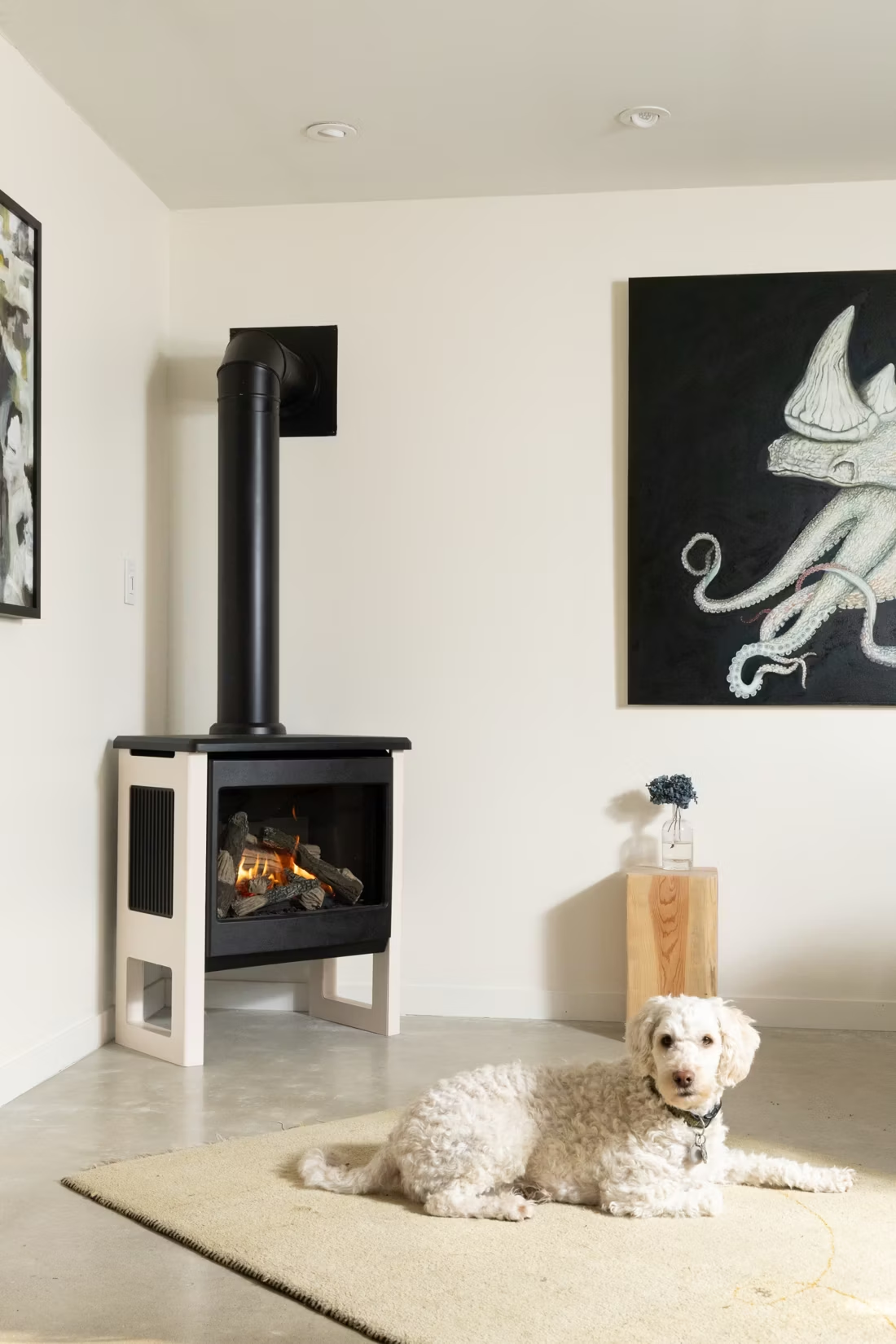
A built-in gas fireplace gets framed into a wall, which suits new construction or a full renovation of one of the newer homes going up near Middle Springs or the Fenlands. A gas insert fits into an existing masonry firebox, the more common route in Banff's older log-and-timber homes and heritage cottages that already have a working chimney chase. A gas stove is freestanding on a hearth pad and tends to show up in smaller condos or cabins where floor space and clearance are tight. For most strata buildings in Banff, an insert or a compact stove is the easier fit given limited common-wall venting options.
Do I need a permit to install a gas fireplace in Banff?
Yes. You'll need a building permit through the Town of Banff Planning & Development department, and the gas line work has to be done by a licensed gas fitter under CSA B365 installation code. Because Banff sits inside a national park, exterior changes—including a new vent cap or flue penetration visible from the street—can also need sign-off under Parks Canada's design guidelines for the townsite. Most local dealers who work here regularly are used to coordinating both approvals so a straightforward fireplace swap doesn't stall for months.
Should I choose a vented or vent-free gas fireplace in Banff?
Direct-vent is the practical choice for almost every Banff home. The Bow Valley is prone to winter temperature inversions that trap cold, still air against the valley floor, and a sealed direct-vent system keeps combustion byproducts outside rather than adding to indoor air during exactly the stretches when everyone's windows are shut. Elevation matters too—at 1,388 metres, thinner air affects combustion, so a good local dealer will confirm your chosen model is rated or adjustable for high-altitude installation before it goes in.
How often should a gas fireplace be serviced in Banff?
Plan on an annual service, ideally in late September or October before ski season fills up local trades and before the first hard cold snap. A technician checks the burner, pilot assembly, gas connections, and venting, and cleans the glass—usually a $150 to $250 visit. This matters more in Banff than in most towns because a large share of the housing stock is short-term rental or seasonally occupied; a fireplace that's been sitting idle since spring needs that check before it's asked to run nightly for winter guests.
Gas or wood—which makes more sense for a Banff property?
Wood has real appeal here: Alberta Forestry and Parks issues free cutting permits valid for 30 days, year-round, and lodgepole pine or aspen poplar cut on Crown land costs nothing but the trip to haul it. But a lot of Banff's housing stock is strata-managed condos where building bylaws restrict or outright prohibit wood-burning appliances, and even for detached homes, the valley's freeze-thaw cycles make consistently seasoned wood harder to guarantee than in flatter parts of the Calgary Region. Gas wins on convenience, on WETT-inspection-free insurance, and on being the only option many condo owners actually have—which is why it's the default choice for most new installs in the townsite.
Can a gas fireplace run on a thermostat?
Most modern gas fireplaces can—turn it on and off from the couch with a remote, or set a room temperature and let the fireplace hold the comfort zone for you. If low maintenance matters to your family, this is the feature set that makes gas the convenience pick over wood and pellet.
Why do fireplace quotes vary so much?
Because a fireplace is an iceberg—there's more behind the wall than in front of it. A low quote often covers only the unit; the full scope includes vent pipe, gas line or electrical, framing, and the tile or stone that has to come off and go back on. Make every bidder price the whole job. If a dealer can't speak to the full scope with confidence, that's your signal to keep looking.
What's the difference between an insert and a zero-clearance fireplace?
An insert is a fireplace that slides into a pre-existing wood-burning fireplace—if you don't have one, there's nothing to insert it into. A zero-clearance fireplace is built into a framed wall, which makes it the answer for remodels and new construction. Simple test: existing masonry fireplace means insert; blank or framed wall means zero-clearance.
Can I put a TV above my fireplace?
Yes—with an asterisk. Fireplaces are hot and TVs don't like heat. Either put a mantel between them to deflect rising warmth, or choose a fireplace with heat-management technology that creates a cool zone on the wall above—the wall stays around 125 degrees, barely warm, while the room still gets full heat. If you like clean lines and don't want a mantel, heat management is the answer.
Nearby Dealers
Hearth shops serving Banff and the surrounding area. Every listing shows whether it is a WhyFire partner, a dealer we have verified as authorized for the brands we recommend, or a local business carrying hearth products. No manufacturer pays for placement. How we verify dealers →
Reinhard Ceramic Tile
Wild's Home Hardware
Reinhart Ceramic Tile & Marble
Diamond Fireplace Distributors
Ryan My Fireplace Guy
Natural Gas Service in Banff
Confirm service at your address before planning a gas fireplace—a quick call settles it.
Atco Gas
Apex Utilities
Get your free Project Guide & Parts List for a Banff gas fireplace.
Tell us about your home or condo and whether you're on ATCO Gas or Apex Utilities, and we'll help you find a trusted local dealer who knows Town of Banff permitting and Parks Canada's design rules, then send a free Project Guide & Parts List with the exact vent kit and parts your project needs.
Find Your Fireplace →