
Heat that holds up through a Southeast Alaska winter.
Wood, gas, pellet, and electric fireplace resources for Wrangell Island—connect with a trusted local hearth retailer who knows what actually works on an island community with limited freight and long, damp winters.
Every Project Starts From One of These Five Situations
Island heating on Wrangell, off the mainland coast of Southeast Alaska.
Wrangell sits on its own island near the mouth of the Stikine River, with a heating load that runs about as long and hard as International Falls, Minnesota, rather than most of the Lower 48. Winter lows average around 29°F, milder than interior Alaska thanks to the maritime climate, but the season is long, wet, and gray, and everything that heats a home here has to survive barge freight, salt air, and the reality that a broken part can mean a week's wait for the next boat. Birch, spruce, and cottonwood are the local firewood species, much of it cut under Tongass National Forest permits or sourced from private timberland nearby.
What you'll find on this hub: hearth retailers, service technicians, and fuel suppliers serving Wrangell Island and the smaller communities tied to it. Pick your fuel below for local dealers, installation costs, and recommended units suited to island logistics—whether you're heating a harbor-front home in town or a cabin along the Stikine.
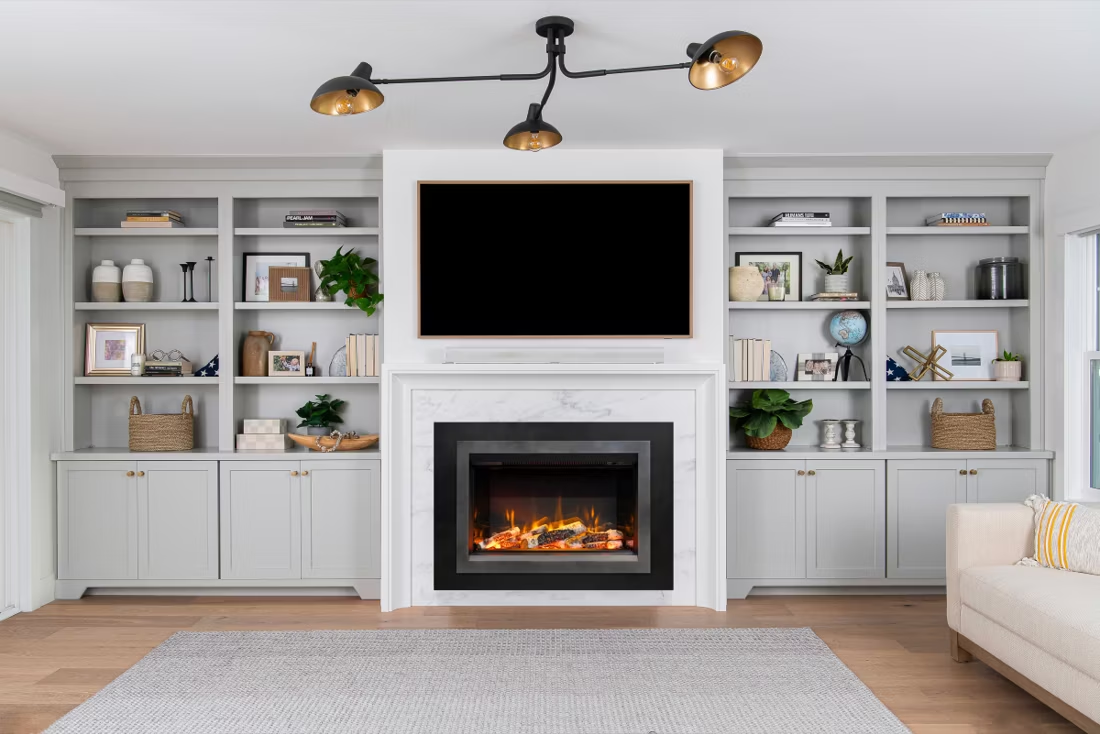
Four fuels. One honest answer for Wrangell County.
Three steps. No salesperson until you're ready.
Tell us about your project
Your zip code, your situation, and the fuel you're leaning toward—or let the answers point you to one.
See what's actually available
The brands dealers within 100 miles genuinely carry—real options, never a catalog mirage.
Get your dealer & Project Guide
A trusted local dealer, plus the free Project Guide & Parts List that names every component of the job.
Frequently Asked Questions
Which fuel works best in Wrangell?
Wood remains the backbone fuel for a lot of Wrangell households—birch and spruce are locally available, cutting permits through Tongass National Forest keep costs manageable, and a wood stove keeps working when a winter storm knocks out the ferry or the power grid. Propane-fired gas fireplaces and stoves are the convenience choice, since there's no piped natural gas on the island; propane arrives by barge and is stored in tanks like anywhere off the gas grid. Pellet stoves work well for households that want wood-style heat without splitting and stacking, as long as you're comfortable keeping a season's supply on hand between barge deliveries. Electric fireplaces are common as supplemental heat in bedrooms and living rooms, helped by relatively affordable hydro power, but they're not typically the primary heat source through a full Wrangell winter.
Do I need a permit to install a fireplace in Wrangell?
Generally yes for wood, gas, and pellet appliances—the City and Borough of Wrangell requires building permits for new hearth installations, and gas work also needs sign-off from a licensed gas fitter for the propane line and tank setup. If you're cutting your own firewood on Tongass National Forest land, that requires a separate Forest Service cutting permit, which is a routine and inexpensive process most winters. Electric fireplaces usually skip the permit process unless the installation involves a built-in unit with new wiring or a dedicated circuit. Most local retailers who install units on the island can walk you through the borough's permit requirements as part of the job.
Is wood smoke or air quality regulated in Wrangell?
Not in any formal sense—Wrangell doesn't have the winter inversion problems that trigger burn advisories in places like the Klamath Basin or Fairbanks. The island's maritime airflow tends to disperse smoke rather than trap it. That said, a well-seasoned load of birch or spruce still burns cleaner and more efficiently than green cottonwood, and a modern EPA-certified stove will produce noticeably less smoke and use less wood per heating season than an older non-certified unit—worth considering given how firewood and parts both have to travel to get here.
Can one local dealer handle all four fuel types on the island?
Given Wrangell's small population, most local hearth work runs through a handful of dealers who carry multiple fuel types rather than specializing in just one—often wood, gas, and pellet together, with electric fireplaces as an easier add-on since they don't require venting. If a specific brand or model isn't stocked locally, it's common for a Wrangell installer to order the unit and vent kit through a mainland supplier in Juneau or Ketchikan and bring it over by barge, which is factored into lead times more than it would be for a mainland town.
How does service and repair work on an island like Wrangell?
Most technicians serving Wrangell are based on the island or make scheduled trips over from Ketchikan or Petersburg, and scheduling ahead matters more here than almost anywhere in the Lower 48—a part on backorder can mean waiting for the next barge, which might be a week or more depending on season and weather. Pre-season service, ideally in late summer before the wet season sets in, is the best way to catch flue corrosion, worn gaskets, or gas line issues before they become an emergency in January. Keeping basic spares on hand (gaskets, batteries for IPI gas units) is common practice for island homeowners on any fuel type.
What's the typical cost range for fireplace installation across fuel types in Wrangell?
Costs run higher than mainland averages mostly due to freight. Wood stove or insert installation: roughly $5,500–$10,500 depending on chimney work and shipping. Propane fireplace, insert, or stove: roughly $5,000–$12,000, with tank setup and line work adding to the range. Pellet stove or insert: roughly $5,000–$8,500. Electric fireplace: $200–$3,000 for the unit itself, plus $400–$1,200 in labor for anything beyond a plug-and-play install—the most freight-insulated option since units are smaller and lighter to ship. See the county + fuel pages above for more detail tied to local retailer pricing.
How much should I budget for a fireplace?
For an average home—covering the fireplace, the vent pipe, and basic installation—a budget between $3,900 and $5,500 gives you a lot of options across wood, gas, and pellet. By the time you add finish work, gas line, and electrical, the average complete installation lands between $5,000 and $12,000 all-in. In a remodel or new build, a good rule is to put about 2.5% of the total project cost toward the fireplace.
Does a fireplace add value to my home?
On average, a fireplace adds back to the home about the same amount you spent installing it. Add the monthly savings from heating the rooms you actually use instead of the whole house—often hundreds of dollars a year—and the value case is strong before you even count what a fire does for how your family uses the room.
What are the biggest mistakes people make buying a fireplace?
Five come up constantly: budgeting for the unit but not the full job (vent, gas line, electrical, finish work); drowning in options instead of starting from style and fuel; buying without an in-home preview; handing installation to a handyman instead of a pro; and giving up out of sheer indecision. Every one is avoidable with a clear plan—step one, step two, step three.
Can a fireplace actually lower my heating bill?
Yes—by creating a comfort zone. A furnace heats every square foot of the house just to warm the one room you're in; a gas fireplace on low burns roughly a sixth of the gas a typical furnace does. Set the furnace around 55–60 degrees as a baseline, then heat the rooms your family actually uses. Families who heat this way commonly save $20–$60 a month.
Stove and Fireplace Dealers in Wrangell County
Listings include WhyFire partner dealers, dealers we have verified as authorized for the brands we recommend, and established local businesses that carry hearth products. Every listing shows which one it is. The ones marked Preferred run on WhyFire's software, so they can show you real pricing and book your appointment right here. No manufacturer pays for placement. How we verify dealers →
Bernie's Sales
Find your fireplace project in Wrangell.
Tell us about your fuel and your home, and we'll match you with a trusted local dealer and send you a free Project Guide & Parts List—including the vent kit and everything else your Wrangell installer needs to get it right the first time.
Find Your Fireplace →