
Warmth engineered for the top of the world.
Wood, gas, pellet, and electric fireplace resources for every village in North Slope Borough—from Utqiaġvik on the Arctic Ocean to Anaktuvuk Pass in the Brooks Range foothills. Find the right unit for -18°F winters and connect with a trusted local hearth retailer or installer.
Every Project Starts From One of These Five Situations
The nation's coldest heating climate, village by village.
North Slope Borough is the largest borough in the United States by land area—roughly 95,000 square miles of Arctic tundra stretching from the Beaufort and Chukchi Sea coastlines south to the Brooks Range. With a winter heating load close to double that of International Falls, Minnesota, this is considerably colder than even Anchorage. Winter lows average -18°F, and the heating season effectively runs year-round. The borough sits above the Arctic tree line, so the birch, spruce, and cottonwood firewood used here isn't harvested locally—it's trucked north on the Dalton Highway or barged in during the short summer sealift window, much as it has been supplemented for generations by driftwood gathered along the coast.
What you'll find on this hub: hearth retailers, service technicians, and fuel suppliers serving Utqiaġvik and the borough's seven other villages—Nuiqsut, Kaktovik, Point Hope, Point Lay, Wainwright, Atqasuk, Anaktuvuk Pass—plus the Deadhorse/Prudhoe Bay oil camp. Because almost everything arrives by barge or air cargo, timing matters as much as fuel choice up here. Pick your fuel below to see local dealers, realistic installed costs once freight is factored in, and the units that hold up best in sustained sub-zero conditions.
Four fuels. One honest answer for North Slope County.
Wood
See what's available near North Slope County.
Find your wood stove →Gas
See what's available near North Slope County.
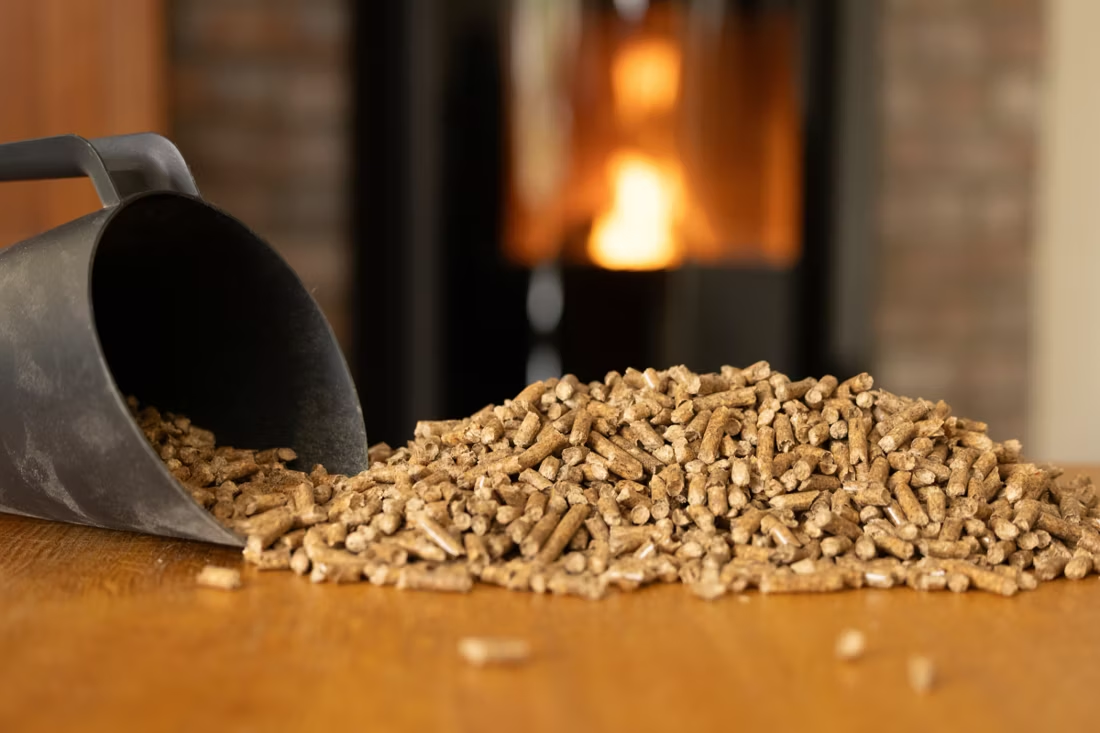
Find your gas fireplace →Pellet
See what's available near North Slope County.
Find your pellet stove →Electric
See what's available near North Slope County.
Find your electric fireplace →Three steps. No salesperson until you're ready.
Tell us about your project
Your zip code, your situation, and the fuel you're leaning toward—or let the answers point you to one.
See what's actually available
The brands dealers within 100 miles genuinely carry—real options, never a catalog mirage.
Get your dealer & Project Guide
A trusted local dealer, plus the free Project Guide & Parts List that names every component of the job.
Frequently Asked Questions
Which fuel works best in North Slope Borough?
There's no single answer—it comes down to what's already reaching your village and what you can keep running when the weather turns. Wood is still common as a backup and ambiance heater; birch and spruce firewood gets trucked up the Dalton Highway or barged in during the summer sealift, since the tundra itself grows no timber. Natural gas is piped in Utqiaġvik from the nearby Barrow Gas Fields—a rare setup for a village this remote—while the other seven communities run gas appliances on propane delivered by barge or air. Pellet stoves work well if you can secure storage space for a season's supply of Superior Pellet Fuels or Lignetics bags shipped in before freeze-up. Electric fireplaces are supplemental only; with village power coming from diesel generation through North Slope Borough Power & Light, electric resistance heat is expensive to run as a primary source. Most homes here layer fuels—propane or gas as the main system, wood or pellet as a resilient backup for outages, which matter more on the Slope than almost anywhere else in the country.
Do I need a permit to install a fireplace or stove in North Slope Borough?
Generally yes, though the process runs through North Slope Borough Planning and Community Services rather than a state agency. Wood stoves, gas appliances, and pellet stoves typically need a building permit, and any new gas line or gas connection should be handled by a licensed gas fitter given how far a mis-installed line is from the nearest inspector. Electric fireplaces that involve hardwiring a new circuit also need an electrical permit; plug-in units generally don't. Because most equipment and installers travel in from Fairbanks or Anchorage, permitting is usually coordinated as part of the install rather than something the homeowner files separately—worth confirming with your dealer before ordering, since freight timing and permit approval both need to line up before the barge season closes.
Are there air quality restrictions on wood or pellet burning in North Slope Borough?
No—North Slope Borough has no non-attainment designation and no burn curtailment program, which sets it apart from interior Alaska communities like Fairbanks, where winter temperature inversions trap wood smoke over the valley and trigger mandatory burn bans. The Slope's open, wind-scoured tundra doesn't hold pollutants the same way, so there's no seasonal restriction on wood or pellet burning here. That said, freight logistics function as their own kind of limit: since firewood and pellets both have to arrive by barge or air before the ground freezes solid, running short mid-winter is a bigger practical risk than any air-quality rule.
Can one local hearth retailer handle all four fuel types in North Slope Borough?
It's less about one storefront carrying everything and more about a dealer who can plan the full supply chain for you. Because there's no hearth showroom in Utqiaġvik or the outlying villages, most homeowners work with a Fairbanks- or Anchorage-based retailer who sells and ships wood, gas, pellet, and electric units north, then coordinates with a local installer for the on-the-ground work—venting, gas connections, and any electrical tie-in. The dealers who do this regularly for North Slope customers understand the sealift and air-cargo windows and will tell you upfront if a fuel choice means waiting until next summer's barge run.
How does service work in such a remote part of North Slope Borough?
Almost all technicians who service North Slope Borough are based outside the borough and fly in on scheduled Alaska Airlines or regional air-taxi service to Utqiaġvik and the outlying villages. That means service calls are booked in advance, often bundled—a tech flying to Wainwright will typically schedule several appointments in the same village on one trip rather than making a single-house run. Plan annual service and any propane or pellet restocking before the ground freezes and before the last barge of the season departs; a part or fuel delivery you missed in September can mean waiting until the following summer. Keeping a wood-burning backup on hand, even in a gas-heated home, is common practice precisely because of how thin the supply lines get in deep winter.
What's the typical cost range for fireplace or stove installation across fuel types in North Slope Borough?
Costs run well above Lower 48 averages because freight is baked into nearly every line item. Wood stove or insert installation: roughly $7,000–$14,000 once barge or air shipping for the unit, chimney components, and installer travel are included. Gas fireplace, insert, or stove: $6,000–$13,000, lower if you're in Utqiaġvik with existing piped gas service, higher in villages relying on propane tank delivery. Pellet stove or insert: $6,500–$11,000, with ongoing fuel cost tied to how many pallets of Superior Pellet Fuels or Lignetics you can get shipped in before freeze-up. Electric fireplace: $300–$3,500 for the unit itself, plus $500–$1,500 in labor if it needs a new circuit—the appliance cost is close to Lower 48 pricing, but running it long-term against diesel-generated electricity rates is the real expense. Ask your dealer for shipping and installer-travel costs up front; they vary more here than the unit price does.
What is an in-home preview and do I need one?
It's a visit where a hearth professional measures your space, confirms the model you picked actually works in your home, and walks the specs—framing, gas line, venting, finish work—before anything is ordered. Some details you just can't know until you see the house. Never make a down payment without one; it's the single most-skipped step that burns buyers.
Wood, gas, pellet, or electric—how do I choose?
Match the fuel to your life, not the other way around. Wood: lowest fuel cost and total power-outage independence, but you're hauling and stacking. Gas: press a button, set a thermostat, no maintenance to speak of. Pellet: wood economics with automatic feeding, in exchange for weekly cleaning and a need for electricity. Electric: plugs in anywhere with honest supplemental heat. Nobody regrets the fuel that fits how they actually live.
Can a fireplace actually lower my heating bill?
Yes—by creating a comfort zone. A furnace heats every square foot of the house just to warm the one room you're in; a gas fireplace on low burns roughly a sixth of the gas a typical furnace does. Set the furnace around 55–60 degrees as a baseline, then heat the rooms your family actually uses. Families who heat this way commonly save $20–$60 a month.
What are the biggest mistakes people make buying a fireplace?
Five come up constantly: budgeting for the unit but not the full job (vent, gas line, electrical, finish work); drowning in options instead of starting from style and fuel; buying without an in-home preview; handing installation to a handyman instead of a pro; and giving up out of sheer indecision. Every one is avoidable with a clear plan—step one, step two, step three.
Find your fireplace solution for North Slope Borough.
Tell us your village and fuel preference, and we'll match you with a trusted dealer who ships and installs hearth equipment on the Slope, plus a free Project Guide & Parts List—the exact parts, including the vent kit, and a plan built around your barge or air-freight timeline.
Find Your Fireplace →