
Fireplace and Stove Options Built for Haines Winters.
Wood, gas, pellet, and electric fireplace resources for every community in Haines Borough—from the Haines townsite to Mud Bay, Letnikof, and Klukwan. Find the right unit for your home and get matched with a trusted local hearth dealer.
Every Project Starts From One of These Five Situations
Long, dark winters on the Lynn Canal in Haines Borough, Alaska.
Haines Borough sits at the head of the Lynn Canal in Alaska's northern panhandle, reachable by the Alaska Marine Highway ferry or the Haines Highway through British Columbia and the Yukon. The borough falls in climate zone 7, with an average winter low near 18°F and 8,837 heating degree days a year—a heating season that runs from September into May, longer in degree-day terms than Duluth, Minnesota, even though the marine air off the canal keeps the hardest cold snaps milder than interior Alaska towns like Fairbanks. Birch, spruce, and cottonwood grow throughout the borough, and cutting your own firewood—with a permit from the Alaska Division of Forestry or the adjacent Tongass National Forest—has been part of how Haines households heat for generations.
This hub covers the whole borough: hearth retailers, service technicians, and fuel suppliers serving Haines townsite, Mud Bay, Letnikof, Mosquito Lake, and the community of Klukwan up the Chilkat River. With just over 2,000 residents spread across a wide area, most dealers and technicians are based in Haines proper and travel out for installs and service calls. Pick your fuel below for local dealers, realistic installed costs, and the resources specific to your project—whether you're heating a cabin near the Chilkat Bald Eagle Preserve or a home in town.
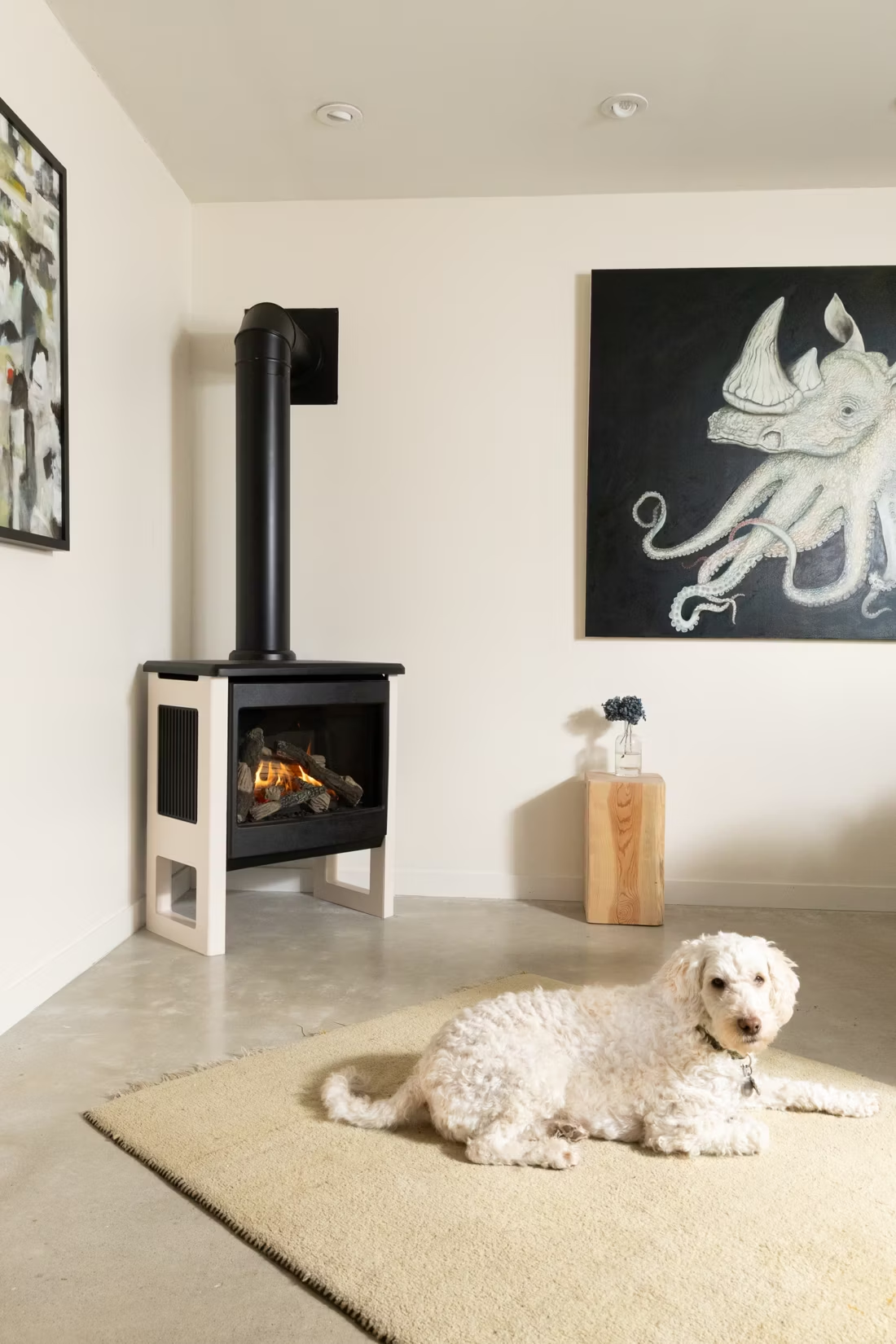
Four fuels. One honest answer for Haines County.
Three steps. No salesperson until you're ready.
Tell us about your project
Your zip code, your situation, and the fuel you're leaning toward—or let the answers point you to one.
See what's actually available
The brands dealers within 100 miles genuinely carry—real options, never a catalog mirage.
Get your dealer & Project Guide
A trusted local dealer, plus the free Project Guide & Parts List that names every component of the job.
Frequently Asked Questions
Which fuel works best for a home in Haines Borough?
It depends on where you are in the borough and what you're heating. Wood is the traditional mainstay—birch and spruce split from the hills around the Chilkat and Chilkoot valleys burn hot and steady through the long winter, and cottonwood is plentiful for quick-catching kindling. A cutting permit from the Alaska Division of Forestry or the nearby Tongass National Forest keeps fuel costs low if you're willing to do the work yourself. Propane is the gas option here—there's no piped natural gas in Haines, so propane is trucked or barged in, and it's the go-to for homeowners who want instant heat without wood handling. Pellet stoves are a solid middle ground; Superior Pellet Fuels and Lignetics both reach this market, though bag availability can tighten in a hard winter, so many pellet households keep a few extra tons on hand each fall. Electric is mostly supplemental—Haines Light and Power's hydro-diesel grid keeps rates more reasonable than in many rural Alaska towns, but electric resistance heat alone isn't enough to carry a home through an 8,800-degree-day winter.
Do I need a permit to install a wood stove or fireplace in Haines?
Yes, in most cases. New wood stoves, inserts, propane fireplaces, and pellet stoves typically require a building permit through the Haines Borough, and any gas line work should go through a licensed installer. Because Haines has no local air-quality non-attainment designation—unlike Fairbanks or Juneau, which restrict burning during winter inversions—there's no curtailment schedule to work around here, though installing an EPA-certified unit is still the right call for efficiency and lower fuel use. Electric fireplaces generally skip the permit unless you're hardwiring a built-in unit, which needs an electrical permit. Most local hearth dealers handle the paperwork as part of the installation.
How does the borough's isolation affect getting a stove or fireplace installed?
It's the biggest practical difference from a lower-48 install. Most units, venting, and parts come up on the Alaska Marine Highway ferry from Juneau or Bellingham, or by truck down the Haines Highway through Haines Junction and Whitehorse—both routes that can run to a multi-week lead time, longer if winter weather closes the pass. Local dealers who stock common wood, propane, and pellet units and order well ahead of the season are worth their weight; special-order units or unusual vent configurations can add real time to a project. Planning your install in late summer, before the fall ferry schedule gets tight, is the smart move for anyone hoping to be burning by October.
Can one dealer in Haines handle wood, gas, pellet, and electric?
Given the borough's population of just over 2,000, most local hearth retailers carry more than one fuel type rather than specializing narrowly—it's the only way to make the business work in a town this size. That said, not every dealer stocks all four; some lean heavily wood and propane with electric as an afterthought, while pellet stock depends on what's been ordered up on the last barge. It's worth asking a dealer directly what they have on hand and what they can order in before the season, rather than assuming a full four-fuel showroom like you'd find in Juneau or Anchorage.
How does service work for outlying communities like Klukwan or Mosquito Lake?
Technicians based in Haines townsite travel out to Mud Bay, Letnikof, Mosquito Lake, and Klukwan for both installs and annual service—expect a modest trip charge for the drive, and expect scheduling to tighten up once the Haines Highway sees its first hard snow. Booking chimney sweeps and propane inspections in late summer or early fall, before the ferry and highway schedules thin out for winter, is the practical approach. Households on wood or pellet in the outlying communities often keep a backup fuel source on hand simply because a service call or a parts shipment can take longer to arrive than it would in town.
What does fireplace installation typically cost in Haines, considering everything has to be shipped in?
Costs run higher across every fuel type than they would in the lower 48, mainly because of freight on the unit, venting, and parts. Wood stove or insert installs typically run $5,500 to $10,500 once shipping and chimney work are figured in. Propane fireplaces, inserts, or stoves run $5,000 to $12,000 depending on tank setup and venting. Pellet stoves or inserts run $5,000 to $8,500. Electric fireplaces are the exception—unit costs of $200 to $3,000 plus $400 to $1,200 in labor are roughly in line with lower-48 pricing since electric units are small enough to ship without much added freight. Getting an exact number for your project means talking to a local dealer who knows the current barge and freight costs.
How much should I budget for a fireplace?
For an average home—covering the fireplace, the vent pipe, and basic installation—a budget between $3,900 and $5,500 gives you a lot of options across wood, gas, and pellet. By the time you add finish work, gas line, and electrical, the average complete installation lands between $5,000 and $12,000 all-in. In a remodel or new build, a good rule is to put about 2.5% of the total project cost toward the fireplace.
Can a fireplace actually lower my heating bill?
Yes—by creating a comfort zone. A furnace heats every square foot of the house just to warm the one room you're in; a gas fireplace on low burns roughly a sixth of the gas a typical furnace does. Set the furnace around 55–60 degrees as a baseline, then heat the rooms your family actually uses. Families who heat this way commonly save $20–$60 a month.
What is an in-home preview and do I need one?
It's a visit where a hearth professional measures your space, confirms the model you picked actually works in your home, and walks the specs—framing, gas line, venting, finish work—before anything is ordered. Some details you just can't know until you see the house. Never make a down payment without one; it's the single most-skipped step that burns buyers.
Can I install a fireplace myself?
If you're putting a fire in your house on purpose, it's best to work with an expert. Unless you're genuinely experienced in framing, gas line, vent pipe, and the national code on clearances to combustibles, have a professional do it—and ideally the same company that sells you the fireplace, so warranty, service, and liability all live under one roof.
Stove and Fireplace Dealers in Haines County
Listings include WhyFire partner dealers, dealers we have verified as authorized for the brands we recommend, and established local businesses that carry hearth products. Every listing shows which one it is. The ones marked Preferred run on WhyFire's software, so they can show you real pricing and book your appointment right here. No manufacturer pays for placement. How we verify dealers →
Nc Chimneys LLC
Area – Juneau, Ak
Find your fireplace in Haines Borough.
Tell us about your project and we'll match you with a trusted local dealer and send a free Project Guide & Parts List—the exact parts, including a vent kit sized for Haines winters, and the dealer who can actually get it installed before the season turns.
Find Your Fireplace →