
Keep Your Family Warm and Safe—No Matter What
From Camden to Pine Hill to Yellow Bluff, wood stoves and inserts give rural Wilcox County homes backup heat when storms knock out power, plus real savings on a timbered landscape thick with oak, pine, and hickory. Find the right unit and connect with a trusted local dealer.
Every Project Starts From One of These Five Situations
Wood heat still matters in the Black Belt's mild winters.
Wilcox County sits in Alabama's Black Belt, a rural stretch of south-central Alabama with a population just over 3,600 spread across farmland and dense timberland. Winters here are mild by national standards—average lows around 36°F and roughly 2,252 heating degree days, a fraction of what a place like Duluth, MN sees in a single season. That means wood heat in Wilcox County isn't a survival necessity the way it is farther north; it's a practical, cost-effective supplement to propane or electric heat, and a reliable backup when winter storms take down power lines across the county's rural grid.
With no national forest tract inside the county, most local firewood comes from private timberland rather than Forest Service permits—a lot of Wilcox County landowners already have oak, pine, and hickory standing on their own property, which keeps fuel costs low for anyone willing to cut and split their own. Climate zone 3A means there are no winter air quality advisories or non-attainment restrictions here, so burning wood on a cold January night doesn't come with the smoke-curtailment concerns you'd find in a mountain valley. A well-sized stove or insert still earns its keep in an older farmhouse or a doublewide on a wooded lot outside Camden—cutting the propane bill and keeping the living room warm if an ice storm takes the power out for a few days.
Three steps. No salesperson until you're ready.
Tell us about your project
Your zip code, your situation, and the fuel you're leaning toward—or let the answers point you to one.
See what's actually available
The brands dealers within 100 miles genuinely carry—real options, never a catalog mirage.
Get your dealer & Project Guide
A trusted local dealer, plus the free Project Guide & Parts List that names every component of the job.
Frequently Asked Questions
How much does a wood stove installation cost in Wilcox County?
A typical wood stove installation in a rural Wilcox County home runs roughly $3,000 to $7,500, depending on the stove itself, whether an existing chimney or masonry fireplace is usable, and whether new Class A chimney pipe has to be run through a roof. Older farmhouses in the Camden and Pine Hill areas sometimes need hearth pad work or floor reinforcement to meet clearance requirements, which can push costs toward the higher end. Because the county is thinly populated, some installers travel in from Selma or the greater Montgomery area, and a modest trip charge is common for jobs out toward Yellow Bluff or Alberta.
What size wood stove or insert do I need for my home?
Given Wilcox County's mild winters—average lows around 36°F and modest heating degree days compared to northern climates—most homes here don't need the largest catalytic stoves built for overnight sub-zero burns. A small to medium stove (rated for 1,000 to 1,800 sq ft) is usually enough for a main living area used as supplemental or backup heat, and a medium unit can handle a modest single-story farmhouse as primary heat if propane costs are the main concern. Mobile and manufactured homes, common throughout the county, generally do best with a smaller, well-insulated stove and careful attention to clearance-to-combustibles rules. A local retailer can size your space based on square footage and how much of your heating load you actually want the stove to carry.
Where can I find certified wood stove installers near me?
Look for installers holding NFI (National Fireplace Institute) certification or CSIA (Chimney Safety Institute of America) credentials—both indicate real training in venting, clearances, and code compliance for wood-burning appliances. Because Wilcox County's population is small, dedicated hearth dealers are limited within the county itself, and many homeowners work with certified installers based out of Selma or the Montgomery metro who cover the surrounding rural counties. Expect a travel charge for installs farther out toward Pine Hill, Yellow Bluff, or Alberta. Avoid handyman or general-contractor installs for wood stoves—improper clearances and venting are the leading cause of chimney fires, and a certified installer typically stands behind the work with a warranty.
What's the difference between a wood stove and a wood insert?
A wood stove is a freestanding unit set on a hearth pad, vented through a chimney, and can go almost anywhere in a room with proper clearances. A wood insert is built to slide into an existing masonry fireplace, turning a drafty open hearth into a sealed, high-efficiency heat source. For Wilcox County's older brick-fireplace farmhouses, an insert is often the simpler upgrade since it uses the chimney that's already there. Homes without an existing fireplace—including many of the manufactured and newer-built homes in the county—are usually better matched to a freestanding stove.
Do I need a permit to install a wood stove in Wilcox County?
Most new wood stove installations require a building permit through the county's building department, and any stove sold new must meet current EPA 2020 NSPS emissions standards. A certified local installer typically handles the permitting as part of the job. Because Wilcox County has no air quality non-attainment designation and no winter inversion issues, there aren't seasonal burn curtailment periods to plan around here the way there are in smoke-sensitive mountain valleys—you're free to burn on cold nights without checking an advisory first, though good practice (seasoned wood, hot fires) still keeps chimney fires and smoke complaints to a minimum.
What's the best wood stove for Wilcox County's climate?
Because Wilcox County's winters are mild—average lows in the mid-30s and far fewer heating degree days than a northern climate—most homes don't need the biggest catalytic, 20-hour-burn stoves designed for places like Bozeman, MT. A solid mid-size non-catalytic stove from a brand like Pacific Energy, Lopi, or Vermont Castings will comfortably heat a main living area, burn local oak and hickory efficiently, and still put out plenty of backup heat during a winter storm outage. Homeowners who want the stove as their primary heat source through the season, rather than just supplemental or emergency heat, can size up slightly and look at models with a longer firebox for oak and hickory rounds, which burn hot and long.
How often should my chimney be inspected and cleaned?
The CSIA recommends an annual inspection for any wood-burning appliance, and that holds true in Wilcox County even with a shorter burning season. Alabama's humid climate can actually accelerate creosote buildup in a chimney that sits unused much of the year and then gets occasional heavy use during cold snaps, so an inspection before the first fire of the season—typically October or November—is worth the trouble. Homes that lean on the stove for backup heat during storm-related outages should still get that yearly check, since irregular use doesn't reduce the fire risk from a dirty flue.
Where can I get firewood in Wilcox County?
Wilcox County doesn't have a national forest tract, so there's no Forest Service cutting permit system like you'd find out West—most firewood here comes from private timberland, and a large share of county residents already own wooded acreage with oak, pine, or hickory standing on it. For homeowners without their own timber, local sellers and small sawmill operators around Camden and Pine Hill often sell seasoned firewood by the truckload or rick rather than the standardized cord measurement common elsewhere. Oak and hickory are the preferred species for heat output and burn time; pine is common and burns hot but faster, and is better suited to kindling or shoulder-season fires.
Wood stove vs. pellet stove—which is right for me?
Wood stoves burn cordwood, work without electricity, and pair naturally with a county where a lot of homeowners already have oak, pine, or hickory on their own land—a real advantage when severe weather knocks out power, which happens more than once most winters in rural Wilcox County. Pellet stoves, using bagged pellets from suppliers like Lignetics, Hamer Pellet Fuel, or Greenway Renewable Energy, are easier to run day to day and burn cleaner, but they need electricity for the auger and blower, so they go dark in an outage unless paired with a battery backup. For a mild-winter, storm-prone county like this one, wood is the more dependable backup option; pellet stoves suit homeowners in town who want convenience and have steady power and don't plan to self-cut firewood.
Why is my open fireplace making my house colder?
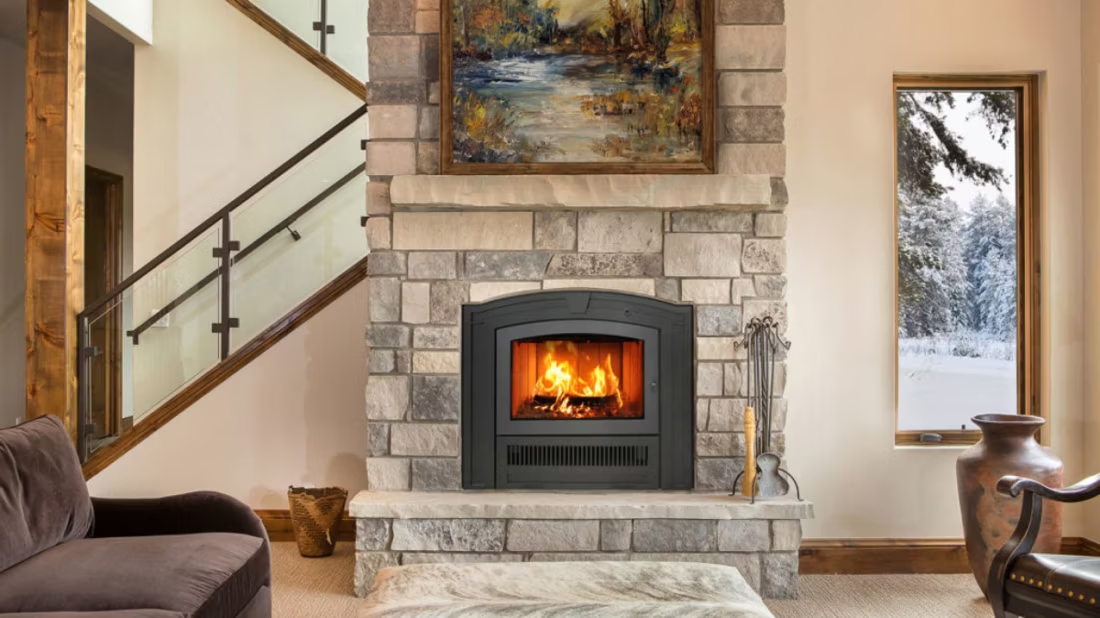
Open fireplaces suck—literally. As the fire burns, it consumes air your furnace already paid to heat and pulls it out through the chimney, so the house is actually colder after the fire goes out than before you lit it. An insert fixes this: it seals the chimney, puts fixed glass across the front, and turns that hole in your house into a real heat source.
What's the difference between an insert and a zero-clearance fireplace?
An insert is a fireplace that slides into a pre-existing wood-burning fireplace—if you don't have one, there's nothing to insert it into. A zero-clearance fireplace is built into a framed wall, which makes it the answer for remodels and new construction. Simple test: existing masonry fireplace means insert; blank or framed wall means zero-clearance.
What is an in-home preview and do I need one?
It's a visit where a hearth professional measures your space, confirms the model you picked actually works in your home, and walks the specs—framing, gas line, venting, finish work—before anything is ordered. Some details you just can't know until you see the house. Never make a down payment without one; it's the single most-skipped step that burns buyers.
Can a fireplace actually lower my heating bill?
Yes—by creating a comfort zone. A furnace heats every square foot of the house just to warm the one room you're in; a gas fireplace on low burns roughly a sixth of the gas a typical furnace does. Set the furnace around 55–60 degrees as a baseline, then heat the rooms your family actually uses. Families who heat this way commonly save $20–$60 a month.
Stove and Fireplace Dealers in Wilcox County
Listings include WhyFire partner dealers, dealers we have verified as authorized for the brands we recommend, and established local businesses that carry hearth products. Every listing shows which one it is. The ones marked Preferred run on WhyFire's software, so they can show you real pricing and book your appointment right here. No manufacturer pays for placement. How we verify dealers →
South Alabama Gas- Monroeville
Thompson Gas- Butler
Allgas, Inc. - Montgomery
Find your wood heat solution in Wilcox County.
Tell us a bit about your home and we'll match you with the right wood stove or insert, plus a free Project Guide & Parts List—the exact parts, including the vent kit, and a recommended local Wilcox County dealer to install it.
Find Your Fireplace →