
Mild winters, real heat needs—find your fit in Tallapoosa County.
Wood, gas, pellet, and electric fireplace resources for every city and lakeside community in Tallapoosa County—from Alexander City to Dadeville and Tallassee. Find the right unit and connect with a trusted local hearth retailer.
Every Project Starts From One of These Five Situations
Shoulder-season heat around Lake Martin, Alabama.
Tallapoosa County sits in Alabama's Piedmont, wrapped around Lake Martin, with a climate that rarely tests a heating system the way a place like Duluth or Fargo does. Winter lows average around 32°F, and the county has a mild, short winter heating season—a fraction of what northern states see. Most homes here don't need a fireplace to survive winter; they want one for cool nights on the lake, for the look of a den, or for the handful of true cold snaps that roll through between December and February. Oak, hickory, and pine are the wood species locals already have on hand from clearing lake lots and farmland, which keeps wood heat an easy, low-cost option even where it's mostly supplemental.
What you'll find on this hub: hearth retailers, service technicians, and fuel suppliers serving every community in the county—from Alexander City and Dadeville around the lake to Tallassee and the smaller crossroads towns. Pick your fuel below to drill into specifics—local dealers, installation costs, recommended units, and the resources that match your project. Whether you're finishing a lake house on Lake Martin or updating a den in town, this is the starting point.
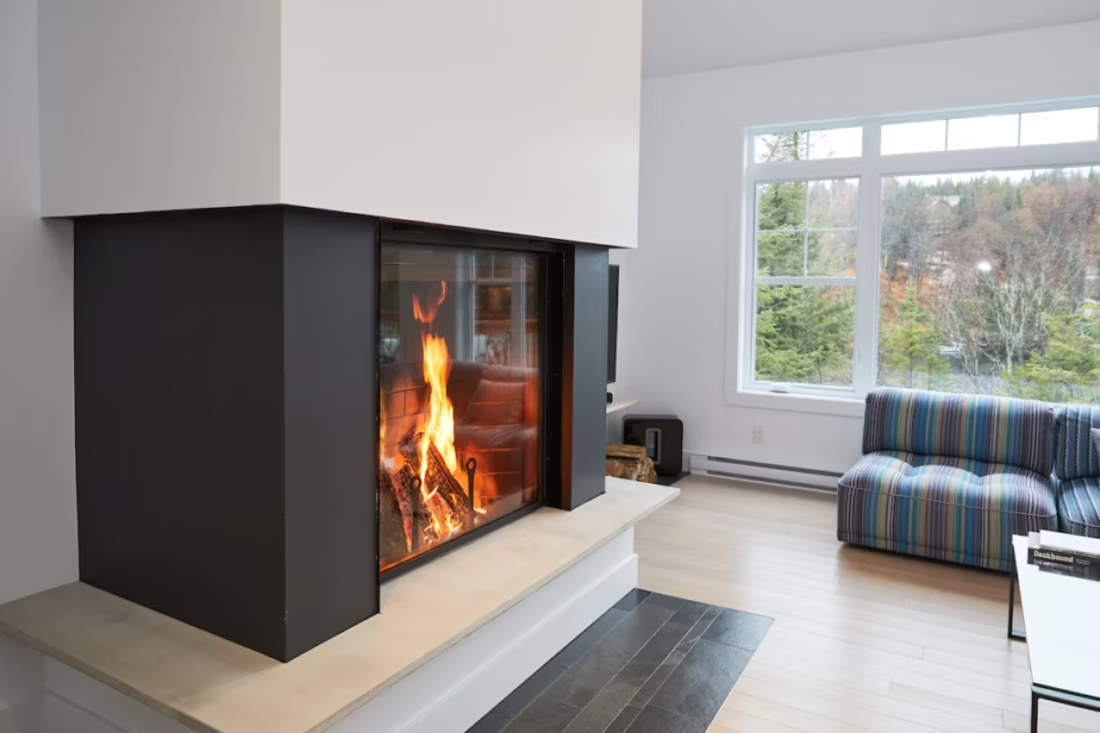
Four fuels. One honest answer for Tallapoosa County.
Three steps. No salesperson until you're ready.
Tell us about your project
Your zip code, your situation, and the fuel you're leaning toward—or let the answers point you to one.
See what's actually available
The brands dealers within 100 miles genuinely carry—real options, never a catalog mirage.
Get your dealer & Project Guide
A trusted local dealer, plus the free Project Guide & Parts List that names every component of the job.
Frequently Asked Questions
Which fuel makes sense for a mild-winter county like Tallapoosa?
With winter lows averaging around 32°F and only a mild, short winter heating season, most Tallapoosa County homes don't need a fuel type chosen purely for survival heat—the choice comes down to ambiance, convenience, and how you use the room. Gas fireplaces and inserts are popular for lake houses and dens because they light instantly with a remote and don't require fuel storage. Wood remains common and cheap given local oak and hickory supply, and it's a genuine draw for lake cabins where a real fire matters more than efficiency. Pellet stoves fit homes that want a set-it-and-forget-it heat source without a chimney, and regional supply from Lignetics and Hamer Pellet Fuel keeps fuel available locally. Electric fireplaces are a strong fit here specifically because the climate is mild—a plug-in unit can supply all the supplemental warmth most rooms need on the occasional cold night, with none of the venting or fuel logistics of the other three.
Do I need a permit to install a fireplace in Tallapoosa County?
In most cases, yes, for anything involving new venting, gas lines, or structural chimney work. Alexander City and Tallassee issue their own building permits within city limits; unincorporated areas of the county—including much of the Lake Martin shoreline—go through the Tallapoosa County building department. Gas fireplace or insert installs typically require a gas line permit and a licensed gas installer in addition to the building permit. Wood stove and insert installs need a permit tied to chimney or liner work. Electric fireplaces are usually permit-free unless you're hardwiring a built-in unit into a new circuit. Most local hearth retailers handle the paperwork as part of the installation quote, so you're rarely filing anything yourself.
Are there any air quality or burn restrictions in Tallapoosa County?
No—Tallapoosa County has no formal air quality non-attainment designation and no burn curtailment program, unlike wood-heavy basin regions out West that deal with winter inversions. That said, EPA 2020 NSPS emissions standards still apply to any new wood stove sold and installed here, so you'll be looking at certified, cleaner-burning units regardless. Around Lake Martin, some HOAs and shoreline covenants have their own rules about outdoor burning or smoke near neighboring docks, so it's worth checking with your community association before planning an outdoor wood setup in addition to an indoor unit.
Can one local hearth retailer handle all four fuel types?
Several dealers serving Tallapoosa County carry three or four fuel types, which is useful if you're still deciding between, say, a gas insert and a pellet stove for a lake house. Retailers based in Alexander City tend to carry wood and gas as their core lines, with pellet stoves and electric units available as secondary offerings—a reflection of local demand rather than any limitation on their end. If you want to see working displays side by side, ask specifically whether a dealer stocks live pellet or electric units in showroom, since those are sometimes special-order in a mild-climate market like this one. Fuel suppliers, by contrast—firewood yards and pellet distributors—generally handle only their specific fuel and aren't a substitute for a full-service hearth retailer on installation.
How does fireplace service work for lake houses and seasonal homes around Lake Martin?
A meaningful share of homes in Tallapoosa County are seasonal or weekend lake properties, and that changes the service calendar a bit. If a wood or gas fireplace sits unused for months at a time between visits, it's worth having a technician inspect venting and gas connections before the first fire of the season rather than assuming everything held up over the summer humidity near Lake Martin. Pests and moisture are a bigger issue for unused flues here than in colder, drier climates—chimney caps and screened vents are worth the small upfront cost. Local techs generally serve Alexander City, Dadeville, and the surrounding shoreline on the same trip, so scheduling around a weekend visit is usually straightforward if you call a week or two ahead.
What's the typical cost range for fireplace installation across all fuel types in Tallapoosa County?
Costs run lower here than in harsher climates simply because units are often sized for ambiance and supplemental heat rather than full-house survival heating. Wood stove or insert installation: roughly $4,000–$8,000 depending on chimney condition and whether an existing masonry flue can be reused. Gas fireplace, insert, or stove: roughly $4,000–$9,500, with lake houses on the higher end if a new gas line has to be run from a propane tank. Pellet stove or insert: roughly $4,000–$6,500 for a typical install. Electric fireplace: $200–$2,500 for the unit itself, with $300–$1,000 in labor for anything beyond a simple plug-and-play placement. For details tied to your specific fuel choice, see the county + fuel pages above.
Can a fireplace actually lower my heating bill?
Yes—by creating a comfort zone. A furnace heats every square foot of the house just to warm the one room you're in; a gas fireplace on low burns roughly a sixth of the gas a typical furnace does. Set the furnace around 55–60 degrees as a baseline, then heat the rooms your family actually uses. Families who heat this way commonly save $20–$60 a month.
Can I install a fireplace myself?
If you're putting a fire in your house on purpose, it's best to work with an expert. Unless you're genuinely experienced in framing, gas line, vent pipe, and the national code on clearances to combustibles, have a professional do it—and ideally the same company that sells you the fireplace, so warranty, service, and liability all live under one roof.
Wood, gas, pellet, or electric—how do I choose?
Match the fuel to your life, not the other way around. Wood: lowest fuel cost and total power-outage independence, but you're hauling and stacking. Gas: press a button, set a thermostat, no maintenance to speak of. Pellet: wood economics with automatic feeding, in exchange for weekly cleaning and a need for electricity. Electric: plugs in anywhere with honest supplemental heat. Nobody regrets the fuel that fits how they actually live.
Should the dealer who sells my fireplace also install it?
Ideally, yes. A fireplace project involves vent pipe, gas line, electrical, and often tile or stone. Hire three or four separate trades and you own the liability and the game of telephone between them. One company selling and installing means one accountable party, start to finish—ask about factory training, on-time completion records, and what happens if an inspection fails.
Stove and Fireplace Dealers in Tallapoosa County
Listings include WhyFire partner dealers, dealers we have verified as authorized for the brands we recommend, and established local businesses that carry hearth products. Every listing shows which one it is. The ones marked Preferred run on WhyFire's software, so they can show you real pricing and book your appointment right here. No manufacturer pays for placement. How we verify dealers →
East Central Alabama Gas District
Blossman Gas And Appliance
Hall's Propane Gas Company, Inc.
Blossman Gas And Appliance
Brick Acquisition Company
Find your fireplace in Tallapoosa County.
Pick your fuel below and we'll help you find a trusted local dealer—plus a free Project Guide & Parts List with the exact parts, including the vent kit, for your fireplace project.
Find Your Fireplace →