
Simple, Safe Heat for Sumter County Homes.
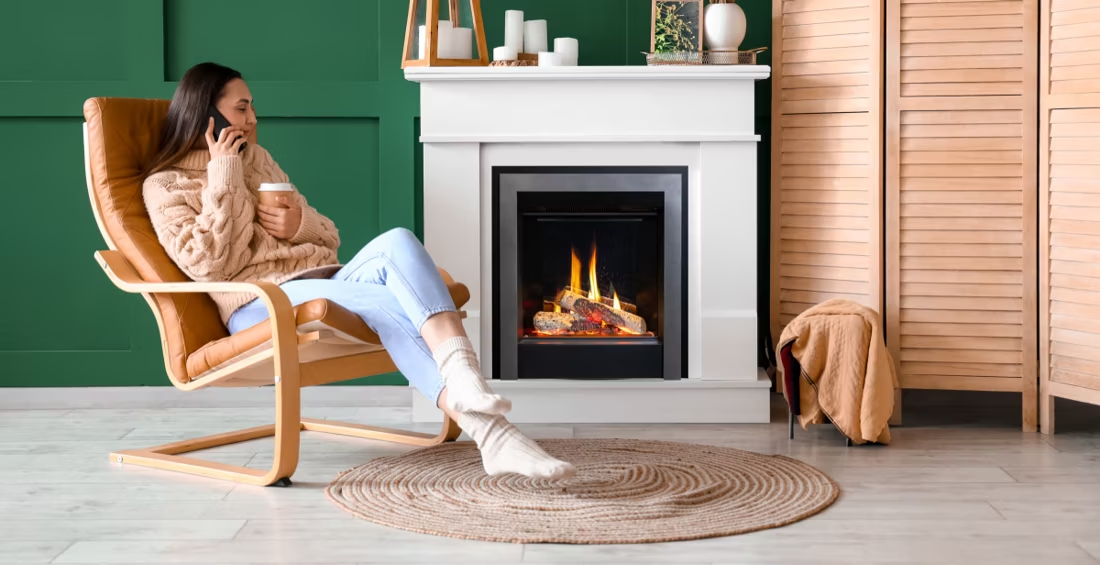
With mild Black Belt winters and no chimney or gas line required, an electric fireplace is often the easiest way to add real warmth and ambiance to a Sumter County home. Find the right unit and connect with a trusted local dealer.
Every Project Starts From One of These Five Situations
Electric heat fits Sumter County's mild winters.
Sumter County sits in Alabama's Black Belt, climate zone 3A, with a mild, short heating season and winter lows that average 34 degrees. That's a fraction of what a place like Fargo, ND deals with in a single January—homes here need heat during scattered cold snaps, not months of sustained sub-freezing weather. Oak, pine, and hickory grow throughout the county and plenty of longtime Livingston and York households still burn wood out of habit, but for a lot of homes an electric fireplace does exactly what's needed: quick supplemental warmth for a living room or den without a wood supply to manage or a flue to maintain.
A large share of Sumter County's roughly 7,461 residents live in rural areas served by the local electric cooperative, and many homes—including manufactured and mobile homes common throughout the county—simply aren't good candidates for a masonry chimney or a new gas line. Electric fireplaces sidestep that problem entirely: a plug-in insert needs nothing but an outlet, and a built-in wall unit needs only a dedicated circuit, not venting or combustion air. The tradeoff is that they run on grid power, so they're a comfort and ambiance upgrade rather than a storm-proof backup heat source—worth knowing before you buy if outages are a concern during Gulf-driven storms.
Three steps. No salesperson until you're ready.
Tell us about your project
Your zip code, your situation, and the fuel you're leaning toward—or let the answers point you to one.
See what's actually available
The brands dealers within 100 miles genuinely carry—real options, never a catalog mirage.
Get your dealer & Project Guide
A trusted local dealer, plus the free Project Guide & Parts List that names every component of the job.
Frequently Asked Questions
How much does an electric fireplace installation cost in Sumter County?
Plug-in electric inserts and freestanding units are the cheapest way in—typically $300 to $1,200 including the unit itself, with no wiring or permit needed since they run off a standard outlet. Built-in wall-mounted or recessed electric fireplaces cost more, usually $1,500 to $4,000 installed, because they require a licensed electrician to run a dedicated 20-amp circuit and often some carpentry to frame the opening. Costs run toward the higher end for homes outside Livingston where an electrician has to travel further, and toward the lower end for a straightforward retrofit into an existing niche or old fireplace opening.
Do I need a permit to install an electric fireplace in Sumter County?
It depends on the unit. A plug-in electric insert or freestanding electric stove that simply plugs into an existing outlet doesn't require a permit. A hardwired, built-in electric fireplace that needs a new dedicated circuit does require an electrical permit through the Sumter County Building Department, since it's treated the same as any other new circuit installation. Most licensed electricians pull that permit as part of the job, so you generally don't have to handle the paperwork yourself.
What size electric fireplace do I need for my home?
Because Sumter County's heating season is short and mild, electric fireplaces here are almost always sized for a single room rather than whole-home heating—central HVAC still carries the load on the rare hard freeze. Most homeowners look for a unit rated for 400 to 1,500 square feet of supplemental heat, which covers a typical living room or den. The bigger factor is usually the visual size—matching the fireplace width to your wall or existing mantel opening—rather than raw BTU output, since you're not trying to heat the whole house through it.
Electric vs. wood—which makes more sense for a Sumter County home?
Wood has deep roots here, and oak, pine, and hickory are all easy to come by locally, so a wood stove or insert still makes sense for anyone who wants real backup heat during an outage or already has a working chimney. Electric makes more sense for homes without an existing chimney, manufactured and mobile homes where a wood-burning unit isn't a safe option, and anyone who wants fireplace ambiance without hauling wood or cleaning ash. Given how mild Sumter County winters are—averaging in the mid-30s with a short heating season—plenty of households are better served by the lower-maintenance electric option and treat wood heat as a secondary, cold-snap fallback if they have it.
Will my electric fireplace work if the power goes out?
No—electric fireplaces need grid power to run, so they'll shut off along with everything else during an outage. That matters in Sumter County because summer thunderstorms and occasional ice events can knock out power to rural lines served by the local electric cooperative for hours or, in bad cases, longer. If outage-proof backup heat matters to you, an electric fireplace should be a comfort and ambiance choice, with a wood stove, propane heater, or generator as the actual emergency plan—not a replacement for one.
What should I look for in an electric fireplace for Alabama's humid climate?
Climate zone 3A means Sumter County deals with real humidity most of the year, so look for units with sealed electronics and a heating element rated for continuous use rather than the cheapest big-box model, which can struggle with premature component failure in humid, unconditioned spaces like porches or garages. For interior living spaces with normal air conditioning, humidity isn't a major concern—the bigger consideration is placement away from bathrooms or laundry areas where moisture is highest. A local dealer can point you toward models that hold up well in the regional climate.
How much maintenance does an electric fireplace need?
Very little compared to wood or gas. There's no chimney to sweep, no gas line to inspect, and no ash or soot to clean. Maintenance is mostly dusting the unit, occasionally vacuuming the heater intake and vent to keep airflow clear, and replacing the LED flame bulbs if your model uses them—LEDs typically last many years before needing attention. Check the manufacturer's manual for filter cleaning intervals if the unit has a blower fan, since dust buildup is the main thing that shortens the life of the heating element.
Are there any rebates for installing an electric fireplace in Sumter County?
Dedicated rebates specifically for electric fireplaces are uncommon—most utility efficiency programs, including those run by the local electric cooperative, are targeted at heat pumps, insulation, and whole-home efficiency upgrades rather than supplemental zone heaters. That said, it's worth asking your utility whether they offer a general electric heating equipment rebate or a home energy audit program, since some cooperatives extend modest incentives to electric-resistance heating upgrades. Don't expect a rebate to be the deciding factor in your budget.
Electric vs. gas fireplace—which is right for my Sumter County home?
Gas fireplaces put out more real heat and give you an actual flame, but in rural Sumter County that usually means propane rather than piped natural gas, plus the cost of a gas line and venting work. Electric fireplaces skip all of that—no fuel tank, no venting, no gas-fitter—and install in almost any wall with just an outlet or a dedicated circuit. For homes that want genuine supplemental heat and don't already have gas service, electric is usually the simpler and cheaper path; for homes already on propane with a fireplace project in mind anyway, gas is worth comparing side by side with a local dealer.
Can I put a TV above my fireplace?
Yes—with an asterisk. Fireplaces are hot and TVs don't like heat. Either put a mantel between them to deflect rising warmth, or choose a fireplace with heat-management technology that creates a cool zone on the wall above—the wall stays around 125 degrees, barely warm, while the room still gets full heat. If you like clean lines and don't want a mantel, heat management is the answer.
Do electric fireplaces actually produce heat?
Yes—most put out around 4,800–5,000 BTUs from a standard outlet, which comfortably warms a bedroom, office, or den as a comfort-zone heater. What they won't do is carry a whole house the way wood, gas, or pellet can. Think of electric as ambiance-first with honest supplemental heat: flames on with no heat in July, flames plus warmth in January.
What is an in-home preview and do I need one?
It's a visit where a hearth professional measures your space, confirms the model you picked actually works in your home, and walks the specs—framing, gas line, venting, finish work—before anything is ordered. Some details you just can't know until you see the house. Never make a down payment without one; it's the single most-skipped step that burns buyers.
Can a fireplace actually lower my heating bill?
Yes—by creating a comfort zone. A furnace heats every square foot of the house just to warm the one room you're in; a gas fireplace on low burns roughly a sixth of the gas a typical furnace does. Set the furnace around 55–60 degrees as a baseline, then heat the rooms your family actually uses. Families who heat this way commonly save $20–$60 a month.
Stove and Fireplace Dealers in Sumter County
Listings include WhyFire partner dealers, dealers we have verified as authorized for the brands we recommend, and established local businesses that carry hearth products. Every listing shows which one it is. The ones marked Preferred run on WhyFire's software, so they can show you real pricing and book your appointment right here. No manufacturer pays for placement. How we verify dealers →
Blossman Gas And Appliance
Sanders Heating & Air
McDonald & Hill
Thompson Gas- Butler
Find your electric fireplace in Sumter County.
Tell us a bit about your home and we'll put together a free Project Guide & Parts List for your electric fireplace project—the right unit, the exact parts, and a trusted local dealer to install it.
Find Your Fireplace →