
Find your electric fireplace in Monroe County.
Mild winters and short heating seasons make electric a practical, low-hassle choice for homes from Monroeville to Frisco City. Find the right unit and connect with a trusted local dealer.
Every Project Starts From One of These Five Situations
Mild winters make electric an easy fit.
Monroe County sits in climate zone 3A, with an average winter low around 36 degrees and just 2,105 heating degree days a year—a fraction of what a place like Fargo, ND racks up in a single winter. Across the roughly 8,800 residents spread between Monroeville, Frisco City, Beatrice, and Excel, most homes need supplemental warmth for a handful of chilly evenings rather than a full-time heating system to fight off months of hard freezes. That's exactly the kind of climate where electric fireplaces earn their keep.
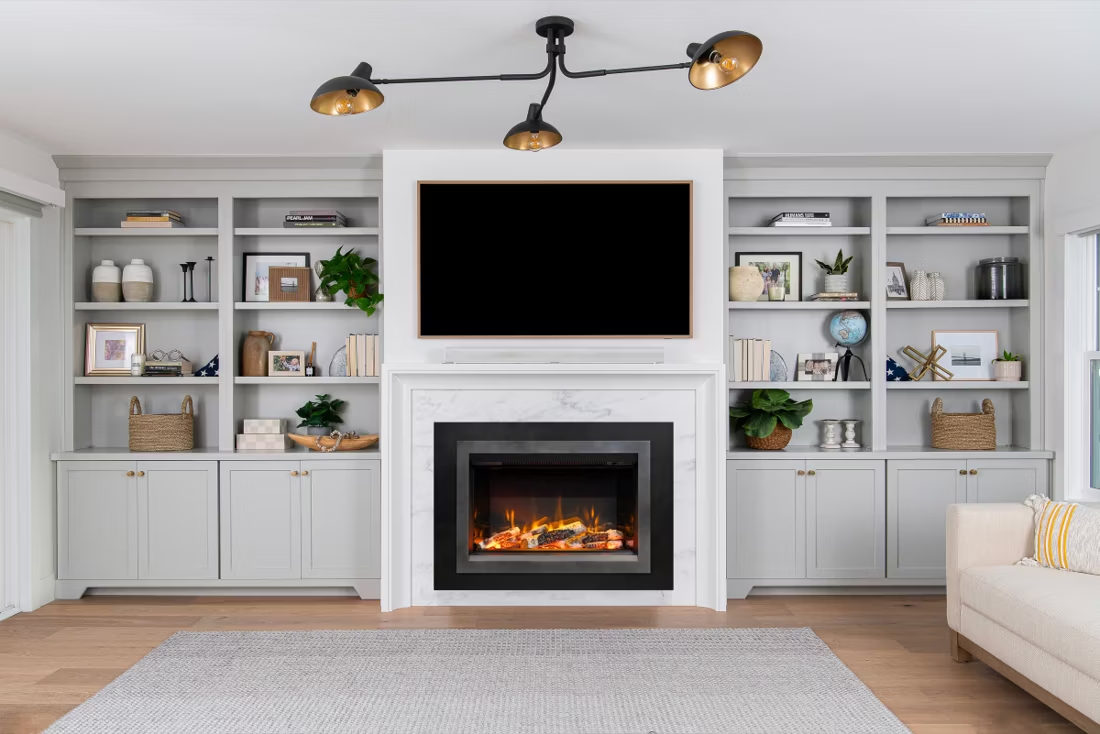
Plenty of older homes in and around Monroeville still have a wood-burning masonry fireplace that's rarely used for its original purpose, and an electric insert can drop into that opening without any chimney work, gas line, or venting. Newer construction in the county is just as easy—a zero-clearance electric unit or wall-mounted model plugs into a standard outlet and runs on demand. There's no cutting, hauling, or stacking oak, pine, or hickory (the woods most common locally), and no propane tank to schedule refills for. For a county with mild winters, that combination of instant ambiance and low-commitment supplemental heat covers what most households actually need.
Three steps. No salesperson until you're ready.
Tell us about your project
Your zip code, your situation, and the fuel you're leaning toward—or let the answers point you to one.
See what's actually available
The brands dealers within 100 miles genuinely carry—real options, never a catalog mirage.
Get your dealer & Project Guide
A trusted local dealer, plus the free Project Guide & Parts List that names every component of the job.
Frequently Asked Questions
How much does an electric fireplace installation cost in Monroe County?
Costs vary widely depending on the type of unit. A plug-in electric insert that drops into an existing masonry fireplace opening typically runs $300 to $1,500 including the unit and basic setup—often something a local dealer can handle in an afternoon with no electrician needed. A built-in wall unit or a linear electric fireplace set into new framing, with a dedicated circuit and finish work, runs closer to $2,000 to $5,000. Because there's no venting or gas line involved, electric installs in Monroe County are almost always faster and less expensive than wood or gas projects of comparable size.
What size electric fireplace or insert do I need for my home?
Electric units are rated by heater wattage rather than whole-home BTU output, and in Monroe County's mild climate most homeowners are shopping for supplemental heat rather than a primary source. A standard 1,500-watt insert or stove comfortably takes the chill off a single room—a living room or den—which covers the vast majority of use cases here given the county's short, mild winters. Larger multi-room open floor plans sometimes call for two zoned units rather than one oversized heater. A local dealer can walk through your room dimensions and insulation to confirm the right fit.
Where can I find installers for electric fireplaces near me?
Electric fireplace installation is generally simpler than wood or gas work, but it still benefits from a dealer who understands proper insert fit, mantel clearances, and—for built-in units—whether a dedicated circuit is needed. Hearth retailers serving Monroe County can handle insert drop-ins directly, and for built-in installations requiring new wiring, they'll coordinate with a licensed electrician. Avoid mounting a heavier built-in unit yourself without checking the framing and circuit load first; that's the most common mistake homeowners run into.
What's the difference between an electric fireplace, insert, and stove?
An electric fireplace is typically a built-in unit designed to sit in a wall opening or framed enclosure, often paired with a mantel. An electric insert is sized to slide into an existing masonry fireplace opening, giving an old wood-burning hearth a second life without any venting work. An electric stove is a freestanding cabinet-style unit that can sit almost anywhere near an outlet, similar in footprint to a traditional wood stove. For Monroe County homes with an existing fireplace opening—common in older Monroeville homes—an insert is usually the simplest upgrade. Newer builds without a fireplace opening often go with a built-in unit or freestanding stove instead.
Do I need a permit to install an electric fireplace in Monroe County?
Most plug-in electric inserts and freestanding stoves don't require a permit since there's no venting, gas line, or structural chimney work involved—you're essentially adding an appliance to an existing outlet. Built-in units that require new wiring or a dedicated circuit may fall under standard electrical permitting depending on the scope of work; it's worth a quick call to your local building office to confirm before a larger installation. This is one of the real advantages of electric heat in the county—far less red tape than a wood or gas install.
What's the best electric fireplace for Monroe County's climate?
Since Monroe County's winters are short and mild, most homeowners here prioritize realistic flame appearance and supplemental warmth over raw heat output. Mid-range models from Dimplex and Napoleon offer LED flame technology that looks convincing without the upkeep of a real fire, plus a 1,500-watt heater that's plenty for taking the edge off a cool evening in a den or living room. If ambiance matters more than heat output—which is common in a climate with only about 2,100 heating degree days a year—a lower-wattage decorative unit may be all you need. A local dealer can match flame style and heat output to how you'll actually use the room.
How much maintenance does an electric fireplace need?
Very little compared to wood or gas. There's no chimney to sweep and no burner to service—maintenance mostly comes down to occasionally dusting the heater vents and flame projector, and checking that the fan and heating element are running smoothly. Most units carry a manufacturer warranty of one to three years on the heating components. This low-maintenance profile is one reason electric units are a popular no-fuss option for vacation homes and rental properties scattered around Monroe County.
Electric vs. wood—which is right for my Monroe County home?
Wood remains a standard choice in Monroe County, and with oak, pine, and hickory all common locally, self-sourced firewood keeps fuel costs low for homeowners willing to handle the cutting, stacking, and ash cleanup. Wood also works without power, which matters during storm-related outages. Electric, on the other hand, means no chimney maintenance, no smoke, and instant on-off convenience—a good match for a climate where you might only want a fire a few dozen nights a year rather than a full heating season's worth. Many households in the county end up using wood in one room for tradition and backup heat, and electric in another for everyday convenience.
Electric vs. gas—which makes more sense here?
Gas fireplaces deliver more consistent heat output and can double as a serious secondary heat source, but they require either a natural gas line or a propane tank, plus venting work and periodic servicing. Electric skips all of that—no fuel deliveries, no annual gas inspection, and no venting to plan around. Given Monroe County's mild winters and modest heating demand, electric is often the lower-cost, lower-maintenance choice for homeowners who mainly want ambiance and light supplemental warmth rather than a workhorse heating appliance.
Do electric fireplaces actually produce heat?
Yes—most put out around 4,800–5,000 BTUs from a standard outlet, which comfortably warms a bedroom, office, or den as a comfort-zone heater. What they won't do is carry a whole house the way wood, gas, or pellet can. Think of electric as ambiance-first with honest supplemental heat: flames on with no heat in July, flames plus warmth in January.
Can I put a TV above my fireplace?
Yes—with an asterisk. Fireplaces are hot and TVs don't like heat. Either put a mantel between them to deflect rising warmth, or choose a fireplace with heat-management technology that creates a cool zone on the wall above—the wall stays around 125 degrees, barely warm, while the room still gets full heat. If you like clean lines and don't want a mantel, heat management is the answer.
Does a fireplace add value to my home?
On average, a fireplace adds back to the home about the same amount you spent installing it. Add the monthly savings from heating the rooms you actually use instead of the whole house—often hundreds of dollars a year—and the value case is strong before you even count what a fire does for how your family uses the room.
How much should I budget for a fireplace?
For an average home—covering the fireplace, the vent pipe, and basic installation—a budget between $3,900 and $5,500 gives you a lot of options across wood, gas, and pellet. By the time you add finish work, gas line, and electrical, the average complete installation lands between $5,000 and $12,000 all-in. In a remodel or new build, a good rule is to put about 2.5% of the total project cost toward the fireplace.
Stove and Fireplace Dealers in Monroe County
Listings include WhyFire partner dealers, dealers we have verified as authorized for the brands we recommend, and established local businesses that carry hearth products. Every listing shows which one it is. The ones marked Preferred run on WhyFire's software, so they can show you real pricing and book your appointment right here. No manufacturer pays for placement. How we verify dealers →
South Alabama Gas- Monroeville
South Alabama Gas- Brewton
Thompson Gas- Chatom
Andrews Ace Hardware
Find your electric fireplace in Monroe County.
Tell us a bit about your home and we'll match you with the right electric fireplace, insert, or stove—and connect you with a trusted local dealer, plus a free Project Guide & Parts List for your installation.
Find Your Fireplace →