
Add real warmth to your Lowndes County home—without a chimney.
Mild Black Belt winters mean most Lowndes County homes need supplemental heat, not a furnace replacement. Find the right electric fireplace or insert, and connect with a trusted local dealer.
Every Project Starts From One of These Five Situations
Mild winters call for simple, flexible heat.
Lowndes County sits in Alabama's Black Belt, a rural stretch between Selma and Montgomery, home to fewer than 5,000 people spread across small towns like Hayneville, Fort Deposit, and White Hall. Winters here are short and mild—the county's zone 3A climate averages a winter low around 37°F and adds up to only a light winter heating load each year, a fraction of what a place like Duluth, MN logs in a single season. Most Lowndes County homes lean on central heat pumps or window units for whole-house comfort, which leaves plenty of room for a fireplace that adds real ambiance and zone warmth without asking a chimney or gas line to do the heavy lifting.
A meaningful share of the county's housing stock is manufactured or mobile homes, where running a chimney or gas line for supplemental heat isn't practical. An electric fireplace or insert solves that instantly—it plugs into a standard outlet or a dedicated 120/240-volt circuit and needs no venting, gas line, or masonry work. Electric service in the county comes from Alabama Power in and around the towns, with rural stretches served by a local electric cooperative; either way, adding a fireplace circuit is usually an afternoon job for a licensed electrician. Unlike the oak, pine, and hickory many households still stack for backup wood heat, electric units carry no ash, no chimney-fire risk, and no smoke to think about—Lowndes County has no wood-smoke restrictions on the books, but electric sidesteps the question entirely.
Three steps. No salesperson until you're ready.
Tell us about your project
Your zip code, your situation, and the fuel you're leaning toward—or let the answers point you to one.
See what's actually available
The brands dealers within 100 miles genuinely carry—real options, never a catalog mirage.
Get your dealer & Project Guide
A trusted local dealer, plus the free Project Guide & Parts List that names every component of the job.
Frequently Asked Questions
How much does an electric fireplace installation cost in Lowndes County?
A plug-in or wall-mounted electric fireplace typically runs $300 to $1,200 installed in a Lowndes County home, including the unit and an electrician setting up a dedicated circuit if the existing outlet isn't rated for it. A built-in electric insert—set into a framed wall cavity or an existing fireplace opening—runs higher, generally $1,200 to $3,500, depending on the size of the opening and whether trim or surround work is needed. Because there's no chimney, vent pipe, or gas line to run, electric projects in Lowndes County are usually the fastest and least expensive fireplace option available, often finished in a single day.
What size electric fireplace do I need for my home?
Since Lowndes County only adds up to a light winter heating load each year, most electric fireplaces here are sized for a single room rather than whole-home heat—think the living room in a Fort Deposit ranch house or a den in a Hayneville double-wide. A standard 1,400 to 1,500-watt unit puts out roughly 5,000 BTU, enough supplemental warmth for 400 to 1,000 square feet depending on ceiling height and insulation. Larger linear or built-in models can cover bigger open-concept spaces, but given the mild winter lows here, most homeowners are buying for ambiance first and zone warmth second—a local dealer can walk through your room dimensions and recommend the right wattage.
Do I need a permit to install an electric fireplace in Lowndes County?
In most cases, no—a plug-in electric fireplace that uses an existing outlet doesn't trigger a permit. If your project involves running a new dedicated circuit, adding a breaker, or framing a wall cavity for a built-in insert, that electrical work typically does require a permit through the county building department, and any licensed electrician doing the work should be pulling it. There's no fire-code or venting inspection involved the way there is with wood or gas, which is part of why electric is the simplest fireplace project to permit and complete in the county.
What's the difference between an electric fireplace, insert, and stove?
A freestanding electric fireplace or wall-mounted unit sits on the floor or hangs like a TV, with no framing required—the easiest option for a mobile home or rental in Lowndes County. An electric insert is built to slide into an existing masonry fireplace opening or a framed wall cavity, giving a more finished, built-in look. An electric stove mimics the shape of a wood or pellet stove but plugs into a standard outlet—a good fit if you want the cast-iron look without cutting a chimney into an existing structure. All three run on the same basic heating element and require no venting, so the choice mostly comes down to look and where you're placing it.
Will an electric fireplace actually heat my room, or is it just for looks?
Most electric fireplaces put out real, usable heat—typically around 5,000 BTU from a 1,500-watt heating element—enough to noticeably warm a bedroom, den, or living room in a Lowndes County home on a cold night. Given the county's mild zone 3A winters and average low near 37°F, an electric unit is often all the supplemental heat a room needs, letting you turn the central heat pump down and zone-heat the room you're actually using. The flame effect can also run independently of the heater, so you get the ambiance year-round without running the heating element in warmer months.
What's the best electric fireplace for Lowndes County's climate?
Because winters here are mild rather than harsh, most Lowndes County homeowners do well with a mid-size wall-mount or built-in linear unit from a mainstream brand like Dimplex, Napoleon, or Touchstone—models in the 1,400 to 1,500-watt range cover the typical room without overheating a small space. For manufactured homes, a low-profile insert designed for a shallow wall cavity tends to fit better than a deep masonry-style unit. If you want a fireplace that still looks convincing with the heater off during Alabama's long warm season, look for models with a separate flame-only setting—a feature worth asking a local dealer about directly.
Electric vs. wood—which is right for my Lowndes County home?
Wood offers real BTU output, the ritual of a live fire, and—critically for rural Lowndes County, where outages on the local electric cooperative lines can run longer than in town—heat that keeps working when the power doesn't. Oak, pine, and hickory are all common locally and many households already keep a stack on hand. Electric, on the other hand, is instant, requires no ash cleanup or chimney maintenance, and installs in an afternoon with no permitting hassle. For a primary living space where convenience matters more than backup heat, electric usually wins; for a home that wants a hedge against storm-related outages, a wood stove or insert is worth keeping in the mix alongside it.
Electric vs. propane gas—which makes more sense here?
Lowndes County isn't served by natural gas infrastructure in most areas, so the real comparison for many homeowners is electric versus propane. A propane fireplace needs a tank, a gas line, and periodic supplier deliveries or tank refills—real ongoing logistics in a rural county. An electric fireplace needs none of that: no tank, no delivery schedule, just a circuit. The tradeoff is that propane units still work during a power outage while electric ones don't. For a primary heat source in an outage-prone rural setting, propane has an edge; for supplemental warmth and ambiance without the fuel logistics, electric is usually simpler.
How much maintenance does an electric fireplace need?
Very little. There's no chimney to sweep, no gas line to inspect, and no ash to clean out—just an occasional dusting of the heating element vents and a check that the fan isn't clogged with pet hair or lint. Most units last 10 to 15 years before the heating element or LED flame components need replacing, and a local dealer can usually swap those parts rather than replacing the whole unit. For Lowndes County homeowners comparing fireplace types, the low-maintenance profile is one of electric's biggest advantages over both wood and gas options.
Does an electric fireplace need a vent or chimney?
No—that's its superpower. An electric fireplace needs a wall and an outlet, period. No vent pipe, no gas line, no clearances to design around, which is why it works in bedrooms, offices, apartments, and walls where venting a gas or wood unit would be impractical or impossible. Installation is typically the simplest and least expensive of any fireplace type.
Can I put a TV above my fireplace?
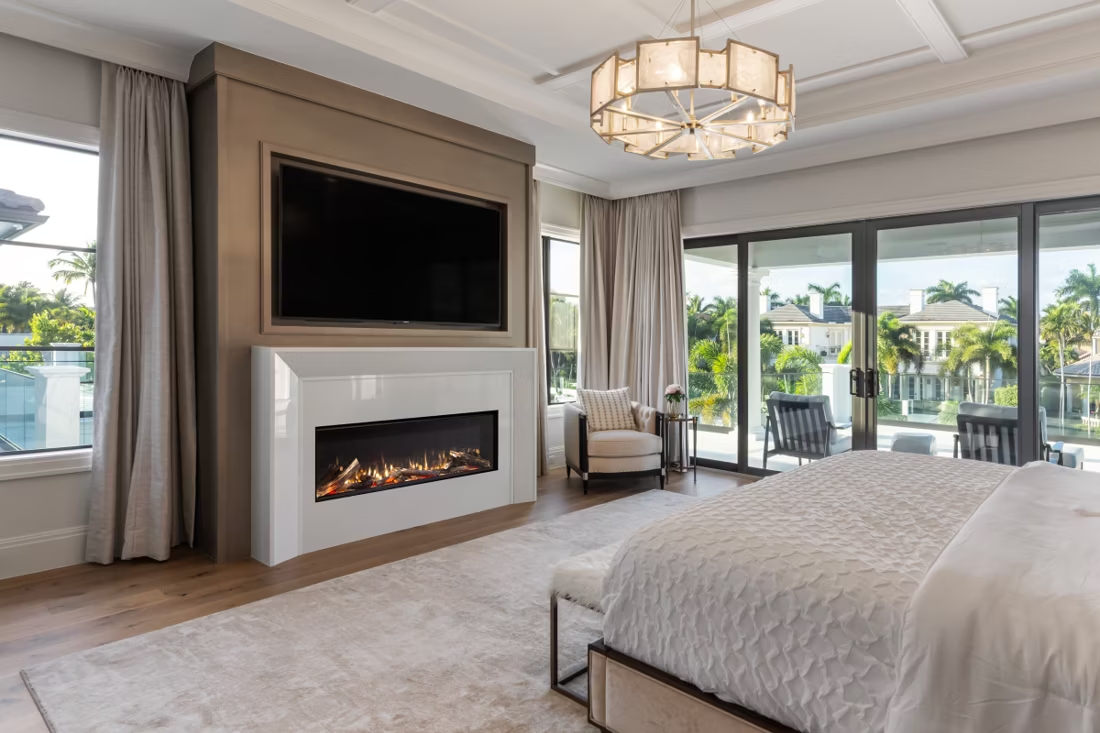
Yes—with an asterisk. Fireplaces are hot and TVs don't like heat. Either put a mantel between them to deflect rising warmth, or choose a fireplace with heat-management technology that creates a cool zone on the wall above—the wall stays around 125 degrees, barely warm, while the room still gets full heat. If you like clean lines and don't want a mantel, heat management is the answer.
How much should I budget for a fireplace?
For an average home—covering the fireplace, the vent pipe, and basic installation—a budget between $3,900 and $5,500 gives you a lot of options across wood, gas, and pellet. By the time you add finish work, gas line, and electrical, the average complete installation lands between $5,000 and $12,000 all-in. In a remodel or new build, a good rule is to put about 2.5% of the total project cost toward the fireplace.
Can I install a fireplace myself?
If you're putting a fire in your house on purpose, it's best to work with an expert. Unless you're genuinely experienced in framing, gas line, vent pipe, and the national code on clearances to combustibles, have a professional do it—and ideally the same company that sells you the fireplace, so warranty, service, and liability all live under one roof.
Stove and Fireplace Dealers in Lowndes County
Listings include WhyFire partner dealers, dealers we have verified as authorized for the brands we recommend, and established local businesses that carry hearth products. Every listing shows which one it is. The ones marked Preferred run on WhyFire's software, so they can show you real pricing and book your appointment right here. No manufacturer pays for placement. How we verify dealers →
Allgas, Inc. - Montgomery
Brick Acquisition Company
Find your electric fireplace in Lowndes County.
Tell us a bit about your Lowndes County home and we'll match you with a trusted local dealer, plus a free Project Guide & Parts List—the exact parts and install plan for your electric fireplace project, no big-box guesswork.
Find Your Fireplace →