
Instant Heat for Jasper's Mild Winters, No Wood Required.
Walker County winters are short but real. A direct-vent gas fireplace or insert gives you flame on demand—find the right unit and a trusted local dealer to install it correctly.
Every Project Starts From One of These Five Situations
Clean heat that fits a short heating season.
Jasper sits at about 392 feet in the Walker County foothills, in climate zone 3A, where winter lows average around 31°F and the area sees a mild, short heating season—a fraction of what a place like Fargo, ND or Burlington, VT sees in a single month. That mild profile is exactly why wood was never the region's primary heat source the way it is farther north: most Jasper homes lean on central HVAC for day-to-day heating, and a gas fireplace or insert fills the gap on the genuinely cold nights and the ones where you just want a real fire without hauling wood.
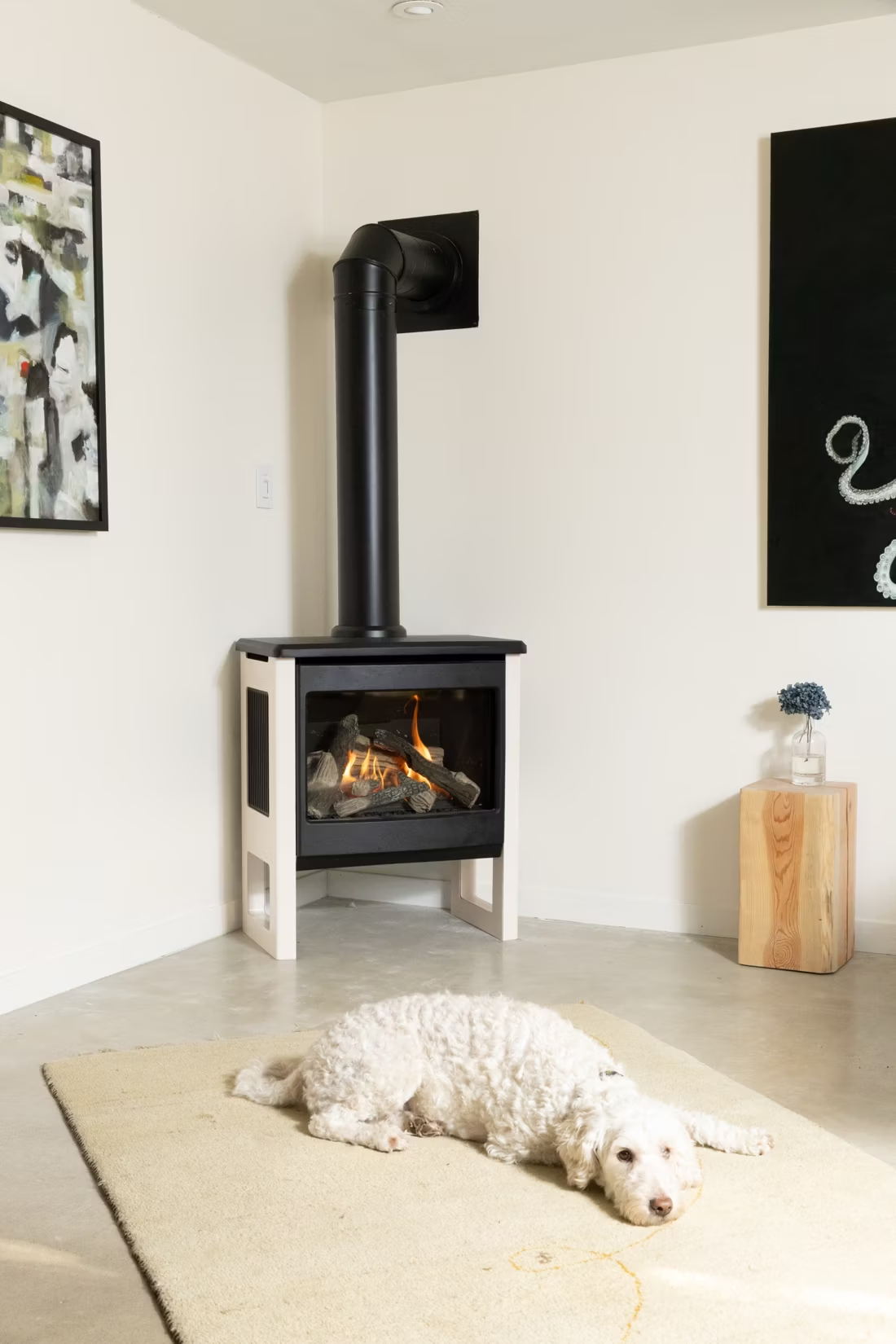
Natural gas mains don't reach every part of Walker County, so a good number of Jasper's gas hearth installs actually run on propane—either from a buried tank or an above-ground tank sized by a local propane supplier. Both fuels work in the same direct-vent, B-vent, or freestanding stove; it's just a matter of which line feeds the unit. Either way, the draw is the same: heat at the flip of a switch, no ash or creosote to manage, and—if you choose a model with battery backup or a self-powered pilot—a fireplace that still works when Alabama Power lines go down in one of the county's occasional ice storms.
Three steps. No salesperson until you're ready.
Tell us about your project
Your zip code, your situation, and the fuel you're leaning toward—or let the answers point you to one.
See what's actually available
The brands dealers within 100 miles genuinely carry—real options, never a catalog mirage.
Get your dealer & Project Guide
A trusted local dealer, plus the free Project Guide & Parts List that names every component of the job.
Frequently Asked Questions
How much does a gas fireplace installation cost in Jasper?
Most gas fireplace and insert installations in the Jasper area run somewhere between $3,000 and $8,000, with the low end covering a direct-vent insert dropped into an existing masonry fireplace that already has a fuel line nearby, and the higher end covering new construction or remodels that need framing, venting, and a fresh gas or propane line run. If your home doesn't have an existing propane tank, expect to add $500 to $1,500 for tank setup through a local propane supplier. A local retailer will size the job accurately after seeing your fireplace opening and chimney in person.
Can I convert an old wood-burning fireplace to gas?
Yes, and it's a common project in Jasper's older housing stock, where a lot of homes built before central air conditioning became standard still have a masonry fireplace originally meant for oak, pine, or hickory cordwood. A gas insert slides into that existing opening, uses a stainless liner run up the same chimney, and gets fed by either a new gas line or a propane line depending on what's available at your address. The masonry stays, the mess goes away, and you get real flame without ever splitting wood again.
Should I use natural gas or propane for my fireplace?
It depends on where in Walker County you live. Homes inside Jasper's more established neighborhoods sometimes have natural gas already run for a furnace or water heater, which makes adding a fireplace straightforward. Outside those pockets, propane is the default—supplied by a regional propane company either through a buried or above-ground tank. Almost every gas fireplace, insert, or stove on the market today can be set up for either fuel; your installer just configures the correct orifice and regulator. If you're not sure what's available at your address, that's one of the first things a local dealer will check before quoting the job.
Will a gas fireplace still work if the power goes out?
Most will, as long as you pick the right ignition system. Units with intermittent pilot ignition (IPI) run on AA batteries tucked inside the unit, which kick in automatically when Alabama Power's lines go down—something that happens in Walker County during the occasional winter ice event. Valor's gas fireplaces skip batteries entirely: the pilot's thermocouple generates its own electricity, so the unit lights and runs with zero outside power, indefinitely. For a backup heat source during an ice storm, that's worth asking about directly when you're comparing models with a local dealer.
What's the difference between a gas fireplace, gas insert, and gas stove?
A gas fireplace is a fully built-in unit, framed into a wall—the right call for new construction or a room without an existing hearth. A gas insert is built to slide into an existing masonry fireplace opening, which describes a lot of older Jasper homes with a fireplace nobody's used for wood in years. A gas stove is freestanding, sits on a hearth pad, and can go almost anywhere with the right clearances and venting—a good option for a den or addition that never had a chimney. Most homeowners converting an existing fireplace end up choosing an insert; new spaces usually go with a built-in fireplace or a freestanding stove.
Do I need a permit to install a gas fireplace in Jasper?
Generally yes—both a building permit and a gas or propane line permit are typically required for a new installation, handled through the City of Jasper or Walker County building department depending on your address. The line work itself needs a licensed gas-fitter or propane technician, which is one of the real reasons to work with an established local hearth dealer: they coordinate the permit, the line hookup, and the venting inspection as one job instead of leaving you to manage separate trades.
Are vent-free gas fireplaces allowed in Alabama, and are they a good idea?
Vent-free (ventless) gas fireplaces are legal to install in Alabama, and some Jasper homeowners consider them for a room without an easy path to the outside for venting. They burn fuel directly into the living space rather than exhausting it outdoors, so they come with strict room-size minimums and require an oxygen depletion sensor. Direct-vent units, by contrast, pull combustion air from outside and exhaust it back outside through a sealed pipe—cleaner, safer, and the option most local dealers recommend by default. If venting to the outside is even remotely feasible for your space, a direct-vent unit is almost always the better long-term choice.
How often does a gas fireplace need to be serviced?
Plan on an annual inspection, ideally before the first cold snap each fall. A technician checks the burner, pilot assembly, gas or propane connections, and venting, and cleans the glass and interior—a much quicker job than a wood chimney sweep, but just as important for safe operation. Given Jasper's short heating season, a unit that only runs a handful of weeks a year can still develop pilot or igniter issues from sitting idle most of the year, so don't skip the yearly check just because it doesn't get heavy use.
Should I get a gas fireplace or just stick with wood?
In a lot of colder states, wood is the default because winters demand it. Jasper isn't one of those places—with an average winter low around 31°F and a mild, short heating season overall, wood was never really established here as primary heat, even though oak, pine, and hickory are all abundant in the Bankhead National Forest area nearby for anyone who wants an occasional wood fire. For most Jasper homeowners, a gas fireplace or insert makes more sense: no wood to source or store, no ash cleanup, and heat that's there the moment you want it. Wood still has its fans for the smell and the ritual, but as a practical heating choice for this climate, gas is the more common route local dealers steer people toward.
Why is my open fireplace making my house colder?
Open fireplaces suck—literally. As the fire burns, it consumes air your furnace already paid to heat and pulls it out through the chimney, so the house is actually colder after the fire goes out than before you lit it. An insert fixes this: it seals the chimney, puts fixed glass across the front, and turns that hole in your house into a real heat source.
What's the difference between an insert and a zero-clearance fireplace?
An insert is a fireplace that slides into a pre-existing wood-burning fireplace—if you don't have one, there's nothing to insert it into. A zero-clearance fireplace is built into a framed wall, which makes it the answer for remodels and new construction. Simple test: existing masonry fireplace means insert; blank or framed wall means zero-clearance.
How much should I budget for a fireplace?
For an average home—covering the fireplace, the vent pipe, and basic installation—a budget between $3,900 and $5,500 gives you a lot of options across wood, gas, and pellet. By the time you add finish work, gas line, and electrical, the average complete installation lands between $5,000 and $12,000 all-in. In a remodel or new build, a good rule is to put about 2.5% of the total project cost toward the fireplace.
What is an in-home preview and do I need one?
It's a visit where a hearth professional measures your space, confirms the model you picked actually works in your home, and walks the specs—framing, gas line, venting, finish work—before anything is ordered. Some details you just can't know until you see the house. Never make a down payment without one; it's the single most-skipped step that burns buyers.
Nearby Dealers
Hearth shops serving Jasper and the surrounding area. Every listing shows whether it is a WhyFire partner, a dealer we have verified as authorized for the brands we recommend, or a local business carrying hearth products. No manufacturer pays for placement. How we verify dealers →
Jasper Feed & Seed Supply
Hawkins Heating & Air Conditioning
Find your gas fireplace in Jasper.
Tell us a bit about your home and fuel setup, and we'll match you with a trusted local dealer plus a free Project Guide & Parts List—the exact parts, vent kit, and installer recommendation for your Jasper gas fireplace project.
Find Your Fireplace →