
Real Local Dealers for Every Fireplace in Franklin County.
Wood, gas, pellet, and electric fireplace resources for Russellville, Red Bay, Phil Campbell, Vina, Hodges, and every community in Franklin County. Find a trusted local hearth retailer who knows what actually installs in this county's homes.
Every Project Starts From One of These Five Situations
Mild winters, deep wood-heat roots in Franklin County, Alabama.
Franklin County sits in the hill country of northwest Alabama, along the Bear Creek watershed and the foothills that lead into the Appalachian plateau. Winters here are mild by national standards—the average winter low is 32°F, and the county's overall winter heating load is roughly half of what a place like Burlington, VT sees in a typical winter. The heating season runs mostly from late November through February, with plenty of 50-degree days mixed in even in January. Oak, hickory, and pine are the wood species most commonly split and burned here, much of it self-cut from family land or bought by the truckload from local suppliers. Franklin County has no air quality nonattainment designation and no winter burn-ban history, so wood heat here isn't complicated by the smoke-management rules you'd find in inversion-prone basins out West.
This hub rolls up hearth retailers, service technicians, and fuel suppliers across the whole county—Russellville, Red Bay, Phil Campbell, Vina, Hodges, Belgreen, and Underwood-Petersville. Pick a fuel below to see local dealers, typical installation costs, and the units that make sense for a Franklin County home, whether that's a farmhouse near Bear Creek Lake or a brick ranch off US-43.
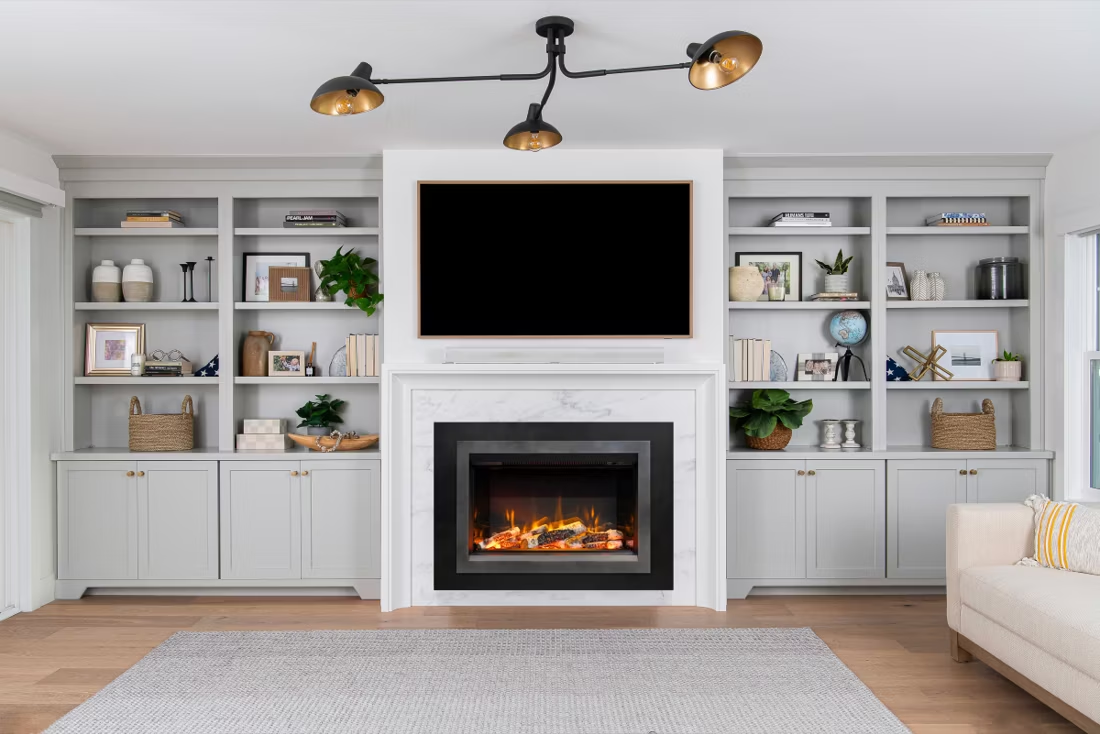
Four fuels. One honest answer for Franklin County.
Three steps. No salesperson until you're ready.
Tell us about your project
Your zip code, your situation, and the fuel you're leaning toward—or let the answers point you to one.
See what's actually available
The brands dealers within 100 miles genuinely carry—real options, never a catalog mirage.
Get your dealer & Project Guide
A trusted local dealer, plus the free Project Guide & Parts List that names every component of the job.
Frequently Asked Questions
Which fireplace fuel is most common in Franklin County?
It depends on the house and the budget. Wood is still the default in rural parts of the county—oak and hickory split from family land burn hot and long, and with a winter heating load only about half that of a place like Duluth, MN, a modest woodstove or insert covers most of a Franklin County winter without needing a 24-hour catalytic burn like you'd want up there. Gas is popular in Russellville and other in-town homes with propane or natural gas service—no wood to haul, no ash to clean. Pellet stoves are a solid middle option; Lignetics and Hamer Pellet Fuel both have local distribution, so fuel isn't hard to find. Electric fireplaces do more work here than in colder climates—because the heating season is short and mild, an electric insert or built-in can realistically serve as the only heat source in a den or bonus room. Most homes end up with one primary fuel and a secondary unit for supplemental warmth or ambiance.
Do I need a permit to install a fireplace in Franklin County?
In most cases, yes. New wood stoves, wood inserts, gas fireplaces, gas inserts, gas stoves, and pellet stoves typically require a building permit through your local building department, and any new wood-burning appliance needs to meet current EPA 2020 NSPS emissions standards. Gas installations also need a licensed gas-fitter and a separate gas line permit for any new or modified gas piping. Electric fireplaces usually skip the permit process unless you're doing a built-in installation that requires a new circuit or hardwiring, in which case an electrical permit applies. Most local hearth retailers pull the permits as part of the installation, so this usually isn't something you have to handle yourself.
Are there any wood-burning restrictions in Franklin County?
No. Franklin County has no air quality nonattainment designation and isn't subject to the winter burn-curtailment programs you see in basins prone to temperature inversions. That means there's no yellow or red advisory system to check before you light a fire, and no seasonal restrictions on when you can burn. The only requirement that applies broadly is that new wood stove installations meet EPA 2020 NSPS emissions standards—that's a national manufacturing standard, not a local air-quality rule.
Can one local retailer handle wood, gas, pellet, and electric?
Some can. Shoals Hearth & Home and Bear Creek Stove & Fireplace, both serving the Russellville area, carry all four fuel types, which makes them a good stop if you're still deciding between options. Smaller shops closer to Red Bay and Phil Campbell tend to focus on wood and pellet, with gas and electric as secondary lines. If a dealer doesn't carry a fuel you're interested in, they can usually point you to a retailer who does—the local hearth trade in a county this size tends to know each other.
How does installation and service work for homes outside Russellville?
Most technicians and retailers are based in or near Russellville and drive out to Red Bay, Phil Campbell, Vina, Hodges, Belgreen, and Underwood-Petersville for both installs and annual service. Expect a modest trip fee for the more outlying communities, and try to book chimney sweeps or gas inspections in early fall—September and October—before the first cold snap fills up every tech's calendar. Because winters here are short and mild, most homeowners get by fine with a single annual service visit rather than the mid-winter emergency calls you'd see in a longer heating season.
What does fireplace installation cost across fuel types in Franklin County?
Wood stove or insert: roughly $4,000–$8,000 installed, depending on chimney condition and whether new venting is needed. Gas fireplace, insert, or stove: about $4,000–$9,000, with the low end for homes that already have gas service and the high end for new gas line runs. Pellet stove or insert: typically $4,000–$6,500. Electric fireplace: $200–$2,500 for the unit itself, plus $300–$1,000 in labor for anything beyond a plug-in install—most electric inserts and wall-mounts fall in that range. Exact numbers depend on the retailer and the specifics of your home; the county + fuel pages above break down retailer pricing in more detail.
Does a fireplace add value to my home?
On average, a fireplace adds back to the home about the same amount you spent installing it. Add the monthly savings from heating the rooms you actually use instead of the whole house—often hundreds of dollars a year—and the value case is strong before you even count what a fire does for how your family uses the room.
I know I want a fireplace—where do I actually start?
Do two things today: snap a photo of the wall or fireplace you want to transform, and take a tape measure to the space—width, height, depth. Those two artifacts answer most of a hearth professional's first questions. Then settle fuel (wood, gas, pellet, or electric) and set a realistic budget: $3,900–$5,500 covers fireplace, vent, and basic install for most homes.
Can I install a fireplace myself?
If you're putting a fire in your house on purpose, it's best to work with an expert. Unless you're genuinely experienced in framing, gas line, vent pipe, and the national code on clearances to combustibles, have a professional do it—and ideally the same company that sells you the fireplace, so warranty, service, and liability all live under one roof.
Should the dealer who sells my fireplace also install it?
Ideally, yes. A fireplace project involves vent pipe, gas line, electrical, and often tile or stone. Hire three or four separate trades and you own the liability and the game of telephone between them. One company selling and installing means one accountable party, start to finish—ask about factory training, on-time completion records, and what happens if an inspection fails.
Stove and Fireplace Dealers in Franklin County
Listings include WhyFire partner dealers, dealers we have verified as authorized for the brands we recommend, and established local businesses that carry hearth products. Every listing shows which one it is. The ones marked Preferred run on WhyFire's software, so they can show you real pricing and book your appointment right here. No manufacturer pays for placement. How we verify dealers →
Vaughan Gas
Thompson Gas
Rogers Lp Gas LLC
Phoenix Sales
Find your fireplace in Franklin County.
Tell us about your project and we'll help you find a trusted local Franklin County dealer, then send you a free Project Guide & Parts List—the exact parts, vent kit, and dealer recommendation for your fireplace, at no cost.
Find Your Fireplace →