
Find the right fireplace for your Coosa County home.
Wood, gas, pellet, and electric fireplace resources for every community in Coosa County—from Rockford to Goodwater to Kellyton. Find the right unit for a mild-winter Alabama home and connect with a trusted local hearth retailer.
Every Project Starts From One of These Five Situations
Mild winters, real heating needs in Coosa County, Alabama.
Coosa County is rural central Alabama—about 5,500 residents spread across roughly 650 square miles along the Coosa River, with the Talladega National Forest reaching into the county's northern edge. Climate zone 3A means a mixed-humid winter: the average winter low sits around 31°F and the county has a short, mild heating season, a fraction of what a place like Duluth, MN or Fargo, ND sees in a single season. That doesn't make heat unnecessary—it just changes the job. Fireplaces and stoves here are as much about ambiance, backup heat during ice storms, and taking the chill off a cold front as they are about carrying a home through months of hard freeze. Oak, hickory, and pine are the wood species most homeowners burn, and much of it is cut and split locally.
What you'll find on this hub: hearth retailers, service technicians, and fuel suppliers serving every community in the county—the county seat of Rockford, along with Goodwater, Kellyton, Nixburg, Equality, and Weogufka. Pick your fuel below to drill into specifics—local dealers, installation costs, recommended units, and the resources that match your project. Whether you're restoring a wood-burning fireplace in an older farmhouse or adding a gas or pellet insert for reliable backup heat when winter storms knock out power, this is the starting point.
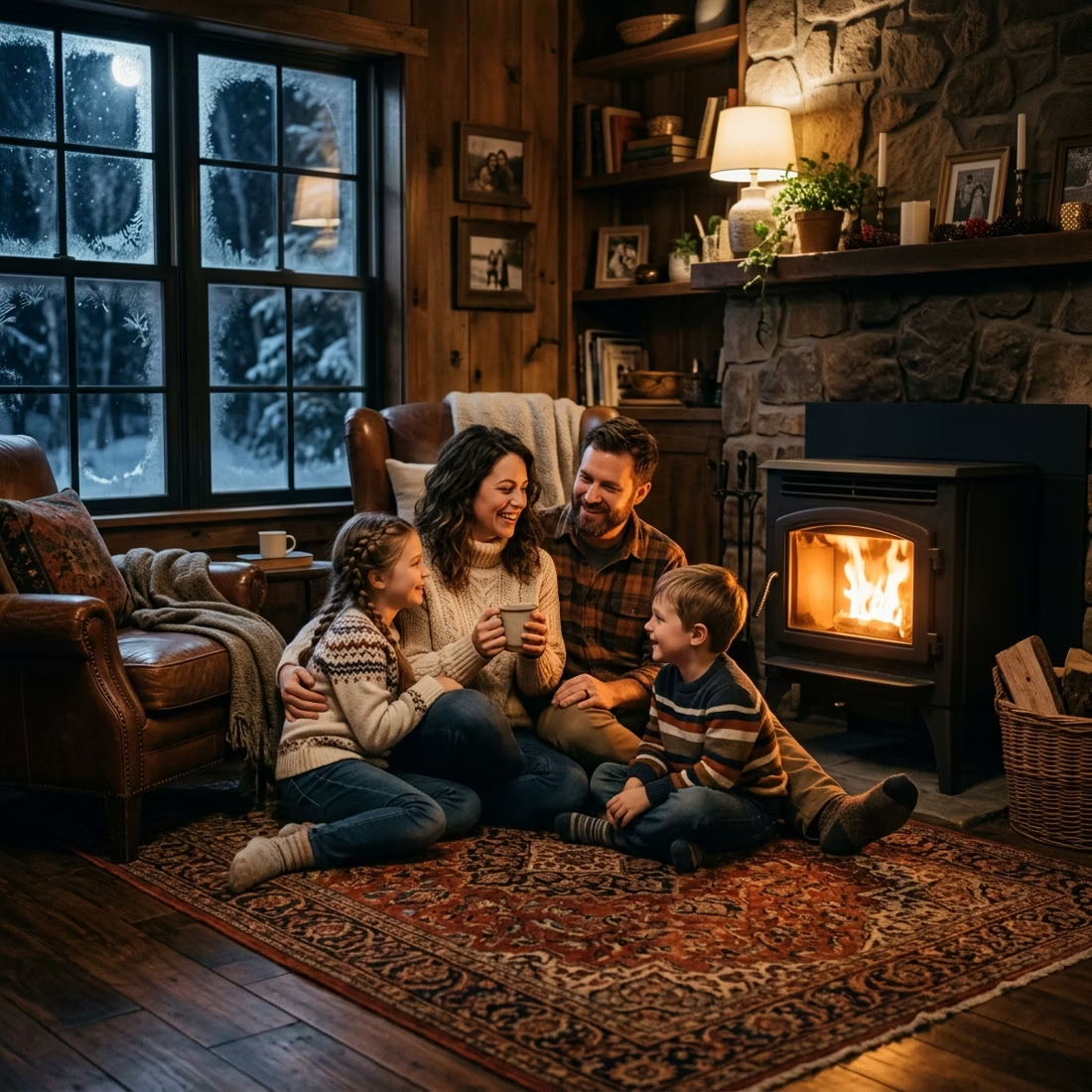
Four fuels. One honest answer for Coosa County.
Three steps. No salesperson until you're ready.
Tell us about your project
Your zip code, your situation, and the fuel you're leaning toward—or let the answers point you to one.
See what's actually available
The brands dealers within 100 miles genuinely carry—real options, never a catalog mirage.
Get your dealer & Project Guide
A trusted local dealer, plus the free Project Guide & Parts List that names every component of the job.
Frequently Asked Questions
Which fuel works best in Coosa County?
With a mild winter climate—average lows around 31°F and a short, mild heating season—most Coosa County homes don't need a fuel type built for weeks of sub-zero cold. Wood remains popular because oak, hickory, and pine are locally abundant and many homeowners already have a masonry fireplace to use or upgrade; it's also valuable backup heat when ice storms knock out power, which happens most winters somewhere in central Alabama. Gas is the convenience choice, though since natural gas mains are limited in the county, most gas installs run on propane rather than piped gas. Pellet stoves are a solid middle ground—steady heat without stacking firewood, and regional brands like Lignetics and Hamer Pellet Fuel are readily stocked. Electric fireplaces work well as supplemental heat for bedrooms or dens, or where venting a wood or gas unit isn't practical. Many county homes end up with two fuels—one as the everyday heater, one as ice-storm insurance.
Do I need a permit to install a fireplace in Coosa County?
In most cases, yes, through the county building department if you're in an unincorporated area, or through the town for installs inside Rockford or Goodwater city limits. New wood stoves, wood inserts, gas appliances, and pellet stoves generally require a building permit, and any gas line work should be done by a licensed gas-fitter and separately permitted. Wood-burning appliances sold new must meet current EPA 2020 NSPS emissions standards. Electric fireplaces usually skip the permit process unless you're hardwiring a built-in unit into a new circuit. Most local hearth retailers who serve the county handle this paperwork as part of the installation, so it's rarely something homeowners have to manage on their own.
Are there air quality restrictions on wood burning in Coosa County?
No. Coosa County has no nonattainment designation and no local burn-ban ordinances tied to wood smoke or winter inversions—this is a rural, low-density county without the geographic bowl effect that causes smoke buildup in places like the mountain West. The one restriction that does apply everywhere is federal: any new wood stove sold must meet EPA 2020 NSPS emissions standards. Beyond that, wood burning in Coosa County is largely unregulated, which is part of why it remains a common supplemental and backup heat source in the area.
Can one local hearth retailer handle all four fuel types?
Given the county's small population, most homeowners end up working with a multi-fuel dealer based in a neighboring county—Sylacauga, Alexander City, or the greater Montgomery area—since a single-fuel specialty shop wouldn't have enough local volume to support itself here. These regional dealers typically carry wood, gas (propane), and pellet lines, with electric fireplaces as an easier add-on since they don't require venting. If you're cross-shopping fuels, working with a retailer that stocks more than one type lets you compare options and get an honest read on what actually fits your home and chimney situation, rather than being steered toward whatever one line they carry.
How does service work in rural areas of Coosa County?
Because Coosa County is sparsely populated, most chimney sweeps and appliance technicians are based outside the county and travel in on a route basis rather than same-day dispatch. Expect to schedule a few weeks out during peak season (roughly October through December) and possibly a modest travel fee for outlying communities like Nixburg or Weogufka. Booking your annual sweep or inspection in late summer, before the fall rush, is the easiest way to avoid a wait. Because ice storms occasionally cause multi-day power outages in this part of Alabama, it's also worth keeping a wood or propane appliance in working order as a heat source of last resort, independent of the grid.
What's the typical cost range for fireplace installation across all fuel types in Coosa County?
Costs here tend to run toward the lower end of national ranges, since the mild climate means simpler venting and smaller units are usually sufficient. Wood stove or insert installation: roughly $3,500–$7,500 for a typical install into an existing masonry chimney. Gas fireplace, insert, or stove (propane, since piped natural gas is limited countywide): $4,000–$9,000 depending on the propane line and venting work. Pellet stove or insert: $3,500–$6,000 for most installs. Electric fireplace: $200–$2,500 for the unit itself, plus $300–$1,000 in labor for anything beyond a simple plug-in placement. See the county + fuel pages above for cost detail tied to specific local retailers.
Can a fireplace actually lower my heating bill?
Yes—by creating a comfort zone. A furnace heats every square foot of the house just to warm the one room you're in; a gas fireplace on low burns roughly a sixth of the gas a typical furnace does. Set the furnace around 55–60 degrees as a baseline, then heat the rooms your family actually uses. Families who heat this way commonly save $20–$60 a month.
Can I install a fireplace myself?
If you're putting a fire in your house on purpose, it's best to work with an expert. Unless you're genuinely experienced in framing, gas line, vent pipe, and the national code on clearances to combustibles, have a professional do it—and ideally the same company that sells you the fireplace, so warranty, service, and liability all live under one roof.
Wood, gas, pellet, or electric—how do I choose?
Match the fuel to your life, not the other way around. Wood: lowest fuel cost and total power-outage independence, but you're hauling and stacking. Gas: press a button, set a thermostat, no maintenance to speak of. Pellet: wood economics with automatic feeding, in exchange for weekly cleaning and a need for electricity. Electric: plugs in anywhere with honest supplemental heat. Nobody regrets the fuel that fits how they actually live.
What are the biggest mistakes people make buying a fireplace?
Five come up constantly: budgeting for the unit but not the full job (vent, gas line, electrical, finish work); drowning in options instead of starting from style and fuel; buying without an in-home preview; handing installation to a handyman instead of a pro; and giving up out of sheer indecision. Every one is avoidable with a clear plan—step one, step two, step three.
Stove and Fireplace Dealers in Coosa County
Listings include WhyFire partner dealers, dealers we have verified as authorized for the brands we recommend, and established local businesses that carry hearth products. Every listing shows which one it is. The ones marked Preferred run on WhyFire's software, so they can show you real pricing and book your appointment right here. No manufacturer pays for placement. How we verify dealers →
Apex Gas & Appliance
East Central Alabama Gas District
Coosa Valley Propane
Colonial Fireplace Company
Find your fireplace in Coosa County.
Pick your fuel below and we'll match you with a trusted local dealer, plus a free Project Guide & Parts List—the exact parts, vent kit, and recommended installer for your Coosa County home.
Find Your Fireplace →