
Zone heat that fits Conecuh County's mild winters.
With winter lows averaging 36°F and just 2,105 heating degree days a year, Conecuh County doesn't need a furnace-sized fireplace—it needs efficient, no-fuss warmth for the family room on the county's coldest nights. Find the right electric unit and connect with a trusted local dealer.
Every Project Starts From One of These Five Situations
Comfort heat for a county that rarely needs much of it.
Conecuh County, centered on Evergreen and stretching out to Repton, Castleberry, and Lenox, sits in climate zone 3A—a heating season that's short by any national standard. At 2,105 heating degree days, the county racks up less than a third of what a place like Duluth, Minnesota sees in a typical winter, and the average winter low of 36°F rarely tests a home's heating system for more than a handful of nights. That changes what a fireplace is for here. It's less about surviving a long cold season and more about taking the edge off a January cold front and giving one room the kind of instant, controllable warmth that doesn't require firing up the central system for the whole house.
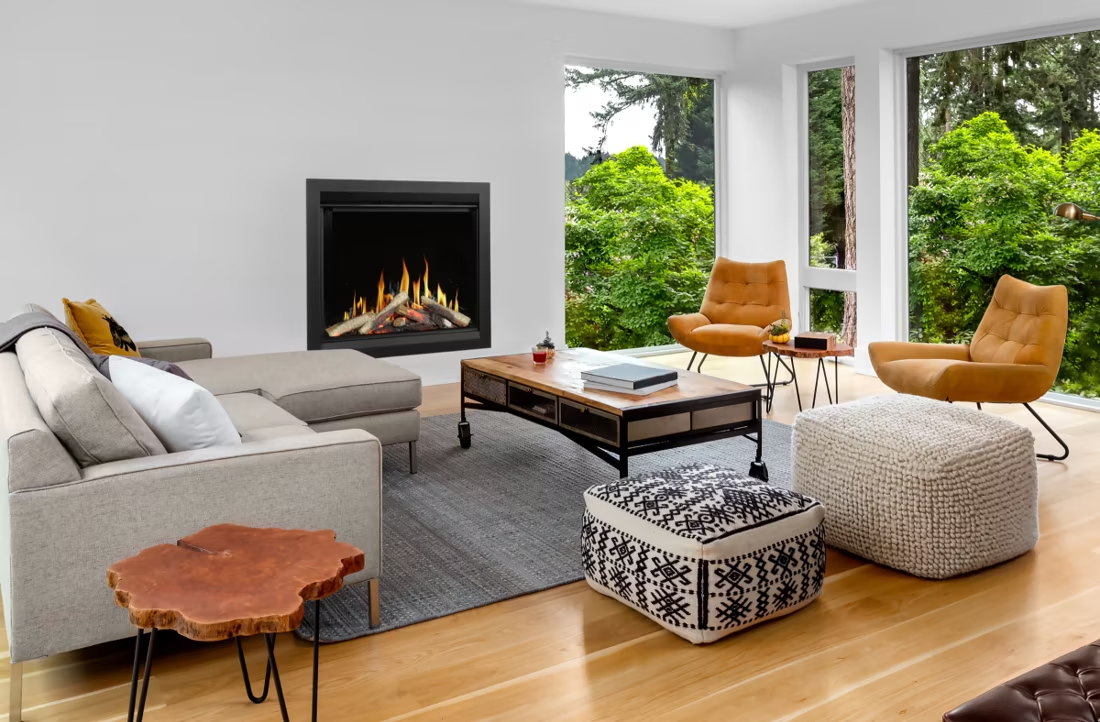
That's exactly the gap an electric fireplace fills. Plenty of Conecuh County homes—especially the manufactured and mobile homes common throughout the county's rural areas, along with older farmhouses that never had a working chimney—don't have a masonry flue to work with. Electric units solve that with a standard outlet or a simple dedicated circuit, no venting, no gas line, and no combustion byproducts to worry about. Power comes from Alabama Power in and around Evergreen, with rural electric cooperatives covering more of the outlying county, so most homes already have the service in place to run one. It's a low-commitment way to get real ambiance and supplemental heat without touching the roofline.
Three steps. No salesperson until you're ready.
Tell us about your project
Your zip code, your situation, and the fuel you're leaning toward—or let the answers point you to one.
See what's actually available
The brands dealers within 100 miles genuinely carry—real options, never a catalog mirage.
Get your dealer & Project Guide
A trusted local dealer, plus the free Project Guide & Parts List that names every component of the job.
Frequently Asked Questions
How much does an electric fireplace installation cost in Conecuh County?
Costs vary widely by unit type. A plug-in freestanding electric stove or a mantel package with a built-in electric insert typically runs $300 to $1,200 installed, since it just needs a standard 120V outlet. A wall-mounted linear unit or a built-in electric fireplace wired to its own dedicated circuit runs higher, often $1,200 to $2,500, once an electrician handles the circuit work and any wall framing or trim-out. Because there's no venting or masonry work involved, electric installs are consistently the least expensive fireplace option available to Conecuh County homeowners.
Will an electric fireplace actually keep a room warm here?
For most of the county's cold spells, yes. A typical 1,500-watt electric fireplace puts out roughly 5,000 BTUs—plenty to comfortably heat a single room when the outside temperature is hovering around Conecuh County's 36°F average winter low. These units aren't designed to replace central heat for the whole house, but for supplemental warmth in a living room, den, or bedroom during the county's short heating season, they do the job well and let you turn the thermostat down elsewhere.
Do I need a permit to install an electric fireplace in Conecuh County?
A plug-in unit that runs off a standard wall outlet doesn't require a permit since nothing is being permanently added to your home's wiring. A built-in electric fireplace wired to a new dedicated circuit is a different matter—that electrical work may require a permit through the Conecuh County Building Department or the City of Evergreen, depending on whether you're inside city limits. A licensed electrician handling the wiring will know which applies and can pull the permit as part of the job.
Electric vs. wood—which makes more sense for my Conecuh County home?
Wood heat still has deep roots here—oak, pine, and hickory are all common local firewood, and plenty of older county homes have a working masonry fireplace to use them in. But wood means chimney upkeep, ash cleanup, and sourcing fuel. Electric skips all of that: no chimney to sweep, no smoke, and it's a straightforward retrofit into a manufactured home or a room with no existing flue. Given how mild Conecuh County winters run, many homeowners find electric covers their actual heating need without the maintenance that comes with a wood-burning setup.
What type of electric fireplace fits Conecuh County homes best?
For the county's older homes around Evergreen and Repton that already have a masonry fireplace opening, an electric insert is usually the simplest upgrade—it slides into the existing firebox and uses the mantel you already have. For manufactured homes or newer construction without a fireplace opening, a wall-mounted linear unit or a freestanding electric stove gives you the same warmth and flame effect without any structural change. Either way, given how short the heating season is here, most homeowners prioritize flame realism and room ambiance as much as raw heat output.
Will my electric fireplace still work if the power goes out?
No—electric fireplaces require power to run the heating element and flame effect, so they won't provide heat during an outage. That's worth factoring in for Conecuh County, where Gulf-tracking storms can knock out power for stretches during hurricane season and occasional winter ice events. If backup heat during outages is a priority, a wood stove or a propane-fueled unit is a better complement to an electric fireplace rather than a replacement for it.
How much does an electric fireplace add to my power bill?
A typical 1,500-watt electric fireplace costs roughly $0.15 to $0.20 per hour to run at standard Alabama Power and rural cooperative residential rates. Running one for a few hours on a cold evening costs less than most homeowners expect, and it's often cheaper than pushing the central heat pump harder across the whole house just to warm up one room—especially given how few genuinely cold nights the county sees in a typical winter.
Are electric fireplaces a good fit for manufactured and mobile homes in the county?
Yes—this is one of the strongest use cases for electric heat in Conecuh County, where manufactured and mobile homes make up a significant share of the rural housing stock. Electric units don't require any combustion, so there's no chimney, no clearance-to-combustibles concerns the way there are with wood or gas, and no structural changes to the home. A wall-mounted or freestanding electric unit can typically be added to a manufactured home with nothing more than an outlet or a simple circuit run.
Electric vs. gas—which should I choose?
Gas fireplaces in Conecuh County almost always mean propane, since natural gas service is limited outside the larger towns—that means a tank, deliveries, and a gas line installation. Electric skips fuel logistics entirely and plugs into power you already have. Gas typically produces more heat output for a larger room, but for the supplemental, ambiance-driven heating most Conecuh County homes actually need given the mild climate here, electric is usually the simpler and less expensive choice. Homeowners who want a stronger primary heat source in a larger space sometimes still lean toward gas or wood instead.
Does an electric fireplace need a vent or chimney?
No—that's its superpower. An electric fireplace needs a wall and an outlet, period. No vent pipe, no gas line, no clearances to design around, which is why it works in bedrooms, offices, apartments, and walls where venting a gas or wood unit would be impractical or impossible. Installation is typically the simplest and least expensive of any fireplace type.
Can I put a TV above my fireplace?
Yes—with an asterisk. Fireplaces are hot and TVs don't like heat. Either put a mantel between them to deflect rising warmth, or choose a fireplace with heat-management technology that creates a cool zone on the wall above—the wall stays around 125 degrees, barely warm, while the room still gets full heat. If you like clean lines and don't want a mantel, heat management is the answer.
What is an in-home preview and do I need one?
It's a visit where a hearth professional measures your space, confirms the model you picked actually works in your home, and walks the specs—framing, gas line, venting, finish work—before anything is ordered. Some details you just can't know until you see the house. Never make a down payment without one; it's the single most-skipped step that burns buyers.
Can I install a fireplace myself?
If you're putting a fire in your house on purpose, it's best to work with an expert. Unless you're genuinely experienced in framing, gas line, vent pipe, and the national code on clearances to combustibles, have a professional do it—and ideally the same company that sells you the fireplace, so warranty, service, and liability all live under one roof.
Stove and Fireplace Dealers in Conecuh County
Listings include WhyFire partner dealers, dealers we have verified as authorized for the brands we recommend, and established local businesses that carry hearth products. Every listing shows which one it is. The ones marked Preferred run on WhyFire's software, so they can show you real pricing and book your appointment right here. No manufacturer pays for placement. How we verify dealers →
Doodlebuggers Fireplace, Grill & Outdoor
South Alabama Gas- Monroeville
South Alabama Gas- Brewton
Fireplace Concepts, Inc
Gas Pro
Geneva County Gas District
Patio Specialists
Coastal Insulation - Ft. Walton Beach
Allgas, Inc. - Montgomery
Thompson Gas- Chatom
Sullivan Insullation Company
Andrews Ace Hardware
Bay Breeze Patio
Hood's Discount Home Center
Brick Acquisition Company
Florida Bath & Surface
Street'S Exquisite Plants
Thompson Gas- Butler
Find your electric fireplace in Conecuh County.
Tell us a bit about your home and we'll put together a free Project Guide & Parts List for your Conecuh County electric fireplace project—the right unit, the exact parts, and a trusted local dealer to install it.
Find Your Fireplace →