
Keep Your Family Warm and Safe—No Matter What
From LaFayette to Valley, Lanett, and Five Points, Chambers County winters are mild but not without their bite—especially when an ice storm takes down the power lines. Find the right stove or insert, and connect with a trusted local dealer.
Every Project Starts From One of These Five Situations
Wood heat that earns its place in a mild climate.
Chambers County sits in east Alabama along the Chattahoochee River and West Point Lake, with a county seat in LaFayette and former mill towns—Valley, Lanett—anchoring the southern end. With winters averaging a low around 32°F, this is climate zone 3A: a fraction of the heating load carried by a place like Burlington, VT (with winters nearly three times as long and cold), and a heating season that typically runs from late November into February rather than six months straight. That means wood heat in Chambers County is rarely someone's sole source of warmth—it's supplemental heat for a den or living room, backup heat for the ice storms that periodically knock out power for days at a time, and, for plenty of households, simply the kind of fire that makes a room feel finished.
East Alabama's mixed hardwood-pine forests put oak and hickory within easy reach for most Chambers County homeowners, either from their own land, a local tree service, or a firewood supplier—split, seasoned oak and hickory burn hot and long, while pine is the common choice for kindling and quick-starting fires. With no air quality non-attainment designations or winter inversion concerns in this part of the state, there's none of the burn-curtailment complexity you'll find in some western counties—just a straightforward building permit process and a stove sized right for a mild-climate home. The right wood stove or insert still earns its keep here: it's the heat source that keeps working when the grid doesn't, and the one that turns a cold January evening into something worth sitting near.
Three steps. No salesperson until you're ready.
Tell us about your project
Your zip code, your situation, and the fuel you're leaning toward—or let the answers point you to one.
See what's actually available
The brands dealers within 100 miles genuinely carry—real options, never a catalog mirage.
Get your dealer & Project Guide
A trusted local dealer, plus the free Project Guide & Parts List that names every component of the job.
Frequently Asked Questions
How much does a wood stove installation cost in Chambers County?
Most wood stove installations in Chambers County run in the $3,000 to $8,000 range, with the low end covering a freestanding EPA-certified stove on an existing hearth pad and the high end covering a full insert conversion into a masonry fireplace with new chimney liner work. Because Chambers County's heating season is short compared to colder parts of the country, most homeowners here are installing a single supplemental-heat unit for a living room or den rather than a whole-home heating system, which keeps most projects toward the lower end of that range. A local dealer can give you a firm number after seeing your existing chimney or hearth setup in person.
What size wood stove do I need for my Chambers County home?
Given the mild winter lows here—averaging around 32°F, well short of what homes in a place like Duluth, MN deal with—most Chambers County households are sizing a stove for one or two rooms rather than the whole house. A small to mid-size stove (rated for 1,000 to 1,800 square feet) is plenty for a den, living room, or open-concept main floor, and oversizing is a real risk: a stove too big for the space will smolder at low output most of the season, building creosote instead of heat. If you're in one of the older farmhouses out toward Five Points or Waverly with less insulation, size up slightly and talk to a dealer about draft and clearance before buying.
Where can I find certified wood stove installers near me?
Look for installers with NFI (National Fireplace Institute) or CSIA (Chimney Safety Institute of America) certification—both indicate real training in wood-burning appliance clearances and venting, not just general contracting experience. Local hearth retailers serving LaFayette, Valley, and Lanett typically employ certified installers and can reach outlying areas like Five Points and Waverly, sometimes with a small travel charge added for the farther edges of the county. Because the same company that sells the stove usually handles the install, warranty coverage and code compliance stay simple—that's worth more than saving a little on a handyman install, especially given how much improper venting raises chimney fire risk.
What's the difference between a wood stove and a wood insert?
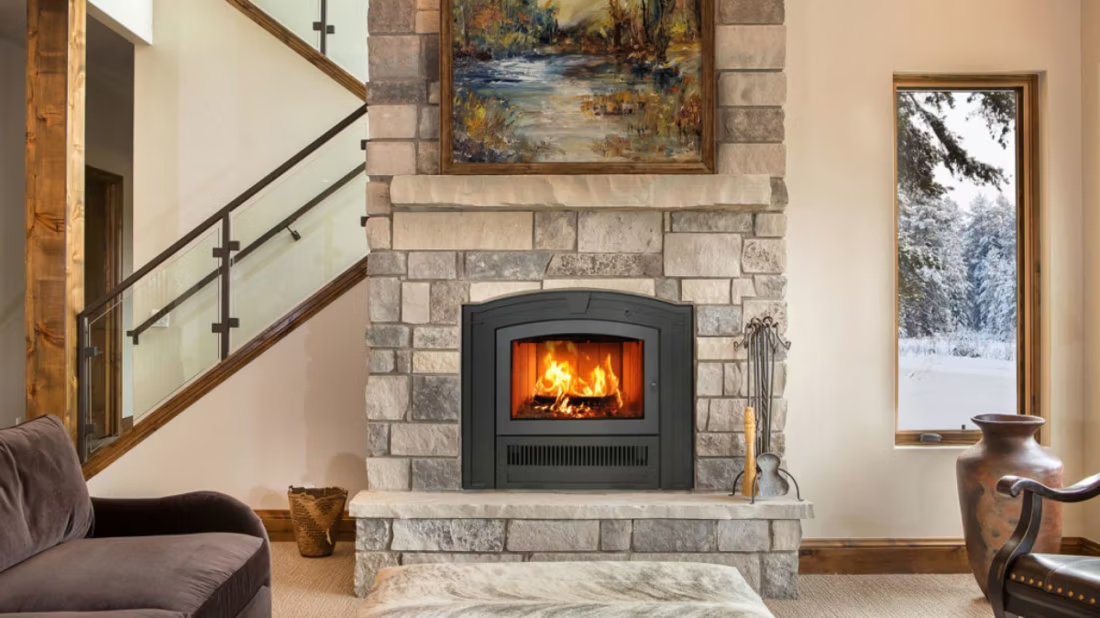
A wood stove is a freestanding unit on its own hearth pad, vented through a chimney, and can go almost anywhere in a home with the right clearances. A wood insert is built to slide into an existing masonry fireplace, turning an old open hearth—common in many of Chambers County's older homes around LaFayette and the mill-town neighborhoods of Valley and Lanett—into a sealed, high-efficiency heat source using the chimney you already have. If your home has an existing fireplace that mostly just looks nice but doesn't put out real heat, an insert is usually the better upgrade. Newer homes without an existing fireplace are typically better candidates for a freestanding stove.
Do I need a permit to install a wood stove in Chambers County?
Yes—a building permit is required for a new wood stove or insert installation, typically issued through the Chambers County Building Department out of LaFayette, and the unit itself needs to meet current EPA 2020 NSPS emissions standards. Most local dealers handle the permit paperwork as part of the installation, so it's rarely something homeowners have to navigate on their own. Unlike parts of the West with winter air quality curtailment periods, Chambers County has no non-attainment designation, so there's no burn-ban complexity to plan around—just a standard permit and inspection.
What's the best wood stove for Chambers County's climate?
Because winter lows here average around 32°F rather than the single digits or below zero that cold-climate installers plan for in places like Bozeman, MT, Chambers County homeowners generally don't need a heavyweight catalytic stove built for 20-plus-hour overnight burns. A well-made mid-size non-catalytic stove from a brand like Pacific Energy or Lopi will comfortably heat a room or open living area without the extra cost of top-tier cold-climate engineering. The bigger factor locally is matching the stove to how you'll actually use it—daily supplemental heat versus occasional backup during an ice storm—which a local dealer can walk through with you.
How often should my chimney be inspected and cleaned?
The CSIA recommends an annual inspection for any wood-burning appliance, and that holds even in a mild climate like Chambers County's—Alabama's humid summers can actually accelerate creosote and moisture damage inside a chimney flue between burning seasons. Plan on a sweep and inspection each late summer or early fall, before the first cold front rolls through, especially if you're burning oak or hickory regularly. It's a smaller time commitment here than in places with six-month burning seasons, but skipping it is still the leading cause of preventable chimney fires.
Where can I get firewood in Chambers County?
Oak and hickory are the backbone of good firewood in Chambers County's mixed hardwood-pine forests, with pine commonly used for kindling and quick starts. Several local tree services and small firewood suppliers around LaFayette, Valley, and Lanett sell seasoned cordwood by the truckload or cord, generally in the $175 to $275 per cord range depending on species and how well-seasoned it is. If you're on rural acreage near Five Points or Waverly, cutting your own from downed or cleared timber is common—just give oak and hickory at least six months to a year of seasoning before burning, since green hardwood won't produce the clean, hot fire this region's wood is known for.
Wood stove vs. pellet stove—which is right for me?
Wood stoves burn cordwood, run without electricity, and pair naturally with the oak and hickory that's easy to source in Chambers County—which matters here because ice storms, not deep cold, are the main reason homes lose power in a bad winter. Pellet stoves, using bagged fuel from regional suppliers like Lignetics, Hamer Pellet Fuel, or Greenway Renewable Energy, are more hands-off and burn cleaner, but the auger and blower need electricity, so they go dark in the same outage a wood stove would keep working through. For a household planning around storm season, wood tends to be the more resilient choice. For a household that just wants easy supplemental heat with less mess, pellet is worth a look—local dealers carry both.
Why is my open fireplace making my house colder?
Open fireplaces suck—literally. As the fire burns, it consumes air your furnace already paid to heat and pulls it out through the chimney, so the house is actually colder after the fire goes out than before you lit it. An insert fixes this: it seals the chimney, puts fixed glass across the front, and turns that hole in your house into a real heat source.
Why is a fireplace insert so efficient?
An insert does two things: it seals the chimney completely, so you stop losing air you already paid to heat, and it radiates warmth into the room through the firebox and glass. Most add a heat-exchange fan that pulls cool room air underneath, wraps it around the hot firebox, and pushes it back out warm. Your home is more efficient before you've even lit the first fire.
How much should I budget for a fireplace?
For an average home—covering the fireplace, the vent pipe, and basic installation—a budget between $3,900 and $5,500 gives you a lot of options across wood, gas, and pellet. By the time you add finish work, gas line, and electrical, the average complete installation lands between $5,000 and $12,000 all-in. In a remodel or new build, a good rule is to put about 2.5% of the total project cost toward the fireplace.
Can I install a fireplace myself?
If you're putting a fire in your house on purpose, it's best to work with an expert. Unless you're genuinely experienced in framing, gas line, vent pipe, and the national code on clearances to combustibles, have a professional do it—and ideally the same company that sells you the fireplace, so warranty, service, and liability all live under one roof.
Stove and Fireplace Dealers in Chambers County
Listings include WhyFire partner dealers, dealers we have verified as authorized for the brands we recommend, and established local businesses that carry hearth products. Every listing shows which one it is. The ones marked Preferred run on WhyFire's software, so they can show you real pricing and book your appointment right here. No manufacturer pays for placement. How we verify dealers →
Blossman Gas And Appliance
Blossman Gas And Appliance
Hall's Propane Gas Company, Inc.
Southland Propane Services
Find your wood stove in Chambers County.
Tell us a bit about your home and we'll match you with the right wood stove or insert for Chambers County's climate—plus a free Project Guide & Parts List and a trusted local dealer to install it.
Find Your Fireplace →