
Find your electric fireplace in Butler County.
Mild winters mean electric heat is about ambiance and flexible zone warmth, not survival heat—from Greenville to Georgiana, find the right unit and a trusted local dealer.
Every Project Starts From One of These Five Situations
Warmth on demand, without the chimney work.
Butler County sits in climate zone 3A with an average winter low around 37°F and just 1,952 heating degree days a year—a fraction of what a place like Bismarck, ND or Minneapolis, MN sees in a single month. That mild profile means most Butler County homes never need a whole-house heating appliance in the living room; what they want is supplemental warmth on the handful of genuinely cold nights, plus the visual appeal of a fireplace without a wood pile or a gas line to maintain.
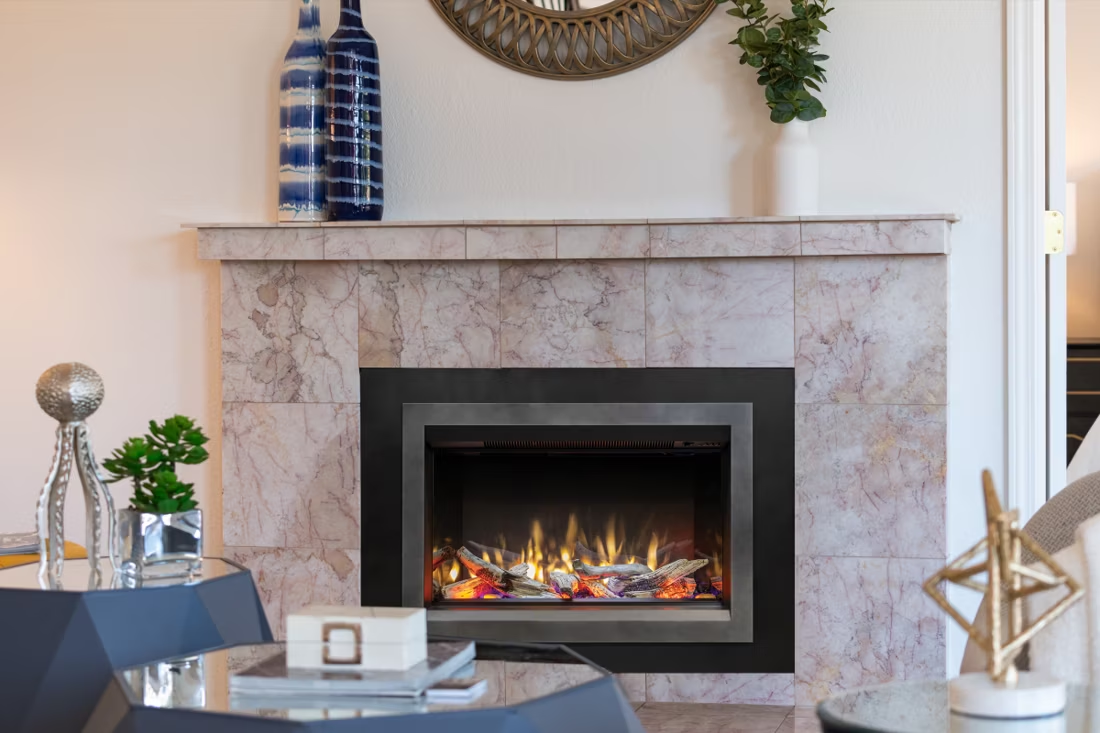
That's exactly where electric fireplaces earn their place here. No venting, no chimney, no permit hassle with the county—just a unit that plugs in and runs. For homeowners in Greenville, Georgiana, or the more rural stretches of the county where natural gas isn't an option and wood means dealing with oak, pine, or hickory rounds, electric offers a clean, low-maintenance way to add a focal point to a den, bedroom, or basement without touching the home's structure.
Three steps. No salesperson until you're ready.
Tell us about your project
Your zip code, your situation, and the fuel you're leaning toward—or let the answers point you to one.
See what's actually available
The brands dealers within 100 miles genuinely carry—real options, never a catalog mirage.
Get your dealer & Project Guide
A trusted local dealer, plus the free Project Guide & Parts List that names every component of the job.
Frequently Asked Questions
How much does an electric fireplace installation cost in Butler County?
Electric fireplace installation in Butler County typically runs $400 to $1,200, and it's usually the simplest hearth project available. A plug-in freestanding unit or a wall-mount model on a standard outlet sits at the low end—often a DIY-friendly project with no permit needed. Built-in units that require a dedicated 120V or 240V circuit, recessed wall framing, or a mantel surround push toward the higher end because they involve an electrician. Given Butler County's mild winters, most homeowners here are buying for ambiance and supplemental warmth rather than primary heat, so a mid-range unit typically covers the need.
Do I need a permit for an electric fireplace in Butler County?
In most cases, no. A plug-in electric fireplace or insert that uses an existing standard outlet doesn't require a building permit. If your installer needs to run a new dedicated circuit or do any wall modification for a built-in unit, that electrical work should be pulled by a licensed electrician, and permitting requirements run through the local building jurisdiction rather than anything related to combustion or venting—because there is none. That's one of the appeals of electric in a county where wood and gas installs both involve more paperwork.
Will an electric fireplace actually heat my Butler County home?
It will comfortably heat a single room, but it isn't sized to be your home's primary heat source, and with Butler County averaging only 1,952 heating degree days a year, it usually doesn't need to be. Most electric units put out around 5,000 BTU, enough to take the chill off a den, bedroom, or sunroom on a cold January night when temperatures dip into the 30s. For whole-home heating, Butler County residents typically rely on a central HVAC system or heat pump, with the electric fireplace serving as a supplemental, zone-specific comfort feature rather than a furnace replacement.
What's the difference between an electric fireplace, insert, and mantel package?
A freestanding electric fireplace is a self-contained unit you place against a wall and plug in—no installation beyond finding an outlet. An electric insert is designed to slot into an existing masonry fireplace opening, letting Butler County homeowners with an old, unused wood-burning fireplace convert it to clean electric heat and light without any chimney work. A mantel package pairs an electric insert or built-in unit with a surrounding wood or stone mantel for a more finished, furniture-grade look. For homes here with a fireplace opening that's gone cold, an insert is usually the most cost-effective way to bring it back to life.
How does electric compare to gas or wood heat in Butler County?
Wood offers real flame, works during power outages, and pairs with the oak, pine, and hickory available regionally, but it requires a chimney, cutting or buying firewood, and cleanup. Gas gives instant, consistent flame with real heat output and works well where propane or natural gas service reaches, but it needs a gas line and venting. Electric requires neither—no chimney, no gas line, no combustion byproducts—but it can't match wood or gas for raw heat output on the rare hard freeze. Given Butler County's average winter low of 37°F, most homeowners here choose based on ambiance and installation simplicity rather than heating necessity, which tends to tip the decision toward electric for secondary living spaces.
Can I run an electric fireplace during a power outage?
No—unlike a wood stove, an electric fireplace has no function without utility power, since the heating element and flame effect both run on electricity. In Butler County, where summer storms are the more common outage driver than winter cold, this is worth factoring in if you're relying on the fireplace for any heating function beyond ambiance. Homeowners who want heat that survives an outage typically pair an electric fireplace for daily use with a wood stove or portable propane heater as backup, rather than depending on electric alone.
What size electric fireplace do I need?
Sizing an electric fireplace is mostly about the room and the look you want rather than BTU calculations for cold-climate survival heat. A 30 to 40-inch unit suits a bedroom or smaller den; a 50 to 60-inch model fills a larger living room wall and can double as a TV-mount surround. Since Butler County's mild winters mean the unit is rarely asked to be the sole heat source, homeowners have more flexibility to size for aesthetics—matching the fireplace to the wall and furniture layout—rather than over-sizing for raw heat output the way you might in a colder climate.
Are electric fireplaces cheaper to run than gas or wood in Butler County?
For the amount of use most Butler County homeowners get out of them—occasional evenings rather than round-the-clock winter heating—electric fireplaces are inexpensive to operate, typically costing a few cents per hour on a standard residential electric rate. Wood can be cheaper still if you're cutting your own oak or pine, but it takes labor and storage. Gas costs more to install upfront if a new line is needed but delivers more heat per dollar during actual cold snaps. Given the county's short heating season, the electric fireplace's low operating cost rarely becomes a major line item on anyone's utility bill either way.
Where can I have an electric fireplace installed in Butler County?
A trusted local dealer serving Butler County can walk your home, confirm whether your outlet or panel supports the unit you want, and handle any electrical work a built-in model requires. Because electric installs are simpler than wood or gas projects, many homeowners are tempted to buy online and DIY—but a local pro still adds value in sizing the unit correctly for the room, confirming clearances around mantels and TVs, and making sure a dedicated circuit is added correctly if the unit calls for one.
Can I put a TV above my fireplace?
Yes—with an asterisk. Fireplaces are hot and TVs don't like heat. Either put a mantel between them to deflect rising warmth, or choose a fireplace with heat-management technology that creates a cool zone on the wall above—the wall stays around 125 degrees, barely warm, while the room still gets full heat. If you like clean lines and don't want a mantel, heat management is the answer.
Does an electric fireplace need a vent or chimney?
No—that's its superpower. An electric fireplace needs a wall and an outlet, period. No vent pipe, no gas line, no clearances to design around, which is why it works in bedrooms, offices, apartments, and walls where venting a gas or wood unit would be impractical or impossible. Installation is typically the simplest and least expensive of any fireplace type.
Can I install a fireplace myself?
If you're putting a fire in your house on purpose, it's best to work with an expert. Unless you're genuinely experienced in framing, gas line, vent pipe, and the national code on clearances to combustibles, have a professional do it—and ideally the same company that sells you the fireplace, so warranty, service, and liability all live under one roof.
How much should I budget for a fireplace?
For an average home—covering the fireplace, the vent pipe, and basic installation—a budget between $3,900 and $5,500 gives you a lot of options across wood, gas, and pellet. By the time you add finish work, gas line, and electrical, the average complete installation lands between $5,000 and $12,000 all-in. In a remodel or new build, a good rule is to put about 2.5% of the total project cost toward the fireplace.
Stove and Fireplace Dealers in Butler County
Listings include WhyFire partner dealers, dealers we have verified as authorized for the brands we recommend, and established local businesses that carry hearth products. Every listing shows which one it is. The ones marked Preferred run on WhyFire's software, so they can show you real pricing and book your appointment right here. No manufacturer pays for placement. How we verify dealers →
South Alabama Gas- Monroeville
Allgas, Inc. - Montgomery
South Alabama Gas- Brewton
Brick Acquisition Company
Get matched with a Butler County electric fireplace dealer.
Tell us a bit about your home and we'll put together a free Project Guide & Parts List for your electric fireplace project—then connect you with a trusted local dealer in Butler County.
Find Your Fireplace →