
Instant heat for Bridgeport's Tennessee River winters.
Bridgeport sits along the Tennessee River in Jackson County, where winters are mild but real. Find the right propane or gas unit for your home and get matched with a trusted local dealer.
Every Project Starts From One of These Five Situations
Reliable warmth without a natural gas line.
Bridgeport sits at about 713 feet elevation on the Tennessee River in the far northeast corner of Alabama, in a climate zone (3A) that gets real winter chill but not the brutal cold of the upper Midwest—average winter lows sit around 29°F, and the town has a winter heating load that's a fraction of what a place like Duluth, MN sees. That's enough cold to want real heat on January and February evenings, but not enough to make a full wood-burning setup a household necessity the way it might be further north.
There's no natural gas utility serving this stretch of Jackson County, so gas fireplaces and inserts here run on propane, delivered and maintained by regional LP suppliers rather than a piped city gas line. That's a normal setup in rural northeast Alabama, and it doesn't limit your options—direct-vent propane fireplaces, inserts, and freestanding stoves all install the same way, with a propane tank taking the place of a gas meter. For homes served by North Alabama Electric Cooperative, an electric fireplace is also worth a look for supplemental rooms, since at roughly 12.8 cents per kWh it's a low-commitment way to add zone heat without any fuel storage at all.
Three steps. No salesperson until you're ready.
Tell us about your project
Your zip code, your situation, and the fuel you're leaning toward—or let the answers point you to one.
See what's actually available
The brands dealers within 100 miles genuinely carry—real options, never a catalog mirage.
Get your dealer & Project Guide
A trusted local dealer, plus the free Project Guide & Parts List that names every component of the job.
Frequently Asked Questions
How much does a gas fireplace installation cost in Bridgeport?
Most propane fireplace and insert installations in this part of Jackson County run somewhere between $3,500 and $8,500, depending on the unit, whether you already have a propane tank on the property, and how much venting work is involved. A direct-vent insert going into an existing masonry fireplace with a tank already in place lands on the lower end. A new built-in fireplace in a remodel—with fresh framing, venting, and a new propane line run from the tank—sits toward the higher end. A local dealer will walk your home and give you a firm number.
Do I need natural gas, or does my gas fireplace run on propane?
In Bridgeport, it's propane. There's no natural gas main serving this part of Jackson County, so essentially every gas fireplace, insert, or stove installed here runs on LP. That means a propane tank—either an above-ground tank you already have for a water heater or range, or a new tank set by a regional LP supplier serving northeast Alabama. Nearly every gas fireplace on the market can be configured for propane; your installer sets the correct orifice and regulator for the fuel you're using.
Can I convert my existing wood fireplace to gas?
Yes, and it's a common project even in a small town like Bridgeport. A propane insert goes into your existing masonry firebox, using the chimney as the venting path with a stainless liner, and a new propane line is run from your tank to the unit. Given the mild-winter, propane-only setup here, expect somewhere in the $4,000 to $7,500 range depending on the insert and how far the gas line has to run. The conversion keeps your fireplace's look while giving you instant, no-hassle heat for cool evenings on the river.
Will my gas fireplace work during a power outage?
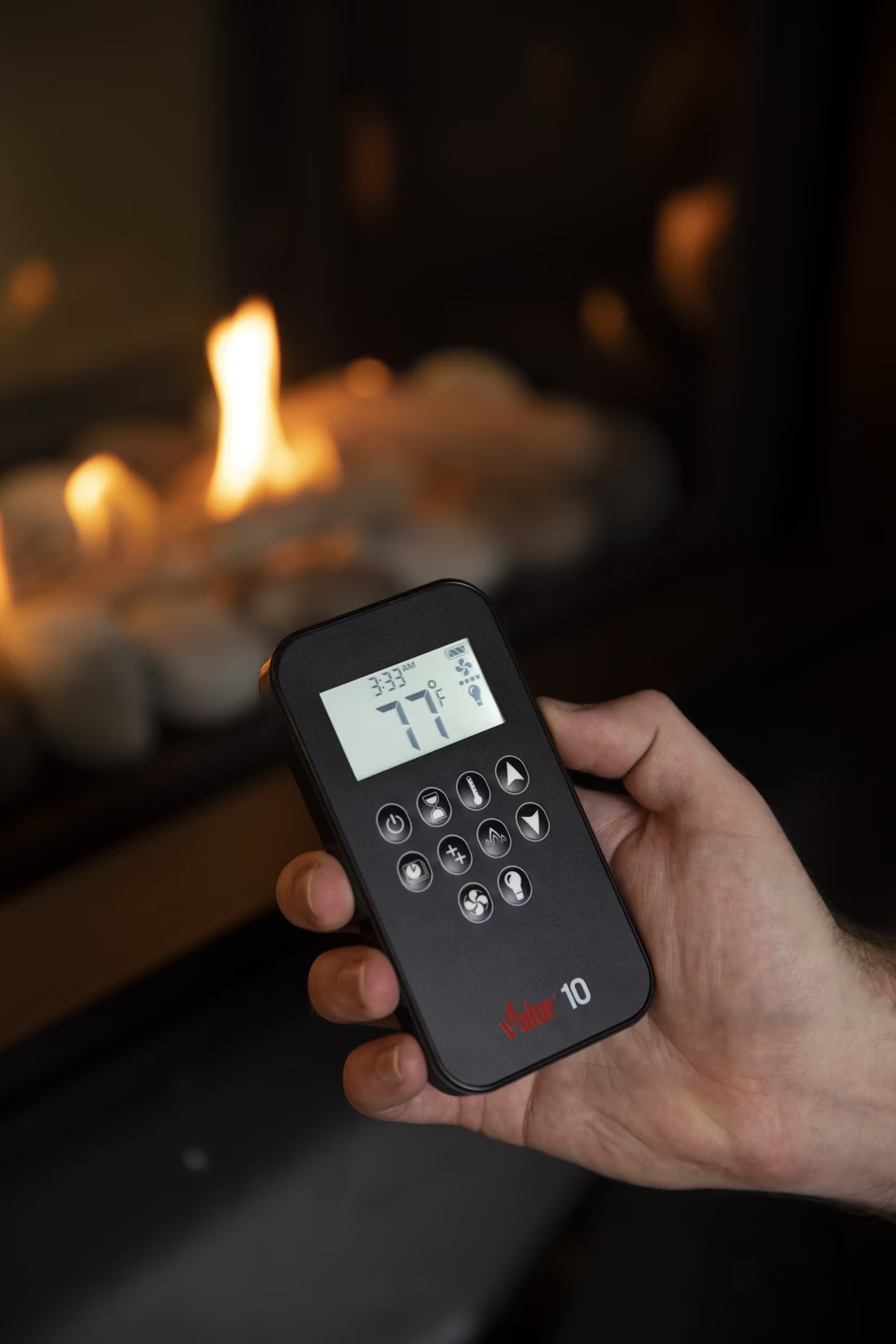
Most will, with the right ignition system. Units with IPI (intermittent pilot ignition) run on AA battery backup that kicks in automatically when the power drops—useful in Jackson County, where ice storms and summer thunderstorms occasionally knock out North Alabama Electric Cooperative lines for a stretch. Valor fireplaces take a different approach: their pilot generates its own electricity through the thermocouple, so there are no batteries to remember at all. Ask your local dealer about the ignition system on any unit you're considering if outage backup matters to you.
What's the difference between a gas fireplace, gas insert, and gas stove?
A gas fireplace is a fully built-in unit framed into a wall—the right call for new construction or a remodel. A gas insert slides into an existing masonry firebox, sealing it up and venting through your existing chimney, which is the common upgrade for Bridgeport's older homes with a fireplace already in place. A gas stove is a freestanding cabinet-style unit that sits on the floor, similar in footprint to a wood stove but running on propane. Homes without an existing fireplace opening usually land on a built-in unit or freestanding stove.
Do I need a permit to install a gas fireplace in Bridgeport?
Yes—building permits for gas appliance installations in this part of Jackson County typically run through the Jackson County Building Department, and any propane tank set or line work has to meet the standards set by the Alabama LP Gas Board, which regulates propane installations statewide. Most established hearth dealers coordinate the permit, the tank hookup, and the gas-line work as part of the install, so you're not stuck managing multiple trades yourself.
What's the difference between vented and vent-free gas fireplaces?
Vented (direct-vent) units draw combustion air from outside and exhaust it back outside through a sealed pipe, keeping combustion byproducts out of the house entirely. Vent-free units burn directly into the room without external venting, which is legal in Alabama but adds water vapor and small amounts of combustion byproducts to indoor air—worth weighing in a humid climate like Bridgeport's, where extra moisture indoors isn't always welcome. For most homes here, a direct-vent unit is the more comfortable, lower-maintenance choice, but your local dealer can walk through both.
How often should my gas fireplace be serviced?
Plan on an annual inspection, ideally before the cool season starts in November. A technician checks the burner, pilot or ignition system, propane line connections, and venting, and cleans the glass and interior. It's a quick visit compared to wood chimney sweeping, but it matters just as much for a propane appliance—undetected connection issues are the main safety concern with LP systems. Expect to pay somewhere in the $150–$250 range for a standard annual service call.
Gas vs. electric fireplace—which makes more sense in Bridgeport?
With Bridgeport's moderate winters—a modest winter heating load and lows that usually stay in the high 20s—a lot of homes here don't need a heavy-duty primary heat source, which puts electric fireplaces in play. An electric unit needs no propane tank or venting at all and runs cheaply on North Alabama Electric Cooperative's roughly 12.8-cent rate, making it a low-commitment option for a bedroom or den. A propane fireplace produces real, higher-output heat and can keep running during a power outage with battery backup—better suited to a main living area or a home that wants a genuine backup heat source. Many homeowners here end up with one propane unit for the main room and an electric unit for a secondary space.
What's the difference between an insert and a zero-clearance fireplace?
An insert is a fireplace that slides into a pre-existing wood-burning fireplace—if you don't have one, there's nothing to insert it into. A zero-clearance fireplace is built into a framed wall, which makes it the answer for remodels and new construction. Simple test: existing masonry fireplace means insert; blank or framed wall means zero-clearance.
Does a gas fireplace work when the power is out?
Yes—modern gas fireplaces have a battery backup for the ignition system that lasts for weeks, so no power equals no problem. Your furnace can't say that: no electricity, no blower, no heat. It's one of the most common reasons families add a fireplace, and worth confirming on any model you're considering.
Can I install a fireplace myself?
If you're putting a fire in your house on purpose, it's best to work with an expert. Unless you're genuinely experienced in framing, gas line, vent pipe, and the national code on clearances to combustibles, have a professional do it—and ideally the same company that sells you the fireplace, so warranty, service, and liability all live under one roof.
Can a fireplace actually lower my heating bill?
Yes—by creating a comfort zone. A furnace heats every square foot of the house just to warm the one room you're in; a gas fireplace on low burns roughly a sixth of the gas a typical furnace does. Set the furnace around 55–60 degrees as a baseline, then heat the rooms your family actually uses. Families who heat this way commonly save $20–$60 a month.
Nearby Dealers
Hearth shops serving Bridgeport and the surrounding area. Every listing shows whether it is a WhyFire partner, a dealer we have verified as authorized for the brands we recommend, or a local business carrying hearth products. No manufacturer pays for placement. How we verify dealers →
Allgas, Inc. - Ider
Smith's Ace Hardware
Allgas, Inc. Of Tn - Winchester
A-1 Chimney Specialist
America's Hearth & Patio Warehouse
Blossman Gas And Appliance
Neal's Heating & Air D/b/a Fireside Hearth & Patio
Factory Furniture
Therm-Con, Llc
Hearthside Fireplace Patio & Barbeque Center
Allgas, Inc. - Boaz
Find your gas fireplace in Bridgeport.
Tell us a bit about your home and we'll put together a free Project Guide & Parts List—the exact propane fireplace or insert setup, vent kit included, plus your matched local dealer in Jackson County.
Find Your Fireplace →